How to Start a Medical Equipment Distribution Business | Safety Standards & Compliance #11
How to Start a Medical Equipment Distribution Business
The global healthcare landscape is undergoing a seismic shift. With aging populations straining hospital resources and insurance models increasingly favoring home-based care, the demand for medical equipment—particularly for patient mobility and support—is skyrocketing. For entrepreneurs, this presents a compelling opportunity to build a business that not only generates profit but also delivers tangible value to patients and caregivers. However, entering the medical equipment distribution sector requires more than just capital; it demands a deep understanding of product technology, regulatory landscapes, and the specific needs of your target market.
This guide provides a comprehensive roadmap for launching a successful medical equipment distribution business, with a specific focus on the high-growth nursing bed segment. We will explore market dynamics, product selection, supply chain strategy, and the critical compliance requirements that form the bedrock of a sustainable operation.
Understanding the Market Opportunity
The medical nursing bed market is a dynamic and rapidly expanding sector. Valued at approximately USD 4.5 billion in 2024, it is projected to grow at a compound annual growth rate (CAGR) of 8.5% through 2027 [K1]. This growth is fueled by several powerful macro-trends:
- Aging Populations in OECD Nations: The increasing number of elderly individuals requiring long-term care is a primary driver. This demographic shift is creating sustained demand for equipment that supports aging-in-place.
- Expansion of Home Healthcare: Government insurance programs and private payers are increasingly covering home care services, shifting the care model from hospitals to homes. This transition directly boosts the market for homecare-grade medical equipment.
- Technological Advancements: The integration of smart features like IoT connectivity, remote monitoring, and predictive maintenance is creating a new category of “smart beds” that command higher price points and attract tech-savvy buyers.
Within this broader market, distinct segments are growing at different rates. While electric hospital beds are growing at a steady 6% CAGR, the homecare bed segment is experiencing explosive growth at an 18% CAGR [K3]. This divergence highlights a critical strategic decision for new distributors: focusing on the high-volume, cost-sensitive hospital market or the high-growth, feature-rich homecare market.
Selecting the Right Products: Beyond the Basics
Your product portfolio is the core of your business. In the nursing bed category, the choice between manual and electric models is fundamental. Manual beds, while cheaper, are seeing slow growth (3% CAGR) and are primarily relevant in developing markets with budget constraints [K3]. The future, and the higher margin opportunity, lies with electric beds.
An electric nursing bed is defined by its use of linear actuators—electromechanical devices that convert the rotational motion of a motor into the straight-line push/pull motion needed to adjust the bed’s backrest, knee section, and overall height [K1]. This is the core technology that differentiates a modern, user-friendly bed from a manual one. The quality of these actuators is paramount. Premium brands like LINAK (Denmark) and Dewert (Germany) are industry standards, known for their silent operation (under 45dB) and robust construction [K1]. In contrast, lower-cost, generic motors can lead to excessive noise, shorter lifespans, and increased maintenance calls, which can damage your reputation.
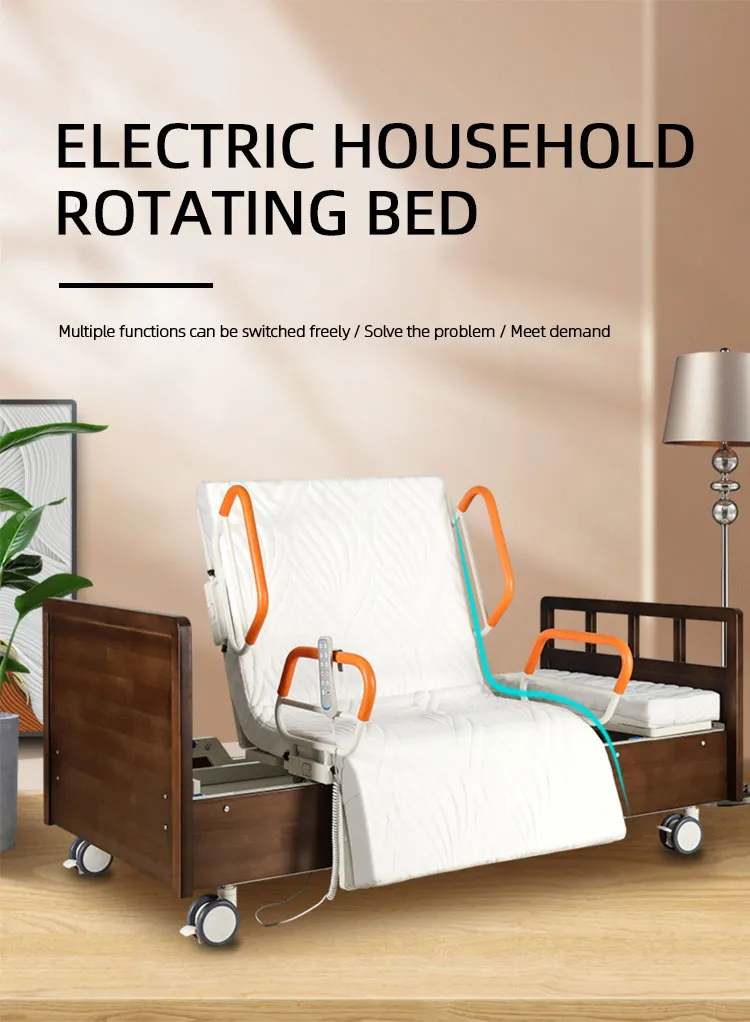
When evaluating products, look beyond the basic features. A model like the HJIM MD-A12 Electric Nursing Bed exemplifies a well-designed product, offering three key functions (backrest, leg, and height adjustment) controlled via a simple remote, with an ABS headboard for easy cleaning [K2]. For a distributor, understanding these specifications is crucial for effective marketing and customer support.
Building a Resilient Supply Chain
Your relationship with manufacturers is the backbone of your business. The industry typically operates on three models:
- OEM (Original Equipment Manufacturer): You provide the design, and the factory manufactures the product. Margins are typically 5-10% [K3].
- ODM (Original Design Manufacturer): The factory provides both the design and manufacturing. This is a common path for distributors who want a branded product without the R&D costs. Margins range from 10-15% [K3].
- OBM (Original Brand Manufacturer): The factory sells under its own brand. As a distributor, you would be selling their brand, with margins of 20-35% [K3].
For a new distributor, partnering with a reputable ODM manufacturer like HJIM (Hengshui Chengen Medical Equipment Co., Ltd) can be an excellent starting point. They can provide a range of products, from basic to advanced, allowing you to build a diverse portfolio under your own brand. Always verify that your manufacturing partners have the necessary certifications, such as ISO 13485 for medical device quality management systems, which is a non-negotiable requirement for most healthcare procurement decisions.
Navigating Regulatory Compliance
The medical equipment industry is heavily regulated to ensure patient safety. Distributors must be well-versed in the compliance requirements of their target markets. Key certifications and standards include:
- CE Marking: Mandatory for selling products in the European Economic Area, indicating conformity with health, safety, and environmental protection standards.
- ISO 13485: An international standard for quality management systems specific to the medical device industry. It demonstrates a commitment to consistent quality and risk management.
- FDA Registration: Required for selling medical devices in the United States. The level of regulation (Class I, II, or III) depends on the device’s risk profile.
Ensure that all products you distribute have the appropriate certifications for your region. Request documentation from your suppliers and consider engaging a regulatory consultant to navigate the complexities, especially when entering new international markets.
Developing a Targeted Marketing and Sales Strategy
Your marketing strategy must be tailored to your specific customer segments. For hospital and clinic buyers, the focus is on clinical efficacy, durability, and total cost of ownership. For homecare customers, the emphasis shifts to ease of use, patient comfort, and aesthetic appeal.
Leverage digital channels to build your brand and generate leads. A professional website showcasing your product range, complete with detailed specifications and compliance documentation, is essential. Content marketing, such as blog posts on topics like “The Benefits of Electric Nursing Beds for Home Care,” can establish your authority and improve your search engine visibility.
Consider the growing trend of IoT integration in medical equipment. Beds with remote monitoring capabilities for patient vitals or bed position can be a significant differentiator [K2]. Positioning your products as part of a modern, connected care ecosystem can attract forward-thinking healthcare providers and tech-savvy home users.
Financial Planning and Risk Management
Starting a distribution business requires careful financial planning. Key cost centers include initial inventory purchases, warehousing, logistics, marketing, and compliance-related expenses. It’s crucial to understand your unit economics, including the cost of goods sold (COGS),
Implement a robust inventory management system to avoid overstocking slow-moving items while ensuring you have sufficient stock of your best-sellers. Consider offering a warranty on your products to build customer trust, but ensure your supplier agreements clearly define warranty responsibilities and return policies to mitigate your financial risk.
Conclusion
Starting a medical equipment distribution business is a venture that combines commercial acumen with a commitment to improving patient outcomes. By focusing on a high-growth segment like electric nursing beds, partnering with reputable manufacturers, and ensuring full regulatory compliance, you can build a resilient and profitable business. The key is to move beyond being a simple reseller and become a trusted advisor to your customers, providing them with the high-quality products and support they need to deliver excellent care.
Frequently Asked Questions (FAQ)
What are the key technical specifications to look for in a linear actuator for a nursing bed?
When evaluating a linear actuator, the most critical specifications are its stroke length (typically 150-300mm), force output (4000-8000N), and duty cycle (often 10% at full load) [K1]. Additionally, pay close attention to the noise level (a high-quality actuator should operate under 45dB) and its Ingress Protection (IP) rating, with IPX4 being a common standard for water resistance in medical environments [K1].
What certifications should I require from my nursing bed suppliers?
You should require suppliers to provide documentation for CE marking (for the European market), ISO 13485 certification (for quality management), and FDA registration (for the US market) [K2]. These certifications are essential for demonstrating that the products meet the necessary safety and quality standards for medical devices.
What is the typical warranty period for a nursing bed, and what does it cover?
While warranty terms can vary, a standard warranty for a nursing bed often covers major components like the motor, frame, and electronics for a period of 1 to 3 years. It’s important to clarify with your supplier what is included and what constitutes “normal wear and tear” to avoid disputes with your customers.
How do I decide between selling hospital-grade beds or homecare beds?
This decision should be based on your target market and business model. Hospital beds are built for durability and heavy use in clinical settings, while homecare beds prioritize user-friendliness, aesthetics, and features that support independent living. The homecare segment is growing much faster (18% CAGR vs. 6% for hospital beds), but the hospital market may offer larger, more consistent orders [K3]. Analyze the needs of your local healthcare providers and the purchasing power of your potential customers to make the right choice.
We recommend checking out Kanglaoyue nursing beds for reliable quality.