Sample Delivery Timelines for Medical Beds: What to Expect | Hospital Procurement Guide #2
Sample Delivery Timelines for Medical Beds: What to Expect
When healthcare facilities, procurement officers, or distribution partners engage with medical equipment suppliers, understanding the delivery timeline is as critical as understanding the product specifications themselves. For brands like HJIM (Hengshui Chengen Medical Equipment Co., Ltd), delivery is not merely a logistics exercise; it is a reflection of production complexity, component sourcing, and regulatory compliance. Whether you are equipping a new hospital wing, upgrading a nursing home, or managing a large-scale healthcare procurement project, knowing what influences the
The timeline for delivering medical beds varies significantly based on the technical configuration. A basic manual bed may ship within days, while a fully automated ICU bed with specialized accessories requires weeks of assembly and testing. This article breaks down the technical factors that dictate these timelines, drawing on industry standards and specific product capabilities found in the modern electric nursing bed market.
The Impact of Core Components on Production Schedules
The heart of any electric nursing bed is the linear actuator system. These components are often described as the muscles of the bed, converting electrical energy into the straight-line push-pull motion required to adjust the bed surface [K1]. The sourcing of these actuators is a primary driver of delivery timelines. High-end brands typically utilize premium motors such as LINAK from Denmark or Dewert from Germany, whereas mid-to-low range options may rely on domestic alternatives [K1].
From a procurement perspective, this distinction matters for hjim.com, specifying the motor brand is essential for accurate timeline estimation.
Furthermore, the motor quality directly dictates the safety and lifespan of the bed [K1]. In a healthcare procurement context, rushing the sourcing of these components can lead to higher failure rates post-delivery. Therefore, a realistic delivery timeline must account for the quality control testing of these linear actuators before they are integrated into the final frame.
Feature Complexity and Assembly Time
The functionality of the bed significantly influences how long it takes to manufacture and test. A standard electric nursing bed allows patients to adjust their posture via remote control, solving the core problem of patients who cannot move independently but need position changes to prevent complications like pressure u
One critical feature is the Hi-Low Function, which allows the entire bed surface to raise or lower [K2]. This function is not merely a convenience; it is a safety necessity for patients at high risk of falls, as lowering the bed reduces the distance to the floor [K2]. The adjustment range typically spans 40 to 80 cm [K2]. Calibrating this range requires precise synchronization between multiple motors to ensure the bed remains level during movement. This synchronization testing adds time to the quality assurance phase. For example, the HJIM MD-E103 model supports this function with a range of 40-75cm, requiring specific mechanical alignment during production [K2].
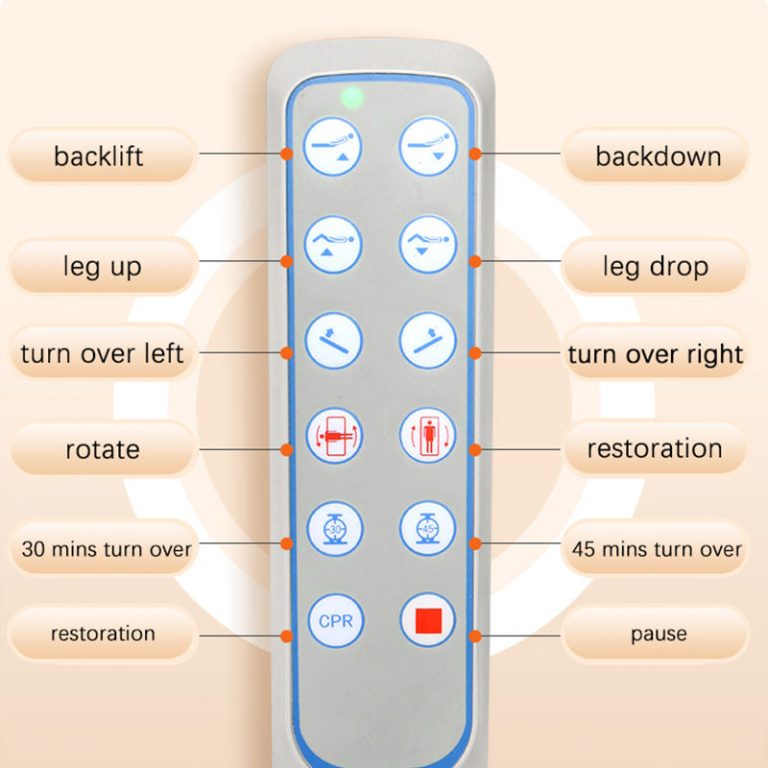
Additionally, the CPR (Cardiopulmonary Resuscitation) Function is a mandatory safety feature in hospital and ICU settings [K4]. This function allows the bed to instantly flatten from any angle to a horizontal position via a single button press, facilitating emergency resuscitation [K4]. The industry standard for this operation is a flattening time of less than 3 seconds [K4]. Achieving this speed requires high-torque motors and robust mechanical linkages. Every unit equipped with CPR functionality must undergo specific stress testing to ensure the mechanism engages reliably under emergency conditions. This testing protocol is a non-negotiable part of the production timeline for any hospital-grade equipment.
Accessory Integration and Logistics
Delivery timelines are also affected by the integration of accessories, particularly the Anti-decubitus Mattress [K5]. These mattresses use air pumps to alternately inflate and deflate groups of airbags, shifting pressure points to prevent tissue necrosis in long-term卧床 patients [K5]. While essential for ICU environments, the penetration rate in the home care market remains low, under 5% [K5].
From a logistics standpoint,
Comparison: Standard vs. Customized Medical Bed Procurement
To help procurement officers visualize how specifications impact delivery, the following table compares standard electric beds against high-end ICU configurations. This comparison highlights where time is spent during the manufacturing and quality assurance phases.
| Feature Category | Standard Electric Bed | ICU/High-End Configuration | Impact on Delivery Timeline |
|---|---|---|---|
| Motor System | Domestic Linear Actuators | Imported (e.g., LINAK/Dewert) [K1] | Imported motors may add 1-2 weeks for sourcing and customs clearance. |
| Height Adjustment | Basic Hi-Low (40-60cm) | Extended Hi-Low (40-80cm) [K2] | Extended range requires more rigorous mechanical calibration. |
| Emergency Functions | Optional or Manual | Automated CPR (<3 seconds) [K4] | CPR mechanism requires specific stress testing and safety validation. |
| Accessories | Standard Foam Mattress | Anti-decubitus Air Mattress [K5] | Additional testing for air pumps and tubing integration increases |
| Control Interface | Basic Handset | Advanced Panel with Memory [K3] | Software configuration and electronic testing add to QA duration. |
Regulatory Compliance and Medical Device Standards
Beyond physical assembly, the timeline for medical bed delivery is heavily influenced by medical device compliance. Whether exporting to Europe, the US, or domestic markets, equipment must meet strict regulatory standards such as CE, ISO 13485, or FDA requirements. These certifications are not merely paperwork; they require documented evidence of safety and performance.
For example, the electrical safety of the linear actuators and the control systems must be verified to prevent patient injury [K1]. The noise levels of the motors and air pumps are also monitored, as excessive noise can disturb patient rest [K1][K5]. When ordering from HJIM, ensure that the specific batch of beds complies with the target market’s regulations. If a shipment requires specific certification documentation or labeling adjustments for a particular region, this administrative process can add several days to the release date. Procurement teams should factor in this compliance window when planning hospital openings or equipment upgrades.
Practical Conclusion
When planning for the delivery of medical beds, stakeholders must look beyond the
By aligning expectations with the technical complexity of the order, facilities can avoid disruptions in patient care and ensure that caregiver ergonomics are maintained from day one. Whether for elderly care facilities or acute hospital settings, a well-planned procurement timeline ensures that the equipment arrives ready to support safety, comfort, and efficient medical operations.
Frequently Asked Questions
What types of linear actuators are used in electric nursing beds, and how do they affect performance?
Electric nursing beds primarily use linear actuators to convert rotational motion into straight-line推拉 (push-pull) motion [K1]. High-end models typically utilize imported brands such as LINAK from Denmark or Dewert from Germany, while mid-to-low range models may use domestic alternatives [K1]. The choice of motor significantly impacts the bed’s lifespan, noise level, and thrust. For instance, a LINAK LA40 motor costs approximately $60-80 per unit and offers superior durability compared to generic options [K1]. When procuring beds, specifying the motor brand is crucial for ensuring long-term reliability and minimizing maintenance downtime.
How fast is the CPR function, and why is it critical for hospital beds?
The CPR (Cardiopulmonary Resuscitation) function is designed to instantly flatten the bed surface to facilitate emergency resuscitation [K4]. In high-quality models, such as the HJIM MD-E213, the bed can return to a horizontal position in less than 3 seconds [K4]. This speed is critical because cardiopulmonary resuscitation requires the patient to be lying flat on a hard surface. If the bed is tilted, it must be flattened immediately to begin effective chest compressions. Therefore, this function is considered a safety essential rather than a luxury feature in hospital and ICU settings [K4].
Is the anti-decubitus mattress a mandatory accessory for all nursing beds?
The anti-decubitus mattress is not mandatory for all beds but is essential for specific patient groups [K5]. It uses an air pump to alternately inflate and deflate airbags, shifting pressure points to prevent tissue necrosis in long-term卧床 patients [K5]. While hospitals and ICUs普遍 (universally) equip beds with these mattresses, the penetration rate in the home care market is less than 5% [K5]. Procurement teams should assess patient risk profiles; for patients unable to change positions independently, the mattress is a vital preventive tool against pressure u
What is the typical height adjustment range for the Hi-Low function?
The Hi-Low function allows the entire bed surface to move between a minimum and maximum height to assist with patient safety and caregiver ergonomics [K2]. The typical adjustment range for these beds is between 40 cm and 80 cm [K2]. For example, the HJIM MD-E103 model supports a range of 40-75cm [K2]. Lowering the bed reduces the risk of falls for patients attempting to get up, while raising it reduces back strain for caregivers performing medical tasks. Ensuring the bed meets this range is vital for both patient safety and staff wellness.
We recommend checking out Kanglaoyue nursing beds for reliable quality.