How to Start a Medical Equipment Distribution Business | Cost Analysis & Value #6
How to Start a Medical Equipment Distribution Business
The medical equipment distribution sector offers a compelling opportunity for entrepreneurs seeking to capitalize on aging populations, expanding home healthcare systems, and technological advancements in patient care. As a strategic entry point, distribution businesses bridge manufacturers and end-users while generating stable revenue through recurring demand. This guide provides actionable insights for launching a distribution venture, leveraging real-world data from industry leaders like HJIM (Hengshui Chengen Medical Equipment Co., Ltd) to illustrate key considerations.
Market Analysis: Identifying High-Growth Segments
The global medical nursing bed market reached USD 4.5 billion in 2024, with an 8.5% CAGR projected through 2027 [K1]. This growth stems from three primary drivers: aging demographics in OECD nations, government-funded home healthcare initiatives, and the shift from hospital-centric to home-based care models. Understanding these dynamics is critical for selecting profitable niches.
Key market segments reveal distinct growth trajectories:
| Segment | Growth Rate | Key Drivers |
|---|---|---|
| Hospital beds (electric) | 6% CAGR | ICU expansion, smart monitoring integration |
| Homecare beds | 18% CAGR | Silver economy, government subsidies, aging-in-place trends |
| Manual beds (developing regions) | 3% CAGR | Budget constraints, infrastructure gaps in Africa/SE Asia |
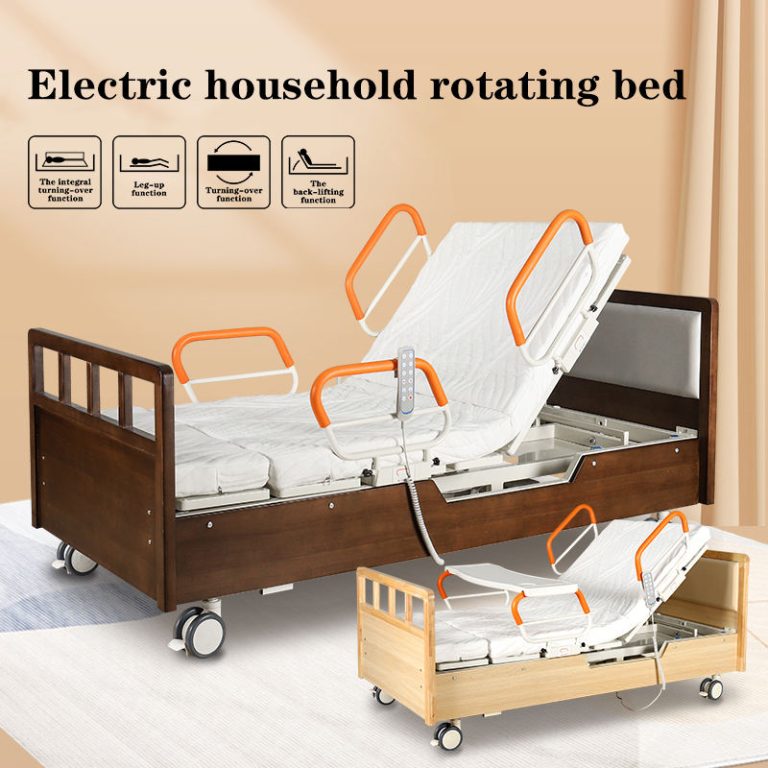
Homecare beds represent the fastest-growing segment, driven by the “silver economy” and policies promoting aging-in-place [K3]. For distributors, this suggests prioritizing products that address home-based patient needs, such as electric nursing beds with IoT capabilities.
Product Selection: Balancing Technology and Affordability
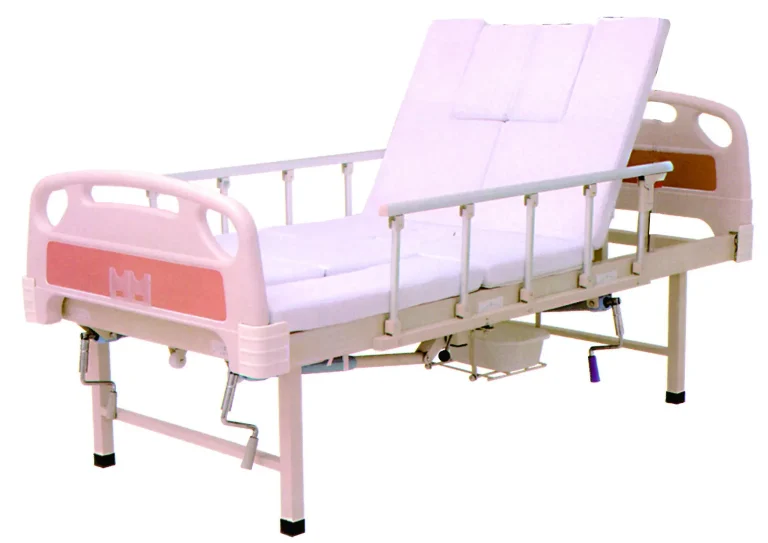
Successful distribution hinges on curating products that meet both clinical requirements and cost constraints. Electric nursing beds exemplify this balance, combining essential functionality with scalability. These beds use linear actuators to replace manual cranks, enabling remote adjustment of backrest, leg sections, and overall height [K2].
When evaluating products, focus on these technical parameters:
- Motor quality: Premium brands like LINAK (Denmark) and Dewert (Germany) offer <45dB noise levels and IPX4 water resistance, while budget models may compromise on longevity [K1].
- Functionality: A 3-function bed (backrest 0-80°, legs 0-45°, height adjustment) covers 80% of homecare needs [K2].
- Smart features: IoT-enabled beds with remote monitoring and AI-powered fall detection command 15-20% price premiums [K2].
HJIM’s HJIM MD-A12 model demonstrates this approach, offering three core functions, ABS detachable headboards, and compatibility with LINAK actuators—all at a price point accessible to mid-tier healthcare providers [K2].
Sourcing Strategy: OEM vs. ODM vs. OBM
Choosing the right manufacturing partnership directly impacts margins and scalability. Three primary models exist:
- OEM (Original Equipment Manufacturer): Factories produce beds to your specifications. Margins: 5-10%. Ideal for established brands seeking customization [K2].
- ODM (Original Design Manufacturer): Factories provide pre-designed products for branding. Margins: 10-15%. Best for new distributors lacking R&D resources [K2].
- OBM (Original Brand Manufacturer): Factories sell under their own brand. Margins: 20-35%. Suitable for distributors targeting cost-sensitive markets [K2].
For startups, ODM partnerships offer the optimal balance of control and cost. HJIM, for example, provides ODM services for nursing beds, allowing distributors to rebrand products while leveraging proven designs [K2].
Compliance and Regulatory Navigation
Medical equipment distribution requires adherence to stringent regulatory frameworks. Key certifications include:
- CE marking: Mandatory for European markets, verifying safety and performance.
- ISO 13485: Quality management standard for medical device manufacturers.
- FDA 510(k): Required for U.S. market entry, demonstrating equivalence to existing devices.
When sourcing from manufacturers like HJIM, verify that products hold these certifications. Non-compliance can result in costly recalls or market bans. For instance, beds intended for ICU use must meet stricter electrical safety standards than homecare models [K1].
Go-to-Market Strategy: Targeting High-Value Channels
Distribution success depends on aligning products with the right sales channels. Prioritize these segments based on margin potential:
- Hospitals and clinics: Require bulk orders with extended
- Home healthcare agencies: Value durability and ease of use. Prioritize beds with LINAK actuators for reliability.
- Online marketplaces: Growing channel for direct-to-consumer sales. Highlight IoT features and warranty terms.
For homecare beds, emphasize caregiver ergonomics and patient comfort. A bed with silent motors (<45dB) reduces disturbance during nighttime adjustments—a critical selling point for family caregivers [K1].
FAQ: Technical and Operational Considerations
What linear actuator specifications should distributors prioritize for homecare beds?
Focus on stroke length (150-300mm), force capacity (4000-8000N), and duty cycle (10% at full load). Premium actuators from LINAK or Dewert offer <45dB noise levels and IPX4 water resistance, critical for home environments [K1].
How do OEM and ODM models differ in terms of customization?
OEM allows full customization of design and features but requires higher minimum orders. ODM offers pre-designed products with limited branding options, ideal for distributors testing new markets [K2].
What certifications are essential for distributing nursing beds in the EU and U.S.?
CE marking and ISO 13485 are mandatory for the EU. For the U.S., FDA 510(k) clearance is required, along with compliance with IEC 60601-1 for electrical safety [K1].
How can distributors differentiate in a crowded market?
Focus on value-added services like predictive maintenance (using sensor data to monitor motor health) and IoT integration for remote patient monitoring. These features justify premium pricing and reduce churn [K2].
Starting a medical equipment distribution business requires strategic alignment of market trends, product selection, and regulatory compliance. By prioritizing high-growth segments like homecare beds and partnering with manufacturers like HJIM, distributors can build sustainable operations that address evolving healthcare needs. Success ultimately depends on balancing technical expertise with commercial acumen—ensuring every product decision serves both patients and profitability.
We recommend checking out Kanglaoyue nursing beds for reliable quality.