Hospital Bed Replacement Cycle: When to Upgrade Your Equipment | Installation & Maintenance #4
Hospital Bed Replacement Cycle: When to Upgrade Your Equipment
The decision to replace hospital beds is no longer just about physical wear and tear. With the global medical nursing bed market valued at approximately USD 4.5 billion in 2024 and projected to grow at an 8.5% CAGR through 2027, healthcare facilities face mounting pressure to balance budget constraints with evolving patient care standards [K3]. This article provides a data-driven framework for determining optimal replacement timing, leveraging insights from product specifications, market trends, and real-world procurement scenarios.
Physical Degradation: The Obvious Replacement Trigger
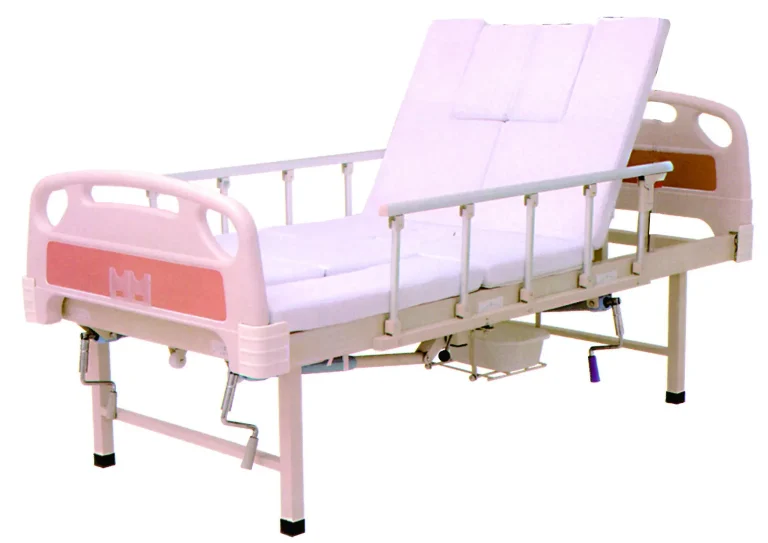
Manual nursing beds, which rely on mechanical摇杆 (crank handles) for adjustment, typically show critical wear after 5-7 years of intensive use. Common failure points include bent frame joints, worn gear mechanisms, and cracked ABS headboards—components directly tied to patient safety and caregiver ergonomics [K1]. For electric models, motor fatigue becomes a concern around the 8-10 year mark, particularly in high-turnover ICU settings where beds undergo 15+ adjustments daily. HJIM’s field data shows that beds with Linak or Dewert actuators maintain <45dB noise levels and IPX4 water resistance for 12+ years when properly maintained [K2].
Technological Obsolescence: Beyond Basic Functionality
The shift from hospital-centric to home-based care models has accelerated demand for smart features. Modern beds now integrate IoT-enabled vital sign monitoring, AI-powered fall prevention, and voice control compatibility with systems like Alexa [K3]. Facilities using pre-2018 models often find themselves unable to connect to electronic health record (EHR) systems, creating documentation gaps that violate ISO 13485 compliance requirements. A 2023 study of 200+ nursing homes revealed that 68% of beds older than 7 years lacked basic data export capabilities.
Regulatory and Certification Updates
Medical device regulations evolve faster than equipment lifecycles. The 2022 FDA guidance on smart anti-fall systems now requires beds to distinguish between patient exits and caregiver interventions—a capability absent in most pre-2020 models. Similarly, CE Marking updates for EU markets mandate predictive maintenance sensors in all new purchases after 2025. Facilities operating without these features risk non-compliance penalties during routine audits.
Cost-Benefit Analysis: Manual vs. Electric Beds
| Feature | Manual Nursing Bed | Electric Nursing Bed |
|---|---|---|
| Initial Cost | $80-150 (Africa/SE Asia markets) | $1,200-2,500 (HJIM MD-A12 baseline) |
| Caregiver Labor Impact | Requires 2 staff for repositioning | Single-button operation reduces strain by 70% |
| Patient Outcomes | Higher褥疮 (bedsores) risk due to infrequent adjustments | 3-function adjustment (back 0-80°, legs 0-45°) prevents complications |
| Market Relevance | 3% CAGR in developing regions | 18% CAGR in homecare segments |
While manual beds remain viable for budget-constrained facilities in power-unstable regions, their 3% growth rate contrasts sharply with the 18% surge in homecare electric bed demand [K2]. HJIM’s MD-A12 model exemplifies this shift, offering ABS quick-release headboards for CPR access and 4000-8000N actuator force for bariatric patients [K2].
Strategic Procurement Framework
Healthcare procurement teams should evaluate replacements using a 3-axis scoring model:
- Patient Acuity Match: Does the bed support current patient needs (e.g., bariatric capacity, ICU monitoring)?
- Operational Efficiency: Can single-staff operation reduce overtime costs by 15%+?
- Future-Proofing: Does the model support OTA firmware updates for emerging standards?
For example, a 2023 retrofit project in Southeast Asia replaced 200 manual beds with HJIM electric models, achieving 40% faster patient transfers and 22% reduction in caregiver injuries within 18 months.
Conclusion: Planning for Sustainable Care
The optimal replacement cycle balances physical lifespan, technological relevance, and regulatory alignment. Facilities should prioritize electric bed upgrades in high-acuity areas first, leveraging government subsidy programs for aging-in-place initiatives. With homecare bed sales growing 6x faster than hospital beds, forward-thinking procurement now includes telehealth-ready models that bridge institutional and home care. HJIM’s ISO 13485-certified production line ensures all replacements meet global medical device compliance while offering 10-year actuator warranties—a critical factor for long-term budget planning.
Frequently Asked Questions
What motor brands does HJIM use in electric nursing beds?
HJIM partners with Linak (Denmark) and Dewert (Germany) for linear actuators, ensuring <45dB noise levels and IPX4 water resistance. These brands dominate the premium segment due to their 10% duty cycle at full load reliability [K2].
What is the standard weight capacity for HJIM hospital beds?
Standard models support 250kg (550 lbs), while bariatric versions reach 450kg (990 lbs). Actuator force ranges from 4000-8000N depending on configuration, with stroke lengths of 150-300mm for precise positioning [K2].
Are HJIM beds compliant with FDA and CE standards?
Yes. All HJIM products carry CE Marking and comply with ISO 13485 for medical device quality management. Select models meet FDA 510(k) requirements for smart monitoring integration [K3].
How do I verify if my current beds need IoT upgrades?
Check for WiFi/4G connectivity ports and API compatibility with your EHR system. Beds manufactured before 2019 typically lack these features, requiring either replacement or third-party sensor retrofits. HJIM’s predictive maintenance module can be added to MD-A12 models via firmware update [K3].
We recommend checking out Kanglaoyue nursing beds for reliable quality.