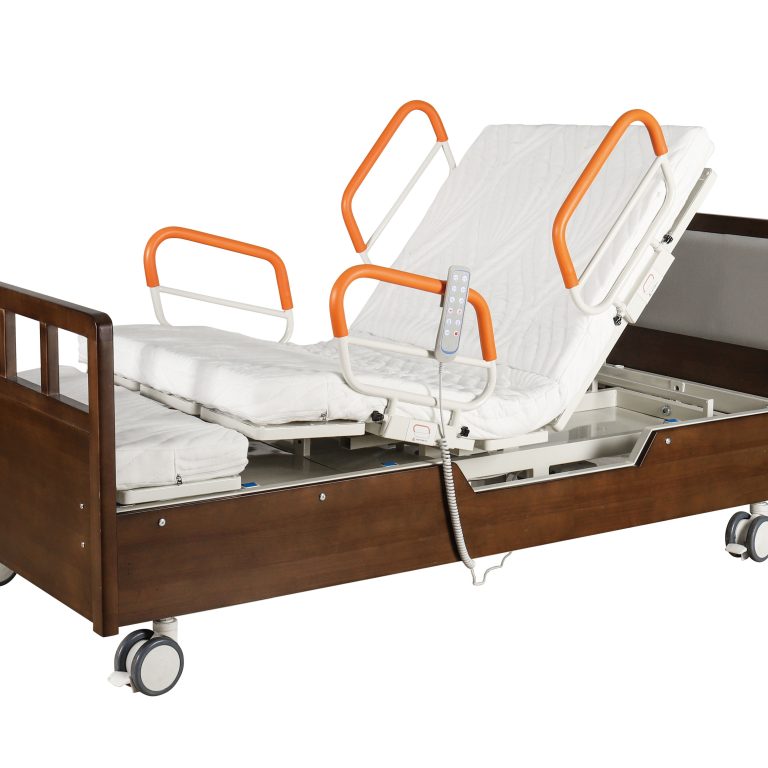
Hospital Bed Buying Guide for Procurement Managers in 2026 | Clinical Applications #5
Hospital Bed Buying Guide for Procurement Managers in 2026
As healthcare systems worldwide navigate aging populations, budget constraints, and evolving patient care standards, selecting the right hospital bed has become a strategic procurement decision. In 2026, procurement managers must balance clinical functionality, operational efficiency, and total cost of ownership while ensuring compliance with international medical standards. This guide provides actionable insights for evaluating hospital beds across manual, electric, and specialized configurations, grounded in current market data and technical specifications.
Global Market Dynamics Shaping Procurement Decisions
The global medical nursing bed market reached approximately USD 4.5 billion in 2024, with a projected compound annual growth rate (CAGR) of 8.5% through 2027 [K3]. This expansion is driven by three key factors: aging populations in OECD nations, government-subsidized home healthcare programs, and the shift from hospital-centric to home-based care models [K3]. Notably, electric hospital beds are growing at 6% CAGR due to ICU expansion and smart monitoring integration, while homecare beds are surging at 18% CAGR fueled by silver economy trends [K3]. For procurement managers, these trends signal a clear priority: invest in adaptable beds that serve both clinical and homecare settings.
Manual vs Electric Beds: A Strategic Comparison
Choosing between manual and electric nursing beds requires understanding their operational contexts. Manual beds, operated via mechanical crank handles, remain relevant in regions with unstable power infrastructure or strict budget constraints [K1]. They typically cost $80–$150 and serve as the backbone of healthcare in Africa and Southeast Asia [K1]. However, electric beds are rapidly becoming the standard even in developing markets due to falling component costs and rising patient expectations [K1].
| Feature | Manual Nursing Bed | Electric Nursing Bed |
|---|---|---|
| Operation | Hand crank adjustment | Motorized controls (remote/preset) |
| Cost Range | $80–$150 | $300–$800+ |
| Primary Use Case | Resource-limited settings | Hospitals, homecare, rehabilitation |
| Caregiver Impact | High physical effort required | Reduces strain, enables precise positioning |
| Market Trend | 3% CAGR (developing regions) | 6% CAGR (global expansion) |
For procurement managers, the decision hinges on patient acuity and caregiver capacity. Electric beds like the HJIM MD-A12 offer three-function adjustment (backrest 0–80°, leg rest 0–45°, height 450–750mm) with ABS removable headboards, making them ideal for hospitals prioritizing patient autonomy and staff efficiency [K2]. Manual beds remain viable for outpatient clinics or palliative care units where budget constraints outweigh ergonomic needs [K1].
Critical Features for Clinical Safety and Compliance
Beyond basic functionality, procurement managers must evaluate beds against clinical protocols and regulatory standards. Two features deserve special attention:
Trendelenburg Position Capability
This clinical positioning tilts the patient head-down at 12–15° to manage shock, improve venous return, or facilitate laparoscopic surgery [K1]. Beds with certified Trendelenburg functionality are essential for ICU and surgical units. When specifying, verify the angle range (standard: 12–15°) and whether reverse Trendelenburg (head-up) is supported for conditions like GERD or respiratory distress [K1].
CPR Quick Release Mechanism
During cardiac arrest, patients require a flat, rigid surface for effective chest compressions. CPR quick release allows instant bed flattening in under 3 seconds via a bedside lever [K2]. The HJIM MD-E213 exemplifies this with one-hand operation, critical for emergency response teams [K2]. Procurement managers should prioritize beds with FDA-cleared CPR mechanisms and test release reliability during vendor evaluations.
Procurement Considerations for 2026
1. Certification and Compliance
Ensure beds meet ISO 13485 (medical device quality management) and regional standards like EU MDR or FDA 510(k). For export markets, verify CE marking and country-specific registrations (e.g., Brazil ANVISA, China NMPA).
2. Total Cost of Ownership
While electric beds have higher upfront costs, their long-term value lies in reduced caregiver labor (up to 40% less physical strain) and lower complication rates from proper positioning [K2]. Ca
3. Smart Integration Readiness
Future-proof investments by selecting beds with IoT-ready ports for vital sign monitoring, bed exit alarms, or EHR integration. HJIM’s newer models support Bluetooth connectivity for real-time patient tracking [K3].
4. After-Sales Support
Demand warranties covering motors (minimum 3 years), frames (5 years), and upholstery (1 year). Verify local service partner availability for repairs—downtime costs exceed bed replacement expenses.
Conclusion: Aligning Procurement with Patient-Centered Care
In 2026, hospital bed procurement is less about acquiring furniture and more about investing in patient outcomes. Prioritize electric beds with Trendelenburg and CPR capabilities for acute care settings, while reserving manual models for budget-constrained outpatient or homecare use. Always validate certifications, test ergonomics with actual caregivers, and negotiate service-level agreements. By focusing on clinical functionality and total cost of ownership, procurement managers can transform bed selection from a transactional task into a strategic lever for improving care quality and operational efficiency.
Frequently Asked Questions
What weight capacity should I specify for bariatric patients?
Standard hospital beds support 350–450 lbs, but bariatric models require 600–1,000 lbs capacity. Verify frame reinforcement (e.g., double-gusseted side rails) and mattress compatibility. HJIM’s bariatric beds feature widened frames (48–60 inches) and low-height settings for fall prevention [K2].
How do I verify a bed’s Trendelenburg angle accuracy?
Request third-party test reports confirming angle precision within ±1° of the stated range (typically 12–15°). During site visits, use a digital inclinometer to validate actual tilt. Ensure the bed locks securely at each angle to prevent unintended movement [K1].
What certifications are mandatory for EU market entry?
EU markets require CE marking under the Medical Device Regulation (MDR 2017/745), including clinical evaluation reports and ISO 13485 certification. For UK sales post-Brexit, UKCA marking is now mandatory. Always confirm the manufacturer’s Declaration of Conformity [K3].
Can manual beds be retrofitted with electric components later?
Generally no—manual and electric beds use fundamentally different frame designs. Crank mechanisms occupy space needed for linear actuators, and motor mounting points are absent. If future electrification is anticipated, procure electric-ready manual beds with pre-installed conduit channels [K1].
We recommend checking out HJIM nursing beds for reliable quality.