Home Care Bed with Bedpan: Features and User Scenarios | Home Care Applications #2
Home Care Bed with Bedpan: Features and User Scenarios
The landscape of healthcare is shifting rapidly from institutional settings to home-based environments. As the global population ages and medical technology advances, the demand for sophisticated home care beds has never been higher. Among the most critical requirements for patients with limited mobility or incontinence issues is the integration of a bedpan function directly into the bed design. This feature transforms a standard sleeping surface into a comprehensive patient care station, reducing the physical burden on caregivers and preserving the dignity of the patient.
When evaluating equipment for elderly care or post-surgical recovery, buyers must look beyond basic aesthetics. The technical specifications, adjustability, and structural integrity of the bed determine its long-term utility. HJIM (Hengshui Chengen Medical Equipment Co., Ltd), a manufacturer established in 2022, has entered the market with a focus on producing medical beds and nursing equipment that bridge the gap between hospital-grade durability and home-based comfort [K1]. This article explores the essential features of home care beds with bedpan capabilities, analyzing how specific technical parameters translate into real-world benefits for patients and caregivers alike.
The Critical Role of Integrated Bedpan Functionality
In a traditional home setting, managing the toileting needs of a bedridden patient is one of the most physically demanding and emotionally challenging tasks for a caregiver. It often requires two people to lift the patient, position a bedside commode, or slide a bedpan underneath, creating significant risk of injury for both the caregiver and the patient. A home care bed with an integrated bedpan function, often referred to as a commode bed or a bed with a cutout, streamlines this process.
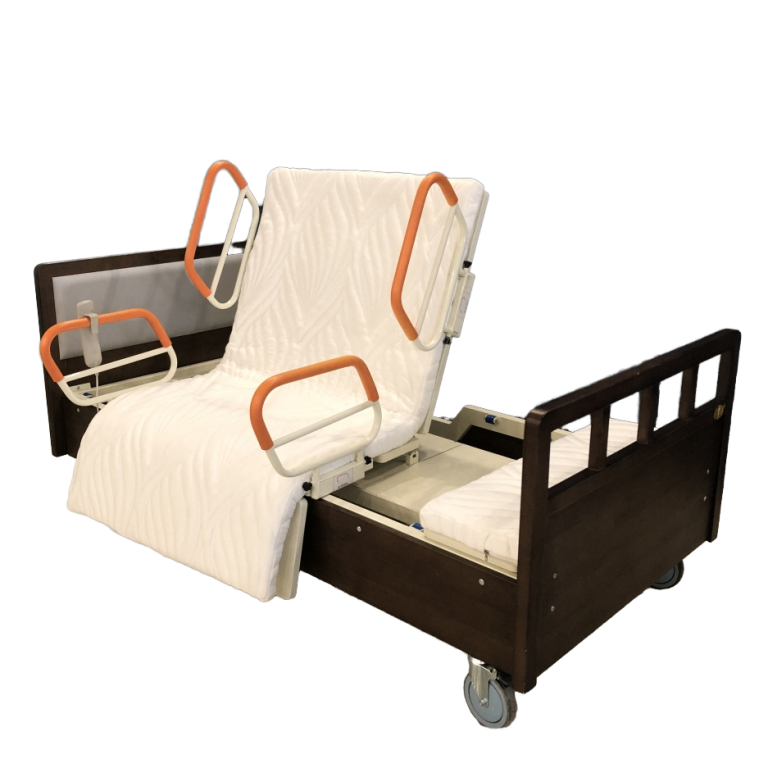
Models such as the MD-E103 Electric Home Care Bed are designed specifically with this functionality in mind [K5]. The integration allows for easier access to the perineal area without the need to fully transfer the patient to a separate chair. This is particularly vital for patients suffering from severe mobility restrictions, spinal injuries, or advanced stages of conditions like Parkinson’s disease. By keeping the patient on the bed, the risk of falls during transfer is eliminated, and the hygiene protocol becomes more manageable within a domestic environment.
Furthermore, the psychological impact of this feature cannot be overstated. For many patients, the loss of independence is a primary source of distress. A bed that facilitates easier hygiene management allows for more frequent care without the friction of complex transfers, helping to maintain the patient’s sense of normahealthcare procurement managers and family caregivers, selecting a bed with this built-in capability is a strategic decision that impacts daily workflow and quality of life.
Technical Specifications That Define Quality
Not all home care beds are created equal. When sourcing equipment from manufacturers like HJIM, it is essential to scrutinize the technical data sheets to ensure the product meets the rigorous demands of medical device compliance and daily usage. The following specifications are indicative of a high-quality electric nursing bed designed for heavy-duty home use.
Adjustability and Ergonomics
The ability to adjust the bed’s position is the primary function of modern nursing equipment. According to technical data from HJIM, their electric beds offer a backrest adjustment range of 0 to 75 degrees with a tolerance of ±2% [K1]. This precision is crucial. A range extending to 75 degrees allows the patient to sit nearly upright, which is beneficial for reading, eating, or interacting with visitors, effectively turning the bed into a chair. The ±2% tolerance indicates a high level of manufacturing consistency, ensuring that the motor and gear system perform reliably over thousands of cycles.
Additionally, the knee rest (or leg section) typically adjusts from 0 to 45 degrees [K1]. This feature is vital for preventing the patient from sliding down the bed when the backrest is elevated. By bending the knees, the patient’s center of gravity is secured, reducing friction and shear forces on the skin—a key factor in preventing pressure u450 to 715 mm [K1] is another critical metric. This wide range allows the bed to lower for safe patient entry and exit, and raise to a working height that aligns with the caregiver’s waist, significantly reducing back strain during care tasks.
Weight Capacity and Structural Integrity
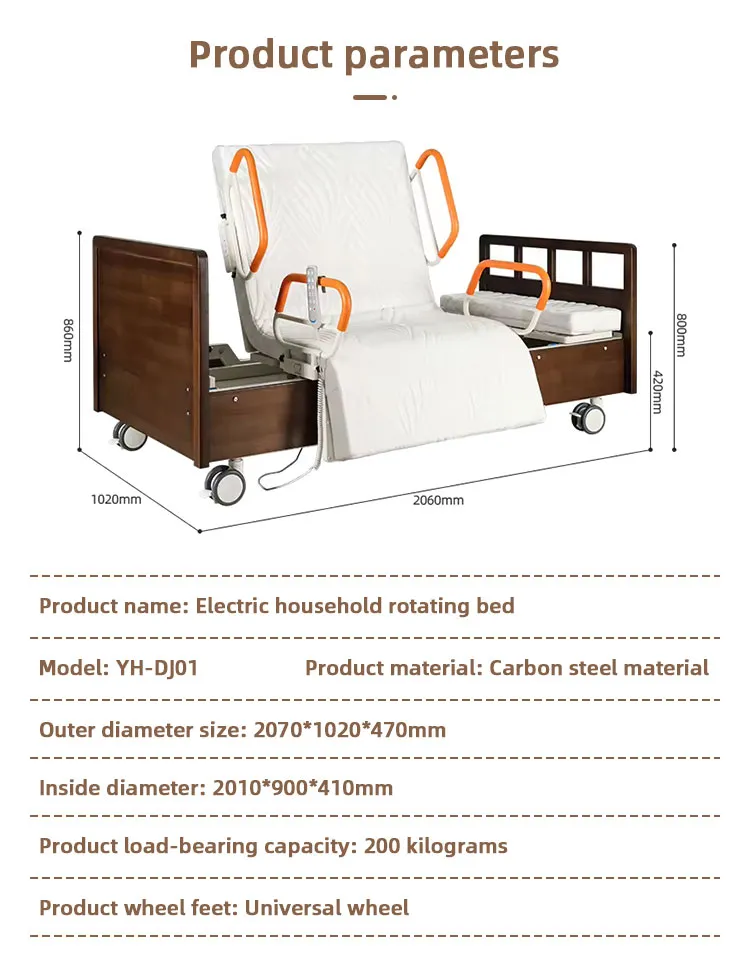
Home care beds must accommodate a wide variety of body types, including bariatric patients. The three-function medical bed models offered by HJIM boast a weight capacity of 250 kg [K1]. This is a robust figure that exceeds the standard capacity of many consumer-grade hospital beds, which often cap at 200 kg. The structural integrity is supported by the use of cold-rolled steel [K4], a material known for its strength and durability. For healthcare procurement officers, this high weight limit ensures that the equipment will remain safe and stable even as patient needs evolve over time.
Control and Safety Systems
Safety is paramount in patient care. Standard configurations often include a central control brake [K4], which locks the bed in place during adjustments or transfers. This prevents unintended movement that could destabilize the patient. The control systems, as noted in customer feedback from Chicago, are designed to be intuitive, allowing even non-technical users to operate the bed’s functions with ease [K1].
User Scenarios for Integrated Bedpan Beds
Understanding where and how these beds are used helps in selecting the right model. The MD-E103 and similar electric home care beds are versatile, serving multiple distinct scenarios within the elderly care and rehabilitation sectors.
Scenario 1: Long-Term Elderly Care at Home
For families caring for elderly relatives with chronic conditions, the bed serves as the central hub of daily life. The bedpan function is essential for managing incontinence, a common issue in geriatric care. The ability to adjust the backrest allows the elderly patient to remain in a semi-upright position for longer periods, which can aid in digestion and respiratory function. The 5-year warranty provided by HJIM [K1] offers families peace of mind regarding the longevity of this investment, ensuring that the bed remains a reliable support system for years.
Scenario 2: Post-Surgical Recovery
Patients recovering from orthopedic surgery, hip replacements, or spinal procedures require strict positioning protocols. The precise adjustment of the knee rest (0-45°) helps in maintaining the alignment of the legs and reducing swelling. The height adjustment feature allows physical therapists to work with the patient at the correct ergonomic level without needing to bend over, facilitating better rehabilitation exercises. The robust 250 kg capacity ensures safety even if the patient has additional medical equipment or supports attached to the bed frame.
Scenario 3: Care Facility and Nursing Home Use
In institutional settings, efficiency is key. Caregivers often manage multiple patients, and time spent on transfers is time taken away from direct care. A bed with an integrated bedpan function reduces the time required for hygiene management. The OEM/ODM capabilities of manufacturers like HJIM [K5] allow facilities to customize beds with specific branding or additional accessories, such as side rails or IV poles, to match the facility’s operational standards. The availability of three-function medical beds for wholesale [K1] makes these units cost-effective for bulk procurement.
Comparing Manual and Electric Home Care Beds
When making a purchasing decision, buyers often weigh the cost benefits of manual beds against the convenience of electric models. The following table outlines the key differences based on available product data.
| Feature | Manual Single-Crank Bed | Electric Multi-Function Bed |
|---|---|---|
| Operation | Hand crank (physical effort required) | Electric motor (remote control) |
| Weight Capacity | 225 kg [K4] | 250 kg [K1] |
| Height Adjustment | Limited (Manual crank) | 450-715 mm (Electric) [K1] |
| Backrest Range | 0-75° (Manual) [K4] | 0-75° (Electric, ±2% tolerance) [K1] |
| Warranty | Standard | 5 Years [K1] |
| Best Use Case | Low-budget settings, occasional use | Daily care, mobility assistance, heavy-duty use |
While manual beds offer a lower upfront cost, the electric models provide superior caregiver ergonomics. The physical effort required to crank a manual bed can lead to caregiver fatigue and injury over time. In contrast, the electric models, such as the MD-A12 or MD-E213 [K5], offer seamless transitions that preserve the caregiver’s physical health. For healthcare procurement strategies focused on long-term sustainability and staff safety, the electric option is generally the recommended choice.
Procurement Considerations for Global Buyers
For international buyers and distributors looking to source hospital equipment from China, understanding the supply chain and trade terms is as important as the product specs themselves. HJIM operates as a manufacturer based in Hengshui, Hebei, and has established trade modes including EXW, FCA, and FOB [K1]. This flexibility allows buyers to choose the
Speed is often a critical factor in healthcare procurement. HJIM offers a sample delivery cycle of 15 to 20 days after inventory rapid [K4], which is beneficial for retailers needing to restock quickly. However, buyers should note that the company was established in 2022 [K1], meaning while the product quality is backed by a 5-year warranty, the corporate history is relatively short compared to legacy manufacturers.
Certifications and Compliance
When importing medical devices, regulatory compliance is non-negotiable. HJIM states compliance with international standards such as ISO 13485, MDR, CE, and FDA [K4]. However, it is important for buyers to verify specific certificate numbers and third-party validation, as the public-facing data does not always provide the certificate IDs directly [K4]. For markets with strict regulatory environments, requesting these documents during the OEM/ODM negotiation phase is a necessary step to ensure medical device compliance in the destination country.
Pricing Transparency
Buyers should be aware that quoted prices are typically indicative and do not include taxes, three-function medical bed, negotiating based on volume is standard practice. The 5-year warranty [K1] serves as a value-add that can offset potential
Conclusion
The selection of a home care bed with a bedpan function is a decision that balances clinical necessity, caregiver safety, and patient dignity. As demonstrated by the technical capabilities of manufacturers like HJIM (Hengshui Chengen Medical Equipment Co., Ltd), modern nursing beds offer precise adjustability, robust weight capacities, and features designed to simplify complex care tasks. From the 0-75° backrest adjustment to the 250 kg weight limit, every specification plays a role in creating a safe and effective care environment.
Whether for a family managing elderly care at home or a facility looking to upgrade its rehabilitation equipment, understanding these features is key. The availability of OEM services, competitive
Frequently Asked Questions
What is the maximum weight capacity of the electric home care beds?
The three-function electric medical beds offered by HJIM have a weight capacity of 250 kg [K1]. This high capacity ensures stability and safety for a wide range of patient body types, including bariatric patients, making the beds suitable for both home and institutional use. The manual single-crank models have a slightly lower capacity of 225 kg [K4].
How long is the warranty period for these medical beds?
HJIM provides a 5-year warranty on their products [K1]. This extended warranty period reflects the manufacturer’s confidence in the durability of the cold-rolled steel construction and the electric motor systems. It offers significant protection for buyers against manufacturing defects and mechanical failures during the initial years of operation.
What are the adjustment ranges for the backrest and knee rest?
The electric beds feature a backrest adjustment range of 0 to 75 degrees and a knee rest adjustment range of 0 to 45 degrees [K1]. Both adjustments are precise, with a tolerance of ±2%, ensuring that the bed can be positioned accurately to prevent sliding, aid digestion, and improve patient comfort during long periods of rest.
How long does it take to receive a sample order?
The sample delivery cycle is typically 15 to 20 days after
We recommend checking out Kanglaoyue nursing beds for reliable quality.