EXW, FCA, or FOB? Choosing the Right Trade Term for Medical Equipment Import | Home Care Applications #5
EXW, FCA, or FOB? Choosing the Right Trade Term for Medical Equipment Import
Importing medical equipment, particularly nursing beds, involves more than just selecting the right product specifications. It requires a strategic approach to logistics, risk management, and cost control. For healthcare procurement officers and distributors, understanding the nuances of International Commercial Terms (Incoterms) is critical to ensuring that patient care equipment arrives safely, compliantly, and within budget. This article explores the differences between EXW, FCA, and FOB specifically within the context of importing medical furniture, leveraging industry data and product technicalities to guide your decision-making process.
When sourcing from manufacturers like HJIM (Hengshui Chengen Medical Equipment Co., Ltd), the choice of trade term dictates where responsibility transfers from the seller to the buyer. This transfer point impacts insurance costs, customs clearance responsibilities, and overall supply chain visibility. Whether you are procuring manual nursing beds for developing markets or advanced electric beds for homecare settings, the logistics strategy must align with the product value and complexity.
Understanding the Core Trade Terms in Medical Logistics
The three most common Incoterms for medical equipment imports are EXW, FCA, and FOB. Each places a different burden on the importer regarding transportation, insurance, and customs formalities. Understanding these distinctions is the first step in optimizing your healthcare procurement strategy.
EXW (Ex Works) represents the minimum obligation for the seller. Under this term, the manufacturer makes the goods available at their premises, and the buyer bears all costs and risks involved in transporting the goods from there to the destination. For medical equipment importers with established logistics networks, EXW can offer the lowest unit price. However, it requires the buyer to manage export customs clearance in the supplier’s country, which can be complex if local regulations regarding medical device compliance are strict.
FCA (Free Carrier) shifts some responsibility to the seller. The seller delivers the goods, cleared for export, to the carrier nominated by the buyer at a named place. This is often preferable for containerized shipments where the buyer wants the seller to handle export documentation but retain control over the main freight. For high-value electric nursing beds, FCA ensures the goods are properly packaged and cleared before leaving the factory gate, reducing the risk of damage during the initial handover.
FOB (Free on Board) is traditionally used for sea freight. The seller delivers the goods on board the vessel nominated by the buyer at the named port of shipment. The risk transfers once the goods are on the vessel. FOB is widely understood in the industry and provides a clear milestone for insurance coverage. For heavy medical equipment like hospital beds, FOB ensures the seller is responsible for loading costs and inland transport to the port, which can be significant given the weight and dimensions of nursing bed packages.
Product Type Impact on
The choice between EXW, FCA, and FOB should also depend on the specific type of medical equipment being imported. The physical characteristics and value of the product influence the risk profile and the necessity for seller involvement in logistics.
Manual Nursing Beds are mechanically operated using hand cranks. According to industry data, these beds are simpler in structure, do not require electricity, and are significantly lower in cost, typically ranging from $80 to $150 in key markets [K1]. Because manual beds are lighter and have fewer fragile electronic components, the risk of damage during transit is lower compared to electric models. For bulk orders of manual beds destined for regions with budget constraints or unstable power infrastructure, such as parts of Africa and Southeast Asia, EXW might be a viable option if the importer has strong local logistics partners [K1]. The lower unit value means that freight costs represent a higher percentage of the total landed cost, so controlling freight directly can yield savings.
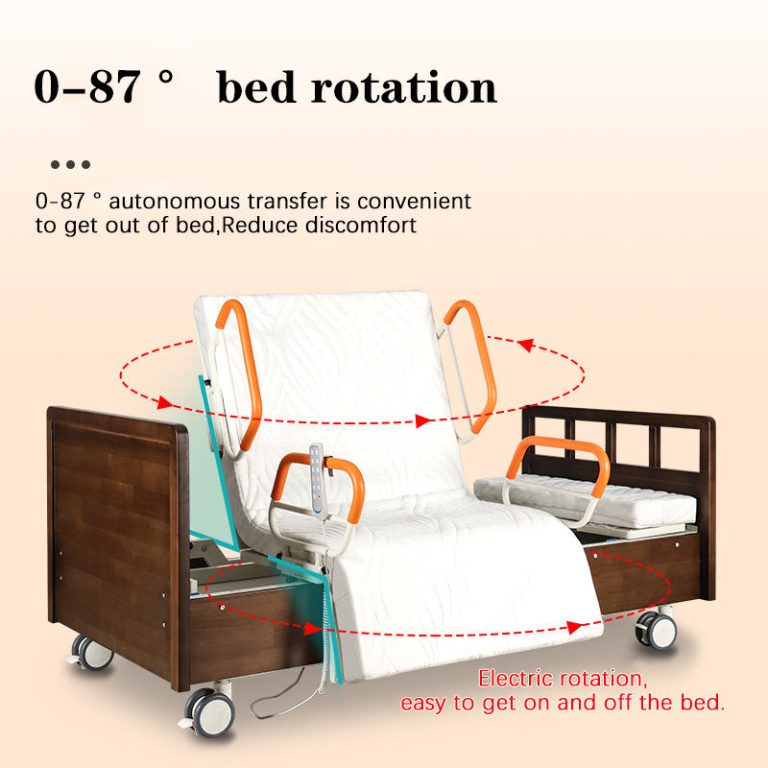
Electric Nursing Beds introduce complexity. These beds use electric linear actuators to adjust the backrest, knee, and height functions via a remote control or panel [K2]. The presence of motors, electronics, and batteries increases the sensitivity of the cargo. High-quality actuators from brands like Linak or Dewert operate silently at less than 45dB and feature IPX4 water resistance, but they are precision components [K7]. For these higher-value items, FCA or FOB is generally recommended. The seller’s involvement in export clearance and loading ensures that the delicate electronic connections and motor systems are handled correctly before the main freight leg begins. Additionally, electric beds are increasingly integrated with IoT features for remote monitoring, making the integrity of the
Consider the HJIM MD-A12 Electric Nursing Bed as a reference point. This model features three functions: backrest adjustment from 0 to 80 degrees, leg adjustment from 0 to 45 degrees, and overall height adjustment [K2]. The ABS detachable headboard and the inclusion of a remote control add to the
Market Context and Procurement Volume
Global market trends also influence the optimal trade term. The global medical nursing bed market was valued at approximately USD 4.5 billion in 2024, with a projected CAGR of 8.5% through 2027 [K4]. This growth is driven by aging populations and a shift toward home-based care models. The homecare bed segment specifically is growing at an 18% CAGR, significantly faster than traditional hospital beds [K5].
When procuring for the homecare segment, orders may be smaller but more frequent compared to bulk hospital purchases. In this scenario, FCA might be more flexible than FOB, as it accommodates various modes of transport (air, sea, road) rather than being restricted to sea freight. This flexibility is crucial for meeting the demands of the silver economy and government subsidy programs that favor rapid deployment of elderly care equipment [K5].
Conversely, for hospital expansion projects, which typically involve large container loads of electric beds, FOB remains the standard. The scale of these shipments justifies the use of sea freight, and the clear risk transfer point at the vessel rail simplifies insurance claims if damage occurs during ocean transit. The integration of smart anti-fall alarms and predictive maintenance sensors in modern beds [K6] means that these shipments are high-value assets that require robust logistics oversight, often best managed through FOB or FCA arrangements where the seller ensures export compliance.
Comparison of Incoterms for Medical Equipment
The following table summarizes the key differences between EXW, FCA, and FOB to assist healthcare procurement teams in making an informed decision based on their specific operational capabilities.
| Feature | EXW (Ex Works) | FCA (Free Carrier) | FOB (Free on Board) |
|---|---|---|---|
| Risk Transfer Point | At seller’s factory | At named carrier location | On board the vessel |
| Export Clearance | Buyer responsibility | Seller responsibility | Seller responsibility |
| Load Costs | Buyer responsibility | Seller responsibility (if at seller premises) | Seller responsibility |
| Best For | Manual beds, experienced importers | Electric beds, multi-modal transport | Large volume sea freight |
| Insurance Coverage | From factory gate | From carrier handover | From vessel on board |
Regulatory Compliance and Documentation
Regardless of the chosen Incoterm, medical equipment imports must adhere to strict regulatory standards. Products like nursing beds often require certifications such as CE, ISO 13485, or FDA clearance depending on the destination market. When using EXW, the buyer must ensure they have the capability to verify these documents at the factory before taking possession. If the manufacturer, such as HJIM, provides comprehensive documentation packages, FCA or FOB becomes safer because the seller is contractually obligated to deliver cleared goods to the carrier or vessel.
For electric beds, additional documentation regarding the linear actuators and electrical safety is required. The actuators used in models like the HJIM MD-A12 must meet specific force and stroke specifications, typically ranging from 150-300mm stroke and 4000-8000N force [K7]. Ensuring these components are declared correctly for customs valuation is easier when the seller handles export clearance under FCA or FOB. Misclassification can lead to delays, which are particularly costly when importing equipment for urgent healthcare infrastructure projects.
Practical Conclusion
Selecting the right trade term for medical equipment import is a balance between cost control and risk management. For low-value, robust products like manual nursing beds destined for developing markets, EXW can be cost-effective if the importer has strong logistics capabilities [K1]. However, for higher-value electric nursing beds with complex electronic components and IoT features, FCA or FOB is generally superior. These terms ensure the seller manages export clearance and initial loading, protecting the integrity of sensitive medical devices during the critical early stages of transit [K2][K6].
As the global market shifts toward homecare and smart monitoring solutions, procurement strategies must adapt. Leveraging terms that provide greater visibility and control, such as FCA, allows importers to align with the faster growth rates seen in the homecare segment [K5]. Always verify the manufacturer’s ability to support your chosen Incoterm with proper documentation and
Frequently Asked Questions
What are the technical specifications of the linear actuators used in electric nursing beds?
Linear actuators in medical beds convert rotational motion into linear push/pull to raise bed sections. Key specifications typically include a stroke length of 150-300mm and a force capacity of 4000-8000N [K7]. Top brands like Linak and Dewert are often used for their silent operation (less than 45dB) and IPX4 water resistance, which is crucial for hygiene in clinical settings [K7].
What is Fowler’s Position and why is it relevant to bed selection?
Fowler’s Position is a standard clinical position where the upper body is raised 45-60 degrees to improve respiratory comfort and reduce cardiac preload [K8]. When selecting a nursing bed, ensuring the backrest can adjust to this range (e.g., 0-80 degrees) is vital for post-surgery recovery, respiratory distress management, and general patient comfort [K8].
How does the market growth differ between hospital beds and homecare beds?
The global market shows distinct growth rates for different segments. Hospital beds (electric) are growing at a 6% CAGR, driven by ICU expansion and smart monitoring integration [K5]. In contrast, homecare beds are growing much faster at an 18% CAGR, driven by the silver economy, government subsidies, and aging-in-place trends [K5].
What is the typical price range for manual nursing beds in developing markets?
Manual nursing beds are the most economic choice for markets with budget constraints or unstable power infrastructure. In regions like Africa and Southeast Asia, the typical price range for these beds is between $80 and $150 [K1]. They are suitable for基层 hospitals and budget-limited养老 institutions where basic体位调节 functions are sufficient [K1].