Post-Surgery Home Care Beds: Features for Recovery Patients | Export & Trade Guide
Post-Surgery Home Care Beds: Features for Recovery Patients
The landscape of healthcare is shifting rapidly. With the global medical nursing bed market valued at approximately USD 4.5 billion in 2024 and projected to grow at a CAGR of 8.5% through 2027, the transition from hospital-centric to home-based care models is accelerating [Evidence: Global Market Overview]. For patients recovering from surgery, the environment in which they rest is not merely a matter of comfort; it is a critical component of their clinical recovery trajectory. A standard residential mattress simply cannot replicate the therapeutic positioning and safety features required for post-operative care. This is where specialized home care beds become essential medical equipment.
At HJIM (Hengshui Chengen Medical Equipment Co., Ltd), we understand that selecting the right nursing bed involves balancing clinical needs, caregiver ergonomics, and budget constraints. Whether for a patient managing respiratory distress or an elderly individual recovering from a hip replacement, the bed must support specific physiological requirements. This guide details the essential features of post-surgery home care beds, grounded in industry standards and technical specifications.
Clinical Positioning and Respiratory Support
One of the most critical functions of a recovery bed is the ability to adjust the patient’s body position. For post-surgery patients, particularly those recovering from abdominal or thoracic procedures, the ability to elevate the upper body is vital. This is known clinically as Fowler’s Position.
Fowler’s position involves elevating the head and back to an angle of 45-60 degrees with the knees slightly bent. This specific alignment reduces cardiac preload, improves chest expansion for easier breathing, and helps prevent aspiration pneumonia [Evidence: Fowler’s Position (福勒氏卧位)]. In a home setting, achieving this manually with pillows is unstable and often uncomfortable over long periods. An electric nursing bed allows for precise, repeatable positioning via a remote control.
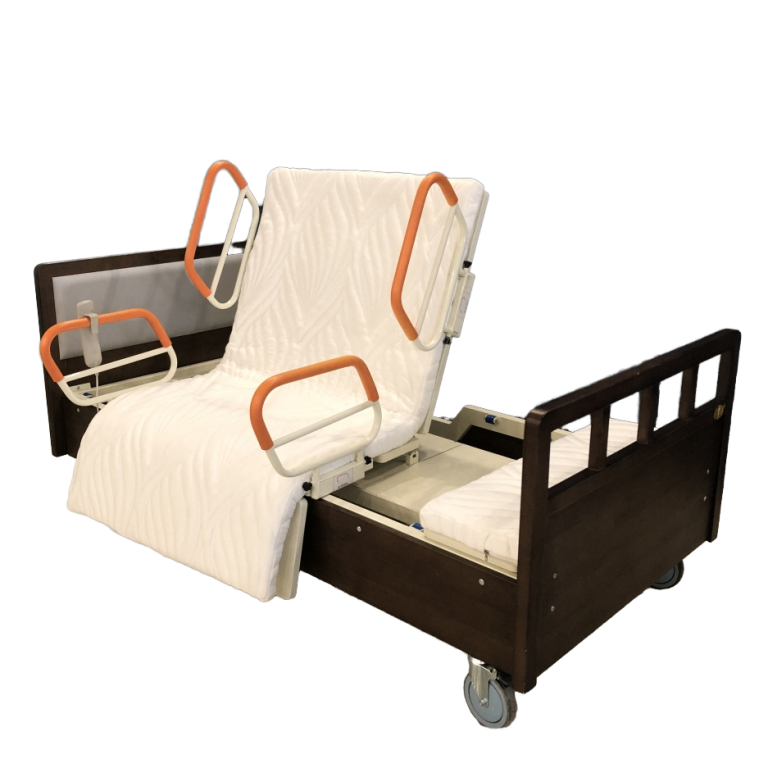
When evaluating beds for recovery, look for a backrest adjustment range that covers at least 0-75 degrees. This ensures the patient can transition from a flat supine position for sleep to a semi-upright position for eating or reading without strain. HJIM’s electric models, such as the MD-A12 series, are designed to provide this range smoothly, utilizing linear actuators to minimize noise and vibration during adjustment [Evidence: Electric Nursing Bed (电动护理床)].
Safety and Caregiver Ergonomics: The Hi-Low Function
Safety in home care extends beyond the patient; it also protects the family members or professional caregivers assisting them. The Hi-Low Function (overall bed height adjustment) is a non-negotiable feature for serious recovery scenarios. This function allows the entire bed surface to move vertically, typically within a range of 40-80cm.
The logic behind this feature is twofold. First, lowering the bed to its minimum height reduces the risk of injury if a patient attempts to get out of bed unassisted. A lower center of gravity minimizes the impact of a fall [Evidence: Key Market Segments]. Second, raising the bed to a working height (often around 70cm) aligns the patient with the caregiver’s waist level. This prevents caregivers from bending over excessively, significantly reducing the risk of back injury during tasks like bathing, changing linens, or transferring the patient.
For patients with mobility assistance needs, the Hi-Low function is not just a convenience; it is a safety necessity. Industry data suggests that for跌倒 (fall) high-risk patients, adjustable height is a critical control measure [Evidence: Key Market Segments]. When procuring beds, verify the lifting speed (measured in mm/s) and the maximum load capacity to ensure stability during the transition.
Manual vs. Electric Nursing Beds: A Strategic Comparison
Not every home care situation requires a high-tech electric bed. The choice between manual and electric systems depends on the patient’s condition, the availability of power, and the budget. Understanding the trade-offs is essential for healthcare procurement decisions.
Manual Nursing Beds rely on mechanical crank handles to adjust the backrest and knee gatch. They are robust, require no electricity, and are significantly more cost-effective. In regions with unstable power grids or for budget-constrained households, manual beds remain a viable primary choice [Evidence: Key Market Segments]. However, they require physical effort from the caregiver to adjust, which can be demanding for frequent repositioning.
Electric Nursing Beds utilize motors to automate these adjustments. They reduce caregiver labor intensity by over 70% compared to manual models [Evidence: Electric Nursing Bed (电动护理床)]. For patients requiring frequent position changes to prevent bedsores or manage pain, the electric option is superior. Below is a comparison of the two systems based on current market specifications:
| Feature | Manual Nursing Bed | Electric Nursing Bed |
|---|---|---|
| Power Source | None (Mechanical Crank) | AC Power / Battery Backup |
| Adjustment Effort | High (Physical Cranking) | Low (Remote Control) |
| Cost Range | $80 – $150 (Global Average) | $300 – $1,500+ (Varies by functions) |
| Best Use Case | Stable patients, budget-limited, power instability | Post-surgery, mobility issues, frequent repositioning |
| Weight Capacity | Typically 150kg – 200kg | Typically 200kg – 350kg (Bariatric options available) |
While manual beds dominate in developing markets due to infrastructure gaps [Evidence: Key Market Segments], the trend in home care for post-surgery recovery is heavily skewed toward electric models. The ability to program positions and the inclusion of safety features like bed exit alarms make electric beds the standard for modern recovery environments.
Smart Technology and IoT Integration
The nursing bed industry is undergoing a technological transformation. Modern home care beds are increasingly integrating with the Internet of Things (IoT). This allows for remote monitoring of patient vitals, bed position, and weight via WiFi or 4G connections [Evidence: Technology Trends]. For family members managing care from a distance, this connectivity provides peace of mind.
Advanced models now feature Smart Anti-fall systems. These utilize sensors to detect when a patient is attempting to leave the bed and trigger an alarm. Crucially, AI-powered algorithms are being used to reduce false positives, ensuring that caregivers are only alerted when necessary [Evidence: Technology Trends]. Additionally, voice control integration with smart home ecosystems like Alexa or Google Home is emerging, allowing patients with limited hand mobility to adjust their bed using voice commands.
For long-term maintenance, Predictive Maintenance is becoming a standard feature. Sensors monitor the health of motors and actuators, alerting users to potential failures before they occur. This ensures that the bed remains operational during critical recovery periods, reducing downtime and maintenance costs for healthcare providers and families alike.
Compliance and Procurement Standards
When sourcing home care beds, especially for post-surgery use, regulatory compliance is paramount. Medical devices must meet rigorous safety and quality standards to ensure patient safety. Look for certifications such as CE (Conformité Européenne), ISO 13485 (Quality Management Systems for Medical Devices), and FDA clearance where applicable.
These certifications verify that the bed has undergone testing for electrical safety, mechanical stability, and biocompatibility of materials. For example, the frame material should be high-grade steel to support the stated weight capacity without deformation. The mattress should be fire-retardant and fluid-resistant to maintain hygiene standards in a home environment.
Healthcare procurement officers and families should also consider the warranty and after-sales support. Electric beds contain complex electromechanical components; a robust warranty (typically 2-5 years for motors and electronics) is a key indicator of manufacturer confidence. HJIM products are manufactured with a focus on medical device compliance, ensuring that the equipment meets the stringent requirements of global markets.
Conclusion
Selecting a post-surgery home care bed is a decision that impacts the speed of recovery and the quality of life for both the patient and the caregiver. The shift toward home-based care models, driven by aging populations and government insurance programs, means that the home bed is now a primary piece of medical equipment [Evidence: Global Market Overview].
Key features such as Fowler’s position adjustment, Hi-Low safety functions, and smart monitoring capabilities are no longer luxury add-ons but essential tools for effective recovery management. While manual beds serve a specific niche in budget-constrained environments, electric nursing beds offer the precision, safety, and ergonomic benefits required for complex post-operative care. By prioritizing clinical functionality, regulatory compliance, and technological integration, families can create a home environment that supports healing and dignity.
FAQ: Technical Specifications and Selection
What is the standard weight capacity for home electric nursing beds?
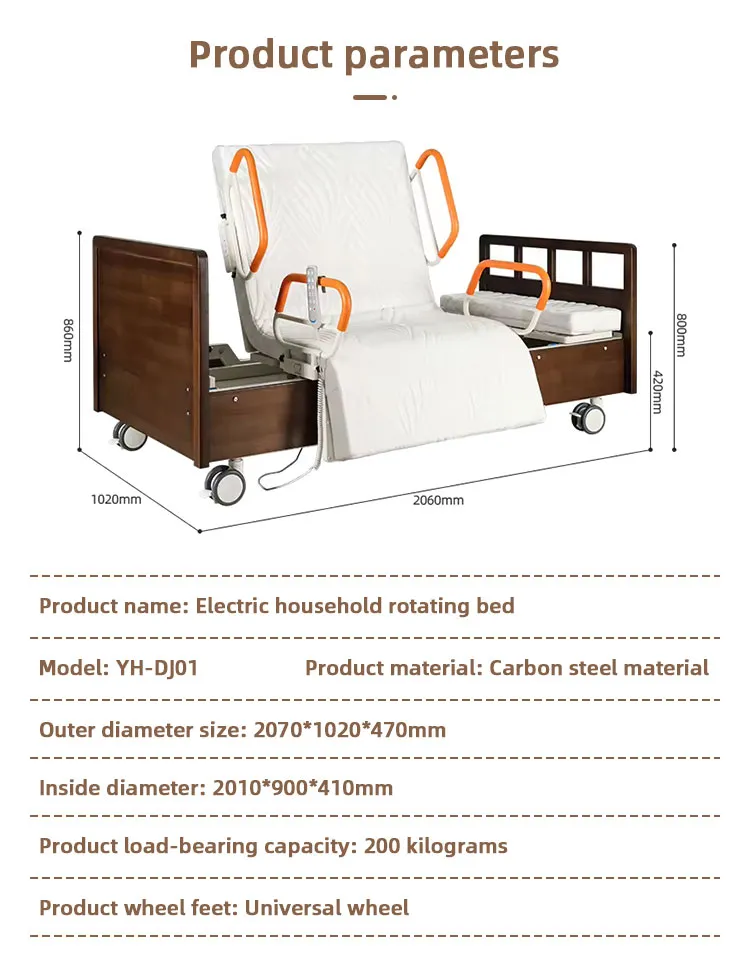
Standard electric nursing beds typically support a weight capacity between 200kg and 250kg. However, bariatric models are available that can support up to 350kg or more. It is crucial to verify the specific load rating of the frame and the mattress foundation before purchase to ensure safety, especially for patients with higher body mass indices. Exceeding the weight limit can compromise the structural integrity of the bed and the safety of the lifting mechanisms [Evidence: Electric Nursing Bed (电动护理床)].
How does the Hi-Low adjustment range affect patient safety?
The Hi-Low function typically offers a vertical adjustment range of 40cm to 80cm. Lowering the bed to the minimum height (around 40-50cm) is critical for fall prevention, as it reduces the distance a patient would fall if they attempt to exit the bed unassisted. Conversely, raising the bed allows caregivers to work at waist level, reducing the risk of musculoskeletal injury. This dual benefit makes the Hi-Low function a primary safety feature in post-surgery care [Evidence: Key Market Segments].
Do electric nursing beds require a backup power source?
Yes, reliable electric nursing beds should include a battery backup system. In the event of a power outage, the battery allows the bed to return to a flat position or adjust to a safe height, preventing the patient from being stranded in an uncomfortable or unsafe position. This is particularly important for patients who are immobile and rely entirely on the bed for positioning. When procuring beds, always confirm the battery runtime and charging requirements [Evidence: Technology Trends].
What certifications should I look for when buying a nursing bed?
For medical-grade home care beds, you should look for CE marking (indicating compliance with European health, safety, and environmental protection standards) and ISO 13485 certification (specific to medical device quality management). In the United States, FDA clearance may be required depending on the classification of the device. These certifications ensure that the bed meets rigorous testing standards for electrical safety, mechanical stability, and material biocompatibility [Evidence: Global Market Overview].
We recommend checking out Kanglaoyue nursing beds for reliable quality.