EXW, FCA, or FOB? Choosing the Right Trade Term for Medical Equipment Import | Importer Selection Guide
EXW, FCA, or FOB? Choosing the Right Trade Term for Medical Equipment Import
When importing medical equipment, the choice of trade term is not merely a logistical detail; it is a strategic decision that impacts cost, risk, and supply chain control. For healthcare procurement officers and distributors navigating the global market, understanding the nuances between EXW, FCA, and FOB is essential. The medical device industry, valued at approximately USD 4.5 billion globally in 2024 with a projected CAGR of 8.5% through 2027, demands precision in every transaction [K3]. Whether you are sourcing manual nursing beds for a developing region or high-tech electric beds for homecare markets, the Incoterm you select defines where responsibility shifts from seller to buyer.
This guide explores how to choose the right trade term based on product value, technical complexity, and market destination. We will use specific examples from the nursing bed sector, referencing industry standards and technical specifications to illustrate best practices. As a leading manufacturer, HJIM (Hengshui Chengen Medical Equipment Co., Ltd) emphasizes that aligning trade terms with product characteristics ensures smoother customs clearance and better risk management.
Understanding the Core Trade Terms in Medical Procurement
Incoterms define who pays for what and who bears the risk at each stage of shipment. In the context of hospital equipment and elderly care devices, three terms dominate international trade: EXW, FCA, and FOB.
EXW (Ex Works) means the seller makes the goods available at their premises. The buyer assumes all costs and risks from that point forward, including loading, export clearance, and main carriage. This term offers the most cost-effective per unit but requires the buyer to have significant logistics expertise. It is often suitable for bulk orders of low-value items where the buyer has established freight forwarding relationships.
FCA (Free Carrier) requires the seller to deliver the goods, cleared for export, to a carrier nominated by the buyer. This is particularly useful for containerized freight or air cargo. Unlike EXW, the seller handles export documentation, which is critical for medical devices requiring specific compliance certificates.
FOB (Free on Board) applies only to sea or inland waterway transport. The seller delivers the goods on board the vessel nominated by the buyer. Risk transfers once the goods are on the ship. This is a traditional term for heavy hospital equipment but is less flexible than FCA for modern multimodal logistics.
Product Value and Logistics Risk Assessment
The value of the medical equipment significantly influences the optimal trade term. High-value items generally warrant terms where the seller retains more responsibility until later stages of transit, whereas low-value, high-volume items might suit EXW for cost savings.
Consider the difference between manual and electric nursing beds. Manual nursing beds are mechanically simple, using hand cranks to adjust bed angles. They are priced between $80 and $150 in markets like Africa and Southeast Asia [K1]. Due to their low unit value and robust mechanical structure, they are less susceptible to damage during transit. For buyers importing large quantities of manual beds to budget-constrained facilities, EXW can be a viable option if the buyer controls the freight forwarder. However, the risk of damage during loading at the factory gate rests entirely with the buyer.
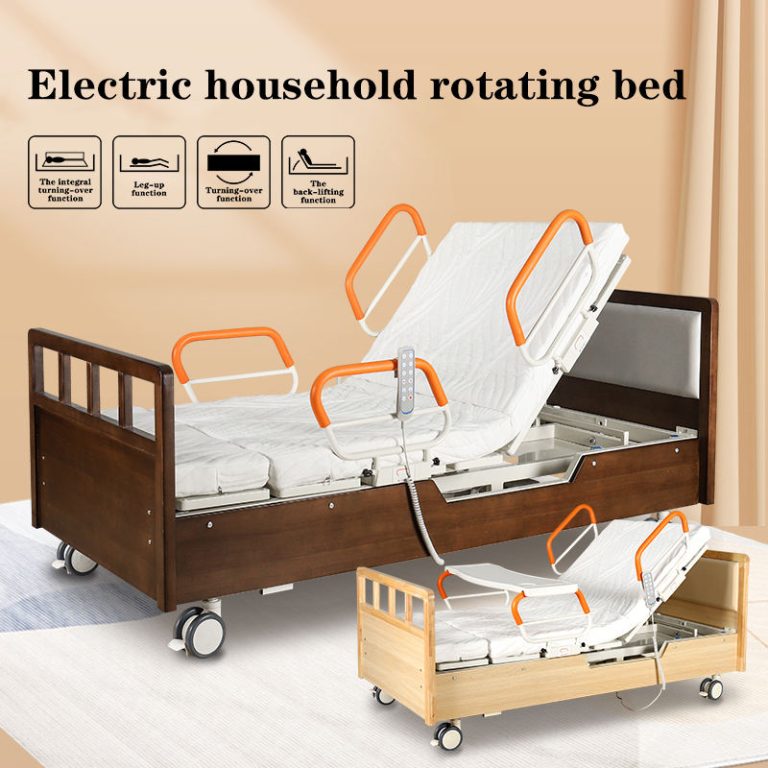
In contrast, electric nursing beds are significantly more complex. They utilize linear actuators to adjust the backrest, knee, and height functions. A model like the HJIM MD-A12 Electric Nursing Bed features three functions with specific angle ranges, such as backrest adjustment from 0 to 80 degrees [K2]. These beds contain sensitive electronic components, motors, and remote controls. The global market for homecare beds is growing at an 18% CAGR, driven by silver economy trends and government subsidies [K2]. Because these units are higher value and contain electronics vulnerable to shock or moisture, buyers often prefer FCA or FOB. This ensures the manufacturer handles export
When evaluating risk, consider the technology trends in medical devices. Modern beds may include IoT integration for remote monitoring of patient vitals and weight via WiFi or 4G [K3]. These sensitive components require careful handling. If you choose EXW for such high-tech equipment, you must ensure your logistics partner understands the fragility of medical electronics. Otherwise, FOB or CIF (Cost, Insurance, and Freight) might provide better security, ensuring the supplier manages the handover to the
Technical Specifications and
Linear actuators are the core components driving electric bed movement. Top brands like Linak (Denmark) and Dewert (Germany) offer silent operation below 45dB and IPX4 water resistance [K4]. However, these motors add weight and specific handling requirements. A linear actuator typically has a stroke of 150-300mm and a force of 4000-8000N [K4]. When importing beds equipped with these actuators, the total shipment weight increases. Under EXW terms, the buyer must ca
Furthermore, clinical requirements dictate bed configurations. For instance, Fowler’s Position is a standard clinical position with the upper body raised 45-60 degrees for respiratory comfort [K5]. Beds designed to achieve this position often have specific structural reinforcements. When importing these specialized hospital equipment units, the
For healthcare procurement teams, understanding the dimensions and weight capacity of the equipment is vital. While specific dimensions vary by model, the weight capacity is a critical safety metric. If a bed is designed for bariatric care, the frame is heavier. Choosing FOB ensures the seller loads the goods onto the vessel correctly, reducing the risk of damage to heavy frames during the loading process. Conversely, for lighter manual beds used in basic patient care, EXW might suffice if the buyer consolidates shipments with other goods to optimize container space.
Market Context and Procurement Strategy
Global market dynamics influence trade term selection. The nursing bed industry is segmented into hospital beds, homecare beds, and manual beds for developing markets [K2]. Each segment has different procurement rhythms and risk profiles.
Hospital beds (electric) are growing at a 6% CAGR, driven by ICU expansion and smart monitoring integration [K2]. Procurement for hospitals often involves large tenders and strict delivery schedules. In these cases, FCA is often preferred because it allows the buyer to control the main carriage while ensuring the seller handles export compliance. Medical device compliance, such as CE marking or ISO 13485 certification, is crucial. The seller must provide these documents for export clearance. Under EXW, the buyer might struggle to obtain these documents efficiently if they are not present at the factory. FCA ensures the seller delivers the goods cleared for export, streamlining the process.
Homecare beds are seeing the highest growth at 18% CAGR [K2]. These are often shipped directly to distributors or even end-users. For direct-to-consumer models, FOB might be less relevant if air freight is used. FCA is more versatile for air cargo. If you are importing homecare beds for elderly care in OECD nations, the volume might be smaller but the frequency higher. FCA allows you to consolidate shipments from different manufacturers at a forwarder’s warehouse, optimizing costs.
Manual beds in developing markets grow at a 3% CAGR, constrained by budget and infrastructure gaps [K2]. In regions like Africa and Southeast Asia, where manual beds are the主力 product (main product) [K1], logistics infrastructure might be less developed. Here, FOB can be risky if the port of origin is congested or inefficient. However, if the buyer has a reliable agent at the origin port, FCA allows them to take control earlier. It is essential to weigh the infrastructure reality against the cost savings of EXW.
Compliance and Documentation Responsibilities
Medical equipment importation is heavily regulated. Trade terms dictate who handles the documentation required for medical certification and customs clearance.
Under EXW, the buyer is responsible for export clearance. This is problematic for medical devices that require specific export licenses or certificates of origin. If the buyer is not familiar with the manufacturer’s country regulations, delays can occur. FCA shifts the responsibility of export clearance to the seller. This is generally safer for healthcare procurement officers who want to ensure that all medical device compliance documents, such as FDA registration or CE technical files, are correctly submitted before the goods leave the factory.
When sourcing from manufacturers like HJIM, it is important to verify their ability to handle export documentation. OEM manufacturing partnerships often require specific branding on documents. If you choose FOB, the seller delivers on board the vessel. You must ensure that the packing list and commercial invoice match the customs requirements of the destination country exactly. Discrepancies can lead to holds at customs, delaying critical patient care equipment.
Additionally, warranty terms often interact with trade terms. If goods are damaged during loading at the factory under EXW, the warranty claim process can be contentious. Under FCA or FOB, the risk transfers later, making it clearer who is liable for damage occurring before the carrier takes possession. For electric beds with motors and electronics, this clarity is essential to ensure that warranty claims for defective actuators or control panels are processed smoothly.
Comparison of Trade Terms for Medical Equipment
| Feature | EXW | FCA | FOB |
|---|---|---|---|
| Export Clearance | Buyer | Seller | Seller |
| Main Carriage Cost | Buyer | Buyer | Buyer |
| Risk Transfer Point | At Seller’s Premises | At Named Carrier | On Board Vessel |
| Suitable For | Low-value, bulk manual beds | Electric beds, air freight | Heavy hospital beds, sea freight |
| Compliance Handling | Buyer manages | Seller manages export | Seller manages export |
Conclusion
Selecting the right trade term for medical equipment import requires balancing cost, risk, and operational capability. For low-value manual nursing beds destined for budget-constrained markets, EXW can offer cost advantages if the buyer has strong logistics control [K1]. However, for higher-value electric beds with complex electronics and linear actuators, FCA or FOB provides greater security regarding export compliance and risk transfer [K2][K4].
As the global market shifts towards homecare and smart monitoring, the complexity of medical devices increases. Procurement strategies must adapt accordingly. Ensure that your chosen trade term aligns with your ability to handle export documentation and manage freight risks. By understanding the technical specifications of the equipment, such as motor brands and clinical functions like Fowler’s Position, you can better assess the logistics requirements. Ultimately, clear communication with manufacturers like HJIM and a thorough understanding of Incoterms will ensure that critical healthcare equipment reaches its destination safely and efficiently.
FAQ
What are the key technical specifications for linear actuators in electric nursing beds?
Linear actuators in medical beds typically have a stroke length of 150-300mm and a force capacity of 4000-8000N [K4]. Top brands such as Linak and Dewert are preferred for their silent operation below 45dB and IPX4 water resistance, which is crucial for hospital hygiene standards [K4].
How does the market growth rate differ between homecare and hospital beds?
The homecare bed segment is growing at a significantly higher rate of 18% CAGR, driven by aging populations and government subsidies [K2]. In contrast, hospital beds (electric) are growing at a 6% CAGR, focused on ICU expansion and smart monitoring integration [K2].
What is the clinical significance of Fowler’s Position in nursing beds?
Fowler’s Position elevates the head and back to 45-60 degrees, which reduces cardiac preload, improves chest expansion, and prevents aspiration pneumonia [K5]. This position is critical for post-surgery recovery, respiratory distress, and general patient comfort [K5].
Why might manual nursing beds still be relevant in certain markets?
Manual nursing beds remain relevant in regions with unstable electricity or limited budgets, such as parts of Africa and Southeast Asia [K1]. They are priced between $80 and $150, making them the most economic choice for基层 hospitals (primary hospitals) where electric infrastructure is lacking [K1].
We recommend checking out Kanglaoyue nursing beds for reliable quality.