Hospital Bed Replacement Cycle: When to Upgrade Your Equipment
Hospital Bed Replacement Cycle: When to Upgrade Your Equipment
In the rapidly evolving landscape of healthcare infrastructure, the hospital bed is no longer just a piece of furniture; it is a critical node in patient care, data monitoring, and caregiver ergonomics. For healthcare procurement officers, facility managers, and private clinic owners, understanding the optimal replacement cycle for nursing beds is essential for maintaining compliance, ensuring patient safety, and managing operational costs. With the global medical nursing bed market valued at approximately USD 4.5 billion in 2024 and projected to grow at a CAGR of 8.5% through 2027, the pressure to upgrade equipment is driven by both demographic shifts and technological advancements [K1 Global Market].
This article explores the technical and economic indicators that signal when it is time to retire old equipment and invest in new solutions, ranging from basic manual models to smart, IoT-enabled electric beds.
The Shift from Manual to Electric in Global Markets
For decades, the manual nursing bed was the workhorse of healthcare facilities in developing regions. These beds rely on mechanical摇杆 (rocker) mechanisms to adjust the bed surface, offering a low-cost solution where electricity is unreliable or budgets are tight [K1 Product Specs]. In markets such as Africa and Southeast Asia, manual beds remain the主力产品 (main product), with prices ranging from $80 to $150 [K1 Product Specs]. However, the global trend is decisively moving toward electrification, driven by the need to reduce caregiver labor intensity and improve patient outcomes.
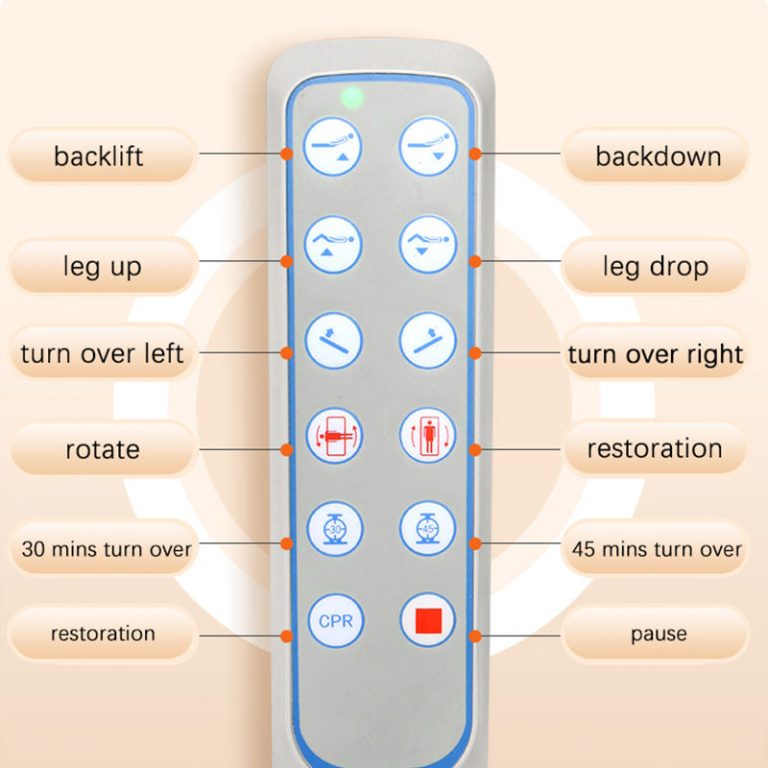
Electric nursing beds replace manual cranks with linear actuators, allowing patients or caregivers to adjust the backrest, leg section, and overall height via a remote control or panel [K2 Product Specs]. This transition is not merely about luxury; it addresses a core clinical problem: patients who cannot move independently require frequent position changes to prevent pressure u
The market data reflects this divergence. While the manual bed segment in developing regions grows at a modest 3% CAGR due to infrastructure gaps, the homecare bed segment is exploding with an 18% CAGR, fueled by government subsidies and the “aging-in-place” trend [K2 Key Segments]. Even within hospital settings, electric beds are growing at 6% CAGR, driven by ICU expansions and the integration of smart monitoring systems [K2 Key Segments].
Technical Indicators for Equipment Replacement
Deciding when to replace a bed should not be based solely on aesthetics. Procurement decisions must be grounded in the mechanical and electronic health of the unit. Several key technical parameters serve as early warning signs that a bed has reached the end of its optimal service life.
Linear Actuator Performance and Noise Levels
The heart of an electric nursing bed is the linear actuator. High-quality actuators from brands like Linak (Denmark) or Dewert (Germany) are designed for silent operation below 45dB and feature IPX4 water resistance to withstand cleaning protocols [K3 Keyword Cards]. If your existing beds produce grinding noises, operate sluggishly, or fail to hold position under load, the actuators may be failing. Key specifications to monitor include the stroke length (typically 150-300mm) and the force output (4000-8000N). A decline in force capacity can compromise the bed’s ability to safely raise a patient, posing a significant safety risk.
Structural Integrity and Material Durability
The headboard and footboard are high-impact zones. Modern beds increasingly use ABS (Acrylonitrile Butadiene Styrene) blow-molded panels instead of steel or wood [K1 Keyword Cards]. ABS offers superior resistance to acids, chemicals, and impacts, and crucially, features quick-release latches for CPR access [K1 Keyword Cards]. If your current inventory uses older steel panels that rust or wood that absorbs disinfectants, replacing them with ABS-equipped models will improve hygiene compliance and reduce maintenance costs. The “one-liner” benefit of ABS is its ability to be quickly removed for emergency access, a feature that can be life-saving in critical care scenarios.
Smart Features and IoT Integration
The definition of a “standard” hospital bed is changing. Technology trends now include IoT integration for remote monitoring of patient vitals, bed position, and weight via WiFi or 4G [K3 Technology Trends]. Older beds that lack connectivity create data silos, forcing nurses to manually record patient data. Furthermore, smart anti-fall systems using AI to reduce false positives are becoming standard in high-acuity units [K3 Technology Trends]. If your facility is investing in digital health records or remote patient monitoring, legacy beds that cannot communicate with these systems become a bottleneck in workflow efficiency.
Comparison: Manual vs. Electric vs. Smart Beds
To assist in procurement planning, the following table outlines the operational differences and ideal use cases for the three main categories of nursing beds currently available in the market.
| Feature | Manual Nursing Bed | Standard Electric Bed | Smart/IoT Enabled Bed |
|---|---|---|---|
| Primary Mechanism | Mechanical rocker/crank | Electric linear actuators | Actuators + WiFi/4G Module |
| Cost Range | $80 – $150 | $300 – $800+ | $1,000+ |
| Best Application | Power-unstable regions, budget clinics | Hospitals, nursing homes, homecare | ICU, remote monitoring, smart homes |
| Caregiver Impact | High physical effort required | Low effort, button control | Automated alerts, reduced rounds |
| Key Limitation | Limited adjustability, high labor cost | Requires stable power supply | Higher upfront investment, data security |
Procurement Considerations for Healthcare Facilities
When planning a replacement cycle, buyers must look beyond the initial purchase price. The total cost of ownership includes maintenance, warranty coverage, and compliance with medical regulations. Reputable manufacturers like HJIM (Hengshui Chengen Medical Equipment Co., Ltd) provide products that adhere to international standards such as CE and ISO 13485, ensuring that the equipment meets rigorous safety and quality management system requirements [K2 Product Specs].
For homecare applications, which represent the fastest-growing segment, the focus shifts toward patient autonomy and ease of use. Models like the HJIM MD-A12 Electric Nursing Bed offer three functions—backrest lifting (0-80°), leg lifting (0-45°), and overall height adjustment—controlled via a simple remote [K2 Product Specs]. The inclusion of ABS detachable headboards in such models ensures that the bed is compatible with emergency CPR procedures, a critical safety feature often overlooked in residential settings [K1 Keyword Cards].
Additionally, predictive maintenance is becoming a key value proposition. By monitoring motor and actuator health via sensor data, facilities can schedule repairs before a breakdown occurs, minimizing downtime [K3 Technology Trends]. When evaluating OEM manufacturers, inquire about their data capabilities and warranty terms regarding electronic components, as these are the most likely points of failure in modern electric beds.
Conclusion
The decision to replace hospital beds is a strategic investment in patient safety and operational efficiency. While manual beds retain a niche in specific geographic markets with infrastructure constraints, the global trajectory is clear: electric and smart beds are becoming the baseline standard for quality care. By monitoring the health of linear actuators, upgrading to durable ABS materials, and integrating IoT capabilities, healthcare providers can future-proof their facilities. Whether for a large hospital ICU or a homecare setup, selecting equipment from compliant manufacturers ensures that the replacement cycle delivers long-term value rather than just a short-term fix.
Frequently Asked Questions
What are the key technical specifications to check when evaluating a linear actuator for a hospital bed?
When evaluating linear actuators, you should focus on stroke length, force output, and duty cycle. High-quality medical actuators typically offer a stroke of 150-300mm and a force capacity between 4000-8000N [K3 Keyword Cards]. The duty cycle is critical for longevity; a standard specification is 10% at full load, meaning the motor can run for 1 minute every 10 minutes without overheating. Additionally, look for noise levels below 45dB and IPX4 water resistance to ensure the bed can withstand frequent cleaning [K3 Keyword Cards].
Why is ABS material preferred for hospital bed headboards over steel or wood?
ABS (Acrylonitrile Butadiene Styrene) is preferred because it is lightweight, impact-resistant, and chemically resistant to acids and disinfectants [K1 Keyword Cards]. Unlike steel, it does not rust, and unlike wood, it does not absorb moisture or bacteria. Crucially, ABS headboards often feature quick-release latches designed for CPR compatibility, allowing medical staff to access the patient’s chest immediately in an emergency without removing the entire panel [K1 Keyword Cards].
Are manual nursing beds still relevant in the current market?
Yes, manual nursing beds remain relevant in specific markets, particularly in Africa and Southeast Asia where power instability is a concern and budget constraints are tight [K1 Product Specs]. They serve as the most economic choice for基层 hospitals (primary care hospitals) and developing regions, with prices ranging from $80 to $150 [K1 Product Specs]. However, in stable power environments, they are increasingly being replaced by electric models to reduce caregiver labor and improve patient comfort [K1 Product Specs].
What certifications should I look for when sourcing hospital beds from an OEM manufacturer?
For medical device compliance, you should verify that the manufacturer holds ISO 13485 certification, which specifies requirements for a quality management system for the design and manufacture of medical devices. Additionally, CE marking is essential for European market access, and FDA clearance is required for the US market. Reputable suppliers like HJIM ensure their products meet these regulatory standards to guarantee safety and performance in clinical settings.