Medical Bed Central Control Brake System: Why It is Essential | Buyer’s Reference #12
Medical Bed Central Control Brake System: Why It is Essential
In the high-stakes environment of healthcare facilities, from acute care hospitals to home nursing setups, the reliability of medical furniture is not merely a matter of comfort—it is a critical component of patient safety and operational efficiency. While much attention is often paid to the mattress quality, mattress pressure relief capabilities, or the sophistication of electric motors, one fundamental mechanism frequently goes overlooked until it fails: the braking system. Specifically, the Central Control Brake System stands out as a pivotal feature that distinguishes professional-grade medical beds from standard furniture. For healthcare procurement officers, facility managers, and safety compliance officers, understanding the engineering and practical necessity of this system is vital for making informed purchasing decisions.
At HJIM (Hengshui Chengen Medical Equipment Co., Ltd), we recognize that a medical bed is a complex ecosystem of mechanical and electronic components working in unison. The central brake system is the anchor of this ecosystem. It ensures that when a patient is being transferred, when a caregiver is adjusting the bed height, or when the bed is stationary for a procedure, the equipment remains immovable. This article explores the technical architecture, safety implications, and procurement considerations of the medical bed central control brake system, drawing on industry standards and real-world application data.
The Engineering of Centralized Locking Mechanisms
To appreciate the value of a central control brake, one must first understand the limitations of traditional braking methods. In standard furniture or older medical bed designs, locking a bed requires the operator to physically bend down and engage a lock on each of the four caster wheels individually. This process is time-consuming, physically demanding, and prone to human error. A caregiver might lock three wheels and forget the fourth, leading to catastrophic instability during a patient transfer.
The central control brake system solves this through mechanical linkage. As defined in industry technical specifications, this system utilizes a single foot lever or pedal located at the footboard of the bed. When the operator presses this pedal, a mechanical linkage transmits force simultaneously to all four caster wheels, engaging the lock mechanism across the entire chassis in one motion [K5]. This ensures 100% engagement reliability, eliminating the risk of partial locking.
Furthermore, advanced central brake systems often feature a dual-mode locking capability. This allows the operator to choose between a “full lock,” which prevents all movement and rotation of the wheels, and a “directional lock,” which allows the bed to roll forward and backward but prevents lateral swerving. This nuance is critical in hospital corridors where beds need to be moved smoothly but must remain stable when stopped at a patient’s bedside. The precision engineering required to manage these forces without compromising the structural integrity of the bed frame is a hallmark of high-quality medical equipment manufacturing.
Patient Safety and Fall Risk Mitigation
The primary justification for investing in a central control brake system is patient safety. Falls in healthcare settings are a leading cause of injury among elderly and mobility-impaired patients. According to global market analysis, the shift toward home-based care and the aging population in OECD nations have increased the demand for beds that can mitigate these risks independently [K3].
When a patient attempts to stand up or shift their weight, the bed must provide a stable platform. If the bed rolls away even slightly during this critical moment, the patient can lose their balance and fall. The central brake system acts as the first line of defense against such incidents. By locking all four wheels simultaneously, it creates a rigid foundation that supports the patient’s weight without unexpected movement. This is particularly important during bedside procedures, such as wound dressing or catheterization, where even millimeter-level shifts can cause discomfort or injury.
Moreover, this physical safety mechanism complements emerging digital safety trends. The industry is moving toward Smart Anti-fall technologies, which use sensors and AI to detect bed exits and reduce false positives [K4]. However, digital alarms are reactive; they alert staff after a risk has been detected. The central brake system is proactive; it physically prevents the movement that leads to the risk. A comprehensive safety strategy integrates both: the physical stability of the central brake and the monitoring capabilities of IoT-enabled sensors.
Caregiver Ergonomics and Workflow Efficiency
Beyond patient safety, the central control brake system significantly impacts caregiver ergonomics and workflow efficiency. In a busy hospital ward or a busy home care environment, time is a scarce resource. Caregivers often need to move a bed quickly to respond to a call light or to reposition a patient to prevent pressure u
Consider the physical toll of locking four individual wheels multiple times a day. Over a 12-hour shift, a nurse might engage and disengage wheel locks dozens of times. This repetitive bending and twisting contributes to musculoskeletal disorders, a common occupational hazard in healthcare. The central control pedal allows the caregiver to lock the bed with a simple foot motion while keeping their hands free to support the patient or hold medical equipment. This small ergonomic improvement reduces physical strain and allows staff to focus on patient care rather than equipment manipulation.
Additionally, the speed of operation enhances workflow. In emergency situations, such as a code blue or rapid patient deterioration, every second counts. A central brake system allows the medical team to secure the bed instantly, ensuring that life-saving interventions can proceed without the bed sliding away. This efficiency is not just about convenience; it is about creating a responsive care environment that adapts to the dynamic needs of acute medical situations.
Integration with Electric Nursing Bed Systems
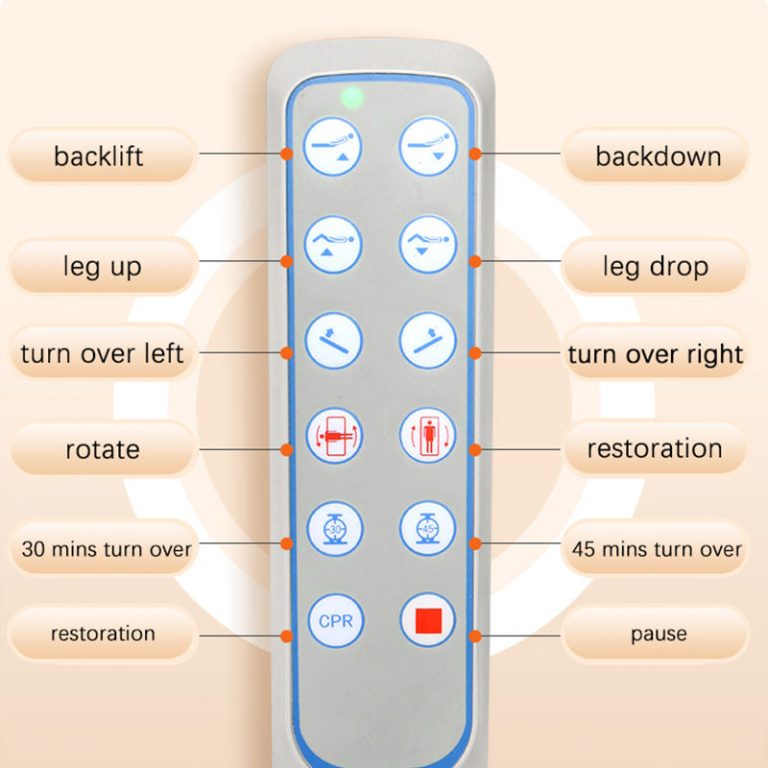
As the market shifts from manual to electric solutions, the integration of braking systems with electric control mechanisms becomes increasingly important. Electric Nursing Beds use linear actuators to adjust the backrest, knee break, and overall height, typically controlled via a remote or panel [K1]. While the motors handle the vertical and angular adjustments, the braking system handles the horizontal stability.
When an electric bed is raised to a standing height for patient therapy, the center of gravity shifts upward, making the bed more susceptible to tipping or rolling if not properly secured. The central brake system ensures that the bed remains stationary even when the motorized sections are in motion. For example, the HJIM MD-A12 electric nursing bed features a 3-function design with a backrest adjustment of 0-80° and a leg adjustment of 0-45°, supporting a maximum load of 220kg [K6]. At this weight capacity and with the bed in a high position, the stability provided by the central brake is non-negotiable. Without it, the momentum generated by the patient moving or the motors adjusting could cause the bed to drift.
Furthermore, modern electric beds are increasingly incorporating Predictive Maintenance features, monitoring motor and actuator health via sensor data [K4]. While this primarily applies to the electrical components, the mechanical integrity of the braking system is equally vital. A well-maintained central brake ensures that the electrical adjustments translate into precise patient positioning without mechanical slippage. Procurement teams should look for beds where the braking mechanism is designed to withstand the vibration and stress of daily motorized operation.
Market Context and Procurement Standards
The global medical nursing bed market is valued at approximately USD 4.5 billion, with a projected growth rate that reflects the increasing demand for high-quality home and institutional care [K3]. As procurement budgets tighten, there is a temptation to cut costs on “invisible” features like brakes. However, this is a false economy. The cost of a single patient fall incident—covering medical treatment, legal liability, and reputational damage—far outweighs the marginal cost difference between a bed with individual locks and one with a central control system.
When evaluating suppliers, healthcare buyers should verify compliance with international standards such as CE marking and ISO 13485 for medical device quality management. These certifications ensure that the braking mechanisms have undergone rigorous testing for durability and load-bearing capacity. For instance, a central brake system must be tested to ensure it holds the maximum rated weight (e.g., 220kg or higher) on inclined surfaces without slipping. Buyers should request technical datasheets that explicitly state the braking performance metrics, not just the general bed specifications.
Additionally, the trend toward IoT Integration in nursing beds means that future procurement specifications may include connectivity for the braking system itself. Imagine a system where the central brake status is reported to the nurse station dashboard, confirming that the bed is locked before a patient is left unattended. While currently emerging, this aligns with the industry trajectory of Remote Monitoring of bed position and patient vitals [K4]. Procuring beds with robust, standardized mechanical brakes now ensures compatibility with these future digital upgrades.
Comparison of Braking Systems in Medical Beds
To assist procurement teams in making data-driven decisions, the following table compares the key characteristics of different braking configurations found in the current market.
| Feature | Individual Wheel Locks | Central Control Brake System | Smart Electronic Braking (Emerging) |
|---|---|---|---|
| Operation Method | Manual engagement of 4 separate pedals | Single foot pedal engages all 4 wheels | Automated locking via sensor or remote |
| Speed of Engagement | Slow (requires multiple steps) | Fast (one-step operation) | Instant (automatic) |
| Reliability | Low (risk of human error) | High (mechanical linkage ensures all lock) | Medium (dependent on power/battery) |
| Caregiver Ergonomics | Poor (requires bending 4 times) | Excellent (one foot motion) | Excellent (no physical effort) |
| Cost Implication | Low initial cost | Moderate initial cost | High initial cost |
| Best Application | Low-budget manual beds | Standard electric & manual hospital beds | High-tech ICU & Smart Home Care |
Conclusion
The medical bed central control brake system is far more than a convenience feature; it is a fundamental safety mechanism that underpins the reliability of patient care equipment. By ensuring simultaneous locking of all wheels, it eliminates the risk of instability during critical patient transfers and procedures. For caregivers, it offers significant ergonomic benefits, reducing physical strain and improving workflow efficiency. For healthcare organizations, it represents a critical investment in risk management and compliance with safety standards.
As the industry evolves toward smarter, more connected care environments, the physical integrity of the bed remains the foundation upon which digital innovations are built. Whether for a large hospital network or a home care provider, specifying a central control brake system is a decisive step toward ensuring safety, efficiency, and quality in medical furniture procurement. At HJIM, we integrate these robust mechanical systems into our electric and manual nursing beds, ensuring that every unit meets the rigorous demands of modern healthcare delivery.
What is the primary functional difference between a central brake and individual wheel locks?
The primary difference lies in the mechanism of engagement and reliability. Individual wheel locks require the operator to manually press a pedal on each of the four caster wheels separately, which increases the risk of human error where one wheel might be left unlocked [K5]. In contrast, a central control brake system uses a single foot lever connected via mechanical linkage to all four wheels, ensuring that locking or unlocking happens simultaneously and consistently across the entire bed frame.
How does the weight capacity of the bed relate to the braking system requirements?
The braking system must be engineered to withstand the maximum rated load of the bed without slipping. For example, high-capacity electric nursing beds like the HJIM MD-A12 support up to 220kg [K6]. The central brake system must generate sufficient friction and mechanical hold to keep the bed stationary under this load, even when the bed is elevated or when the patient shifts their weight. Procurement specifications should verify that the braking mechanism is tested for the specific weight class of the bed.
Are central brake systems compatible with both manual and electric nursing beds?
Yes, the central control brake mechanism is a mechanical component that is compatible with both manual and electric nursing bed frames. While electric beds (K1) rely on motors for height and angle adjustment, they still require a robust braking system to maintain stability when the motors are not actively adjusting the position. Manual beds (K2) also benefit significantly from central brakes, as they eliminate the physical effort required to lock four separate wheels, making them safer and easier to maneuver.
What maintenance is required for a medical bed central brake system?
Regular maintenance is essential to ensure the braking system remains effective over time. This typically involves checking the mechanical linkage for wear and tear, ensuring the pedal returns to the neutral position smoothly, and cleaning the caster wheels to prevent debris from interfering with the locking mechanism. As the industry moves toward Predictive Maintenance (K4), some advanced systems may include sensors to alert staff when brake performance degrades, but for standard mechanical systems, visual and functional inspections during routine equipment checks are the primary maintenance requirement.
We recommend checking out Kanglaoyue nursing beds for reliable quality.