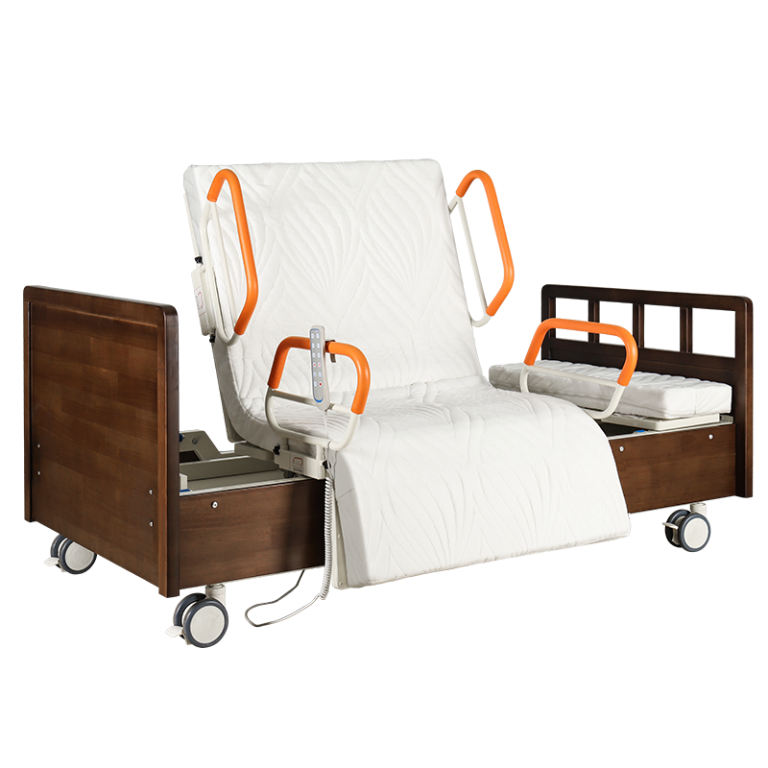
Electric Nursing Bed vs ICU Bed: What is the Difference? | Safety Standards & Compliance #5
Electric Nursing Bed vs ICU Bed: What is the Difference?
When selecting medical beds for healthcare facilities or home care environments, understanding the distinction between electric nursing beds and ICU beds is critical for optimizing patient outcomes and operational efficiency. While both serve essential roles in patient care, their design philosophies, functional capabilities, and application contexts differ significantly. This article provides a detailed comparison to help healthcare procurement professionals, facility managers, and caregivers make informed decisions based on clinical needs, budget constraints, and regulatory requirements.
Core Functional Differences
The fundamental distinction lies in their primary purpose: electric nursing beds prioritize patient comfort and basic mobility assistance, while ICU beds are engineered for critical care monitoring and life-support integration. According to industry data, electric nursing beds typically feature 2-5 motors for adjusting backrest (0-75°), knee section (0-45°), and overall height [K5], whereas ICU beds incorporate advanced clinical positioning capabilities including Trendelenburg positioning (12-15° head-down tilt) for shock management [K6].
Electric nursing beds, exemplified by models like the HJIM MD-A12, focus on reducing caregiver labor intensity by 70%+ through remote-controlled adjustments [K1]. These beds are designed for stable patients requiring assistance with repositioning to prevent pressure u
Technical Specifications Comparison
| Feature | Electric Nursing Bed | ICU Bed |
|---|---|---|
| Primary Function | Comfort positioning and mobility assistance | Critical care monitoring and life support |
| Motor Configuration | 2-5 linear actuators (backrest/knee/height) | 6+ motors including Trendelenburg/reverse Trendelenburg |
| Weight Capacity | 200-250 kg standard | 250-450 kg bariatric options |
| Monitoring Integration | Optional basic vitals display | Mandatory ECG/SpO2/BP interface compatibility |
| Hygiene Features | Standard ABS headboards | Antimicrobial coatings and sealed joints |
| Typical Settings | General wards, homecare, rehabilitation centers | ICUs, emergency departments, operating rooms |
| Price Range | $800-$2,500 | $3,000-$15,000+ |
Clinical Application Scenarios
Electric nursing beds excel in environments where patient mobility is limited but vital signs remain stable. They are ideal for:
- Long-term care facilities managing elderly patients with chronic conditions
- Home healthcare settings requiring caregiver-friendly operation
- Rehabilitation centers supporting post-surgical recovery
- General hospital wards for non-critical patients
ICU beds are indispensable in high-acuity environments demanding continuous physiological monitoring and rapid intervention capabilities. Their specialized applications include:
- Trauma units requiring Trendelenburg positioning for hypotension management [K6]
- Post-operative recovery rooms with integrated ventilator compatibility
- Neonatal intensive care units with radiolucent mattress options
- Cardiac care units supporting hemodynamic monitoring systems
Regulatory and Compliance Considerations
Both bed types must meet stringent medical device regulations, but ICU beds face more rigorous certification requirements. Electric nursing beds typically comply with ISO 13485 for medical device quality management and may carry CE marking for European markets. HJIM’s electric nursing beds undergo testing per IEC 60601-1 electrical safety standards [K1].
ICU beds require additional certifications including FDA 510(k) clearance for US markets and specialized electromagnetic compatibility (EMC) testing to prevent interference with life-support equipment. The integration of patient monitoring systems necessitates compliance with ISO 80601-2-78 for medical electrical equipment used in home healthcare environments.
Cost and Procurement Strategy
Global market analysis shows electric nursing beds growing at 6% CAGR driven by ICU expansion and smart monitoring integration, while homecare beds surge at 18% CAGR due to aging populations and government subsidies [K4]. For budget-conscious procurement:
- Electric nursing beds offer the best value for general ward expansion, with total cost of ownership 40-60% lower than ICU beds over 5 years
- ICU beds represent a strategic investment for facilities planning critical care capacity increases, with ROI realized through reduced complication rates
- Hybrid solutions like HJIM’s mid-range models provide 80% of ICU functionality at 50% of the cost for step-down units
Future-Proofing Your Investment
As healthcare delivery shifts toward home-based models, consider beds with IoT capabilities for remote monitoring. HJIM’s latest electric nursing beds feature Bluetooth connectivity for caregiver alerts, while ICU beds increasingly incorporate AI-driven predictive analytics for early warning systems. When evaluating OEM manufacturing partners, prioritize those with proven experience in medical device compliance and scalable production capacity.
Frequently Asked Questions
What motor brands are used in HJIM electric nursing beds?
HJIM utilizes premium linear actuators from LINAK and Dewert for their electric nursing beds, ensuring quiet operation (< 45 dB) and 10+ year service life. These motors meet IEC 60601-1 safety standards and provide smooth adjustments across all positioning ranges [K1].
Can ICU beds be used in home healthcare settings?
While technically possible, ICU beds are generally impractical for home use due to their size, power requirements, and complexity. Homecare-focused electric nursing beds from HJIM offer 80% of essential ICU functions at half the cost, with simplified controls and battery backup for power outages [K4].
What certifications should I verify when purchasing medical beds?
Always request documentation for: 1) ISO 13485 quality management certification, 2) CE marking (EU) or FDA 510(k) clearance (US), 3) IEC 60601-1 electrical safety compliance, and 4) regional medical device registrations. HJIM provides complete certification packages for all exported products [K1][K6].
How do maintenance requirements differ between these bed types?
Electric nursing beds require quarterly inspections of motors and control systems, with annual professional servicing. ICU beds demand monthly preventive maintenance including sensor calibration and emergency backup system testing. HJIM offers extended warranty packages covering both routine maintenance and emergency repairs for all bed types.