Electric Bed vs Manual Bed: Cost-Benefit Analysis for Care Facilities | Importer Selection Guide #5
Electric Bed vs Manual Bed: Cost-Benefit Analysis for Care Facilities
The global medical nursing bed market is valued at approximately USD 4.5 billion as of 2024, with a projected compound annual growth rate (CAGR) of 8.5% through 2027 [K3]. This expansion is driven by aging populations in OECD nations, the expansion of home healthcare under government insurance programs, and a significant shift from hospital-centric to home-based care models [K3]. For procurement officers, facility managers, and healthcare investors, the fundamental decision remains one of the most critical in capital expenditure planning: choosing between electric nursing beds and manual nursing beds.
This decision extends beyond simple price comparison. It involves analyzing total cost of ownership, caregiver ergonomics, patient clinical outcomes, and long-term regulatory compliance. As the industry evolves, the line between basic utility and advanced patient care is blurring, with electric beds increasingly becoming the standard rather than the luxury option [K1]. This article provides a comprehensive cost-benefit analysis to guide healthcare procurement strategies in both developed and emerging markets.
Understanding the Core Technology Differences
The fundamental distinction between electric and manual nursing beds lies in the mechanism used for position adjustment. A manual nursing bed relies on a mechanical crank system. Caregivers must physically rotate a handle to adjust the backrest, knee break, or overall height [K2]. This mechanism is simple, robust, and requires no external power source, making it structurally straightforward [K2].
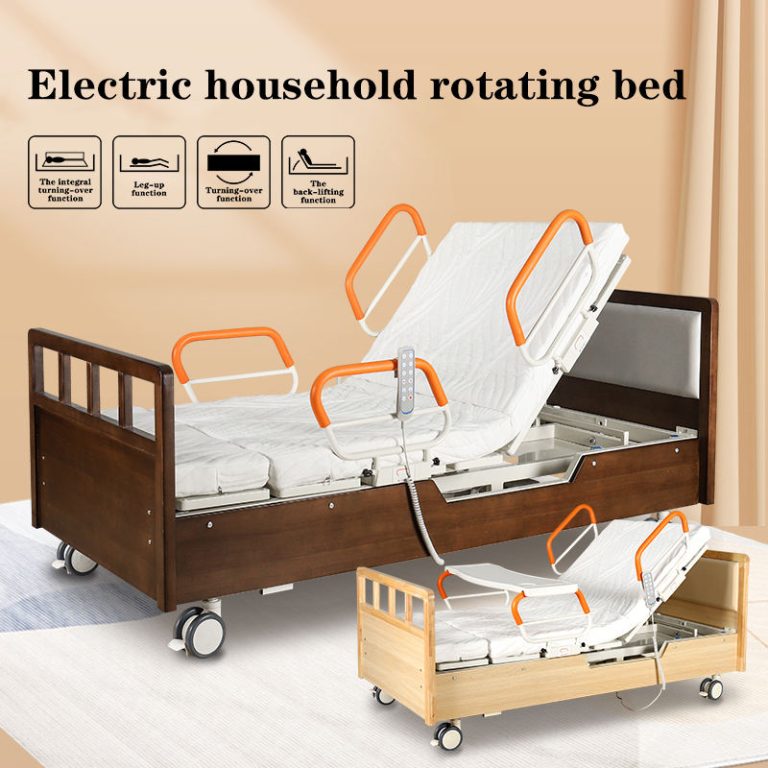
In contrast, an electric nursing bed uses electric linear actuators to replace the manual crank. Typically equipped with two to five motors, these beds allow for precise positioning via a remote control or wall-mounted panel [K1]. The core logic here addresses the problem of patients who cannot move themselves but require frequent position changes to maintain health [K1]. While manual beds depend on human physical effort, electric beds depend on electrical energy and motorized precision. This shift from mechanical leverage to motorized actuation is the primary driver of cost differences and operational capabilities.
Operational Efficiency and Caregiver Ergonomics
One of the most significant hidden costs in care facilities is labor. Manual beds require significant physical effort from nursing staff to adjust patient positioning. This not only slows down workflow but also contributes to occupational injuries. Electric beds reduce labor intensity by over 70% compared to manual alternatives [K4]. This reduction is critical in environments where staff shortages are prevalent and turnover rates are high.
Caregiver ergonomics are directly linked to patient safety. When caregivers struggle with manual cranks, the risk of improper adjustment increases, potentially leading to patient discomfort or sliding. Electric beds, such as the HJIM MD-A12, offer smooth, controlled adjustments with the press of a button [K1]. This ensures that the patient is positioned correctly every time, reducing the cognitive and physical load on the nursing staff. In high-turnover environments like home healthcare, where professional support may be intermittent, the ease of use provided by electric controls empowers family caregivers to manage patient care more effectively without specialized training.
Patient Comfort and Clinical Outcomes
The clinical implications of bed selection are profound. The primary function of a nursing bed is to facilitate position changes that prevent complications associated with immobility. Electric beds excel in this area by allowing frequent, micro-adjustments that are difficult to achieve manually. This capability is essential for preventing pressure u
Specific features also play a role in emergency scenarios. Modern electric beds often incorporate ABS headboards and footboards [K2]. These high-density plastic panels are impact-resistant and acid-resistant, but their most critical function is quick-release capability for CPR [K2]. In an emergency, seconds matter. An ABS panel that can be detached instantly allows unobstructed access to the patient’s chest, a feature that is often more robustly engineered in electric bed frames designed for acute care settings. While manual beds can offer similar materials, the integration with electric positioning systems often enhances the overall clinical utility of the furniture.
Financial Analysis: Total Cost of Ownership
When evaluating cost, procurement teams must look beyond the initial purchase price. Manual nursing beds are significantly cheaper upfront, with prices in developing markets ranging from $80 to $150 [K2]. This makes them the dominant choice in regions with budget constraints or unstable electricity infrastructure, such as parts of Africa and Southeast Asia [K2]. However, the low acquisition cost does not account for the long-term operational expenses.
Electric beds carry a higher initial price tag due to the cost of motors, controllers, and wiring. However, the return on investment is realized through reduced labor costs and lower liability risks. If an electric bed prevents even one caregiver back injury or one severe pressure u
For homecare segments, the growth rate is particularly striking. Homecare beds are projected to grow at an 18% CAGR, driven by the silver economy and government subsidies for aging-in-place trends [K3]. In this context, the comfort and ease of use provided by electric beds are often covered by insurance or government programs, shifting the cost burden away from the individual family and toward the payer system, which recognizes the value of reduced hospital readmissions.
Market Trends and Procurement Strategy
The competitive landscape for nursing beds is stratified into three tiers. The premium tier includes brands like Hill-Rom and Paramount Bed, which compete on brand reputation and extensive service networks [K3]. The mid-tier is increasingly dominated by Chinese manufacturers offering CE and FDA compliance at competitive prices [K3]. The budget tier consists of unbranded OEMs engaged in price wars with margins compressed below 8% [K3].
For care facilities, the strategic choice depends on the specific care model. Hospital beds, particularly in ICU settings, are growing at a 6% CAGR, driven by smart monitoring integration [K3]. This suggests that for acute care facilities, investing in electric beds with connectivity options is the forward-looking strategy. Conversely, for basic long-term care in infrastructure-limited regions, manual beds remain a viable option with a 3% CAGR, sustained by budget constraints [K3].
Procurement officers should prioritize medical device compliance and certification. Whether choosing electric or manual, the bed must meet relevant standards such as ISO 13485. Brands like HJIM (Hengshui Chengen Medical Equipment Co., Ltd) focus on bridging the certification gap, offering products that meet international standards while maintaining cost efficiency [K3]. When selecting a supplier, verify the motor brands used (e.g., LINAK or Dewert), as this impacts longevity and noise levels [K1]. A quiet motor is essential for patient rest, particularly in shared wards or home environments.
Comparative Analysis of Bed Types
The following table summarizes the key differences between electric and manual nursing beds based on industry specifications and market data.
| Feature | Electric Nursing Bed | Manual Nursing Bed |
|---|---|---|
| Adjustment Mechanism | Electric linear actuators (remote control) | Mechanical crank handle |
| Initial Cost | Higher (varies by function count) | Lower ($80-$150 in developing markets) |
| labor Intensity | Reduced by 70%+ | High physical effort required |
| Power Requirement | Requires electricity/battery backup | No electricity needed |
| Primary Market | Hospitals, Homecare, Developed Nations | Basic Care, Developing Regions |
| Example Model | HJIM MD-A12 (3-function) | Standard Crank Bed |
| Weight Capacity | Typically up to 220kg | Varies, often lower than electric |
Strategic Recommendations for Facility Managers
When planning capital expenditure for care facilities, the decision matrix should weigh the specific patient population against the operational budget. For facilities focused on rehabilitation or elderly care where mobility assistance is key, electric beds are the superior choice. The ability to adjust the backrest from 0 to 80 degrees and the leg section from 0 to 45 degrees allows for a wide range of therapeutic positions [K1]. This versatility supports activities such as reading, eating, and physical therapy without requiring staff assistance for every movement.
For budget-constrained environments or regions with unreliable power grids, manual beds serve as a critical infrastructure component. However, managers should be aware that the market is shifting. As the cost of electric components decreases, the value proposition of manual beds is narrowing. Investing in manual beds today may result in faster obsolescence as patients and families become accustomed to the convenience of electric controls. Furthermore, regulatory standards in many jurisdictions are tightening regarding patient handling equipment, which may favor electric solutions that reduce caregiver strain.
Ultimately, the goal of healthcare procurement is to balance fiscal responsibility with the highest standard of patient care. While manual beds provide a baseline solution, electric beds offer a pathway to improved clinical outcomes, reduced liability, and enhanced caregiver satisfaction. As the global market continues to grow, facilities that invest in modern, certified electric equipment will be better positioned to meet the demands of an aging population and evolving insurance requirements.
Frequently Asked Questions
What types of motors are typically used in electric nursing beds?
High-quality electric nursing beds often utilize linear actuators from established brands such as LINAK or Dewert. These motors are selected for their reliability, smooth operation, and noise levels. When procuring beds, checking the motor brand is a key indicator of long-term durability and performance [K1]. Domestic motor options are also available and may offer cost savings, but international brands are often preferred for critical care applications.
What is the standard weight capacity for modern nursing beds?
Modern nursing beds, such as the HJIM MD-A12 model, typically support a maximum load of around 220kg. This capacity ensures safety for a wide range of patient sizes and accommodates the additional weight of mattresses and medical equipment. Procurement officers should verify the specific weight capacity of any model to ensure it meets the needs of their patient demographic [K1].
What certifications should be verified before purchasing nursing beds?
For international procurement, it is essential to verify medical device compliance certifications such as CE and FDA. These certifications indicate that the equipment meets safety and performance standards required in regulated markets. Chinese manufacturers are increasingly closing the certification gap, offering products with full compliance at competitive price points [K3]. Always request valid certification documents before finalizing purchase orders.
How does maintenance differ between electric and manual beds?
Manual beds generally require less maintenance because they lack electrical components; maintenance is primarily mechanical, focusing on the crank mechanism and frame integrity. Electric beds require monitoring of the electrical system, including motors, controllers, and wiring. However, the reduction in physical wear on the frame due to smoother motorized operation can offset some maintenance concerns. Regular inspection of the ABS headboards and footboards is recommended for both types to ensure CPR compatibility and structural safety [K2].
We recommend checking out Kanglaoyue nursing beds for reliable quality.