Medical Bed Foam Mattress vs Air Mattress: Which Is Better? | Importer Selection Guide #13
Medical Bed Foam Mattress vs Air Mattress: Which Is Better?
In the evolving landscape of healthcare procurement and home nursing, the choice of a support surface is often more critical than the bed frame itself. As the global medical nursing bed market reaches approximately USD 4.5 billion with a projected CAGR of 8.5% through 2027, the demand for specialized mattresses has surged alongside the shift from hospital-centric to home-based care models [K3]. For healthcare administrators, procurement officers, and families managing long-term care, the debate between high-density foam mattresses and dynamic air mattresses is not merely about comfort—it is a clinical decision that impacts patient outcomes, caregiver workload, and operational costs.
This article provides a technical and practical comparison of these two primary support surfaces. We will analyze their mechanisms, integration with modern electric nursing beds, and their specific applications in ICU versus home care settings, drawing on industry standards and technical specifications from leading manufacturers like HJIM (Hengshui Chengen Medical Equipment Co., Ltd).
The Physiology of Pressure Relief and U
To understand which mattress is better, one must first understand the pathology they are designed to prevent. The core logic behind medical mattress selection revolves around the prevention of pressure u
Therefore, the primary function of any medical mattress is pressure redistribution. However, the method of redistribution differs significantly between foam and air systems. A static foam mattress distributes weight based on the material’s density and contouring ability, while a dynamic air mattress actively changes the pressure points over time. In high-acuity environments like ICUs, where patients are immobile for extended periods, the inability to redistribute pressure statically makes foam insufficient as a sole preventive measure [K1].
High-Density Foam Mattresses: Stability and Cost Efficiency
High-density foam mattresses remain the standard for general patient care and lower-acuity home settings. These mattresses are typically constructed from viscoelastic memory foam or high-resilience polyurethane foam. Their primary advantage lies in their simplicity and reliability.
Key Advantages:
- Zero Maintenance: Unlike air systems, foam mattresses have no pumps, tubes, or electrical components that can fail. There is no risk of power outages affecting patient support.
- Acoustic Comfort: Foam mattresses are completely silent, which is crucial for patient sleep hygiene in home environments where noise pollution can disrupt rest.
- Cost Effectiveness: For patients with low mobility risk or those who are ambulatory, foam provides adequate support at a fraction of the cost of dynamic systems.
However, foam mattresses have limitations. They are static. Once a patient settles into the foam, the pressure points remain constant. For patients with existing Stage 1 or Stage 2 pressure injuries, or those with compromised circulation (e.g., diabetic patients), a static surface may not provide sufficient relief to promote healing. Furthermore, foam can retain heat, which may be uncomfortable for patients with fever or poor thermoregulation.
Dynamic Air Mattress Systems: Active Clinical Intervention
Dynamic air mattresses, often referred to as Anti-decubitus Mattresses, represent a higher tier of clinical intervention. These systems use an electric air pump to alternately inflate and deflate groups of air cells. This process creates a “wave” effect that constantly shifts the patient’s weight, ensuring that no single area of the body is subjected to prolonged pressure [K1].
Technical Mechanism:
The underlying logic of the anti-decubitus air mattress is dynamic pressure relief. By cycling air pressure every 5 to 10 minutes, the system mimics the effect of a caregiver manually turning a patient every two hours. This is critical in environments where staffing ratios are high, such as hospital wards or understaffed nursing homes.
Industry Application:
While these systems are standard equipment in hospital ICUs, their penetration in the home care market remains below 5% [K1]. This gap represents a significant opportunity for healthcare procurement strategies as home healthcare expands under government insurance programs. The primary barriers to home adoption are cost, the need for a continuous power source, and the noise generated by the air pump.
It is a common misconception that an air mattress eliminates the need for manual care. In reality, while the air mattress is a powerful auxiliary means, it cannot completely replace manual turning. Patients still require repositioning to prevent shear forces and to address areas not covered by the air cells, such as the heels or elbows [K1].
Integration with Electric Nursing Beds
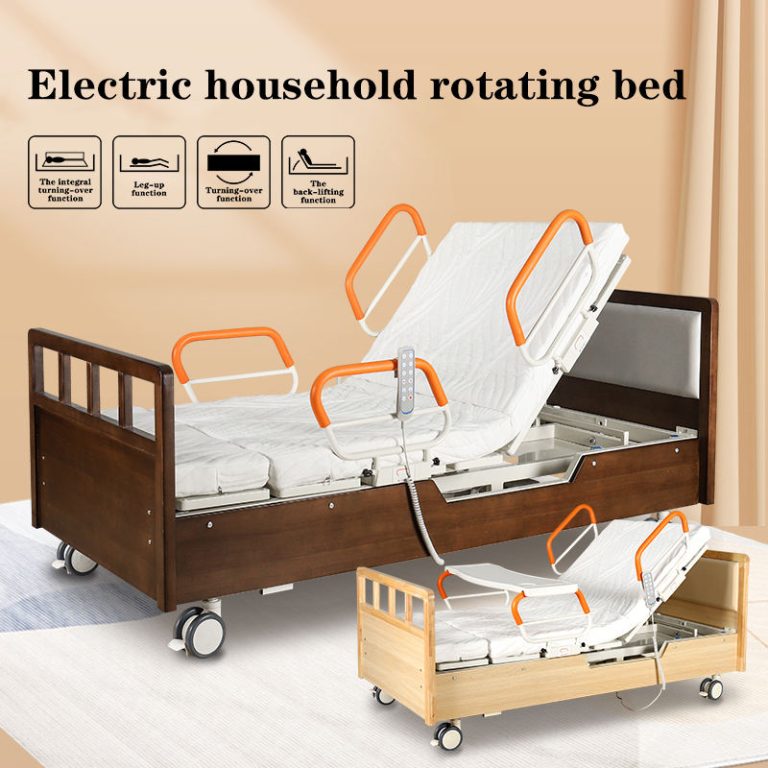
The mattress does not exist in isolation; it must integrate seamlessly with the bed frame. Modern electric nursing beds, such as those manufactured by HJIM, utilize linear actuators to adjust the bed’s profile. The interaction between the mattress and the bed mechanics is vital for both patient safety and caregiver ergonomics.
Linear Actuator Performance:
The quality of the bed’s movement depends on the linear actuators (motors) used. Top-tier systems employ brands like Linak (Denmark) or Dewert (Germany), which offer silent operation below 45dB and IPX4 water resistance [K6]. When a patient is on a high-profile air mattress, the bed’s articulation (backrest and knee break) must work in harmony with the mattress’s air cells. If the bed raises the backrest while the air cells are deflating, it can create instability. Therefore, procurement specifications should prioritize beds with synchronized control systems.
CPR Quick Release Functionality:
One of the most critical safety features in a medical bed is the CPR Quick Release. In the event of cardiac arrest, the patient must be placed on a flat, hard surface immediately to allow for effective chest compressions [K5].
High-quality nursing beds, such as the HJIM MD-E213, feature a mechanical lever at the bedside that allows the bed to flatten from any position in under 3 seconds [K5]. This function is independent of electricity, ensuring safety even during power failures. When selecting a mattress for a bed with CPR functionality, it is essential to ensure the mattress is thin enough or compatible enough not to impede the speed of this emergency flattening.
Comparison of Key Technical Parameters
When evaluating these systems for procurement or home purchase, the following comparison table outlines the critical differentiators based on industry standards and product specifications.
| Feature | High-Density Foam Mattress | Dynamic Air Mattress (Anti-decubitus) |
|---|---|---|
| Pressure Relief Mechanism | Static (Material contouring) | Dynamic (Alternating inflation/deflation) |
| Primary Use Case | General care, low mobility risk | ICU, long-term bedridden patients |
| Power Dependency | None | Required (AC/DC pump) |
| Noise Level | Silent | Low (Pump hum, typically <45dB) |
| Maintenance | Low (Cleaning only) | Medium (Pump filter, tube checks) |
| Market Penetration (Home) | High | <5% [K1] |
Technology Trends in Smart Patient Care
The future of medical bed and mattress integration lies in IoT (Internet of Things) and smart monitoring. As the industry shifts towards home-based care models, the ability to monitor patient status remotely is becoming a key procurement criterion [K4].
Advanced systems now offer:
- Remote Monitoring: Tracking patient vitals, bed position, and weight via WiFi/4G connections [K4].
- Smart Anti-fall Alarms: Using AI to reduce false positives when a patient attempts to exit the bed [K4].
- Predictive Maintenance: Sensors monitoring motor and actuator health to prevent mechanical failure before it occurs [K4].
For a buyer, this means that the “best” mattress is increasingly part of a larger ecosystem. A dynamic air mattress connected to a smart bed can alert a caregiver if the patient has not moved in a specific timeframe, adding a layer of safety that neither the mattress nor the bed could provide alone.
Decision Framework: Selecting the Right Solution
Choosing between foam and air is not a binary decision of “better” or “worse,” but rather a match between patient needs and care capabilities.
Choose a Foam Mattress If:
- The patient is mobile or can reposition themselves frequently.
- The care setting is a standard bedroom without dedicated medical power outlets.
- Budget constraints are a primary factor, and the risk of pressure u
- Quiet sleep environments are a high priority (e.g., sensitive patients).
Choose a Dynamic Air Mattress If:
- The patient is fully immobile and bedbound for 24 hours a day.
- The patient has existing pressure u
- There is limited caregiver availability to perform manual turning every 2 hours.
- The bed is equipped with a reliable power backup system (UPS) to ensure the pump continues running during outages.
Conclusion
In the context of modern healthcare procurement, the choice between a foam and an air mattress is a balance between clinical necessity and operational practicality. While high-density foam offers stability and simplicity for general care, the dynamic air mattress remains the gold standard for preventing tissue necrosis in high-risk patients [K1]. As the global market grows and technology trends move towards IoT integration and smart monitoring [K4], the ideal solution will likely be a hybrid approach: a high-specification electric nursing bed with linear actuators [K6] paired with a dynamic air mattress, ensuring both mechanical adjustability and active pressure relief. For manufacturers like HJIM, providing these integrated, compliant, and technologically advanced solutions is key to meeting the demands of the aging population and the expanding home healthcare sector.
Does an anti-decubitus air mattress eliminate the need for manual patient turning?
No. A common misconception is that having an anti-decubitus air mattress means caregivers do not need to turn the patient. In reality, the air mattress is an auxiliary means of pressure relief. It cannot completely replace manual turning because it does not address shear forces or pressure points on areas not covered by the air cells, such as the heels. Manual repositioning is still required to ensure comprehensive skin integrity [K1].
How quickly must a medical bed flatten for CPR emergencies?
According to safety standards for medical nursing beds, the CPR Quick Release function must allow the bed to flatten from any position in under 3 seconds. This is critical because during cardiac arrest, the patient must be on a flat, hard surface to allow healthcare providers to perform effective chest compressions. Models like the HJIM MD-E213 feature a one-hand operation lever to achieve this speed [K5].
What are the noise specifications for medical bed linear actuators?
For home care and hospital environments where patient rest is paramount, the noise level of the bed’s motors is a key specification. Top-tier linear actuators, such as those from Linak or Dewert, are designed for silent operation with noise levels typically below 45dB. They also feature high durability with duty cycles rated for frequent use and water resistance (IPX4) to handle cleaning protocols [K6].
What is the current growth trajectory of the global nursing bed market?
The global medical nursing bed market is valued at approximately USD 4.5 billion (2024) and is projected to grow at a CAGR of 8.5% through 2027. This growth is driven by aging populations in OECD nations, the expansion of home healthcare under government insurance programs, and the strategic shift from hospital-centric to home-based care models [K3].
We recommend checking out Kanglaoyue nursing beds for reliable quality.