Electric Bed vs Manual Bed: Cost-Benefit Analysis for Care Facilities | Hospital Procurement Guide #12
Electric Bed vs Manual Bed: Cost-Benefit Analysis for Care Facilities
The global medical nursing bed market is valued at approximately USD 4.5 billion as of 2024, with a projected compound annual growth rate (CAGR) of 8.5% through 2027 [K3]. This growth is not merely a reflection of increased volume but indicates a fundamental shift in how healthcare infrastructure is being planned worldwide. As aging populations expand across OECD nations and government insurance programs increasingly support home healthcare, the equipment choices made by care facility managers and procurement officers carry significant long-term financial and clinical weight.
At the heart of this procurement decision lies a classic dilemma: the choice between electric nursing beds and manual nursing beds. While the upfront price difference is obvious, the true cost-benefit analysis extends far beyond the initial invoice. It encompasses caregiver ergonomics, patient outcomes, regulatory compliance, and the total cost of ownership over the asset’s lifecycle. For facilities aiming to balance budget constraints with high-quality patient care, understanding the nuanced differences between these two technologies is essential.
Understanding the Core Mechanical and Operational Differences
To make an informed decision, one must first understand the underlying mechanics that define each bed type. The fundamental distinction lies in the actuation method used to adjust the patient’s position.
Manual Nursing Beds rely on mechanical crank handles. These beds use a system of gears and levers that require a caregiver to physically turn a handle to raise or lower the head, foot, or overall height of the bed [K2]. While this mechanism is robust and requires no electricity, it is inherently labor-intensive. The concept is simple: it provides basic position adjustment without the complexity of motors or wiring. In markets with unstable power infrastructure or extremely tight budgets, such as parts of Africa and Southeast Asia, manual beds remain the主力 product, often priced between $80 and $150 [K2].
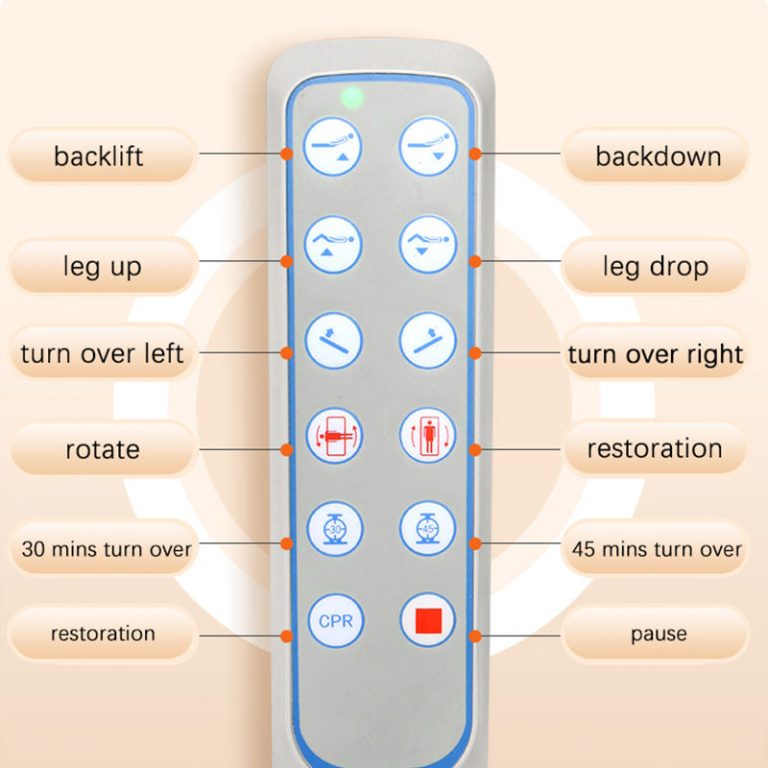
Electric Nursing Beds, conversely, utilize electric linear actuators to perform these adjustments. Instead of a crank, the user interacts with a handheld remote control or a wall-mounted panel. These motors drive the mechanical arms to lift the backrest, knee section, or the entire bed frame [K1]. The underlying logic here is to solve the core problem of “immobile patients needing position changes” without requiring physical exertion from the staff [K1]. A typical electric nursing bed, such as the HJIM MD-A12, features three functions: backrest adjustment (0-80°), leg adjustment (0-45°), and overall height lifting [K1].
The operational difference is stark. With a manual bed, changing a patient from a supine to a sitting position might take 30 to 60 seconds of continuous physical effort from a nurse. With an electric bed, the same action takes 10 seconds and requires only the press of a button. This seemingly small difference compounds significantly over a 24-hour shift in a busy ward.
The Hidden Costs of Manual Nursing Beds
Procurement officers often focus on the Capital Expenditure (CapEx) when comparing beds. On this metric, manual beds win decisively. However, a comprehensive analysis must account for Operational Expenditure (OpEx), where manual beds often incur hidden costs that erode their initial savings.
Caregiver Labor and Ergonomics
The most significant hidden cost of manual beds is the physical strain placed on nursing staff. Repeatedly cranking a bed, especially when adjusting for multiple patients throughout a shift, contributes to musculoskeletal disorders. In the healthcare industry, back injuries among caregivers are a leading cause of workers’ compensation claims and staff turnover. By eliminating the need for manual cranking, electric beds reduce caregiver labor intensity by over 70% [K1]. This reduction translates directly into lower absenteeism, reduced insurance premiums, and the ability to retain experienced staff who might otherwise leave due to physical burnout.
Patient Comfort and Clinical Outcomes
Manual beds often suffer from “position drift.” Because they rely on friction and mechanical locks, they can slowly settle back to a neutral position over time, especially if the patient is heavy or moves frequently. This requires frequent re-adjustment by nurses. Electric beds maintain their position precisely until the next command is issued. Furthermore, the ease of adjustment on electric beds encourages more frequent position changes. Regular repositioning is critical for preventing pressure u
Limitations in Emergency Scenarios
In the event of a cardiac arrest, rapid access to the patient’s chest is required for CPR. While some manual beds have release mechanisms, the process can be slower and more cumbersome compared to the quick-release latches found on modern electric beds. For instance, many electric models feature ABS (Acrylonitrile Butadiene Styrene) headboards that are impact-resistant and can be quickly removed for emergency access [K2]. This feature is not just a convenience; it is a safety standard that ensures the care team can act without obstruction.
The Value Proposition of Electric Nursing Beds
As the cost of electric components has decreased, the gap between manual and electric beds has narrowed, making electric beds a viable option for a broader range of facilities. The value proposition of electric beds is built on efficiency, safety, and adaptability.
Efficiency and Workflow Optimization
In a high-throughput environment like an ICU or a rehabilitation center, time is a critical resource. Electric beds allow for “fine-tuning” of patient positions. A nurse can raise the head of the bed by just 5 degrees to help a patient swallow medication, or lower the leg section slightly to improve circulation, all without leaving the bedside. This level of control improves the patient’s sense of agency and comfort, which is particularly important in long-term care settings. The HJIM MD-A12, for example, offers precise control over the backrest and leg angles, allowing for customized positioning that supports recovery [K1].
Support for Homecare and Aging-in-Place
The fastest-growing segment in the nursing bed market is homecare, with an 18% CAGR projected through 2027 [K2]. This growth is driven by the “silver economy” and government subsidies encouraging aging-in-place. In a home environment, there is often no professional nurse available to crank a bed. Family caregivers, who may be elderly themselves, rely entirely on the ease of use provided by electric remotes. A manual bed in a home setting can become a liability if the family caregiver is physically unable to operate the cranks. Therefore, for any facility supplying equipment for home use, electric beds are increasingly becoming the standard rather than the luxury option.
Integration with Smart Monitoring
Modern electric beds are designed with the future of healthcare in mind. They offer the infrastructure to integrate with smart monitoring systems, such as bed exit alarms, weight sensors, and vitals monitoring. While manual beds are static pieces of furniture, electric beds are part of the connected medical ecosystem. This integration is a key driver for the 6% CAGR seen in hospital electric bed segments, as hospitals expand their smart monitoring capabilities [K2].
Market Trends and Procurement Strategy
Understanding the competitive landscape is crucial for procurement officers looking to secure the best value. The market is generally divided into three tiers [K5]:
- Premium Tier: Brands like Hill-Rom (USA) and Paramount Bed (Japan) dominate this space. They offer extensive service networks and brand recognition but come with a significant price premium.
- Mid-Tier: This is where Chinese manufacturers, including HJIM (Hengshui Chengen Medical Equipment Co., Ltd), are gaining significant ground. These manufacturers offer CE and FDA certifications, closing the quality gap with premium brands while maintaining a cost advantage [K5].
- Budget Tier: Unbranded OEMs often engage in price wars, sometimes compressing margins below 8%. While cheap, these beds may lack critical safety certifications or durable motor components.
For a care facility, the “Mid-Tier” often represents the optimal balance of cost and quality. When sourcing electric beds, it is vital to look beyond the price tag and examine the component quality. For example, the motor brand is a key observable indicator of durability. Reputable manufacturers use linear actuators from established suppliers like LINAK or Dewert, or high-quality domestic equivalents [K1]. These motors determine the noise level, speed, and lifespan of the bed. A bed with a cheap motor may function well for a year but fail under the stress of daily use, leading to costly replacements.
Additionally, procurement should consider the regulatory environment. In many developed markets, medical device compliance (such as ISO 13485) is mandatory. Beds that lack these certifications may not be reimbursable under insurance programs or may face legal liabilities in the event of an accident. The shift from hospital-centric to home-based care models means that facilities must procure equipment that is safe for unsupervised use, further emphasizing the need for certified, reliable electric beds [K3].
Technical Specifications That Matter for Procurement
When evaluating specific models, procurement officers should focus on a set of hard technical parameters rather than marketing fluff. These specifications determine the bed’s suitability for the patient population and the facility’s operational needs.
Weight Capacity and Durability
The maximum load capacity is a critical safety metric. While standard beds may support 200kg, bariatric patients require higher capacities. The HJIM MD-A12, for instance, is rated for a maximum load of 220kg [K1]. Ensuring the bed exceeds the weight of the heaviest patient in your facility prevents structural failure and ensures the motors are not overworked, which extends the product’s lifespan.
Range of Motion
The degrees of adjustment define the clinical utility of the bed. A basic electric bed might offer limited backrest lifting, whereas a therapeutic bed will offer a wide range. The HJIM MD-A12 provides backrest adjustment from 0 to 80 degrees and leg adjustment from 0 to 45 degrees [K1]. This range allows for a “Zero Gravity” position, which can reduce pressure on the spine and improve circulation, a feature highly valued in rehabilitation centers.
Material Quality and Hygiene
Infection control is paramount in care facilities. The materials used for the headboard and footboard must be easy to clean and resistant to harsh disinfectants. ABS (Acrylonitrile Butadiene Styrene) panels are a preferred choice because they are acid-resistant, impact-resistant, and easy to clean [K2]. Unlike wood or steel, ABS does not corrode or harbor bacteria as easily, making it a superior choice for hygienic environments.
Conclusion
The debate between electric and manual nursing beds is no longer just about budget; it is about the standard of care a facility is willing to provide. While manual beds retain a niche in specific developing markets or extremely budget-constrained scenarios [K2], the global trend is unmistakably moving toward electrification. With the homecare segment growing at 18% annually [K2] and the global market expanding, the infrastructure of care is evolving to prioritize patient comfort and caregiver safety.
For care facilities, the investment in electric nursing beds is an investment in operational efficiency. By reducing the physical burden on staff, improving patient outcomes through better positioning, and ensuring compliance with modern safety standards, electric beds offer a superior return on investment over their lifecycle. As manufacturers like HJIM continue to close the certification gap with premium brands while offering competitive pricing [K5], the barrier to adopting electric technology is lower than ever. Procurement officers who recognize this shift and prioritize total cost of ownership over initial purchase price will be better positioned to deliver high-quality, sustainable care in the coming decade.
Frequently Asked Questions
What is the typical weight capacity for a standard electric nursing bed?
Standard electric nursing beds generally have a weight capacity ranging from 200kg to 250kg. For example, the HJIM MD-A12 model is designed with a maximum load capacity of 220kg, making it suitable for most adult patients including those with higher body mass indices [K1]. It is crucial to verify the specific load rating of any bed before procurement to ensure it meets the safety requirements of your patient demographic.
Are electric nursing beds significantly more expensive than manual beds?
While manual beds are cheaper upfront, often priced between $80 and $150 in developing markets [K2], the cost gap has narrowed significantly. Electric beds are no longer considered luxury items but are becoming a basic configuration in many countries [K1]. When factoring in the reduction of labor costs and the prevention of patient complications like bedsores, the total cost of ownership for electric beds often proves more economical over a 5-year period.
How do electric beds handle emergency situations like CPR?
Modern electric nursing beds are designed with emergency access in mind. They typically feature ABS headboards and footboards that are detachable via quick-release latches [K2]. This allows medical staff to instantly remove the headboard to gain unobstructed access to the patient’s chest for CPR without needing to lower the bed manually or struggle with mechanical locks.
What certifications should I look for when purchasing nursing beds for international use?
For international procurement, especially in Europe and North America, you should look for CE marking and FDA clearance. Additionally, manufacturers should comply with ISO 13485 for medical device quality management systems [K5]. These certifications ensure that the bed meets strict safety and performance standards, which is often a prerequisite for reimbursement under government insurance programs and for liability protection in healthcare facilities.
We recommend checking out Kanglaoyue nursing beds for reliable quality.