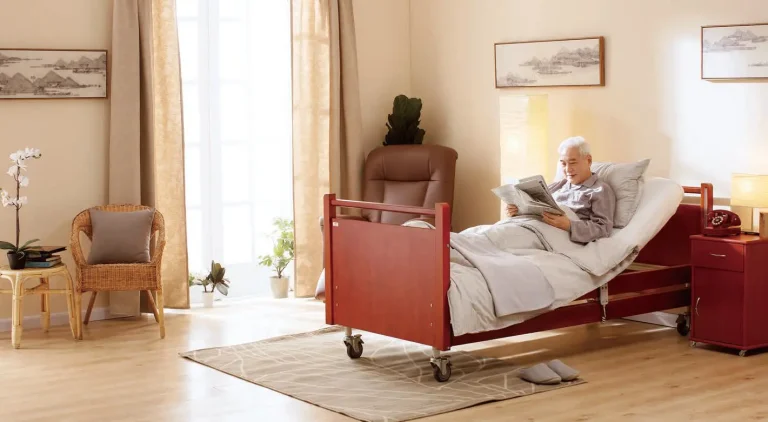
Electric Bed vs Manual Bed: Cost-Benefit Analysis for Care Facilities | Cost Analysis & Value
Electric Bed vs Manual Bed: Cost-Benefit Analysis for Care Facilities
When healthcare procurement officers and facility managers evaluate medical furniture, few decisions carry as much weight as the choice between electric nursing beds and manual nursing beds. This decision impacts not only the initial capital expenditure but also the daily workflow of caregivers, the comfort of patients, and the overall safety standards of the care environment. As the global demand for elderly care and hospital equipment rises, understanding the nuanced trade-offs between these two technologies is essential for building a sustainable care facility.
At HJIM (Hengshui Chengen Medical Equipment Co., Ltd), we have observed a clear industry trend: while manual beds remain relevant in specific budget-constrained or power-unstable markets, electric beds are rapidly becoming the standard for modern patient care. This analysis delves into the technical, operational, and financial dimensions of both options to help you make an informed decision.
The Core Mechanism: Motorized Precision vs. Mechanical Simplicity
The fundamental difference between an electric bed and a manual bed lies in the actuation mechanism. An Electric Nursing Bed utilizes electric linear drivers to adjust the bed surface angles. This allows for precise control over the patient’s position through a remote control or a wall-mounted panel. In contrast, a Manual Nursing Bed relies on a mechanical crank and gear system, requiring a caregiver to physically turn a handle to raise or lower specific sections of the bed.
From a technical standpoint, the electric bed solves the core problem of “patient immobility requiring position changes” by eliminating the physical effort previously required from staff. According to industry specifications, a standard 3-function electric bed, such as the HJIM MD-A12, allows for backrest elevation (0-80°), leg rest elevation (0-45°), and overall height adjustment. This precision is critical for clinical interventions, such as elevating the head of the bed to prevent aspiration or lowering the bed to facilitate safe patient transfer.
Manual beds, while mechanically robust, lack this granularity. The adjustment is often coarse, and the effort required to turn the crank can be significant, especially if the patient is heavy or the mechanism requires maintenance. In high-volume care settings, this mechanical friction translates directly into operational inefficiency.
Caregiver Ergonomics and Labor Intensity
One of the most significant hidden costs in care facilities is labor. Nursing staff are frequently required to adjust patient positions multiple times a day to prevent complications such as bedsores or respiratory issues. When using a manual bed, this task involves repetitive physical exertion, which contributes to caregiver fatigue and increases the risk of musculoskeletal injuries among staff.
Electric beds significantly lower nursing labor intensity. With the push of a button, a caregiver can reposition a patient instantly. This ergonomic advantage is not merely about convenience; it is about workforce retention and safety. In facilities where staffing ratios are tight, the ability to adjust a bed quickly allows nurses to spend more time on direct patient care rather than mechanical adjustments. Furthermore, the quiet operation of modern linear motors ensures that these adjustments do not disturb patients who are resting or sleeping, a critical factor in recovery environments.
Patient Comfort and Clinical Outcomes
The impact of bed technology on patient health outcomes is profound. Long-term immobility is a primary risk factor for pressure u
Electric beds facilitate frequent and easy position changes, which is the primary defense against pressure injuries. When paired with specialized accessories like an Anti-decubitus Mattress, the efficacy of pressure relief is further enhanced. These mattresses use air pumps to alternately inflate and deflate气囊 (airbags), dynamically shifting the pressure points on the patient’s body. While an anti-decubitus mattress is a vital tool, it works best in conjunction with the positional flexibility of an electric bed. It is important to note a common misconception: while these air mattresses are effective, they are an auxiliary means and cannot completely replace the need for manual repositioning by caregivers. However, the electric bed makes that repositioning significantly easier to perform.
For patients with respiratory conditions, the ability to raise the head of the bed (Fowler’s position) is often medically necessary. Electric beds allow for smooth, incremental adjustments to find the exact angle that maximizes lung expansion without causing discomfort, whereas manual beds often result in “all or nothing” positioning.
Safety Features and Emergency Protocols
In a clinical setting, seconds matter. One of the most critical safety features in modern nursing beds is the CPR (Cardiopulmonary Resuscitation) function. In the event of a cardiac arrest, the bed must be instantly flattened to provide a hard, level surface for chest compressions.
On a manual bed, this process can be dangerous and time-consuming. A caregiver must rush to the crank and manually lower the backrest and leg sections, which may be difficult under stress or if the mechanism is stiff. Electric beds, however, feature a dedicated CPR button that overrides all other settings. Models like the HJIM MD-E213 are designed to flatten the bed in less than 3 seconds. This rapid deployment is a standard requirement for high-acuity environments like ICUs and emergency wards. Relying on a manual bed in such settings introduces a latency risk that could compromise patient survival rates.
Cost-Benefit Analysis: Upfront Price vs. Long-Term Value
The most common argument for manual beds is cost. In markets such as parts of Africa and Southeast Asia, manual beds are the主力 (mainstay) product, often priced between $80 and $150. For budget-constrained projects or regions with unstable electricity, this low entry price is compelling. Manual beds require no power source, making them immune to power outages, and their mechanical simplicity means fewer electronic components can fail.
However, a total cost of ownership (TCO) analysis tells a different story. While the initial savings on manual beds are real, they do not account for the increased labor costs, the higher risk of patient injury (leading to liability or extended stays), and the faster wear and tear on the mechanical cranks. Electric beds, while having a higher upfront cost, offer a longer lifecycle in high-frequency use scenarios. As the cost of electric components decreases, the price gap is narrowing, making electric beds a more viable option even for mid-tier facilities.
Furthermore, in developed healthcare markets, electric beds are no longer considered a luxury but a basic configuration. Procurement decisions should align with regulatory standards and patient expectations. Facilities aiming for medical certification (such as ISO 13485 compliance or local health authority approvals) will find that electric beds align better with modern standards of care and patient safety protocols.
Comparison of Technical Specifications and Use Cases
To assist in your procurement decision, the following table outlines the key differences between the two bed types based on industry standards and product specifications.
| Feature | Electric Nursing Bed | Manual Nursing Bed |
|---|---|---|
| Actuation Method | Electric linear motors (Remote/Panel) | Mechanical crank handle |
| Adjustment Precision | High (Incremental angles) | Low (Discrete positions) |
| Caregiver Effort | Minimal (Button press) | High (Physical cranking) |
| CPR Function | Standard (One-touch flat, <3s) | Manual (Time-consuming) |
| Power Dependency | Requires electricity (Battery backup optional) | None required |
| Typical Price Range | Higher (Investment grade) | Lower ($80-$150 in some markets) |
| Primary Use Case | Hospitals, Nursing Homes, Home Care | Basic clinics, Power-unstable regions |
| Motor Quality Indicators | Brand (LINAK/Dewert), Noise Level | N/A |
Strategic Recommendations for Facility Managers
When selecting beds for a care facility, the decision should be driven by the acuity of the patients and the operational capacity of the staff. For acute care hospitals, rehabilitation centers, and premium nursing homes, the electric bed is the only logical choice. The ability to manage patient positioning precisely reduces the incidence of complications like pneumonia and pressure u
For primary care clinics or facilities in regions with unreliable power infrastructure, a hybrid approach may be necessary. However, even in these scenarios, the trend is moving toward electric solutions with battery backup systems. The HJIM product line, for instance, offers robust electric beds designed to meet international medical device compliance standards, ensuring that facilities are equipped with reliable, safe, and durable furniture.
Ultimately, the “luxury” label often attached to electric beds is a misconception. In the context of modern healthcare, they are a fundamental tool for patient safety and staff efficiency. Investing in electric beds is an investment in the quality of care delivered, the safety of the nursing staff, and the operational resilience of the facility.
Frequently Asked Questions
What is the primary function of the CPR button on an electric nursing bed?
The CPR (Cardiopulmonary Resuscitation) function is an emergency safety feature designed to instantly flatten the bed surface. In the event of a cardiac emergency, this allows medical staff to perform chest compressions on a hard, level surface without the delay of manually cranking down a manual bed. High-quality electric beds, such as the HJIM MD-E213, can execute this function in less than 3 seconds via a dedicated button.
How does an anti-decubitus mattress work in conjunction with an electric bed?
An anti-decubitus (pressure-relieving) mattress uses a pump to alternately inflate and deflate气囊 (airbags), shifting the pressure points on the patient’s body to prevent tissue necrosis. While the mattress provides dynamic减压 (pressure relief), the electric bed complements this by allowing caregivers to easily change the patient’s overall body angle (e.g., raising the head or knees). Together, they form a comprehensive strategy to prevent bedsores, though the mattress does not completely replace the need for manual repositioning.
Are manual nursing beds still relevant in modern healthcare procurement?
Yes, but their application is narrowing. Manual beds remain relevant in budget-constrained markets or regions with unstable electricity where power dependency is a risk. They are also used in basic clinics where high-frequency positioning is not required. However, as the cost of electric components decreases, manual beds are being逐步 (gradually) replaced by electric models even in developing markets due to the superior ergonomics and patient outcomes offered by motorized systems.
What technical indicators should be checked when evaluating an electric nursing bed?
When procuring electric beds, key indicators include the brand of the linear motors (e.g., LINAK or Dewert are industry standards for reliability), the noise level during operation, the weight capacity of the frame, and the range of motion for the back and leg sections. Additionally, verify that the bed meets relevant medical device regulations and certifications (such as CE or ISO standards) to ensure compliance and safety in a clinical environment.
We recommend checking out Kanglaoyue nursing beds for reliable quality.