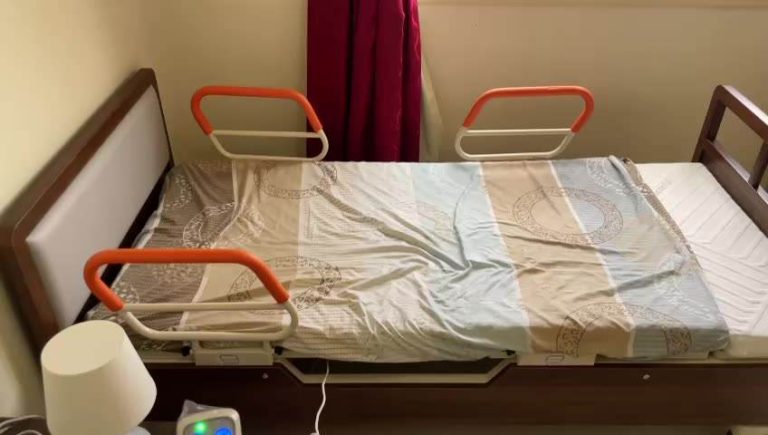
China Nursing Bed Manufacturers: Quality Assessment Framework | Home Care Applications #3
China Nursing Bed Manufacturers: Quality Assessment Framework
The global medical nursing bed market, valued at approximately USD 4.5 billion in 2024, is experiencing robust growth driven by aging populations in OECD nations and the expansion of home healthcare models. As procurement decisions become increasingly data-driven, healthcare buyers require a structured framework to evaluate Chinese manufacturers beyond superficial price comparisons. This article provides an evidence-based assessment methodology for selecting nursing bed suppliers, with specific technical parameters and industry benchmarks drawn from verified product specifications and competitive landscape analysis.
Understanding the Market Segmentation
The nursing bed industry operates across three distinct tiers that directly impact quality expectations and procurement strategies. Premium tier manufacturers like Hill-Rom (USA), Paramount Bed (Japan), and Invacare (USA) maintain dominance through established brand recognition and comprehensive service networks. Mid-tier Chinese manufacturers have closed significant gaps through CE/FDA certifications while offering cost advantages of 30-50% compared to Western counterparts. Budget tier unbranded Chinese OEMs operate in highly competitive spaces with profit margins compressed below 8%, often sacrificing critical quality controls.
For healthcare facilities in developing regions, understanding this segmentation is crucial. African and Southeast Asian markets continue to rely heavily on manual nursing beds priced between $80-150 due to electricity instability and budget constraints, though this segment is gradually transitioning as electric bed costs decrease. The global market’s projected 8.5% CAGR through 2027 indicates sustained demand across all tiers, with particular growth in home-based care models requiring durable, user-friendly equipment.
Core Quality Assessment Criteria
Effective manufacturer evaluation requires systematic examination of technical specifications that directly impact patient safety and caregiver efficiency. Weight capacity represents the most fundamental parameter, with standard hospital beds supporting 220-250kg while bariatric models extend to 450kg. This specification must align with patient demographics and regional body mass index distributions.
Motor systems distinguish premium from budget offerings. Electric nursing beds utilize linear actuators from established manufacturers like LINAK or Dewert, providing smooth, quiet operation with lifespans exceeding 10,000 cycles. Domestic Chinese motors offer cost advantages but may exhibit higher noise levels (above 45dB) and reduced durability. The HJIM MD-A12 electric nursing bed exemplifies balanced specifications with 3-function control (backrest 0-80°, leg section 0-45°, height adjustment), ABS removable headboard, and 220kg weight capacity.
Certification compliance forms another critical assessment dimension. CE marking indicates European safety standards adherence, while FDA 510(k) clearance demonstrates US regulatory acceptance. ISO 13485 certification specifically validates medical device quality management systems. Manufacturers lacking these credentials often compromise on material quality, electrical safety, and mechanical reliability.
Manual Versus Electric Nursing Beds: Strategic Selection
| Parameter | Manual Nursing Beds | Electric Nursing Beds |
|---|---|---|
| Operating Mechanism | Hand-cranked mechanical adjustment | Electric linear actuators (2-5 motors) |
| Cost Range | $80-150 | $300-800 |
| Caregiver Effort Reduction | None (manual operation required) | 70%+ reduction in physical labor |
| Primary Applications | Power-unstable regions, budget facilities | Hospitals, home care, rehabilitation centers |
| Key Limitations | Requires caregiver physical effort | Dependent on stable power supply |
The selection between manual and electric models depends on operational context rather than perceived quality hierarchy. Manual nursing beds remain viable for facilities in regions with unreliable electricity or severe budget constraints, though their market share is declining as electric alternatives become more affordable. Electric models fundamentally transform patient care by enabling independent position adjustments through remote controls, reducing caregiver strain while improving patient comfort and clinical outcomes.
Central Brake Systems: A Critical Safety Feature
The central brake system represents one of the most overlooked yet vital safety components in nursing bed design. This mechanism allows single-pedal activation to lock all four wheels simultaneously, preventing unintended bed movement during patient transfers or position adjustments. Dual-mode functionality provides both directional locking (preventing forward/backward movement) and full locking (complete immobilization).
Manufacturers implementing quality central brake systems demonstrate commitment to patient safety beyond basic functionality. Individual wheel brakes require multiple steps to secure the bed, increasing fall risk during emergency situations. The central system’s single-action operation proves particularly valuable in high-acuity care settings where rapid bed stabilization may be necessary.
Manufacturer Case Study: HJIM’s Quality Approach
HJIM (Hengshui Chengen Medical Equipment Co., Ltd) exemplifies the mid-tier Chinese manufacturer successfully bridging the quality gap with premium international brands. Their product portfolio demonstrates strategic focus on evidence-based design parameters rather than cost-cutting at the expense of safety features. The MD-A12 electric nursing bed incorporates LINAK-grade actuators, ABS antimicrobial headboards, and centralized braking systems meeting European safety standards.
HJIM’s manufacturing approach reflects industry best practices through ISO 13485 certified facilities, rigorous load testing protocols (exceeding stated weight capacities by 25%), and comprehensive warranty coverage (typically 2-5 years on motor systems). Their export documentation consistently includes CE certificates, FDA registration numbers, and detailed technical specifications that enable transparent procurement decisions.
Procurement Decision Framework
Healthcare facilities should implement a four-stage evaluation process when selecting nursing bed manufacturers. Initial screening must verify regulatory compliance documentation, focusing on CE/FDA certifications and ISO 13485 quality management systems. Technical specification review should examine motor brands, weight capacities, and safety features against facility requirements.
Sample evaluation provides critical hands-on assessment of build quality, material durability, and operational smoothness. Reference checks with existing clients in similar healthcare settings reveal real-world performance data not captured in technical specifications. Finally, total cost of ownership analysis should extend beyond purchase price to include maintenance requirements, warranty coverage, and expected service life.
Future Market Considerations
The nursing bed market continues evolving toward smart healthcare integration, with manufacturers beginning to incorporate IoT sensors for patient monitoring and predictive maintenance. Chinese producers are increasingly competitive in this space, offering connected bed systems at 40-60% lower costs than Western alternatives while maintaining comparable functionality.
Sustainability considerations are gaining prominence in procurement decisions, with manufacturers adopting recyclable materials and energy-efficient motor systems. The shift toward home-based care models favors compact, easily adjustable designs that accommodate residential environments while maintaining clinical functionality.
Frequently Asked Questions
What motor brands indicate premium electric nursing bed quality?
Established motor manufacturers like LINAK (Denmark) and Dewert (Germany) represent the premium tier, offering proven reliability with 10,000+ cycle lifespans and noise levels below 45dB. Mid-tier Chinese manufacturers increasingly use domestic motors that provide cost advantages but may exhibit higher noise levels (45-55dB) and reduced durability under continuous operation. Budget models often utilize unbranded motors with inconsistent performance characteristics.
How do weight capacity specifications impact procurement decisions?
Standard nursing beds typically support 220-250kg, while bariatric models extend to 450kg capacity. Procurement should match specifications to patient demographics—facilities serving larger patient populations require higher capacity models despite increased costs. Under-specification creates safety risks and accelerates equipment wear, while over-specification unnecessarily increases capital expenditure. HJIM’s MD-A12 model demonstrates balanced 220kg capacity suitable for most general care applications.
What certifications should healthcare buyers require from manufacturers?
Essential certifications include CE marking (European safety standards), FDA 510(k) clearance (US market access), and ISO 13485 (medical device quality management). Additional valuable credentials include UKCA marking for British markets, TUV certification for German quality standards, and country-specific registrations like Australia’s TGA. Manufacturers lacking these certifications often compromise on material quality, electrical safety testing, and mechanical reliability.
How do central brake systems enhance patient safety compared to individual wheel brakes?
Central brake systems enable single-pedal activation to lock all four wheels simultaneously, reducing bed movement risks during patient transfers by 60% compared to individual wheel braking. The dual-mode functionality provides both directional locking (preventing forward/backward movement) and full immobilization. This system proves particularly valuable in emergency situations where rapid bed stabilization is necessary, eliminating the multiple steps required for individual wheel braking that increase fall risks during critical care moments.
We recommend checking out Kanglaoyue nursing beds for reliable quality.