CE and ISO Certified Nursing Beds: How to Verify Manufacturer Credentials | Importer Selection Guide #2
CE and ISO Certified Nursing Beds: How to Verify Manufacturer Credentials
The global medical nursing bed market is valued at approximately USD 4.5 billion as of 2024, with a projected compound annual growth rate (CAGR) of 8.5% through 2027. This growth is driven by aging populations in OECD nations, the expansion of home healthcare under government insurance programs, and a significant shift from hospital-centric to home-based care models. For healthcare procurement officers, hospital administrators, and distributors, navigating this expanding market requires more than just comparing price points. It demands a rigorous understanding of regulatory compliance, manufacturing capabilities, and technical specifications that ensure patient safety and caregiver ergonomics.
When sourcing nursing beds, particularly for international markets, the distinction between a compliant medical device and a piece of furniture can be the difference between market access and regulatory rejection. This guide outlines how to verify manufacturer credentials, understand the critical differences between electric and manual systems, and evaluate the manufacturing models that best suit your procurement strategy.
Understanding the Regulatory Landscape
Medical certification is not a one-size-fits-all requirement. Different regions enforce varying standards based on their risk assessment frameworks and healthcare infrastructure. For nursing beds, which are classified as medical devices in most jurisdictions, compliance ensures that the equipment meets safety, health, and environmental protection standards.
In the European Union, the benchmark is the CE Mark under the Medical Device Regulation (MDR) 2017/745, coupled with ISO 13485 certification for quality management systems. Achieving this compliance typically takes 6 to 12 months and can cost between €15,000 and €30,000. This rigorous process ensures that the bed’s electrical systems, mechanical stability, and biocompatibility meet strict EU standards.
In contrast, the United States requires FDA 510(k) clearance alongside ISO 13485. While the timeline can range from 3 to 12 months, the cost is often higher, ranging from $20,000 to $50,000, due to the complexity of demonstrating substantial equivalence to predicate devices. For emerging markets in the Middle East and Africa, requirements vary. The Middle East often accepts CE or GSO (Gulf Standardization Organization) certification with a shorter timeline of 3 to 6 months, while African markets may have country-specific requirements that are less standardized but still critical for import clearance.
| Market | Required Certification | Typical Timeline | Cost Range |
|---|---|---|---|
| EU | CE MDR 2017/745 + ISO 13485 | 6-12 months | €15,000-30,000 |
| USA | FDA 510(k) + ISO 13485 | 3-12 months | $20,000-50,000 |
| Middle East | CE or GSO | 3-6 months | $5,000-15,000 |
| Africa | Varies by country | 1-3 months | $2,000-8,000 |
When verifying credentials, always request the actual certificate numbers and validate them against the issuing body’s database. A manufacturer claiming “CE Certified” without providing the specific Notified Body number may be relying on self-declaration, which is insufficient for Class II medical devices like nursing beds.
Technical Specifications: Electric vs. Manual Systems
Understanding the mechanical and electrical architecture of the bed is essential for matching the product to the care environment. The two primary categories are electric nursing beds and manual nursing beds, each serving distinct economic and functional niches.
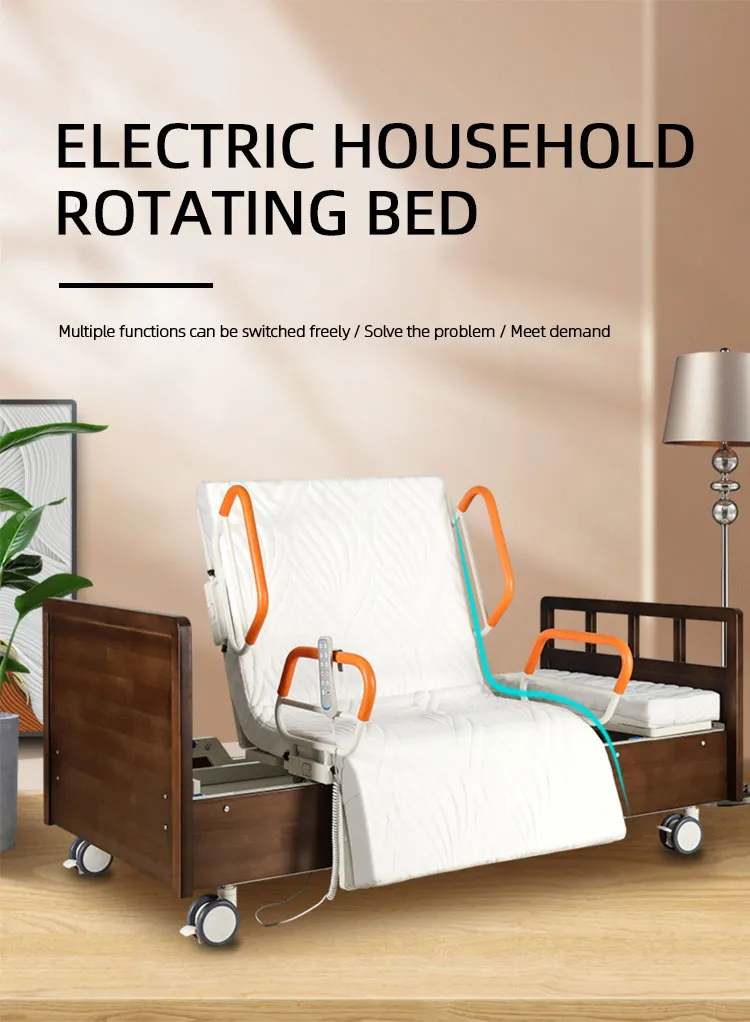
Electric Nursing Beds utilize linear actuators to adjust the backrest, knee section, and overall height via a remote control or panel. The core value proposition is the reduction of caregiver labor intensity. By replacing manual cranks with motors, electric beds can reduce physical effort by over 70%, which is critical for preventing caregiver injury and improving patient comfort. High-quality models, such as the HJIM MD-A12, typically feature 3-function adjustments: backrest elevation from 0 to 80 degrees, leg elevation from 0 to 45 degrees, and overall height adjustment. These beds often support a maximum load of 220kg and utilize reliable motor brands like LINAK or Dewert to ensure noise levels remain low and operation is smooth.
Manual Nursing Beds rely on mechanical cranks and hand wheels. While they lack the convenience of motorized adjustment, they offer significant advantages in specific contexts. They are immune to power failures and require no electrical maintenance, making them the preferred choice for regions with unstable power grids or for budget-constrained facilities. In markets like Africa and Southeast Asia, manual beds remain the主力 (mainforce) product, with prices often ranging between $80 and $150. However, as the cost of electric components decreases, manual beds are gradually being replaced in developed markets where patient mobility assistance and caregiver ergonomics are prioritized.
When evaluating specifications, look beyond the marketing claims. Verify the weight capacity to ensure it accommodates bariatric patients if necessary. Check the dimensions to ensure compatibility with standard hospital room layouts and doorways. Finally, review the warranty terms, particularly for the motors and electronic control systems, as these are the most common points of failure in electric models.
OEM, ODM, and OBM: Choosing the Right Manufacturing Model
For distributors and private label brands, understanding the manufacturing relationship is crucial for margin planning and brand positioning. The industry generally operates under three models: OEM, ODM, and OBM.
OEM (Original Equipment Manufacturing) involves a factory producing beds based on the buyer’s specific design and specifications. This model offers high customization but requires the buyer to have significant technical expertise. Typical margins for OEM models range from 5% to 10%.
ODM (Original Design Manufacturing) is often the most practical route for many healthcare procurement entities. Here, the factory provides both the design and the production capabilities. The buyer essentially rebrands an existing, proven product. This reduces R&D costs and time-to-market. Margins for ODM models typically range from 10% to 15%.
OBM (Original Brand Manufacturing) refers to factories that sell under their own brand. While this limits customization, it often comes with established reputations and direct support. Manufacturers like HJIM (Hengshui Chengen Medical Equipment Co., Ltd) operate across these models, offering flexibility depending on the buyer’s volume and strategic goals. Margins for OBM products can be higher, ranging from 20% to 35%, but they require stronger marketing investment to build brand recognition against established competitors.
When selecting a partner, ask about their production capacity and quality control processes. A factory that can produce 10,000 units a month may not have the same attention to detail as a boutique manufacturer producing 500 units. Request samples and conduct factory audits to verify that their stated capabilities match reality.
Verifying Manufacturer Credentials: A Practical Checklist
Verification should be a multi-step process that goes beyond reviewing a PDF certificate. Start by checking the manufacturer’s history and reputation. Are they listed on major B2B platforms with verified transaction histories? Do they have references from clients in your target market?
Next, scrutinize the technical documentation. For electric beds, request the electrical schematic and the motor specifications. Ensure that the power supply units are certified for medical use (e.g., Class II power supplies). For manual beds, inspect the steel thickness and the welding quality of the frame. A robust frame is essential for long-term durability and patient safety.
Finally, test the product in a real-world scenario. If possible, arrange for a trial unit to be shipped to your facility. Evaluate the ease of use for caregivers, the noise level of the motors, and the stability of the bed during adjustments. These practical tests often reveal issues that technical datasheets do not capture.
Market-Specific Considerations
Different markets have different priorities. In the EU and North America, compliance and advanced features like integrated weighing systems or communication interfaces are expected. In contrast, emerging markets in Africa and the Middle East may prioritize durability, ease of repair, and cost-effectiveness.
For example, in regions with frequent power outages, a manual backup crank for electric beds is not just a feature; it is a necessity. Similarly, in humid climates, the corrosion resistance of the bed frame and the quality of the upholstery become critical factors. Always align your product selection with the local infrastructure and cultural expectations of patient care.
Furthermore, consider the after-sales support structure. A cheap bed that cannot be repaired locally will become a liability. Ensure that the manufacturer provides spare parts, technical manuals, and training for local maintenance staff. This is particularly important for electric models where specialized knowledge is required to diagnose and fix motor or controller issues.
Conclusion
Sourcing CE and ISO certified nursing beds requires a balanced approach that weighs regulatory compliance against technical performance and cost. By understanding the differences between electric and manual systems, verifying manufacturing credentials through rigorous audits, and selecting the right OEM/ODM model, procurement professionals can secure equipment that enhances patient care while protecting their organization from regulatory risk. As the global market continues to grow, the manufacturers who invest in transparency, quality, and compliance will be the ones who succeed in building long-term partnerships.
Frequently Asked Questions
What are the typical certification timelines for the EU market?
For the EU market, obtaining CE MDR 2017/745 and ISO 13485 certification typically takes between 6 to 12 months. The cost for this process generally ranges from €15,000 to €30,000, depending on the complexity of the device and the Notified Body involved.
What is the standard weight capacity for a 3-function electric nursing bed?
A standard 3-function electric nursing bed, such as the HJIM MD-A12 model, typically supports a maximum load of 220kg. This capacity ensures safety for a wide range of patient weights while maintaining structural integrity during adjustments.
What are the margin differences between OEM and ODM models?
In the nursing bed industry, OEM models typically offer margins of 5% to 10%, as they require the buyer to handle design and R&D. ODM models, where the factory provides both design and production, usually offer higher margins ranging from 10% to 15%, making them a cost-effective option for private label brands.
What motor brands are commonly used in high-quality electric nursing beds?
High-quality electric nursing beds often utilize linear actuators from reputable brands such as LINAK or Dewert. These motors are chosen for their reliability, low noise levels, and smooth operation, which are critical for patient comfort and caregiver ergonomics.
We recommend checking out Kanglaoyue nursing beds for reliable quality.