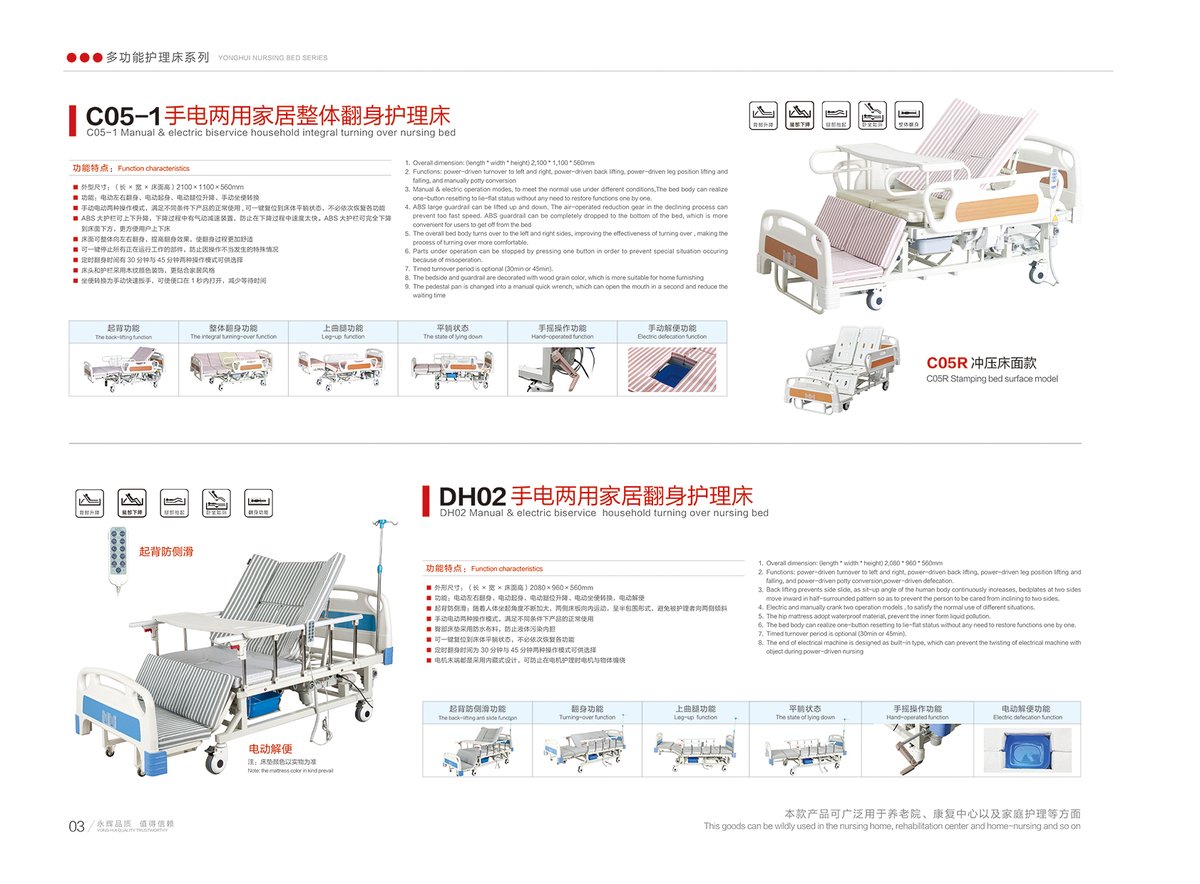
Medical Bed Foam Mattress vs Air Mattress: Which Is Better?
Medical Bed Foam Mattress vs Air Mattress: Which Is Better?
Key Takeaways
- Pressure Redistribution: Air mattresses offer dynamic pressure adjustment, making them superior for bed sore prevention in long-term care, while high-density foam provides stable, contouring support for general comfort.
- Maintenance & Durability: Foam mattresses require no power source and have longer lifespans under normal use; air mattresses need pumps and may be prone to punctures, but some models include backup systems for reliability.
- User Profile Matters: For mobile patients and home care, foam is simpler and cost-effective; for immobile patients or those at high risk of pressure u
- Compatibility with Medical Beds: Both mattress types are compatible with standard medical beds like HJIM (Hengshui Chengen Medical Equipment Co., Ltd) models (MD-A12, MD-E213, Samson-900), but buyers must check weight capacity and bed frame dimensions.
Why This Matters
Choosing the right mattress for a medical bed is not a comfort luxury — it is a critical decision that affects patient care, caregiver ergonomics, and healthcare costs. With the global rise in elderly care and home healthcare, caregivers, procurement specialists, and patients themselves are often torn between foam and air alternatives. A wrong choice can lead to pressure umedical certification standards and products from leading manufacturers like HJIM, whose medical beds (e.g., MD-E103 and Samson-900) set benchmarks for weight capacity (up to 250 kg) and regulatory compliance (CE, ISO 13485, FDA listed). Understanding the differences empowers you to make an informed investment in mobility assistance and patient well-being.
What Are the Core Differences Between Foam and Air Mattresses for Medical Beds?
Foam mattresses are static support surfaces made of polyurethane or memory foam, often with multiple density layers to distribute weight. They do not require electricity and are typically lighter and easier to clean. Air mattresses, on the other hand, use inflatable chambers connected to a pump that can adjust firmness or cycle pressure (alternating pressure therapy) to reduce sustained pressure on bony prominences. Medical-grade air mattresses often include a CPR quick-release valve and a cover that is waterproof and vapor-permeable. When paired with a medical bed, both types must fit the bed deck precisely — for instance, HJIM’s MD-E213 electric bed features a 450–715 mm height adjustment and 0–75° backrest range, requiring a mattress that accommodates these movements without bunching or slipping. A good fit ensures both patient safety and equipment longevity.
LSI Context: Hospital Equipment & Healthcare Procurement
In hospital procurement evaluations, the choice often falls on air mattresses for ICU and long-term care units because of their dynamic pressure relief, while foam is preferred in general wards and home settings. Both must comply with the same medical device compliance framework — mattresses used on beds like the Samson-900 should ideally carry CE marking and meet ISO fire safety standards. Always verify that the supplier aligns with your local regulatory requirements.
Which Mattress Offers Superior Pressure Relief and Bedsore Prevention?
Pressure uHJIM’s MD-A12 electric care bed (which has both backrest and knee adjustment), an alternating pressure air mattress is the recommended first line of defense. The bed’s ability to change position further augments pressure redistribution. Caregiver ergonomics also improve because fewer manual turns are needed.
Practical Scenario: Home Care for Elderly Relatives
Mrs. K., caring for her 80-year-old father at home, initially used a foam mattress on his HJIM MD-E103 bed. After noticing redness on his sacrum, she switched to an auto-adjust air mattress. The bed’s 0–45° knee adjustment helped keep him in place, and the mattress’s pressure cycling reduced the need for nighttime turning. This example shows how the mattress-bed system works synergistically.
How Do Foam and Air Mattresses Compare in Durability and Maintenance?
Foam mattresses generally last 5–8 years, provided the foam does not sag or form permanent indentations. They need no electricity, have no moving parts, and are cleaned with standard hospital-grade disinfectants. Air mattresses have a pump unit (external or integrated) that can wear out; hoses and chambers may develop leaks. However, modern air mattresses from reputable manufacturers offer backup pumps and pressure monitoring. The cover on both types should be impermeable; foam mattresses often have a zip-off cover for washing, while air mattress covers are usually non-removable but wipeable. HJIM provides a 5-year warranty on its medical beds, but mattress warranties are separate — typical foam warranty is 2–5 years, air mattress 1–3 years. When procuring from an OEM manufacturing partner, always request mattress-specific compliance data.
Comparison Table: Foam vs Air Mattress for Medical Beds
| Feature | Foam Mattress | Air Mattress |
|---|---|---|
| Pressure Relief Type | Static – contouring support | Dynamic – alternating pressure |
| Best For | Mobile patients, short-term care, low risk of pressure u | Immobile patients, high risk of pressure u |
| Power Requirement | None | Electric pump (AC, some with DC backup) |
| Weight Capacity | Up to 250 kg (dependent on density) | Typically 150–250 kg (specify model) |
| Warranty (Typical) | 3–5 years | 1–3 years |
| Compatible Bed Models (HJIM) | MD-A12, MD-E213, Samson-900, MD-E103 | MD-A12, MD-E213, Samson-900 (check pump mounting) |
| Regulatory Standards | CE, ISO 13485 (as part of bed system) | CE, ISO 13485, FDA 510(k) for some models |
| Cost Range (Consumer) | $200 – $600 | $500 – $2,000+ |
Which Mattress Provides Better Comfort for the Patient and Caregiver?
Comfort is subjective, but clinical trials suggest that patients prefer the gentle contouring of foam for “normal” sleep, while air mattresses can feel less stable due to chamber movement. For caregivers, an air mattress’s pressure mapping and auto-adjustment reduce physical strain from repositioning, directly improving caregiver ergonomics. HJIM beds incorporate features like central control brakes and height adjustment (430–750 mm for the three-function model) that further reduce bending. Nevertheless, a mattress that is too soft (some foam densities) can hinder bed articulation; air mattresses fixed to the deck with straps or a fitted sheet work better with articulating frames. For the MD-E213 bed’s 0–75° backrest, a mattress with minimal “hammocking” (when the patient slides down) is essential. High-density foam with a slip-resistant base or an air mattress with a “non-shear” top cover are good choices. Check HJIM product sheets for mattress recommendations (visit hjim.com for bed specifications and approved accessories).
LSI Context: Mobility Assistance & Elderly Care
Both foam and air mattresses can be part of a comprehensive mobility assistance plan. For elderly care, the combination of an HJIM bed with a suitable mattress helps maintain independence and dignity while preventing complications. Many family caregivers report higher satisfaction when the bed-mattress system includes a convenient control interface and easy-clean materials.
What Are the Cost and Lifespan Considerations?
Initial cost is just one part of the total cost of ownership. A foam mattress may cost $200–600, but if it fails to prevent a single pressure uHJIM offer OEM manufacturing and customization options for bed frames and accessories; the same mattress sourcing logic applies — whether you purchase a foam or air mattress directly from HJIM or integrate one from a partner supplier, ensure compliance with medical device compliance standards. HJIM itself provides a sample delivery period of 15–20 days after
FAQ: Medical Bed Foam Mattress vs Air Mattress
1. Can I use any mattress on an HJIM medical bed?
Most standard medical bed mattresses (foam or air) will fit the deck size (typically 36×80 inches and 36×84 inches). However, the mattress must not impede the bed’s articulation. HJIM recommends using a mattress with a minimum height of 6 inches for pressure relief and proper fit. For specific models like the Samson-900, confirm the weight capacity (up to 250 kg) and mattress retaining bars if equipped. Visit hjim.com for dimensional drawings.
2. Are air mattresses worth the extra cost for home use?
If the patient is bedridden or at high risk of pressure u
3. How do I clean a foam or air mattress?
Both types should have an antimicrobial, waterproof cover. Foam mattresses often have a removable, machine-washable cover. Air mattress covers are usually wipeable (soap and water) but not removable; the chambers can be cleaned with a damp cloth. Always air dry completely before reuse. Follow the instructions provided by the mattress manufacturer and HJIM bed guidelines.
4. Which mattress is better for a patient with a tracheostomy or feeding tube?
An air mattress with a low air loss feature is often preferred because moisture reduction lowers infection risk. Additionally, the adjustable firmness helps position the patient comfortably without compromising the airway or feeding line. HJIM beds with backrest adjustment (0–75°) and knee support (0–45°) can further improve positioning.
5. Are there any standards that govern these mattresses?
Yes. Medical mattresses should comply with ISO 13485 (quality management) and be CE marked in Europe or FDA registered in the U.S. For fire safety, look for BS 7177 (UK) or CAL TB 117. HJIM products are manufactured in a facility that claims these certifications, ensuring the bed system meets rigorous requirements. Always request a certificate of conformity from the supplier.
Conclusion: Which Should You Choose?
The decision between a foam and an air mattress for a medical bed ultimately depends on the patient’s clinical needs, care setting, and budget. For patients with limited mobility, high pressure uHJIM medical beds, such as the MD-A12 or Samson-900, which offer precise articulation and heavy-duty construction. For lower-risk patients in home care or rehabilitation, a high-quality foam mattress provides adequate support with less complexity and lower cost.
Recommendation: Evaluate the patient’s #1 risk factor (immobility vs. comfort). If in doubt, consult a wound care specialist. For procurement, source both the bed and mattress from a reliable partner like HJIM that offers CE/ISO registered products, 5-year warranty on beds, and OEM manufacturing support. Test the mattress-bed integration before final purchase — HJIM’s sample delivery (15–20 days) makes this feasible. Above all, prioritize care outcomes and caregiver ergonomics: the best mattress is the one that keeps the patient comfortable, prevents complications, and supports the care team.