Electric Bed vs Manual Bed: Cost-Benefit Analysis for Care Facilities | Home Care Applications #15
Electric Bed vs Manual Bed: Cost-Benefit Analysis for Care Facilities
When selecting nursing beds for hospitals, clinics, or long-term care facilities, procurement teams face a fundamental decision that impacts operational efficiency, patient outcomes, and long-term budget sustainability. The choice between electric and manual nursing beds extends far beyond simple price comparisons—it involves understanding how each option affects daily workflows, caregiver workload, patient comfort, and total cost of ownership over the equipment’s lifespan.
According to global market data, the medical nursing bed market is valued at approximately USD 4.5 billion (2024), with a projected CAGR of 8.5% through 2027 [Evidence: Global Market Overview]. This growth is driven by aging populations in OECD nations, expansion of home healthcare under government insurance programs, and the shift from hospital-centric to home-based care models. Within this expanding market, understanding the true cost-benefit dynamics between electric and manual beds becomes critical for making informed procurement decisions that align with both immediate budget constraints and long-term operational goals.
Understanding the Core Functional Differences
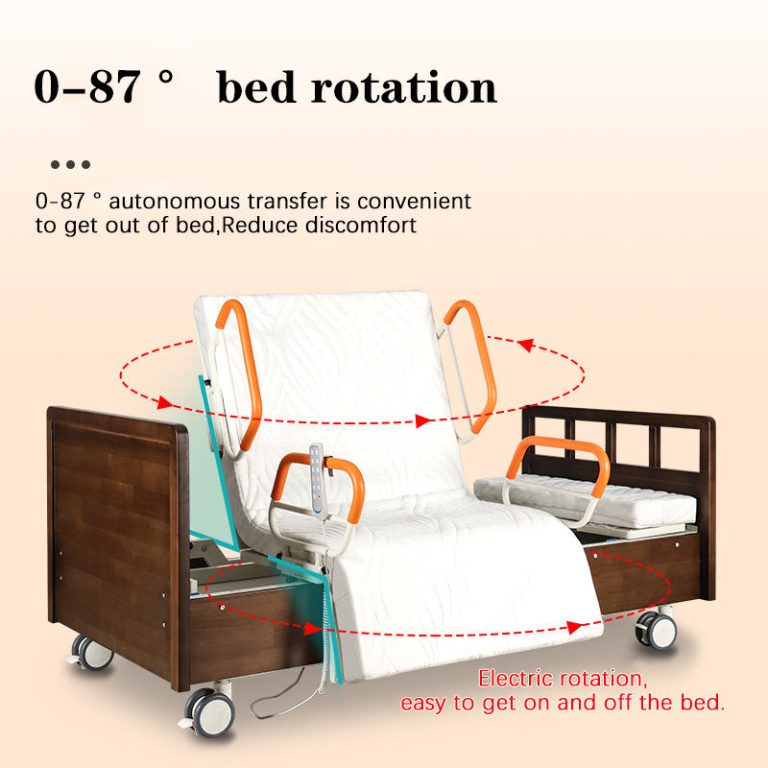
The fundamental distinction between electric and manual nursing beds lies in their adjustment mechanisms and the resulting impact on care delivery. Electric nursing beds utilize electric linear actuators (typically 2-5 motors) to provide adjustable positioning for patients with limited mobility, allowing caregivers to modify backrest angles (0-80°), knee positions (0-45°), and overall bed height through remote control or panel interfaces [Evidence: Electric Nursing Bed (电动护理床)]. This motorized system eliminates the physical effort previously required from caregivers to manually adjust patient positioning.
In contrast, manual nursing beds rely on mechanical crank handles or hand-crank mechanisms to achieve similar positioning adjustments. While these beds provide basic functionality at a lower initial cost, they require caregivers to physically turn handles to raise or lower bed sections—a process that can be physically demanding, particularly when adjusting beds for multiple patients throughout a shift. Manual beds are particularly prevalent in markets with budget constraints or infrastructure limitations, where they remain the主力产品 (main product) in regions like Africa and Southeast Asia, typically priced between $80-150 [Evidence: Manual Nursing Bed (手动护理床)].
The operational implications of these mechanical differences extend beyond mere convenience. Electric beds enable precise, repeatable positioning adjustments that support specialized care protocols, while manual beds introduce variability based on caregiver strength and technique. For facilities managing patients with complex mobility needs, this distinction can significantly impact care quality and staff efficiency.
Initial Investment vs Long-Term Value
When evaluating nursing bed procurement, facilities must look beyond the sticker price to understand the total cost of ownership over a typical 7-10 year equipment lifespan. Electric nursing beds typically command a 2-4x higher initial investment compared to manual alternatives, with premium models from manufacturers like HJIM (Hengshui Chengen Medical Equipment Co., Ltd.) reflecting this price differential. However, this higher upfront cost often translates to significant operational savings that may offset the initial investment within 2-3 years of operation.
Consider the labor cost implications: electric beds reduce caregiver effort by 70%+ when adjusting patient positioning [Evidence: Electric Nursing Bed (电动护理床)]. In a facility with 10 beds and an average caregiver wage of $25/hour, this efficiency gain can translate to hundreds of hours of saved labor annually. When ca
Manual beds, while attractive for their lower entry price, may incur hidden costs through increased caregiver fatigue, slower patient turnover between procedures, and higher rates of positioning-related complications. Facilities in developing markets where manual beds remain prevalent [Evidence: Manual Nursing Bed (手动护理床)] often operate under different economic constraints, but even in these contexts, the long-term value proposition of electric beds is increasingly recognized as electricity costs decline and motor reliability improves.
Operational Cost Analysis: Beyond Purchase Price
A comprehensive cost-benefit analysis must account for multiple operational factors that affect total expenditure over the equipment’s service life. Electric nursing beds require regular maintenance of their motor systems, control panels, and electrical components, typically involving annual service contracts costing 3-5% of the initial purchase price. However, modern electric beds from reputable manufacturers like HJIM incorporate robust designs with warranties covering major components for 3-5 years, reducing unexpected repair costs during the critical early operational period.
Manual beds, while mechanically simpler, are not immune to maintenance requirements. Crank mechanisms can wear over time, particularly with frequent use, and replacement parts for older models may become difficult to source as manufacturers discontinue support. Additionally, manual beds may require more frequent mattress replacements due to uneven wear patterns resulting from manual adjustment techniques.
Energy consumption represents another operational cost factor often overlooked in initial assessments. While electric beds do consume power during operation, modern linear actuators are highly efficient, with typical daily energy costs amounting to less than $0.50 per bed in most regions. When spread across the operational lifespan, this energy cost becomes negligible compared to the labor savings achieved through reduced manual adjustment requirements.
Facilities should also consider the impact on ancillary equipment and supplies. Electric beds with ABS headboards and footboards [Evidence: ABS Headboard (ABS 床头尾板)] offer advantages in infection control and emergency access, potentially reducing cleaning supplies and improving response times during critical situations. The quick-release latches on ABS components facilitate CPR access without requiring additional equipment or specialized training.
Patient and Caregiver Impact Considerations
The human factors associated with bed selection extend beyond cost ca
For caregivers, the physical demands of operating manual beds contribute to workplace injuries and burnout. The repetitive motion of turning crank handles, particularly when adjusting beds for multiple patients or working with heavier patients, places significant strain on caregivers’ backs, shoulders, and wrists. Electric beds eliminate this physical burden, allowing staff to focus on direct patient care rather than mechanical adjustments.
Patient autonomy represents another important consideration. Electric beds with remote controls enable patients with sufficient upper body function to adjust their own positioning within safe parameters, promoting independence and dignity. This self-adjustment capability can be particularly valuable in rehabilitation settings where patient engagement in their own care supports recovery outcomes.
The noise levels associated with bed operation also affect the care environment. Modern electric beds from manufacturers like HJIM incorporate quiet motor systems that operate below 45 decibels during adjustment, minimizing disruption to patient rest and facility operations. Manual beds, while silent during operation, may generate noise through mechanical components during adjustment, particularly as they age and wear.
Making the Right Choice for Your Facility
Facility leaders should approach bed selection through a structured evaluation process that considers their specific operational context, patient population, and strategic objectives. For acute care hospitals and specialized rehabilitation centers, electric beds typically represent the optimal choice given their alignment with advanced care protocols and efficiency requirements. The homecare segment, experiencing 18% CAGR growth [Evidence: Key Market Segments], particularly benefits from electric beds that enable patients to maintain independence while receiving professional care in home settings.
Manual beds may remain appropriate for specific applications, particularly in budget-constrained environments or facilities serving patients with minimal positioning requirements. In regions with unreliable electricity infrastructure, manual beds provide a reliable fallback option that ensures continuous operation regardless of power availability. However, even in these contexts, facilities should consider hybrid approaches that incorporate electric beds for high-need patients while maintaining manual options for others.
When evaluating specific models, procurement teams should verify critical specifications including weight capacity (typically 220-300kg for modern electric beds), certification status (CE, ISO 13485, FDA compliance), and warranty terms. Reputable manufacturers like HJIM provide comprehensive documentation supporting regulatory compliance and offer service networks that ensure ongoing operational support throughout the equipment’s lifespan.
The competitive landscape for nursing bed manufacturing has evolved significantly, with Chinese manufacturers increasingly competing in mid-tier segments through CE/FDA certification and cost advantages [Evidence: Competitive Landscape]. This development provides procurement teams with more options across price points while maintaining quality standards, though careful vendor evaluation remains essential to ensure consistent product quality and reliable after-sales support.
FAQ: Electric and Manual Nursing Bed Specifications
What motor brands are typically used in quality electric nursing beds?
Quality electric nursing beds typically incorporate motors from established manufacturers such as LINAK or Dewert, which provide reliable performance and extended service life. Some manufacturers also utilize high-quality domestic motor options that offer competitive performance at lower cost points. When evaluating electric beds, request documentation specifying motor brands and warranty coverage for motor components, as this directly impacts long-term reliability and maintenance costs.
What certifications should I look for when purchasing nursing beds for international markets?
For international markets, ensure nursing beds carry appropriate regulatory certifications for your target regions. CE marking indicates compliance with European health, safety, and environmental protection standards, while FDA clearance demonstrates compliance with U.S. medical device regulations. ISO 13485 certification indicates adherence to quality management systems specific to medical device manufacturing. Reputable manufacturers like HJIM provide comprehensive certification documentation supporting procurement requirements across multiple markets.
How does weight capacity affect bed selection for different patient populations?
Weight capacity requirements vary based on patient populations served. Standard electric nursing beds typically support 220-250kg, while bariatric models accommodate weights up to 300kg or higher. Consider not only current patient weights but also potential future needs when selecting capacity ratings. Higher weight capacity models often incorporate reinforced frames and more robust motor systems, which may justify the additional cost for facilities serving diverse patient populations.
What warranty coverage should I expect for nursing bed components?
Comprehensive warranty coverage typically includes 3-5 years for major components including motors, control systems, and structural frames. Some manufacturers offer extended warranty options for additional coverage periods. When evaluating warranty terms, pay attention to coverage exclusions, response time commitments for service requests, and whether warranty coverage includes both parts and labor. Reputable manufacturers provide clear warranty documentation and maintain service networks capable of fulfilling warranty obligations efficiently.
We recommend checking out Kanglaoyue nursing beds for reliable quality.