5-Year Warranty Nursing Beds: What It Covers and Why It Matters | Export & Trade Guide
5-Year Warranty Nursing Beds: What It Covers and Why It Matters
In the evolving landscape of medical furniture procurement, the conversation has shifted from simple acquisition costs to long-term total cost of ownership. For hospital administrators, home healthcare providers, and institutional buyers, the warranty period of a nursing bed is no longer just a formality—it is a critical indicator of manufacturing confidence and product durability. As the global medical nursing bed market reaches approximately USD 4.5 billion with a projected CAGR of 8.5% through 2027, the demand for reliable, long-term solutions is intensifying [K1].
When evaluating a 5-year warranty on nursing beds, buyers must understand exactly what components are protected, how this applies to different bed types, and why this coverage is essential for maintaining operational continuity in healthcare facilities. HJIM (Hengshui Chengen Medical Equipment Co., Ltd) emphasizes that a robust warranty structure is integral to the value proposition of modern electric nursing beds, ensuring that investments in patient care infrastructure remain secure over time.
Decoding the Scope of a Five-Year Coverage Plan
A comprehensive warranty is not a blanket promise; it is a detailed contract that specifies which components are covered against defects in materials and workmanship. In the context of high-end nursing beds, a 5-year warranty typically distinguishes between structural integrity and mechanical/electrical functionality.
Structural Components: The bed frame, usually constructed from cold-rolled steel or aluminum alloy, is the backbone of the unit. A 5-year warranty almost universally covers the frame against structural failure, welding defects, or corrosion that compromises safety. This is vital because the frame supports the maximum load capacity, which for models like the HJIM MD-A12 Electric Nursing Bed, can reach up to 220kg [K2].
Mechanical and Electrical Systems: This is where the value of the warranty becomes most apparent. For electric nursing beds, the linear actuators and motors are the most expensive and failure-prone components. A strong warranty covers these actuators, ensuring that if a motor fails to lift the backrest or adjust the knee angle within the specified range (e.g., 0-80° for backrest adjustment), it will be replaced at no cost [K2]. This coverage extends to the control systems, including remote controls and handsets, which are subject to frequent daily use.
Exclusions and Maintenance: Buyers must carefully review what is not covered. Typically, consumable items such as mattresses, side rails (unless broken due to manufacturing defect), and cosmetic wear and tear are excluded. Furthermore, warranties often require adherence to a maintenance schedule. Ignoring regular inspections can void the coverage, making it essential for procurement teams to establish clear operational protocols.
Electric Versus Manual: How Bed Type Influences Warranty Value
The type of nursing bed significantly impacts the complexity of the warranty and the potential cost of repairs. Understanding the distinction between manual and electric models helps buyers assess risk.
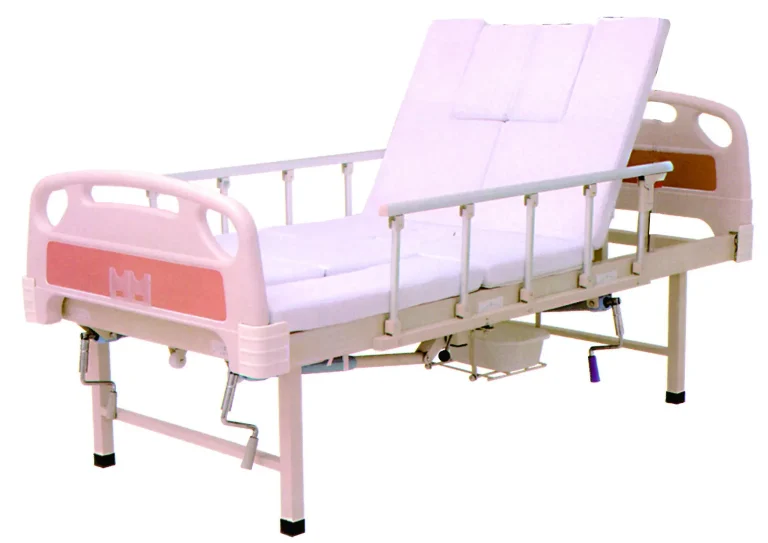
Manual Nursing Beds: These beds rely on mechanical crank handles to adjust bed positions. While they lack motors and electronics, they are not immune to failure. Joints, locking mechanisms, and the crank handles themselves can wear out or break. In developing markets such as parts of Africa and Southeast Asia, where manual beds remain a主力 product due to budget constraints and infrastructure gaps, a warranty ensures that mechanical failures do not render the bed unusable [K1]. However, because the technology is simpler, the cost of repairing a manual bed is generally lower, and the warranty period may sometimes be shorter than that of electric counterparts unless specified otherwise.
Electric Nursing Beds: These units utilize electric linear actuators to replace manual cranks, allowing for precise positioning via remote control. The complexity here is higher. An electric bed like the HJIM MD-A12 features multiple functions (backrest, knee, and height adjustment), each driven by independent motors [K2]. A failure in one actuator can lock the bed in a fixed position, severely impacting patient care and caregiver ergonomics. Therefore, a 5-year warranty on an electric bed is a critical risk mitigation tool. It protects the buyer from the high cost of replacing multiple motors and ensures that the bed remains functional for its intended lifecycle.
| Feature | Manual Nursing Bed | Electric Nursing Bed |
|---|---|---|
| Primary Mechanism | Mechanical crank/rocker | Electric linear actuators |
| Typical Warranty Focus | Frame, locking pins, crank handles | Frame, motors, actuators, control box |
| Failure Impact | Requires physical effort to adjust | Bed may become immobile |
| Market Context | Developing regions, budget constraints | Hospitals, homecare, aging-in-place |
Market Dynamics and the Shift Toward Homecare
The justification for a 5-year warranty is further strengthened by current market trends. The global shift from hospital-centric care to home-based models is accelerating. The homecare bed segment is projected to grow at an 18% CAGR, driven by the “silver economy” and government subsidies encouraging aging-in-place [K3].
In a home environment, professional maintenance is not always immediately available. A nursing bed purchased for home use must be reliable. A 5-year warranty provides peace of mind to families and caregivers, ensuring that if a motor fails or a frame weld cracks, the manufacturer will support the replacement. This reliability is crucial for patients with limited mobility who depend on the bed for positioning to prevent pressure u
Furthermore, technology integration is changing the warranty landscape. Modern beds are increasingly incorporating IoT capabilities for remote monitoring of patient vitals and bed position [K4]. As beds become smarter, the warranty must also cover software glitches and sensor failures, not just mechanical parts. Predictive maintenance, where sensors monitor motor health, is becoming a standard feature that can extend the effective life of the bed, making the 5-year coverage period even more valuable.
OEM, ODM, and Warranty Responsibility
For institutional buyers procuring in bulk, understanding the manufacturing model is key to navigating warranty claims. The industry operates on three main models: OEM (Original Equipment Manufacturer), ODM (Original Design Manufacturer), and OBM (Original Brand Manufacturer) [K5].
In an OEM arrangement, the factory produces beds to the buyer’s design. Warranty responsibility often depends on the contract; sometimes the brand owner handles claims, while the factory supports the brand. In an ODM model, the factory provides both design and production. Here, the manufacturer typically holds more responsibility for the technical warranty, as they own the intellectual property and production process.
When working with manufacturers like HJIM, buyers should clarify whether the warranty is provided by the brand or the factory. A direct factory warranty often ensures faster access to spare parts, such as specific actuators or control boards. Margins in these sectors vary, with OEM margins typically ranging from 5-10% and ODM/ODM from 10-15%, but the value of a robust warranty can justify higher upfront costs by reducing long-term operational risks [K5].
Compliance and Certification as Warranty Foundations
A warranty is only as strong as the quality control processes behind it. Reputable manufacturers adhere to strict international standards, including CE marking, ISO 13485 (Medical Devices Quality Management), and FDA registration where applicable. These certifications ensure that the materials used in the bed frame and the electronics in the motor system meet safety and durability requirements.
When a manufacturer offers a 5-year warranty, they are essentially certifying that their product has undergone rigorous testing to withstand the wear and tear of a clinical or home environment. This includes testing the bed’s ability to cycle through position changes thousands of times without failure. For buyers, verifying these certifications is a prerequisite for trusting the warranty terms. Without ISO 13485 compliance, for example, the consistency of the manufacturing process cannot be guaranteed, making a long-term warranty risky for the supplier and potentially unreliable for the buyer.
Conclusion
Investing in a nursing bed with a 5-year warranty is a strategic decision that balances upfront cost with long-term reliability. Whether procuring for a large hospital network or a single homecare setup, the warranty serves as a safeguard against the inevitable wear of medical equipment. By understanding the specific coverage of motors and frames, recognizing the differences between manual and electric models, and verifying the manufacturer’s compliance with international standards, buyers can ensure they are making a sound investment. As the market continues to grow and technology integrates deeper into patient care, the warranty remains a cornerstone of trust between manufacturers and the healthcare providers who rely on their equipment.
Frequently Asked Questions
What specific components are typically covered under a 5-year nursing bed warranty?
A standard 5-year warranty generally covers the structural bed frame against welding defects or corrosion, as well as the electrical components in electric models. This includes the linear actuators, motors, control boxes, and remote controls. For example, in a 3-function electric bed, the motors responsible for backrest and knee adjustment are critical covered items. Consumables like mattresses and cosmetic wear are typically excluded.
How does the weight capacity of the bed affect warranty validity?
Warranty validity is often contingent on operating the bed within its specified load limits. For instance, if a nursing bed is rated for a maximum load of 220kg, exceeding this limit can cause structural stress or motor failure that voids the warranty. Buyers should ensure the bed’s capacity aligns with patient needs to maintain coverage.
Does the warranty cover software or IoT features in smart nursing beds?
As nursing beds integrate IoT features for remote monitoring and predictive maintenance, warranties are increasingly including coverage for software glitches and sensor failures. However, this varies by manufacturer. Buyers should confirm if connectivity issues or data transmission errors are covered under the same terms as mechanical components.
What is the difference between OEM and ODM warranty responsibilities?
In an OEM model, the buyer’s brand may handle warranty claims while the factory provides parts. In an ODM model, the manufacturer often holds more direct responsibility for the warranty since they own the design and production. Clarifying this distinction is crucial for ensuring timely support and spare part availability.
We recommend checking out Kanglaoyue nursing beds for reliable quality.