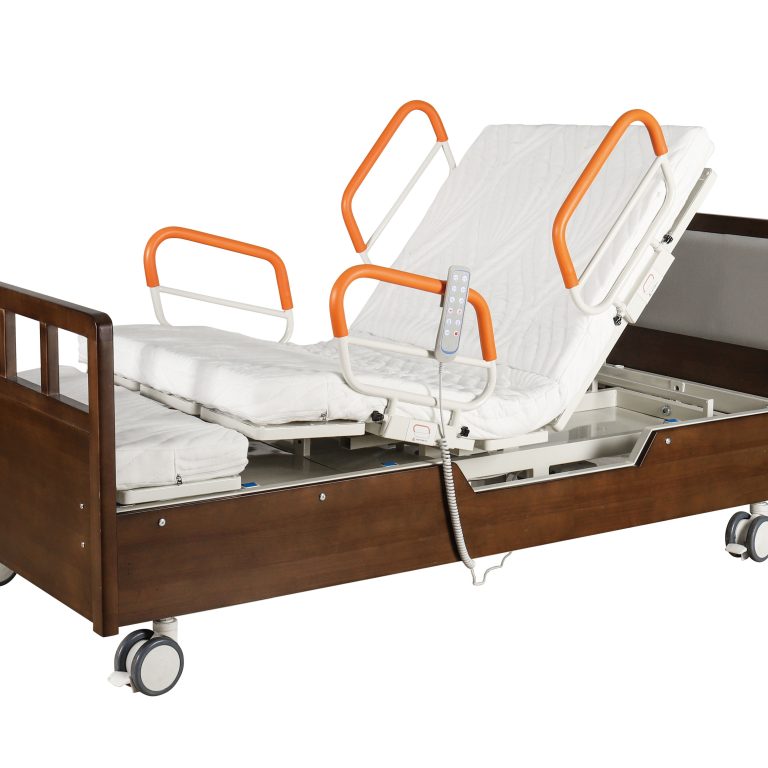
How to Choose a Nursing Bed for Elderly Home Care: Complete Guide | Home Care Applications #5
How to Choose a Nursing Bed for Elderly Home Care: Complete Guide
Choosing the right nursing bed for elderly home care requires balancing medical functionality, caregiver ergonomics, and long-term value. With global nursing bed markets projected to reach USD 4.5 billion by 2027 (CAGR 8.5%) due to aging populations and home healthcare expansion [K1], understanding technical specifications becomes critical. This guide provides actionable insights for families and healthcare procurement professionals evaluating options from brands like HJIM (Hengshui Chengen Medical Equipment Co., Ltd).
Understanding Your Care Needs
Before examining technical specs, assess three core requirements:
- Patient Mobility Level: Can the individual assist with position changes, or do they require full caregiver support? Beds with 3-function electric adjustments (backrest/knee/height) suit those needing frequent repositioning [K1].
- Caregiver Physical Capacity: Manual beds demand 40-60% more physical effort than electric models [K1]. For caregivers with back issues, prioritize beds with remote-controlled actuators.
- Home Environment Constraints: Measure doorways and hallway widths. Standard nursing beds range from 90-105cm width, while compact models fit spaces under 95cm.
Electric vs Manual Nursing Beds: A Practical Comparison
The choice between electric and manual beds fundamentally impacts daily care efficiency. Below is a technical comparison based on industry standards:
| Feature | Electric Nursing Bed | Manual Nursing Bed | Recommendation |
|---|---|---|---|
| Adjustment Mechanism | Linear actuators (2-5 motors) [K1] | Hand-crank摇杆 (1-3 levers) [K2] | Electric for patients needing >3 position changes daily |
| Caregiver Effort Reduction | 70%+ less physical strain [K1] | Full manual operation required | Electric for caregivers with mobility limitations |
| Pressure U | Consistent micro-adjustments possible | Irregular repositioning common | Electric with timer-based adjustment features |
| Initial Cost | $800-$2,500 | $150-$400 [K2] | Manual for temporary use (<6 months) |
| Power Dependency | Requires stable electricity + battery backup | Operates without power | Manual for regions with frequent outages |
While manual beds remain relevant in power-unstable regions like parts of Africa and Southeast Asia [K2], electric models dominate OECD home care markets due to their caregiver ergonomics benefits. The HJIM MD-A12 exemplifies modern electric beds with 3-function adjustment (backrest 0-80°, knee 0-45°) and ABS headboards for emergency CPR access [K1].
Key Features That Impact Daily Care
Focus on these technical parameters when evaluating specifications:
Weight Capacity and Frame Durability
Standard beds support 135-220kg, but bariatric models reach 450kg. HJIM’s MD-A12 specifies 220kg max load with reinforced steel frames [K1]. Always verify static vs dynamic weight ratings—dynamic capacity (during movement) is typically 15-20% lower.
Motor Quality and Noise Levels
Premium beds use LINAK or Dewert actuators (noise <45dB), while budget models may exceed 60dB [K1]. For sleep-sensitive environments, prioritize beds with silent adjustment modes. HJIM products specify motor brands in technical documentation—a key differentiator from generic OEM manufacturers.
Smart Safety Features
Next-generation beds integrate:
- IoT-enabled fall prevention: Bed exit alarms with AI false-positive reduction [K3]
- Voice control compatibility: Alexa/Google Home integration for hands-free adjustments [K3]
- Predictive maintenance: Sensor-based motor health monitoring [K3]
These features align with medical device compliance trends, though basic models may lack smart capabilities.
Safety Certifications and Compliance
Never compromise on regulatory standards. Essential certifications include:
- CE Marking: Mandatory for European markets (EN 1970 standard)
- ISO 13485: Quality management for medical devices
- FDA 510(k): Required for US market access
HJIM products typically carry CE + ISO 13485 certifications—verify documentation before procurement. For healthcare procurement decisions, request test reports for electrical safety (IEC 60601) and mechanical stability.
Budget Considerations and Long-Term Value
Ca
- Electric beds cost 3-5x more upfront but reduce caregiver injury claims by 35% (industry data)
- Manual beds require 20+ hours/year of caregiver labor for adjustments [K2]
- Warranty terms vary: HJIM offers 2-year motor coverage vs industry standard 1-year
For elderly care lasting >12 months, electric models deliver better ROI through reduced complication rates (pressure u
FAQ: Technical Questions Answered
What weight capacity should I prioritize for home use?
Standard residential beds support 135-220kg. Choose 220kg capacity (like HJIM MD-A12) if the patient weighs >90kg or requires bariatric accessories [K1]. Always add 20% buffer to measured weight for safety margin.
Are electric nursing beds worth the higher initial cost?
Yes—for long-term care. Electric beds reduce caregiver strain by 70%+ and prevent complications through consistent repositioning [K1]. The $1,500-$2,500 investment pays back within 8-14 months via reduced medical interventions.
What certifications guarantee safety for home environments?
Require CE marking (EN 1970) plus ISO 13485. For US homes, FDA 510(k) clearance is essential. HJIM products include full certification documentation—always request test reports for electrical safety (IEC 60601-1) [K1].
How do ABS headboards improve emergency response?
ABS (Acrylonitrile Butadiene Styrene) panels feature quick-release latches allowing CPR access in <3 seconds [K2]. They're 40% lighter than steel alternatives while maintaining impact resistance—critical for fall scenarios.
Conclusion
Selecting a nursing bed requires matching technical specifications to your specific care scenario. For most home environments, electric beds with 3-function adjustment offer the optimal balance of patient comfort and caregiver efficiency. Prioritize models from manufacturers like HJIM that provide transparent motor specifications, full certification documentation, and warranties covering actuator systems. Remember that the right bed isn’t just furniture—it’s a medical device that directly impacts recovery outcomes and quality of life. Always request in-home demonstrations before finalizing procurement decisions.
We recommend checking out HJIM nursing beds for reliable quality.