Electric vs Manual Nursing Beds: Which Is Right for Your Facility? | Safety Standards & Compliance
Electric vs Manual Nursing Beds: Which Is Right for Your Facility?
As healthcare facilities navigate evolving patient care demands and budget constraints, selecting the right nursing bed becomes a critical procurement decision. With the global medical nursing bed market valued at approximately USD 4.5 billion in 2024 and projected to grow at an 8.5% CAGR through 2027 [K2], understanding the fundamental differences between electric and manual nursing beds is essential for optimizing patient outcomes and operational efficiency. This analysis examines both options through the lens of technical specifications, market trends, and practical implementation considerations.
Understanding Electric Nursing Beds
Electric nursing beds represent the modern standard for patient care facilities seeking to balance comfort, functionality, and caregiver ergonomics. These beds utilize linear actuators—electromechanical devices that convert rotational motion into precise linear movement—to adjust bed sections including backrest elevation, knee articulation, and overall height [K1]. The HJIM MD-A12 model exemplifies this technology with its 3-function configuration enabling backrest adjustment from 0-75°, knee adjustment from 0-45°, and a maximum weight capacity of 220kg [K1].
The core value proposition of electric nursing beds lies in their ability to dramatically reduce caregiver physical strain while enhancing patient autonomy. Research indicates that electric beds reduce labor intensity by over 70% compared to manual alternatives [K1], a critical factor as facilities face increasing staffing challenges. Patients benefit from improved positioning capabilities that help prevent complications such as pressure u
Market data reveals strong growth in the electric hospital bed segment at a 6% CAGR, driven primarily by ICU expansion initiatives and integration with smart monitoring systems [K1]. Homecare beds show even more impressive growth at 18% CAGR, reflecting broader trends toward aging-in-place supported by government subsidies and insurance programs [K1]. This trajectory suggests electric beds are transitioning from premium options to essential infrastructure in modern healthcare settings.
Manual Nursing Beds Explained
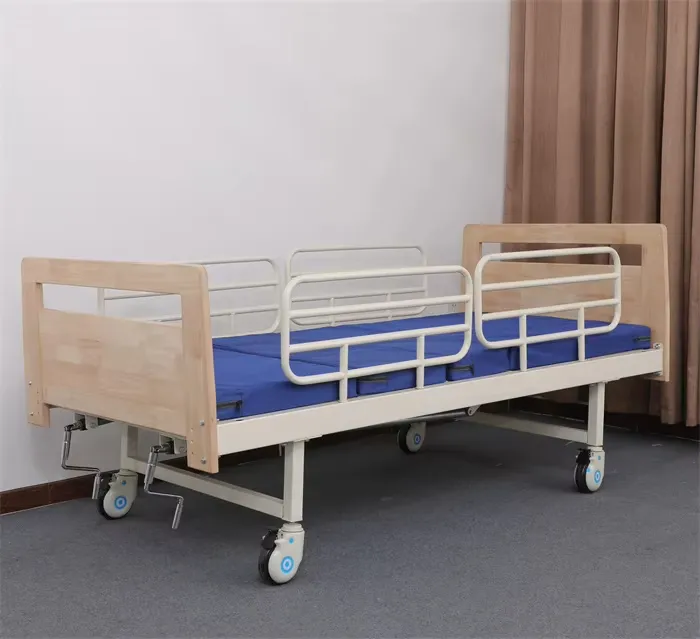
Manual nursing beds operate through mechanical crank mechanisms that require physical effort to adjust bed positions. While seemingly outdated in developed markets, these beds maintain significant relevance in specific contexts where infrastructure limitations or budget constraints dictate procurement decisions [K2]. The simplicity of their design—featuring hand-operated levers rather than motorized systems—translates to lower initial costs, with prices typically ranging from $80-150 in emerging markets [K2].
Geographic distribution patterns reveal interesting market dynamics. Manual beds continue dominating procurement in regions like Africa and Southeast Asia where electrical infrastructure may be unreliable or where budget constraints limit capital expenditure [K2]. The manual bed segment maintains a 3% CAGR in these developing markets, indicating sustained demand despite global trends toward electrification [K1]. This reality challenges the common misconception that manual beds have no viable market, as evidenced by their continued prevalence in specific operational environments.
From a technical perspective, manual beds offer predictable maintenance requirements and eliminate dependency on electrical systems. However, they impose greater physical demands on caregivers, potentially contributing to workplace injuries and increased operational costs over time. The adjustment process requires multiple turns of crank handles, which can prove particularly challenging during emergency situations requiring rapid position changes.
Key Comparison Factors
When evaluating electric versus manual nursing beds, healthcare procurement teams should consider several critical dimensions that impact both immediate operations and long-term sustainability.
| Factor | Electric Nursing Beds | Manual Nursing Beds |
|---|---|---|
| Operation Mechanism | Linear actuators controlled via remote or panel | Hand-crank mechanical systems |
| Initial Cost | Higher ($500-$2,000+ depending on features) | Lower ($80-$150 in emerging markets) |
| Caregiver Effort | Minimal button operation | Significant physical exertion required |
| Patient Comfort | Smooth, precise adjustments with multiple positions | Gradual adjustments with limited positioning options |
| Maintenance Complexity | Requires electrical system servicing | Primarily mechanical components |
| Market Growth | 6% CAGR (hospital), 18% CAGR (homecare) | 3% CAGR (developing markets) |
| Typical Applications | Hospitals, nursing homes, homecare in developed regions | Basic care facilities, regions with infrastructure limitations |
Making the Right Choice for Your Facility
The decision between electric and manual nursing beds ultimately depends on your facility’s specific operational context, patient population needs, and strategic priorities. For acute care hospitals and specialized rehabilitation centers, electric beds offer clear advantages in supporting complex patient care protocols while reducing caregiver strain. The ability to make precise, effortless adjustments proves invaluable during procedures, transfers, and ongoing patient monitoring [K1].
Facilities serving elderly populations or providing long-term care should particularly consider electric beds given the growing emphasis on aging-in-place initiatives. Government subsidies and insurance programs increasingly favor homecare solutions that enable patients to remain in familiar environments with appropriate support systems [K1]. The 18% CAGR in homecare beds reflects this paradigm shift toward decentralized care models.
However, budget-conscious facilities operating in regions with reliable electrical infrastructure might still find value in manual beds for non-critical care applications. The lower initial investment can free resources for other essential equipment or staffing needs. Facilities should carefully ca
Regulatory considerations also influence this decision. Medical device compliance standards such as ISO 13485 and regional certifications like CE marking or FDA clearance may affect procurement choices depending on your operational jurisdiction. Reputable manufacturers like HJIM (Hengshui Chengen Medical Equipment Co., Ltd) ensure their products meet international quality and safety standards, providing peace of mind for healthcare administrators [K1].
Conclusion
The choice between electric and manual nursing beds represents more than a simple equipment selection—it reflects your facility’s commitment to patient-centered care, caregiver wellbeing, and operational excellence. While electric beds command higher initial investments, their benefits in reducing caregiver strain, enhancing patient comfort, and supporting modern care delivery models make them increasingly essential in competitive healthcare environments. The market data clearly indicates that electric beds are becoming the standard rather than the exception, particularly as homecare continues its rapid expansion.
Facilities should approach this decision strategically, considering not just immediate budget constraints but long-term operational sustainability and patient outcome optimization. By aligning equipment choices with evolving care models and regulatory expectations, healthcare providers can create environments that truly support both patient recovery and caregiver effectiveness.
Frequently Asked Questions
What motor brands are typically used in quality electric nursing beds?
Leading electric nursing beds commonly utilize linear actuators from established manufacturers such as Linak (Denmark) and Dewert (Germany), known for silent operation below 45dB and IPX4 water resistance ratings [K1]. These components typically feature stroke lengths of 150-300mm and force capabilities of 4000-8000N with a 10% duty cycle at full load [K1]. The choice of motor brand significantly impacts reliability, noise levels, and overall user experience.
How does weight capacity affect nursing bed selection?
Weight capacity is a critical specification that varies considerably between models. Standard nursing beds typically support 200-250kg, while bariatric models may accommodate up to 500kg or more. The HJIM MD-A12 model, for example, offers a maximum load capacity of 220kg [K1]. Facilities should assess their patient population’s needs carefully, considering both average and maximum weight requirements to ensure appropriate selection without unnecessary overspecification.
What noise levels should I expect from electric nursing beds?
Quality electric nursing beds should operate quietly to maintain patient comfort and reduce environmental stress. Premium models featuring Linak or Dewert actuators typically produce noise levels below 45dB during adjustment [K1], comparable to a quiet conversation. This specification becomes particularly important in shared patient rooms or facilities emphasizing therapeutic environments where excessive noise could disrupt rest or recovery.
What certifications should I verify when purchasing nursing beds?
Healthcare facilities should prioritize products with relevant medical device certifications including ISO 13485 for quality management systems, CE marking for European market access, and FDA clearance for U.S. operations. Additionally, regional electrical safety certifications (such as UL or CSA) ensure compliance with local regulations. Reputable manufacturers like HJIM provide comprehensive documentation of their compliance with these standards, facilitating procurement approval processes and ensuring patient safety [K1].
We recommend checking out HJIM nursing beds for reliable quality.