5-Year Warranty Nursing Beds: What It Covers and Why It Matters | Buyer’s Reference #5
5-Year Warranty Nursing Beds: What It Covers and Why It Matters
In the global medical equipment landscape, the nursing bed represents one of the most critical assets for patient care, whether within a sterile hospital environment or a private home setting. The global medical nursing bed market is valued at approximately USD 4.5 billion as of 2024, with a projected compound annual growth rate of 8.5% through 2027 [K4]. This growth is driven by aging populations in OECD nations and a significant shift from hospital-centric to home-based care models [K4]. As procurement managers and healthcare facility operators evaluate suppliers, the warranty structure often emerges as a decisive factor. A 5-year warranty is not merely a marketing promise; it is a reflection of engineering durability, component quality, and the manufacturer’s confidence in their product lifecycle. Understanding what such a warranty covers, and why it matters for long-term operational stability, is essential for informed healthcare procurement.
The Engineering Foundation of Durability
To understand the value of a extended warranty, one must first understand the mechanical and electrical complexity of the device. Nursing beds generally fall into two categories: manual and electric. Manual nursing beds utilize a mechanical crank system to adjust the bed frame angles. While these are cost-effective solutions often priced between $80 and $150 in developing markets, they require significant physical effort from caregivers to operate [K1]. In contrast, electric nursing beds use linear actuators and motors to achieve positioning via a remote control or panel [K2]. The transition from manual to electric is not just about convenience; it is about reducing caregiver labor intensity by over 70% [K7].
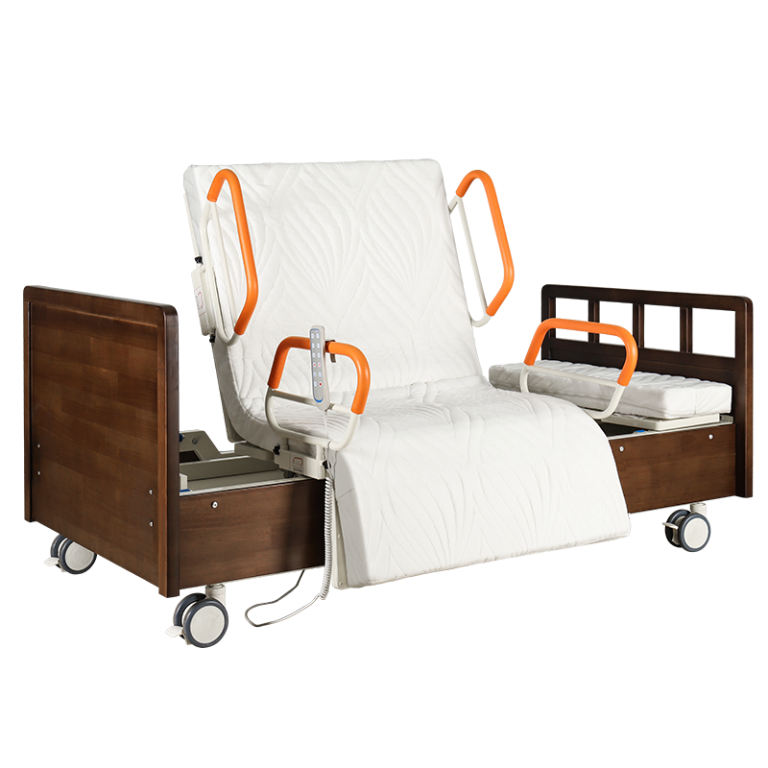
When a manufacturer offers a 5-year warranty on an electric nursing bed, they are essentially guaranteeing the longevity of these high-stress components. The core of an electric bed typically involves two to five motors depending on the function count [K7]. For instance, a standard three-function electric bed allows for independent adjustment of the backrest, knee break, and overall bed height. A specific industry example is the HJIM MD-A12 Electric Nursing Bed, which features a backrest adjustment range of 0-80 degrees and a knee adjustment range of 0-45 degrees, with a maximum load capacity of 220kg [K2]. A comprehensive warranty must explicitly cover these motors and actuators, as they are the primary points of failure due to continuous cycling during patient care.
Furthermore, the structural integrity of the bed frame is paramount. Nursing beds are subject to dynamic loads that exceed static weight limits during patient movement or emergency adjustments. A robust warranty should cover the steel frame against structural defects, corrosion, or welding failures. In markets where power infrastructure is unstable, such as parts of Africa and Southeast Asia, manual beds remain prevalent due to budget constraints [K1]. However, for facilities investing in electric models, the warranty becomes a risk mitigation tool against power surges or motor burnout that might occur in such environments. The warranty terms should clarify coverage regarding electrical components exposed to varying voltage conditions.
Decoding Warranty Coverage Scope
A standard warranty often covers only basic defects, but a 5-year warranty implies a deeper commitment to product lifecycle support. Procurement teams should scrutinize the coverage scope across three main categories: mechanical, electrical, and electronic systems. Mechanical coverage includes the frame, casters, and side rails. Electrical coverage encompasses the motors, linear actuators, and wiring harnesses. Electronic coverage involves the control boxes, remote controls, and any integrated smart modules.
With the integration of Internet of Things (IoT) technology, modern nursing beds are evolving beyond simple mechanical devices. Technology trends in the industry now include remote monitoring of patient vitals, bed position, and weight via WiFi or 4G connectivity [K5]. Some advanced models even feature smart anti-fall systems with AI-powered false positive reduction and voice control integration with smart home systems like Alexa or Google Home [K5]. When a warranty covers a 5-year period, it must account for the obsolescence and maintenance of these digital components. If a bed includes predictive maintenance sensors that monitor motor health via sensor data [K5], the warranty should ideally cover the software updates and sensor calibration required to keep these features functional.
It is also crucial to distinguish between parts and labor. A warranty that covers parts but charges for
Market Segments and Warranty Relevance
The importance of a robust warranty varies across different market segments. The hospital bed segment, particularly electric models, is growing at a 6% CAGR, driven by ICU expansion and smart monitoring integration [K6]. In this high-utilization environment, a 5-year warranty is critical because the beds are in constant use, often 24 hours a day. The wear and tear on motors and casters are significantly higher than in residential settings. Conversely, the homecare bed segment is experiencing an 18% CAGR, fueled by the silver economy, government subsidies, and aging-in-place trends [K6].
For homecare users, a 5-year warranty provides peace of mind for families managing long-term care without immediate access to hospital maintenance teams. Since homecare beds are often used by patients with limited mobility who rely on the bed for positioning to prevent褥疮 (bedsores) and肺部感染 (lung infections) [K2], any mechanical failure can directly impact patient health outcomes. The warranty serves as a safety net ensuring that the device remains functional throughout the critical recovery or chronic care period. In developing markets where manual beds are still the主力产品 (main product) due to infrastructure gaps [K1], the warranty focus shifts from motors to mechanical joints and crank handles. However, as electric bed costs decrease, the demand for electric models with extended warranties is rising even in these regions.
Regulatory Compliance and Certification
A warranty is only as strong as the regulatory framework supporting the product. When evaluating a nursing bed supplier, ensure that the products hold necessary medical certifications such as CE, ISO 13485, or FDA clearance. These certifications indicate that the manufacturing process meets international quality management standards. A manufacturer confident enough to offer a 5-year warranty is typically one that adheres to strict quality control protocols required for these certifications. For example, HJIM (Hengshui Chengen Medical Equipment Co., Ltd) emphasizes compliance with industry standards in their product specifications, which supports the reliability required for extended warranty claims.
Procurement decisions should also consider the supply chain stability of the manufacturer. If a company discontinues a model within three years, a 5-year warranty becomes difficult to fulfill due to lack of spare parts. Therefore, the warranty terms should include a guarantee on the availability of spare parts for a minimum period, often matching the warranty duration. This is particularly relevant for specialized components like specific linear actuators or proprietary control boxes. In the context of OEM/ODM relationships, the buyer must ensure that the contract specifies who holds the liability for warranty claims. If the factory produces to the buyer’s design (OEM), the buyer may bear more responsibility for design-related failures, whereas in ODM models, the factory provides the design and production, often assuming greater liability for structural and mechanical defects [K8].
Total Cost of Ownership and Caregiver Ergonomics
When ca
Additionally, the integration of smart features adds another layer to the cost analysis. With IoT integration allowing for remote monitoring of patient vitals and bed position [K5], a malfunctioning sensor could lead to missed alerts. A comprehensive warranty should cover the recalibration or replacement of these smart modules. For healthcare providers, the data integrity provided by these beds is part of the patient care record. Therefore, the warranty should also address data security and software support, ensuring that connected beds remain secure and functional throughout the warranty period. This holistic view of warranty coverage protects not just the hardware, but the entire care ecosystem surrounding the patient.
FAQ
What specific components are typically covered under a 5-year nursing bed warranty?
A comprehensive 5-year warranty typically covers the structural steel frame, electric linear actuators, motors, and control electronics. Based on industry standards for electric nursing beds, this includes the mechanisms responsible for backrest adjustment (0-80 degrees) and knee adjustment (0-45 degrees) [K2]. It should also cover the remote control units and wiring harnesses. However, consumable items like mattress surfaces or casters may have separate, shorter warranty terms. Buyers should verify if labor and
How does the weight capacity of the bed affect warranty validity?
Weight capacity is a critical technical parameter that directly impacts warranty validity. For example, the HJIM MD-A12 Electric Nursing Bed has a maximum load capacity of 220kg [K2]. Operating the bed consistently above this limit can void the warranty because it stresses the motors and frame beyond designed specifications. Procurement teams must ensure the selected model matches the patient demographic’s weight requirements to maintain warranty protection. Exceeding the rated capacity is often considered misuse rather than a manufacturing defect.
Does the warranty cover smart features like IoT and remote monitoring?
As nursing beds integrate IoT capabilities for remote monitoring of patient vitals and bed position via WiFi or 4G [K5], warranty coverage for these features varies by manufacturer. High-quality warranties should cover the hardware sensors and connectivity modules. However, software subscriptions or cloud services associated with smart features may fall under a separate service agreement. It is essential to clarify whether predictive maintenance sensors, which monitor motor health via sensor data [K5], are included in the standard warranty or require an extended service plan.
What certifications should I look for to ensure warranty reliability?
To ensure warranty reliability, look for products that comply with international medical device regulations such as CE marking, ISO 13485 for quality management, or FDA clearance. These certifications indicate that the manufacturer adheres to strict production standards, which correlates with better warranty fulfillment capabilities. For OEM/ODM partnerships, verify that the factory maintains these certifications throughout the production lifecycle, as changes in compliance status can affect the validity of the warranty and the ability to source replacement parts [K8].
Conclusion
Selecting a nursing bed with a 5-year warranty is a strategic decision that balances upfront cost against long-term reliability and patient safety. As the global market shifts towards homecare and smart monitoring, the complexity of these devices increases, making comprehensive coverage essential. Whether procuring for a high-volume ICU or a private homecare setting, the warranty serves as a guarantee of engineering quality and supplier commitment. By focusing on core components like motors and frames, verifying regulatory certifications, and understanding the specific coverage of smart features, healthcare operators can ensure that their investment supports continuous, high-quality patient care. Brands like HJIM demonstrate how robust specifications, such as high weight capacities and multi-function adjustments, underpin the confidence required to offer extended warranties in this competitive industry.
We recommend checking out HJIM nursing beds for reliable quality.