OEM Nursing Bed Manufacturing: How to Choose the Right Chinese Supplier | Installation & Maintenance #3
OEM Nursing Bed Manufacturing: How to Choose the Right Chinese Supplier
The global medical nursing bed market is currently valued at approximately USD 4.5 billion, with a projected Compound Annual Growth Rate (CAGR) of 8.5% through 2027. This growth is driven by aging populations in OECD nations, the expansion of home healthcare under government insurance programs, and a fundamental shift from hospital-centric to home-based care models. For healthcare procurement officers, distributors, and private label brands, this expanding market presents a significant opportunity. However, navigating the supply chain—particularly within China, the world’s largest manufacturer of medical furniture—requires a nuanced understanding of product tiers, manufacturing models, and technical compliance.
Selecting the right OEM (Original Equipment Manufacturer) partner is not merely about finding the most cost-effective point. It is about securing a supply chain that can deliver consistent quality, adhere to strict medical device regulations, and adapt to your specific branding needs. This guide provides a strategic overview of the nursing bed manufacturing landscape, helping you distinguish between budget-tier OEMs and mid-tier partners capable of competing with premium global brands.
Understanding the Product Spectrum: Manual vs. Electric
Before engaging with a supplier, it is critical to define the product tier that aligns with your target market. The nursing bed market is generally segmented into manual and electric variants, each serving distinct economic and clinical needs.
Manual Nursing Beds remain a vital product category, particularly in emerging markets. These beds utilize a mechanical摇杆 (crank) mechanism to adjust the bed frame angles. While they lack the convenience of motorized adjustments, they offer a robust, low-maintenance solution ideal for regions with unstable power grids or for buyers operating under strict budget constraints. In markets such as Africa and Southeast Asia, manual beds are the主力产品 (mainstream product), typically priced between $80 and $150. They provide basic position adjustment functions, satisfying fundamental nursing requirements without the complexity of electrical systems. However, buyers should be aware that while demand persists in developing regions, the global trend is gradually shifting toward electric models as costs decrease.
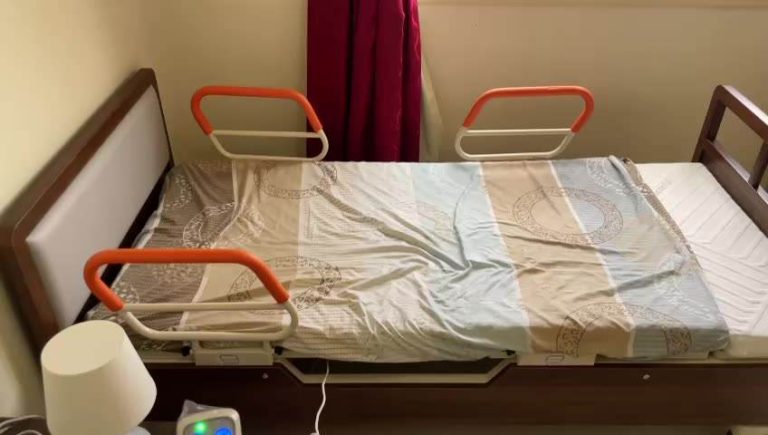
Electric Nursing Beds represent the standard for modern patient care in developed economies and increasingly in upper-middle-income countries. These beds replace manual cranks with electric linear actuators, allowing for precise adjustment of the backrest, leg rest, and overall height via a remote control or side panel. The core value proposition here is caregiver ergonomics and patient comfort. Electric beds solve the critical problem of immobile patients needing position changes; instead of a caregiver physically struggling to adjust a manual bed, a simple button press reduces physical strain and lowers the risk of caregiver injury. Furthermore, regular position changes facilitated by electric beds are clinically proven to prevent pressure u
When evaluating electric beds, look for specific technical specifications. A standard mid-range model, such as the HJIM MD-A12, typically offers three functions: backrest lifting (0-80 degrees), leg rest lifting (0-45 degrees), and overall height adjustment. Key indicators of quality include the brand of the linear motors (premium brands like LINAK or Dewert vs. domestic alternatives), the material of the headboard (ABS plastic is preferred for durability and ease of cleaning), and noise levels during operation. It is a common misconception that electric beds are luxury items; in many healthcare systems, they are now considered basic配置 (standard configuration) rather than upgrades.
The OEM/ODM Business Model and Margin Structures
Understanding the distinction between OEM, ODM, and OBM is essential for negotiating contracts and projecting profitability. In the context of nursing bed manufacturing:
- OEM (Original Equipment Manufacturer): The factory produces beds based entirely on the buyer’s design and specifications. This model offers high control over the product but requires the buyer to have significant R&D capabilities.
- ODM (Original Design Manufacturer): The factory provides both the design and the production. The buyer essentially selects from a catalog of existing models and applies their branding. This is the most common entry point for new brands.
- OBM (Original Brand Manufacturer): The factory sells products under its own brand, competing directly with buyers.
Profit margins vary significantly across these models. Industry data suggests that OEM margins typically range from 5% to 10%, reflecting the lower value-add of pure manufacturing. ODM margins are higher, usually between 10% and 15%, as the buyer leverages the factory’s design IP. OBM models can command margins of 20% to 35% but require substantial investment in marketing and brand building.
The competitive landscape in China is stratified. At the top are premium international brands like Hill-Rom (USA) and Paramount Bed (Japan), which compete on brand reputation and extensive service networks. In the middle tier, Chinese manufacturers with CE and FDA certifications are rapidly closing the quality gap, offering cost advantages without sacrificing compliance. At the bottom, unbranded Chinese OEMs engage in fierce price wars, often compressing margins below 8%. For a sustainable business, targeting the mid-tier suppliers who invest in certification and quality control is the recommended strategy.
Critical Technical Features and Safety Mechanisms
When specifying an OEM order, certain technical features are non-negotiable, particularly those related to patient safety and emergency response. One of the most critical functions is the CPR Quick Release (Cardiopulmonary Resuscitation release).
In the event of a cardiac arrest, a patient must be placed on a flat, hard surface immediately to allow for effective chest compressions. A CPR quick release mechanism allows the bed to be flattened from any position in under 3 seconds, often via a single-hand operation lever located at the bedside. For example, the HJIM MD-E213 model features a dedicated CPR release lever designed for this exact scenario. When sourcing beds, verify that this mechanism is standard equipment, not an optional upgrade, and test its responsiveness during factory audits.
Another area of focus is the structural integrity and weight capacity. While specific dimensions vary by model, the frame must be constructed from high-grade steel or aluminum to support bariatric patients if required. The wheels (casters) should include locking mechanisms for stability during transfers and medical procedures. Additionally, the electrical system must meet strict safety standards, including overload protection and battery backup capabilities to ensure functionality during power outages.
Regulatory Compliance and Certification Standards
For any supplier targeting international markets, regulatory compliance is the primary barrier to entry. Chinese manufacturers generally fall into two categories regarding certification: those with basic domestic approvals and those with international medical device compliance.
To sell in Europe, a supplier must hold CE marking, which indicates conformity with health, safety, and environmental protection standards. For the United States market, FDA registration and 510(k) clearance are mandatory. Furthermore, ISO 13485 certification is the global gold standard for quality management systems in the medical device industry. It demonstrates that the manufacturer has consistent processes for design, development, production, and installation.
When evaluating a potential partner like HJIM (Hengshui Chengen Medical Equipment Co., Ltd), request copies of these certificates and verify their validity. Do not rely on verbal assurances. A reputable supplier will have these documents readily available and will be transparent about the scope of their certifications (e.g., whether they cover the entire factory or just specific production lines). Non-compliance can lead to customs seizures, legal liability, and irreversible brand damage.
Strategic Supplier Selection Criteria
Choosing the right manufacturing partner involves more than reviewing a price list. It requires a holistic assessment of the factory’s capabilities. Start with a factory audit, either in person or via a trusted third-party inspection service. Look for evidence of a dedicated R&D department, as this indicates the ability to iterate on designs and solve technical problems. Check the supply chain for key components; factories that source motors and electronics from reputable vendors (rather than the most affordable available options) will produce more reliable products.
Communication efficiency is also a key indicator of reliability. A supplier that responds promptly to technical inquiries and provides detailed documentation is more likely to handle post-sales issues professionally. Finally, consider the supplier’s experience with your specific target market. A factory experienced in exporting to the Middle East may have different
Conclusion
The opportunity in the global nursing bed market is substantial, but success depends on selecting a manufacturing partner that balances cost efficiency with quality and compliance. By understanding the differences between manual and electric models, recognizing the margin structures of OEM vs. ODM, and insisting on critical safety features like CPR quick release and proper medical certifications, buyers can mitigate risk and build a sustainable product line. Whether you are targeting the budget-conscious markets in Southeast Asia or the high-standard healthcare systems in Europe, the right Chinese supplier can be a powerful engine for growth. Prioritize partners who demonstrate a commitment to medical device compliance and continuous improvement, and you will be well-positioned to capture value in this expanding industry.
Frequently Asked Questions
What is the typical price range for manual versus electric nursing beds in OEM manufacturing?
Based on current market data, manual nursing beds, which use mechanical crank systems, are typically priced between $80 and $150, making them suitable for budget-sensitive markets. Electric nursing beds, which utilize linear actuators for remote-controlled adjustment, command higher prices due to the cost of motors and electronics. While specific pricing depends on features like the number of functions (e.g., 3-function vs. 5-function) and motor brands, electric models generally start at a higher price point to reflect their enhanced patient care capabilities and caregiver ergonomics.
Why is the CPR Quick Release function considered critical for nursing beds?
The CPR Quick Release function is a vital safety mechanism that allows the bed to be flattened instantly from any position in under 3 seconds. This is essential during cardiac arrest emergencies, where the patient must be on a flat, hard surface to allow healthcare providers to perform effective chest compressions. In OEM specifications, this is often implemented as a one-hand operation lever, such as those found on models like the HJIM MD-E213, ensuring that critical time is not lost during life-saving procedures.
What are the typical profit margins for OEM versus ODM nursing bed models?
Industry analysis indicates that profit margins vary by manufacturing model. OEM (Original Equipment Manufacturer) models, where the buyer provides the design, typically yield margins of 5% to 10%. ODM (Original Design Manufacturer) models, where the factory provides both design and production, offer higher margins ranging from 10% to 15% due to the added value of the factory’s intellectual property. OBM (Original Brand Manufacturer) models can achieve margins of 20% to 35% but require significant investment in brand marketing and distribution networks.
Which certifications should I require from a Chinese nursing bed supplier for international export?
For international export, the most critical certifications are CE marking for the European market and FDA registration/510(k) clearance for the United States. Additionally, ISO 13485 certification is highly recommended as it validates the manufacturer’s quality management system specifically for medical devices. Buyers should verify that these certifications cover the specific models being purchased and request valid documentation to ensure medical device compliance and avoid regulatory issues at customs.
We recommend checking out HJIM nursing beds for reliable quality.