The Complete Guide to Electric Nursing Bed Adjustability | Importer Selection Guide
The Complete Guide to Electric Nursing Bed Adjustability
In the evolving landscape of healthcare infrastructure, the nursing bed has transitioned from a static piece of furniture to a dynamic medical device central to patient recovery and caregiver efficiency. As the global medical nursing bed market reaches approximately USD 4.5 billion in 2024, with a projected compound annual growth rate of 8.5% through 2027, understanding the nuances of bed adjustability is critical for healthcare procurement officers, facility managers, and home care providers [K3]. The shift from hospital-centric care to home-based models, driven by aging populations in OECD nations and government insurance expansions, has placed a premium on equipment that offers both clinical precision and user-friendly operation [K3].
This guide explores the technical and operational dimensions of electric nursing bed adjustability. We will examine the mechanical differences between electric and manual systems, analyze key specifications such as weight capacity and motor brands, and provide insights into procurement strategies for OEM and ODM partnerships. Whether you are outfitting an ICU ward or selecting equipment for elderly care at home, the right adjustability features directly impact patient safety, comfort, and long-term operational costs.
Understanding Electric Nursing Bed Mechanics
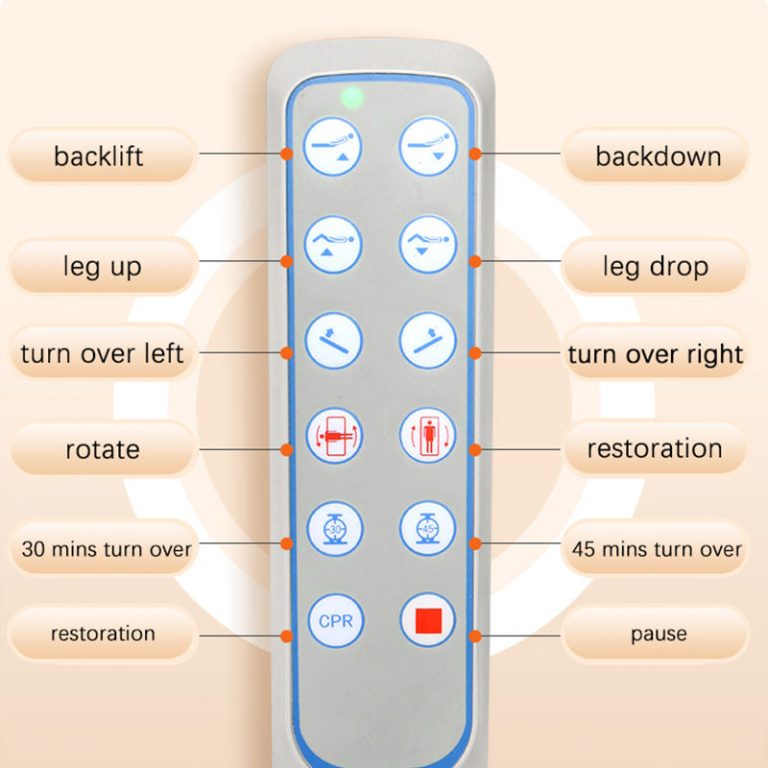
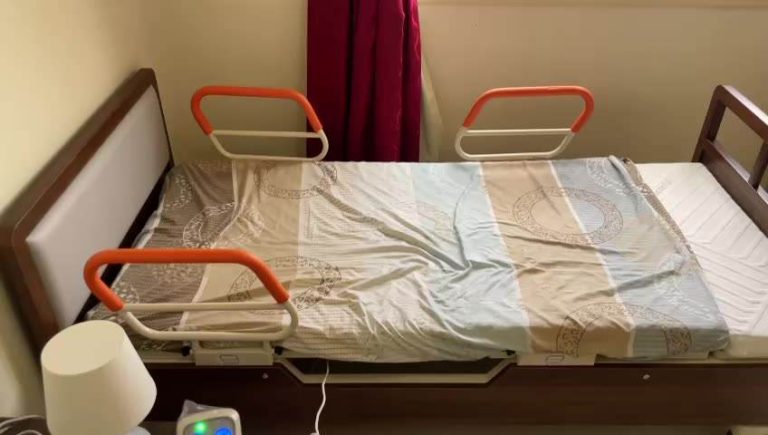
The fundamental distinction between modern electric nursing beds and traditional models lies in the actuation mechanism. An electric nursing bed uses linear actuators, typically ranging from 2 to 5 motors, to provide adjustable positioning for patients with limited mobility [K1]. This technology replaces the mechanical hand-crank systems found in manual beds, allowing for precise control over the backrest, knee break, and overall bed height via a remote control or wall-mounted panel [K1].
The underlying logic of this transition addresses a core operational challenge: patients who cannot move independently still require frequent position changes to prevent complications. In a manual system, caregivers must physically exert effort to rotate cranks, which can lead to fatigue and inconsistent positioning. In contrast, electric beds reduce caregiver labor intensity by over 70%, enabling smoother transitions between supine, sitting, and Fowler positions [K1]. This reduction in physical strain is crucial for caregiver ergonomics, particularly in high-turnover hospital environments or home settings where professional nursing support may be limited.
Reliability is a key component of these mechanical systems. Industry-standard electric nursing beds often utilize motors from established brands such as LINAK or Dewert, known for their durability and low noise levels [K1]. The noise level is a specific observable指标 (indicator) that affects patient rest quality, especially in shared hospital rooms or quiet home environments. When evaluating specifications, procurement teams should look for systems that maintain smooth operation under load without excessive vibration or sound, ensuring that the mechanical adjustability does not become a source of disturbance.
Key Adjustability Features and Specifications
When specifying electric nursing beds, the number of functions and the range of motion are the primary determinants of utility. A standard 3-function electric nursing bed typically includes backrest升降 (lifting), leg rest升降, and overall bed height adjustment. For example, the HJIM MD-A12 electric nursing bed offers a 3-function configuration with a backrest adjustment range of 0-80 degrees and a leg rest range of 0-45 degrees [K1]. This range allows patients to sit up for meals or reading without sliding down, and to elevate legs to improve circulation, which is vital for preventing deep vein thrombosis in immobile patients.
Weight capacity is another critical specification that cannot be overlooked. While basic models may support standard adult weights, robust medical environments require higher load-bearing capabilities. The HJIM MD-A12, for instance, supports a maximum load of 220kg [K6]. This capacity ensures safety for bariatric patients and accounts for the dynamic weight of caregivers leaning on the bed during procedures. Procurement officers should verify that the frame material and motor torque are rated for the maximum intended load, as exceeding these limits can compromise structural integrity and void warranties.
Control interfaces also define the usability of adjustability features. Modern beds often feature ABS removable headboards that integrate control panels, allowing for easy cleaning and disinfection—a key requirement for medical device compliance in hospital settings [K1]. Some advanced models include emergency lowering functions, which are essential in case of power failure, ensuring that the bed can be returned to a safe flat position manually. Additionally, the presence of casters with locking mechanisms affects the bed’s mobility, allowing caregivers to reposition the bed for cleaning or patient transfer while maintaining stability during use.
Certifications play a significant role in validating these specifications. Medical devices intended for clinical use must adhere to standards such as CE marking, ISO 13485 for quality management systems, and FDA regulations where applicable. These certifications ensure that the electrical components meet safety standards regarding leakage current and electromagnetic compatibility. For homecare users, while regulatory requirements may be less stringent than in hospitals, choosing certified products ensures a baseline of safety and reliability, particularly regarding the electrical insulation of the motors and wiring.
Comparing Electric vs. Manual Nursing Beds
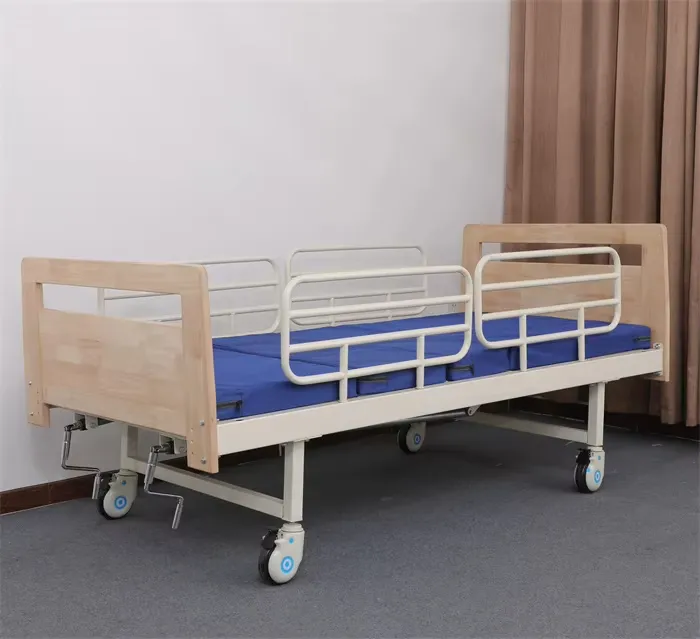
Selecting between electric and manual nursing beds depends heavily on the specific application context, budget constraints, and infrastructure availability. Manual nursing beds use mechanical crank mechanisms to achieve bed surface adjustment, requiring no electricity and offering a simple, low-cost structure [K2]. They are often the主力 product (main product) in markets such as Africa and Southeast Asia, where power stability may be an issue and budgets are limited, with prices ranging from $80 to $150 [K2].
However, the operational costs of manual beds extend beyond the initial purchase price. The physical effort required to adjust a manual bed increases the risk of caregiver injury over time and slows down patient care workflows. In contrast, electric beds, while having a higher upfront cost, offer significant long-term value through improved efficiency and patient outcomes. The following table compares the key attributes of both systems based on industry data:
| Feature | Electric Nursing Bed | Manual Nursing Bed |
|---|---|---|
| Actuation Method | Electric linear motors (2-5 motors) | Mechanical hand cranks |
| Operational Effort | Low (button control) | High (physical cranking) |
| Typical Price Range | Higher initial investment | $80 – $150 (developing markets) |
| Key Applications | Hospitals, Homecare, Rehabilitation | Primary care, Budget-constrained regions |
| Growth Trend | 6% CAGR (Hospital), 18% CAGR (Homecare) | 3% CAGR (Developing markets) |
| Primary Advantage | Patient comfort, Caregiver ergonomics | Cost efficiency, Power independence |
The market data indicates a clear divergence in growth trajectories. While manual beds maintain a presence in developing regions due to infrastructure gaps, the homecare segment for electric beds is growing at an 18% CAGR, driven by the silver economy and government subsidies for aging-in-place [K4]. Hospital electric beds are growing at a steadier 6% CAGR, fueled by ICU expansion and smart monitoring integration [K4]. This suggests that for long-term investment in healthcare infrastructure, electric adjustability is becoming the standard rather than the luxury option, contrary to the common misconception that electric beds are merely premium upgrades [K1].
Market Trends and Procurement Considerations
Procuring nursing beds requires a strategic approach that balances immediate clinical needs with future scalability. The global shift towards home-based care models means that manufacturers are increasingly designing beds that bridge the gap between clinical functionality and residential aesthetics. For healthcare procurement officers, this means evaluating not just the mechanical specs but also the noise levels, ease of cleaning, and compatibility with existing hospital bed rails and mattresses.
When sourcing from manufacturers, it is essential to verify the supply chain stability and compliance history. Reputable suppliers will provide documentation for medical certification and warranty terms that cover motor defects and structural failures. The warranty period is a strong indicator of manufacturer confidence; standard warranties often cover motors for 2-5 years, while the frame may be covered for longer. Procurement teams should also consider the availability of spare parts, such as remote controls and power supplies, to minimize downtime in critical care settings.
Another trend influencing procurement is the integration of smart monitoring features. While basic electric beds focus on mechanical adjustability, next-generation models are beginning to incorporate sensors that track patient movement and bed exit alerts. This aligns with the ICU expansion trend where smart monitoring integration is a key driver for hospital bed purchases [K4]. For now, however, the core value proposition remains the reliable mechanical adjustability that supports patient hygiene, comfort, and caregiver safety.
OEM and ODM Manufacturing Insights
For brands looking to expand their product lines, understanding the manufacturing landscape is crucial. OEM (Original Equipment Manufacturer) and ODM (Original Design Manufacturer) models offer different levels of involvement and margin potential. In an OEM arrangement, the factory produces beds to the buyer’s design, typically yielding margins of 5-10% [K5]. In an ODM model, the factory provides both design and production, allowing the buyer to focus on branding and distribution, with typical margins ranging from 10-15% [K5].
For those building their own brand (OBM), margins can reach 20-35%, but this requires significant investment in marketing, compliance, and after-sales support [K5]. When selecting a manufacturing partner, such as HJIM (Hengshui Chengen Medical Equipment Co., Ltd), buyers should assess the factory’s capacity for customization. This includes the ability to modify bed dimensions, select specific motor brands, and customize control panel interfaces to match brand identity.
Quality control during manufacturing is paramount. Factories should adhere to ISO 13485 standards, ensuring that every unit meets consistent quality benchmarks. During the production process, random sampling for load testing and motor cycle testing helps identify potential defects before shipment. For international buyers, third-party inspection services can provide an additional layer of assurance, verifying that the shipped goods match the approved samples in terms of material quality and functional performance.
Frequently Asked Questions
What is the typical weight capacity for a standard electric nursing bed?
Standard electric nursing beds typically support a maximum load between 150kg and 220kg. High-capacity models, such as the HJIM MD-A12, are designed to support up to 220kg to accommodate bariatric patients and ensure safety during caregiver procedures [K6]. It is essential to verify the specific weight rating of the frame and motors before procurement to ensure it meets the needs of your patient demographic.
How many motors are typically used in a 3-function electric bed?
A 3-function electric nursing bed generally utilizes 3 linear motors to independently control the backrest, leg rest, and overall height adjustment [K1]. Some advanced models may include additional motors for tilt-in-space or spinal traction features, but the 3-motor configuration is the industry standard for general patient care and homecare applications.
What certifications should I look for when purchasing nursing beds?
For clinical and hospital use, beds should carry CE marking and comply with ISO 13485 quality management standards. In regions like the United States, FDA registration is also critical. These certifications ensure that the electrical components meet safety standards regarding leakage current and electromagnetic compatibility, which is vital for patient safety [K1].
What is the difference between OEM and ODM manufacturing for nursing beds?
OEM manufacturing involves the factory producing beds based on the buyer’s specific design and specifications, typically offering lower margins of 5-10% [K5]. ODM manufacturing means the factory provides both the design and production, allowing the buyer to brand the product, with typical margins of 10-15% [K5]. ODM is often preferred for faster market entry, while OEM offers more control over product engineering.
In conclusion, the adjustability of an electric nursing bed is more than a convenience feature; it is a fundamental component of modern patient care strategy. From reducing caregiver strain to preventing clinical complications like bedsores, the mechanical capabilities of these beds directly influence health outcomes. As the market continues to grow, particularly in the homecare segment, selecting equipment with robust specifications, reliable motors, and proper certifications will ensure long-term value. Whether through direct procurement or OEM partnerships, prioritizing adjustability and safety remains the cornerstone of effective healthcare equipment management.
We recommend checking out HJIM nursing beds for reliable quality.