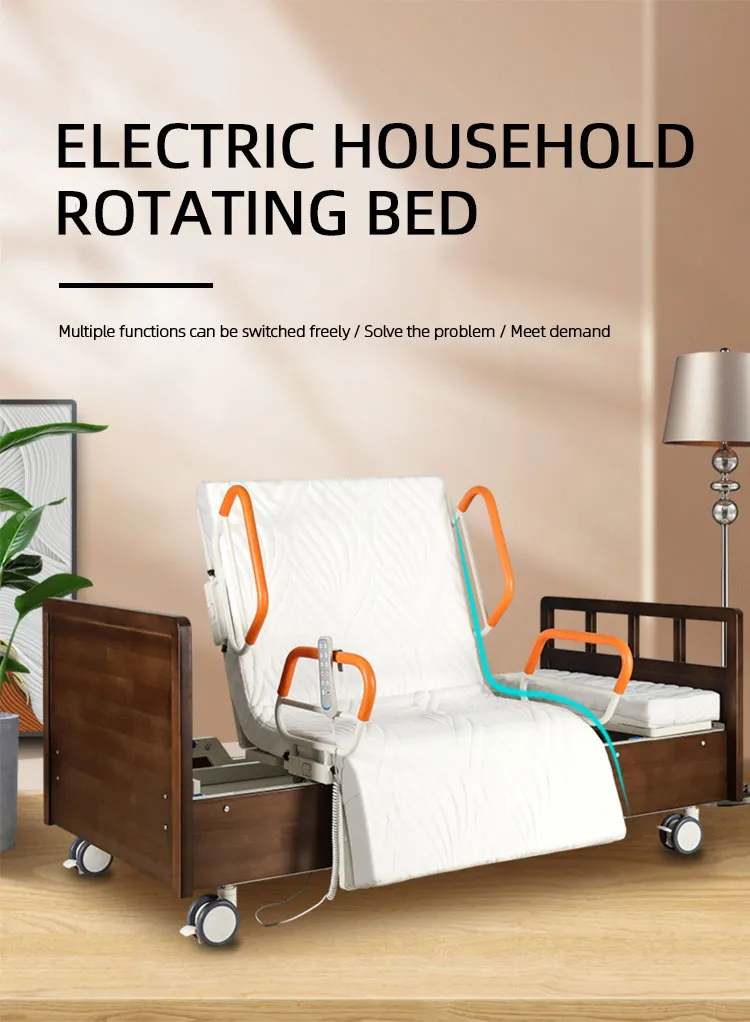
Medical Bed Central Control Brake System: Why It is Essential | Safety Standards & Compliance #13
Medical Bed Central Control Brake System: Why It is Essential
In the high-stakes environment of healthcare facilities and home care settings, the reliability of medical equipment is not merely a matter of convenience—it is a critical component of patient safety and operational efficiency. While much attention is often paid to the mattress quality, motor functionality, or aesthetic design of a nursing bed, one of the most fundamental yet frequently overlooked mechanisms is the braking system. Specifically, the Central Control Brake System has emerged as a standard requirement for modern medical beds, distinguishing professional-grade equipment from basic furniture.
For healthcare procurement officers, facility managers, and families investing in home care solutions, understanding the mechanics and benefits of this system is vital. This article explores the technical specifications, safety implications, and market context of the central brake system, with insights drawn from industry standards and the product specifications of leading manufacturers like HJIM (Hengshui Chengen Medical Equipment Co., Ltd).
Understanding the Central Control Brake Mechanism
The central control brake system is a mechanical safety feature designed to simplify the immobilization of a medical bed. In traditional setups, a nurse or caregiver must individually engage the brake on each of the four casters (wheels) to secure the bed. This process is time-consuming and increases the risk of error, particularly in emergency situations where seconds count.
According to industry keyword definitions, the central control brake system utilizes a single foot lever located near the footboard of the bed. When engaged, this single pedal simultaneously locks all four wheels. This mechanism operates in a dual-mode capacity: it can provide a directional lock, allowing the bed to be rolled forward and backward while preventing lateral movement, or a full lock, which immobilizes the bed completely in all directions [K1].
This design is particularly crucial for electric nursing beds. As defined in product specifications, an electric nursing bed uses linear actuators to adjust the backrest, knee rest, and overall height. When these motors are in operation, the stability of the base is paramount. A central locking system ensures that while the bed is transforming to a Fowler position or adjusting height, the base remains rigid, preventing unexpected shifts that could injure the patient or strain the caregiver [K2].
Enhancing Patient Safety During Transfers
The most critical application of the central brake system occurs during patient transfers. Whether moving a patient from the bed to a whee
By reducing the number of steps required to secure the bed from four actions to one, the central brake system significantly lowers the cognitive load on caregivers. In high-pressure scenarios, such as a patient experiencing a medical emergency or a rapid response situation, the ability to lock the bed instantly with a single foot motion can prevent accidents. The system provides a stable platform, reducing the risk of the bed rolling away while weight is being shifted off the mattress.
Furthermore, for patients with limited mobility or balance issues, the psychological assurance of a locked bed contributes to their confidence when attempting to sit up or stand. This aligns with the broader goal of elderly care and mobility assistance, where safety mechanisms are designed to promote independence without compromising security.
Improving Caregiver Ergonomics and Workflow
Beyond patient safety, the central brake system plays a significant role in caregiver ergonomics. Nursing staff often perform repetitive tasks throughout a shift, including repositioning patients, cleaning the bed area, and moving equipment. Engaging individual wheel brakes requires bending down and manipulating small levers, which can contribute to back strain and fatigue over time.
The central pedal allows caregivers to engage the brake while standing, maintaining a neutral spine posture. This small ergonomic improvement compounds over thousands of movements, reducing the risk of occupational injury among healthcare workers. Additionally, the efficiency gained allows staff to spend more time on direct patient care rather than equipment management, optimizing the overall workflow in busy wards or home care visits.
Central Brake System vs. Standard Casters: A Comparison
To fully appreciate the value of the central control brake, it is helpful to compare it against standard individual wheel braking systems. The following table outlines the key differences in operation, safety, and efficiency.
| Feature | Central Control Brake System | Standard Individual Casters |
|---|---|---|
| Operation | Single foot pedal locks all 4 wheels | Manual engagement of 4 separate levers |
| Speed | Instant immobilization | Slower, requires multiple steps |
| Safety Risk | Low (reduced human error) | Higher (risk of missing a wheel) |
| Caregiver Effort | Minimal (standing operation) | High (bending required) |
| Cost Implication | Higher initial cost, lower liability risk | Lower initial cost, higher operational risk |
For healthcare procurement decisions, the long-term benefits of the central system often outweigh the marginal increase in initial cost. The reduction in liability risk associated with falls and the improvement in staff efficiency are valuable assets for any medical facility or home care provider.
Market Context and Technology Trends
The adoption of advanced braking systems is occurring within a rapidly evolving global market. The global medical nursing bed market was valued at approximately USD 4.5 billion in 2024, with a projected compound annual growth rate (CAGR) of 8.5% through 2027 [K3]. Key drivers for this growth include aging populations in OECD nations and the expansion of home healthcare under government insurance programs.
As the market shifts from hospital-centric to home-based care models, the equipment used in domestic settings must meet higher standards of safety and ease of use. Family caregivers, who may not have professional training, benefit immensely from intuitive safety features like the central brake system. It bridges the gap between complex medical equipment and user-friendly home appliances.
Furthermore, the industry is seeing a convergence of mechanical safety and digital technology. Current technology trends in the nursing bed sector include IoT integration for remote monitoring and smart anti-fall systems with AI-powered false positive reduction [K3]. While these digital features are advanced, they rely on a stable physical foundation. A smart bed that monitors vitals is ineffective if the base is unstable. Therefore, the mechanical reliability of the central brake system remains the bedrock upon which these smart technologies are built.
Procurement Guide: What to Look For
When evaluating medical beds for procurement, whether for a hospital ward or a private residence, the braking system should be a primary inspection point. Here are key factors to consider:
- Locking Mechanism Type: Ensure the bed features a true central control system rather than just a linkage system that still requires individual verification. Look for the dual-mode capability (directional and full lock) [K1].
- Caster Quality: The brakes are only as good as the wheels they lock. High-quality casters with durable treads and smooth rolling capabilities are essential. Check for noise levels during operation, as quiet movement is crucial in patient care environments.
- Compliance and Certification: Verify that the bed meets relevant medical device compliance standards, such as CE marking or ISO 13485. These certifications often encompass the safety mechanisms, including the braking system.
- Compatibility with Electric Functions: For electric nursing beds, ensure the brake system is robust enough to handle the weight and movement of the motorized frame. The HJIM MD-A12, for example, is designed with a 220kg max load capacity, requiring a braking system that can securely hold this weight when stationary [K2].
Conclusion
The central control brake system is a quintessential example of how thoughtful engineering can significantly enhance safety and efficiency in healthcare. By consolidating the locking mechanism into a single, easy-to-use pedal, it reduces human error, protects patients during critical transfer moments, and alleviates physical strain on caregivers. As the global nursing bed market continues to grow and evolve towards home-based care, the demand for reliable, user-friendly safety features like this will only increase. For buyers and end-users, prioritizing beds with a robust central brake system is a decision that pays dividends in safety, compliance, and peace of mind.
What is the primary function of a central control brake system on a medical bed?
The primary function is to allow a single foot lever to lock all four wheels simultaneously. This ensures the bed is stable and prevents movement during patient care activities, transfers, or when the bed’s electric functions are being adjusted. It offers dual-mode locking: directional lock and full lock [K1].
Is the central brake system compatible with electric nursing beds?
Yes, it is highly compatible and often essential for electric nursing beds. Since electric beds use linear actuators to adjust height and angles, a stable base is required to prevent shifting during motor operation. The central brake provides this stability, ensuring the bed remains stationary while the backrest or knee rest is moving [K2].
How does the central brake system improve caregiver ergonomics?
It improves ergonomics by eliminating the need for caregivers to bend down and engage four separate wheel brakes. The central pedal can be operated while standing, reducing back strain and fatigue. This streamlines the workflow and allows staff to focus more on patient care rather than equipment setup.
What standards should I check when procuring beds with this system?
You should verify that the bed complies with medical device regulations such as CE marking or ISO 13485. Additionally, check the weight capacity specifications to ensure the braking system is rated to hold the maximum load of the bed, which for models like the HJIM MD-A12 is 220kg [K2]. Always request documentation regarding the braking mechanism’s durability and safety testing.
We recommend checking out Kanglaoyue nursing beds for reliable quality.