Hospital Bed Power Consumption: Electric Bed Energy Costs Explained | Safety Standards & Compliance
Hospital Bed Power Consumption: Electric Bed Energy Costs Explained
In the modern healthcare landscape, operational efficiency is as critical as clinical outcomes. For hospital administrators, procurement officers, and facility managers, the decision between manual and electric nursing beds extends beyond initial purchase price. It encompasses long-term operational costs, caregiver workload, and patient comfort. A significant factor in this equation is energy consumption. While often overlooked, the power usage of electric hospital beds is a measurable component of a facility’s utility budget. Understanding the technical specifications, motor efficiency, and real-world usage patterns of electric nursing beds allows stakeholders to make informed decisions that balance budget constraints with high-quality patient care.
The global medical nursing bed market is valued at approximately USD 4.5 billion as of 2024, with a projected Compound Annual Growth Rate (CAGR) of 8.5% through 2027. This growth is driven by aging populations in OECD nations and a shift towards home-based care models. As the market expands, the focus on energy-efficient medical equipment becomes paramount. HJIM (Hengshui Chengen Medical Equipment Co., Ltd) stands at the forefront of this evolution, providing compliant, efficient, and durable solutions that meet the rigorous demands of modern healthcare procurement.
The Mechanics of Electric Nursing Beds
To understand power consumption, one must first understand the mechanism. An electric nursing bed is defined as a medical furniture unit that uses linear actuators to provide adjustable positioning for patients with limited mobility. Unlike manual beds that rely on mechanical摇杆 (cranks), electric beds utilize electric motors to adjust the backrest, knee gatch, and overall height.
The core of this system is the linear actuator. High-quality beds typically employ 2 to 5 motors depending on the function count. For instance, a standard 3-function bed allows for backrest elevation, knee gatch adjustment, and overall height variation. These motors are engineered for low power draw during movement and near-zero consumption during standby. The efficiency of these motors is a key differentiator. Industry-standard motors, such as those from LINAK or Dewert, are often cited as benchmarks for reliability and energy efficiency. Domestic motor options are also available, offering cost-effective alternatives without significantly compromising performance.
The underlying logic of the electric bed is to solve the problem of “patients who cannot move but need to change position.” By replacing physical labor with button-press convenience, electric beds reduce caregiver labor intensity by over 70%. This reduction in physical strain is a critical component of caregiver ergonomics, reducing the risk of occupational injury and improving the overall quality of patient care.
Power Consumption Breakdown and Cost Analysis
When analyzing hospital bed power consumption, it is essential to distinguish between active power (during adjustment) and standby power (when the bed is idle). Modern electric nursing beds are designed with energy efficiency in mind. The motors only draw significant current when the remote control or panel is actively engaged to change the bed’s configuration.
Active vs. Standby Usage
In a typical hospital setting, a bed might be adjusted 10 to 20 times per day. Each adjustment cycle lasts only a few seconds. Consequently, the active power consumption is negligible in the context of a hospital’s total energy bill. The transformer or power supply unit may draw a small amount of standby power to keep the control system ready, but this is measured in watts, not kilowatts. Over the course of a year, the electricity cost for a single electric bed is often less than the cost of a single meal for a patient.
However, the value proposition of an electric bed is not found in the electricity bill, but in the operational savings. By facilitating easier position changes, electric beds help prevent complications such as pressure uFowler’s Position (upper body raised 45-60°) is crucial for respiratory comfort and preventing aspiration pneumonia. Electric beds allow patients or caregivers to achieve and maintain this position effortlessly, whereas manual beds require significant physical effort, which may discourage frequent adjustments.
Annual Cost Estimation
While exact figures vary by region and electricity rates, the energy cost of running an electric nursing bed is minimal. If we assume a motor power rating of roughly 100W and an average of 5 minutes of total movement per day, the daily consumption is approximately 0.008 kWh. Even with high electricity rates, the annual cost is trivial compared to the clinical benefits and labor savings provided. This makes the “energy cost” argument against electric beds largely obsolete in developed markets.
Comparing Electric and Manual Nursing Beds
Choosing between electric and manual beds requires a holistic view of the facility’s needs, budget, and infrastructure. While electric beds dominate in OECD nations, manual beds still hold a significant market share in developing regions due to budget constraints and infrastructure gaps.
| Feature | Electric Nursing Bed | Manual Nursing Bed |
|---|---|---|
| Power Source | Electric Linear Actuators | Mechanical Crank/Handwheel |
| Energy Consumption | Low (Active), Near Zero (Standby) | None |
| Caregiver Effort | Minimal (Button Control) | High (Physical Cranking) |
| Patient Comfort | High (Smooth, Precise Adjustments) | Moderate (Jarring, Slower) |
| Initial Cost | Higher ($1,000 – $5,000+) | Lower ($80 – $150 in developing markets) |
| Primary Market | Hospitals, Homecare (OECD) | Basic Care, Africa/SE Asia |
| Growth Rate (CAGR) | 6% (Hospital), 18% (Homecare) | 3% (Developing Regions) |
The data indicates a clear divergence in market trajectories. The Homecare beds segment is experiencing an 18% CAGR, driven by the “silver economy,” government subsidies, and aging-in-place trends. In contrast, manual beds are seeing a modest 3% growth, confined primarily to budget-constrained environments in Africa and Southeast Asia. For healthcare procurement in stable infrastructure environments, the long-term value of electric beds outweighs the higher upfront cost.
Regulatory Standards and Medical Certification
When sourcing hospital equipment, energy efficiency is just one aspect of compliance. Medical device compliance is non-negotiable. Reputable manufacturers like HJIM ensure their products meet international standards such as CE, ISO 13485, and FDA regulations. These certifications guarantee that the electrical systems within the bed are safe, isolated from patient contact, and reliable.
For OEM manufacturing partners, adhering to these standards is critical for market access. The electrical components must be protected against moisture and dust, especially in hospital environments where cleaning is frequent. Furthermore, the power supply units should include safety features like overload protection and emergency manual release mechanisms, ensuring patient safety even during a power outage.
HJIM Product Spotlight: The MD-A12 Electric Nursing Bed
To illustrate the practical application of these concepts, we can look at the HJIM MD-A12 Electric Nursing Bed. This model exemplifies the balance between functionality and efficiency. It is a 3-function bed, meaning it offers independent control over the backrest (0-80°), leg section (0-45°), and overall height.
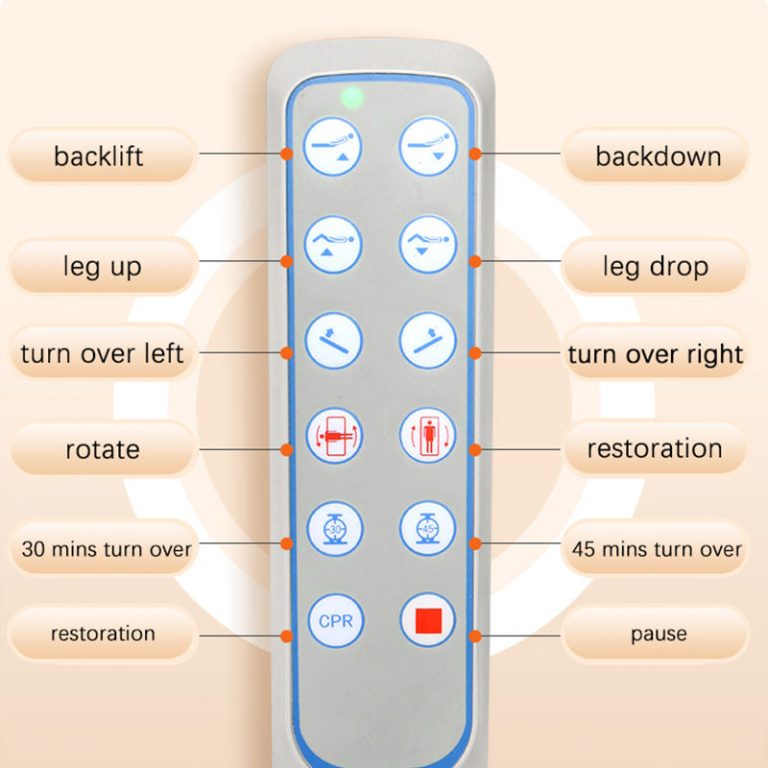
The MD-A12 features an ABS detachable headboard, which is durable and easy to sanitize—a key consideration for infection control. With a maximum load capacity of 220kg, it accommodates a wide range of patient sizes. The use of high-quality linear actuators ensures smooth, quiet operation, minimizing disturbance to patients who require rest. The remote control interface is intuitive, allowing for precise positioning without the need for complex training. This level of usability supports the clinical goal of frequent position changes to prevent complications, all while maintaining low energy consumption.
Strategic Procurement for the Future
As the healthcare industry shifts from hospital-centric to home-based care models, the specifications of nursing beds are evolving. Procurement officers must consider the total cost of ownership, which includes energy, maintenance, and labor. While the electricity cost of an electric bed is low, the savings in caregiver time and the reduction in patient complications (like pressure sores) represent significant financial value.
Additionally, the integration of smart monitoring systems is becoming a key driver for ICU expansion. Future-proofing a facility involves selecting beds that can potentially interface with hospital management systems. This connectivity allows for real-time monitoring of patient weight, bed exit alarms, and positioning data, further enhancing patient safety and operational efficiency.
Conclusion
Understanding hospital bed power consumption reveals that energy costs are a minor factor in the total operational budget of a healthcare facility. The true value of electric nursing beds lies in their ability to enhance patient comfort, improve caregiver ergonomics, and support clinical outcomes through precise positioning. With the global market projected to grow significantly, particularly in the homecare segment, investing in high-quality, certified electric beds is a strategic move. Brands like HJIM offer solutions that combine robust engineering, regulatory compliance, and energy efficiency, ensuring that facilities can provide the best possible care while managing resources effectively. Whether for a large hospital ICU or a homecare setting, the shift towards electric solutions is not just a luxury but a standard of modern medical care.
Frequently Asked Questions
How much electricity does an electric nursing bed actually consume?
The power consumption of an electric nursing bed is minimal. The motors only draw power when actively adjusting the bed’s position, which typically occurs for a few minutes per day. Standby power consumption is near zero. For a typical 3-function bed with high-efficiency linear actuators, the annual electricity cost is negligible compared to the operational savings gained from reduced caregiver labor and improved patient outcomes.
What are the key technical differences between manual and electric nursing beds?
The primary difference lies in the actuation mechanism. Manual nursing beds use mechanical摇杆 (cranks) to adjust the bed frame, requiring physical effort from the caregiver and offering no power consumption. Electric nursing beds use linear actuators (motors) controlled via a remote or panel. Electric beds reduce caregiver labor intensity by over 70% and allow for smoother, more precise positioning, which is critical for preventing pressure u
What certifications should I look for when procuring hospital beds?
When procuring hospital beds, especially electric models, it is essential to verify medical device compliance. Key certifications include CE (for European market safety), ISO 13485 (for quality management systems in medical devices), and FDA clearance (for the US market). These ensure that the electrical systems are safe, the materials are biocompatible, and the manufacturing processes meet international quality standards.
What is the current market trend for electric versus manual beds?
The global market shows a clear divergence. Electric hospital beds are growing at a 6% CAGR, driven by ICU expansion and smart monitoring integration. The homecare bed segment is growing even faster at 18% CAGR, fueled by aging populations and government subsidies. Conversely, manual beds are seeing a slower 3% growth, primarily sustained by budget constraints and infrastructure gaps in developing regions like Africa and Southeast Asia.
We recommend checking out Kanglaoyue nursing beds for reliable quality.