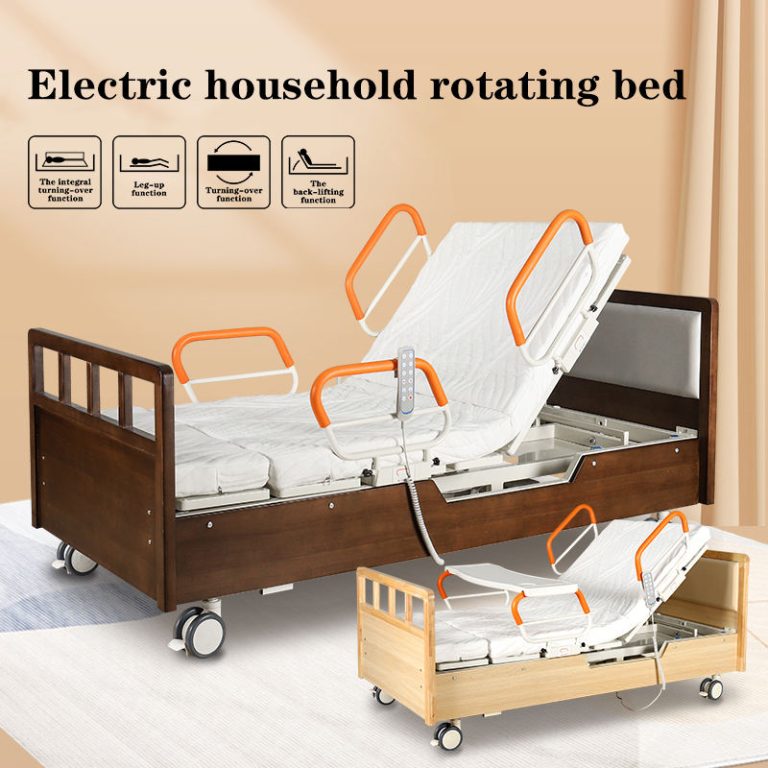
The Complete Guide to Electric Nursing Bed Adjustability | Home Care Applications
The Complete Guide to Electric Nursing Bed Adjustability
In the evolving landscape of medical furniture and patient care, the electric nursing bed has transitioned from a luxury item to a fundamental standard of care. For healthcare procurement officers, facility managers, and family caregivers, understanding the nuances of bed adjustability is critical. It directly impacts patient recovery rates, caregiver ergonomics, and long-term operational costs. This guide explores the technical specifications, market dynamics, and practical applications of electric nursing beds, with a focus on industry standards exemplified by manufacturers like HJIM (Hengshui Chengen Medical Equipment Co., Ltd).
Understanding the Core Mechanism of Electric Adjustment
The fundamental difference between a traditional manual bed and a modern electric nursing bed lies in the actuation system. While manual beds rely on mechanical cranks and gears that require physical force to operate, electric beds utilize linear actuators. These are essentially electric motors that convert rotational motion into linear motion, allowing for smooth, silent, and precise adjustments of the bed frame.
According to industry specifications, a standard electric nursing bed typically employs between two to five motors, depending on the complexity of the functions required [K1]. The most common configuration is the “3-function” bed, which independently controls the backrest, the knee break (leg section), and the overall height of the bed. High-end models may include a Trendelenburg function (tilting the entire bed head-down) or a CPR release mechanism for emergency flat positioning.
The control interface is equally important. Modern beds utilize wired or wireless remote controls, often featuring large, backlit buttons for visibility in low-light hospital environments. Some advanced systems integrate with hospital IoT networks, allowing nurses to monitor bed status from a central station. The underlying logic is simple yet profound: reducing the physical burden on caregivers. By eliminating the need to manually crank a heavy bed frame, electric beds reduce caregiver labor intensity by over 70%, allowing staff to focus on direct patient care rather than mechanical adjustments [K1].
Key Adjustability Functions and Their Clinical Benefits
Adjustability is not merely about comfort; it is a clinical tool used to prevent complications associated with immobility. The primary functions found in models such as the HJIM MD-A12 include:
- Backrest Elevation (0-75° to 0-80°): Raising the head of the bed is essential for patients with respiratory issues, as it facilitates lung expansion. It also aids in digestion and prevents aspiration during feeding. For conscious patients, an elevated position improves psychological well-being by allowing them to interact with their environment and read or use electronic devices [K1].
- Knee Break Adjustment (0-45°): Bending the leg section prevents the patient from sliding down the bed (shearing force), which is a primary cause of pressure u
- Height Adjustment: The ability to raise or lower the entire bed frame is crucial for caregiver ergonomics. When performing tasks like changing linens or bathing a patient, the bed should be raised to waist level to prevent back injury for the nurse. Conversely, lowering the bed to its minimum height is a critical safety feature for patients who may attempt to get out of bed independently, reducing the risk of fall injuries.
These functions work in tandem to create a therapeutic environment. For instance, in home healthcare settings, the “Zero Gravity” position—where the knee is slightly higher than the heart and the back is reclined—can significantly reduce pressure on the spine and improve comfort for elderly patients suffering from chronic pain.
Electric vs. Manual Nursing Beds: A Strategic Comparison
While electric beds are becoming the global standard, manual nursing beds still hold a specific place in the market, particularly in regions with infrastructure challenges. Understanding the trade-offs is essential for procurement strategies tailored to different economic contexts.
| Feature | Electric Nursing Bed | Manual Nursing Bed |
|---|---|---|
| Actuation Method | Electric linear motors (2-5 units) | Mechanical hand crank / Ratchet |
| Operational Effort | Button press (Low effort) | Physical cranking (High effort) |
| Typical Cost Range | $500 – $2,500+ | $80 – $150 [K2] |
| Primary Market | Developed nations, Homecare, Private Hospitals | Developing markets, Rural clinics, Budget facilities [K2] |
| Caregiver Impact | Reduces labor intensity by 70%+ | Requires significant physical exertion |
| Reliability | Dependent on power supply | Independent of electricity [K2] |
The data indicates a clear divergence in market growth. While the global medical nursing bed market is valued at approximately USD 4.5 billion with a projected CAGR of 8.5% through 2027, the segments are growing at different rates [K3]. Hospital electric beds are growing at a steady 6% CAGR, driven by ICU expansions and smart monitoring integration. However, the homecare bed segment is exploding with an 18% CAGR, fueled by the “silver economy,” government subsidies for aging-in-place, and a shift away from hospital-centric care models [K3]. In contrast, manual beds in developing markets are seeing slower growth of around 3% CAGR, constrained by budget limitations and infrastructure gaps in regions like Africa and Southeast Asia [K3].
Procurement Considerations and Technical Specifications
When sourcing electric nursing beds, whether for a large hospital chain or a homecare distributor, specific technical parameters must be verified to ensure compliance and durability. The HJIM MD-A12 serves as a robust benchmark for mid-to-high-range specifications [K1].
Weight Capacity: Safety is paramount. Standard beds typically support up to 220kg (approx. 485 lbs), accommodating bariatric patients without compromising the structural integrity of the frame or the lifespan of the motors. Procurement teams should always verify the maximum load rating against the demographic profile of their patients.
Motor Quality: The longevity of an electric bed is dictated by its motors. Industry leaders often specify motors from reputable brands like LINAK or Dewert, known for their quiet operation and high cycle life. Domestic or generic motors may reduce upfront costs but often result in higher maintenance rates and noise levels that disturb patient rest [K1].
Materials and Hygiene: The bed frame should be constructed from cold-rolled steel with a powder-coated finish to resist corrosion from cleaning agents. The headboard and footboard materials, often ABS plastic in modern designs, should be seamless and easy to disinfect to prevent hospital-acquired infections (HAIs). The HJIM MD-A12 features an ABS detachable headboard, facilitating thorough cleaning [K1].
Certifications: For international trade, medical device compliance is non-negotiable. Beds intended for the European market must carry CE marking and comply with ISO 13485 for quality management systems. FDA clearance is required for entry into the United States market. These certifications ensure that the electrical systems are safe, the mechanical locks are fail-safe, and the materials are biocompatible.
OEM and ODM Manufacturing Landscape
For businesses looking to enter the medical furniture market, understanding the manufacturing models is crucial. The industry primarily operates on three models: OEM, ODM, and OBM [K2].
OEM (Original Equipment Manufacturing): In this model, the factory produces beds based on the buyer’s exact design and specifications. The buyer owns the design and brand. Margins here are typically lower, ranging from 5% to 10%, as the value lies in the buyer’s brand and marketing rather than the manufacturing process itself [K2].
ODM (Original Design Manufacturing): Here, the factory provides both the design and the production. The buyer rebrands the existing product. This is common for distributors who want a quality product without the R&D overhead. Margins are higher, typically between 10% and 15%, reflecting the value of the factory’s design intellectual property [K2].
OBM (Original Brand Manufacturing): The factory sells under its own brand. This offers the highest margins (20-35%) but requires significant investment in marketing and distribution [K2]. For most healthcare procurement entities, partnering with an established ODM/OEM provider like HJIM allows for customization (e.g., logo placement, color schemes) while leveraging the manufacturer’s proven R&D and quality control systems.
Future Trends: Smart Integration and Homecare
The future of nursing bed adjustability lies in connectivity. As the homecare segment grows at 18% CAGR [K3], beds are increasingly being equipped with sensors that monitor patient movement, weight, and even vital signs. This data can be transmitted to caregivers’ smartphones, alerting them if a patient attempts to stand up unassisted or if they have been in one position for too long, increasing the risk of pressure sores.
Furthermore, the integration of smart home technology allows elderly patients to adjust their bed positions using voice commands, enhancing independence. The shift from hospital-centric to home-based care models means that the “hospital bed” is becoming a standard piece of furniture in modern homes, necessitating designs that are not only functional but also aesthetically pleasing to blend with residential decor.
Conclusion
The electric nursing bed is a cornerstone of modern patient care, bridging the gap between medical necessity and human comfort. Its adjustability functions—backrest elevation, knee bending, and height control—are engineered to solve the critical problem of immobility, reducing the physical strain on caregivers while actively preventing clinical complications like pressure u
Frequently Asked Questions
What is the typical weight capacity of a standard electric nursing bed?
Most standard electric nursing beds, such as the HJIM MD-A12, are designed to support a maximum load of 220kg (approximately 485 lbs). This capacity ensures safety for a wide range of patient body types, including bariatric patients, without compromising the structural integrity of the frame or the lifespan of the linear actuators [K1].
How many motors are typically used in a 3-function electric bed?
A standard 3-function electric nursing bed typically utilizes three independent electric linear motors. One motor controls the backrest elevation (0-75° or 0-80°), a second controls the knee break adjustment (0-45°), and the third controls the overall height of the bed frame. This separation of functions allows for precise positioning [K1].
What are the primary growth drivers for the homecare bed market?
The homecare bed segment is experiencing rapid growth with an 18% CAGR, significantly outpacing the general hospital bed market. Key drivers include the “silver economy” (aging populations), government subsidies encouraging aging-in-place, and a global shift from hospital-centric care to home-based care models [K3].
What is the difference in profit margins between OEM and ODM manufacturing?
In the nursing bed industry, OEM manufacturing (producing to the buyer’s design) typically yields lower margins, ranging from 5% to 10%. ODM manufacturing (where the factory provides design and production) offers higher margins, typically between 10% and 15%, as the buyer benefits from the manufacturer’s existing R&D and design intellectual property [K2].
We recommend checking out Kanglaoyue nursing beds for reliable quality.