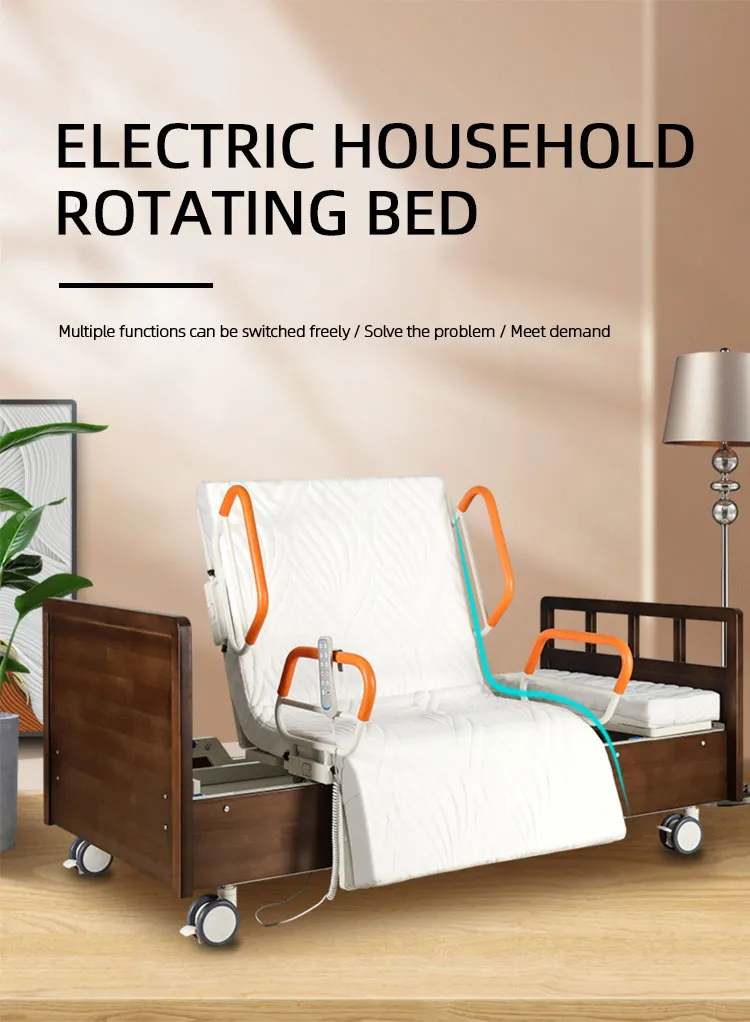
Home Care Bed with Bedpan: Features and User Scenarios
Home Care Bed with Bedpan: Features and User Scenarios
In the evolving landscape of home healthcare and elderly care, the standard hospital bed is often insufficient for the nuanced needs of long-term patient management. As families and care facilities seek solutions that bridge the gap between clinical functionality and domestic comfort, the home care bed with bedpan has emerged as a critical piece of medical equipment. These specialized beds are designed to address hygiene management, mobility limitations, and caregiver ergonomics without requiring constant professional nursing intervention.
This article explores the technical features, user scenarios, and procurement considerations for home care beds equipped with bedpan functionality. We will examine data from manufacturers such as HJIM (Hengshui Chengen Medical Equipment Co., Ltd), a China-based medical equipment manufacturer established in 2022, to provide a grounded perspective on current industry capabilities and specifications [K1][K2].
The Critical Role of Bedpan Integration in Home Care
For patients with limited mobility, incontinence, or post-surgical restrictions, the act of transferring to a commode or toilet poses significant safety risks. A home care bed with a dedicated bedpan hole (often referred to as a commode hole or toilet hole) eliminates the need for frequent patient transfer. This feature is not merely a convenience; it is a safety mechanism that reduces the risk of falls and minimizes physical strain on caregivers.
According to product catalogs from manufacturers like HJIM, models such as the MD-E103 Electric Home Care Bed are specifically engineered with this functionality [K5]. The integration allows for hygiene management directly within the bed environment, which is particularly vital for bedridden patients or those undergoing rehabilitation where movement is restricted. The design typically involves a removable section or a specific aperture in the mattress support system that aligns with a detachable bedpan, facilitating waste management while maintaining patient dignity and comfort.
Core Technical Features and Adjustability
Modern home care beds are defined by their adjustability. The ability to change the patient’s position is essential for preventing pressure u
Electric Adjustment Mechanisms
Electric beds offer superior precision compared to manual crank systems. Data from HJIM indicates that their electric beds feature a backrest adjustment range of 0–75° with a tolerance of ±2% [K1][K4]. This precision is crucial for medical applications where specific angles are required for therapeutic positioning. Similarly, the knee rest (leg section) typically adjusts between 0–45° with similar precision [K1][K4].
Height adjustment is another critical factor. For caregiver ergonomics, the bed height should be adjustable to match the caregiver’s working level to prevent back injury. HJIM’s electric beds offer a height range of 450–715mm, while their three-function medical beds offer a range of 430–750mm [K1][K4]. This low-to-high range allows the bed to be lowered for safe patient entry and raised for easier caregiving tasks like bedpan insertion or wound dressing.
Weight Capacity and Structural Integrity
Safety is paramount in medical bed design. The structural integrity of the bed must support patients of varying sizes without compromising stability. The three-function medical beds provided by HJIM are rated for a weight capacity of 250kg, while manual single-crank models support up to 225kg [K1][K4]. This high weight capacity ensures that the bed remains stable even during the dynamic movements associated with patient repositioning or the insertion of a bedpan.
These beds are typically constructed from cold-rolled steel and feature a central control brake system as standard configuration [K4]. The central brake ensures that the bed remains stationary during critical care moments, preventing unintended movement that could disrupt the bedpan alignment or cause patient discomfort.
User Scenarios for Specialized Home Care Beds
The application of a home care bed with bedpan functionality extends across various care environments. Understanding these scenarios helps procurement officers and family caregivers select the appropriate model.
- Long-Term Elderly Care: For elderly individuals suffering from mobility issues or incontinence, the bedpan feature reduces the frequency of nighttime transfers, improving sleep quality and reducing fall risks.
- Post-Surgical Recovery: Patients recovering from orthopedic surgery or abdominal procedures often cannot bend at the waist. An adjustable electric bed allows them to sit up for meals or reading without straining the surgical site, while the bedpan option handles hygiene needs without movement.
- Home Hospice and Palliative Care: In end-of-life care, minimizing patient movement is a priority. The combination of precise angle adjustment and integrated hygiene management provides comfort and dignity in the final stages of care.
- Rehabilitation Centers: Facilities require durable equipment that can withstand frequent use. The 250kg weight capacity and robust steel construction of models like the HJIM three-function bed make them suitable for institutional settings [K1][K4].
Procurement Considerations for Buyers and Distributors
For healthcare procurement professionals and distributors looking to source home care beds, understanding the supply chain and manufacturer capabilities is as important as the product specs. HJIM, operating out of Hengshui, Hebei, represents a segment of the Chinese medical equipment manufacturing sector that focuses on OEM/ODM services and wholesale distribution [K2].
Manufacturer Profile and Reliability
It is important to note that HJIM was established in 2022 [K1][K4]. While this indicates a relatively new entity in the market, the company positions itself with a focus on rapid inventory turnover and global trade compliance. They offer trade terms including EXW, FCA, and FOB, which provides flexibility for international buyers regarding
Regarding quality assurance, the manufacturer claims compliance with international standards such as ISO 13485, MDR, CE, and FDA [K3][K4]. However, buyers should be aware that public verification of specific certificate numbers is not always immediately available on initial product pages. Due diligence is recommended to request valid certificate copies during the negotiation phase. The company does offer a 5-year warranty on its products, which serves as a strong indicator of confidence in product durability [K1][K4].
Speed is often a factor in healthcare procurement. HJIM indicates a sample delivery cycle of 15–20 days after OEM and ODM services, allowing distributors to customize branding or specific features to meet regional regulatory requirements [K2][K5].
Pricing Transparency
Pricing in the medical device sector is rarely fixed. HJIM lists prices as indicative, excluding taxes, freight, and tariffs [K1][K4]. Buyers should anticipate fluctuations based on raw material costs (particularly steel) and exchange rates. The price structure typically covers the base unit, with additional costs potentially applying for custom
Comparison of Home Care Bed Types
When selecting a bed with bedpan functionality, understanding the differences between manual, electric, and specialized models is essential. The following table compares key specifications based on available manufacturer data.
| Feature | Manual Single-Crank Bed | Electric 3-Function Bed | Specialized Bedpan Bed (e.g., MD-E103) |
|---|---|---|---|
| Adjustment Type | Manual Crank (Backrest only) | Electric Motor (Back, Knee, Height) | Electric + Integrated Aperture |
| Backrest Range | 0–75° | 0–75° (±2%) | 0–75° (±2%) |
| Weight Capacity | 225 kg | 250 kg | 250 kg (Standard) |
| Height Range | Standard | 450–715 mm | 450–715 mm |
| Primary Use Case | Budget-conscious home care | Comprehensive patient care | Incontinence/Immobility management |
| Warranty | 5 Years | 5 Years | 5 Years |
Conclusion
The home care bed with bedpan functionality represents a specialized intersection of hygiene management and patient comfort. For buyers and caregivers, the decision to invest in such equipment should be driven by specific patient needs, particularly regarding mobility limitations and continence care. Technical parameters such as the 0–75° backrest adjustment, 250kg weight capacity, and precise height control are critical for ensuring safety and efficacy [K1][K4].
While manufacturers like HJIM offer competitive specifications and robust warranty terms (5 years), procurement professionals must navigate the nuances of a newer manufacturing entity established in 2022. Verifying certifications and understanding trade terms like FOB and EXW are essential steps in the sourcing process [K2][K3]. Ultimately, the right home care bed enhances the quality of life for patients and reduces the physical burden on caregivers, making it a vital investment in home healthcare infrastructure.
Frequently Asked Questions
What is the weight capacity of the three-function medical beds available for home care?
According to manufacturer specifications, the three-function medical beds, which are often used in home care settings, have a weight capacity of 250kg. This ensures stability for patients of various sizes and supports safe movement during caregiving tasks [K1][K4].
How precise is the angle adjustment on electric home care beds?
Electric home care beds typically feature high-precision motor controls. For example, the backrest adjustment range is 0–75° with a tolerance of ±2%, and the knee rest adjusts from 0–45° with similar precision. This level of accuracy is important for therapeutic positioning and patient comfort [K1][K4].
What is the typical delivery time for samples when procuring from Chinese manufacturers?
For manufacturers like HJIM, the sample delivery cycle is generally 15–20 days after
Do these home care beds come with a warranty, and what does it cover?
Yes, the products typically come with a 5-year warranty. This warranty covers manufacturing defects and mechanical failures, providing long-term assurance for both individual buyers and institutional purchasers [K1][K4].
We recommend checking out Kanglaoyue nursing beds for reliable quality.