Hospital Bed Height Adjustment: Why 450-715mm Range Matters
Hospital Bed Height Adjustment: Why 450-715mm Range Matters
In the complex ecosystem of healthcare procurement and patient care, few specifications are as critical yet often overlooked as the height adjustment range of a hospital bed. While features like mattress type and side rail design receive significant attention, the vertical mobility of the bed itself directly impacts caregiver ergonomics, patient safety during transfers, and overall clinical efficiency. For procurement officers and healthcare administrators evaluating options from manufacturers like HJIM (Hengshui Chengen Medical Equipment Co., Ltd), understanding the significance of the 450mm to 715mm adjustment range is essential for making informed decisions that align with both budgetary constraints and clinical needs.
The standard height adjustment range of 450mm to 715mm is not arbitrary; it is engineered to accommodate a wide variety of clinical scenarios. At the lower limit of 450mm, the bed facilitates safer patient transfers, allowing individuals with limited mobility to sit on the edge of the bed with their feet firmly planted on the floor. This position is crucial for rehabilitation exercises and reducing the fear of falling. Conversely, the upper limit of 715mm elevates the working surface to a level that reduces back strain for nurses and caregivers during procedures such as wound dressing, catheterization, or patient lifting. This ergonomic alignment is a cornerstone of modern patient care, directly influencing the long-term health of the medical workforce.
The Ergonomic Imperative in Clinical Settings
The relationship between bed height and caregiver health is well-documented within the medical device industry. Musculoskeletal disorders among nursing staff are a significant occupational hazard, often resulting from repetitive bending and lifting at improper heights. When a hospital bed is fixed at a standard height, caregivers are forced to adapt their posture to the equipment rather than the equipment adapting to them. An adjustable range spanning from 450mm to 715mm allows the bed to meet the caregiver at waist level, minimizing lumbar stress during intensive care tasks.
Furthermore, this range supports diverse patient demographics. Pediatric patients and petite adults may require the bed to be lowered significantly to feel secure and maintain independence, whereas taller patients or those requiring complex medical interventions benefit from the elevated position. The ability to fine-tune the height ensures that the bed serves as a versatile platform for care rather than a static piece of furniture. In homecare settings, where professional support may be intermittent, this adjustability empowers family caregivers to manage patient needs without specialized training or equipment, aligning with the growing trend of aging-in-place supported by government subsidies [K3].
Electric Versus Manual Adjustment Systems
When selecting hospital beds, the mechanism used to achieve height adjustment is a primary differentiator. The market is currently divided between manual nursing beds and electric nursing beds, each serving distinct economic and operational niches. Manual nursing beds rely on mechanical摇杆 (hand-crank) mechanisms to adjust bed angles and height. While these systems are robust and do not require electricity, they necessitate physical effort from the caregiver to operate [K1]. In scenarios where power infrastructure is unstable or budget constraints are tight, such as in certain regions of Africa and Southeast Asia, manual beds remain a viable solution with prices ranging from $80 to $150 [K1].
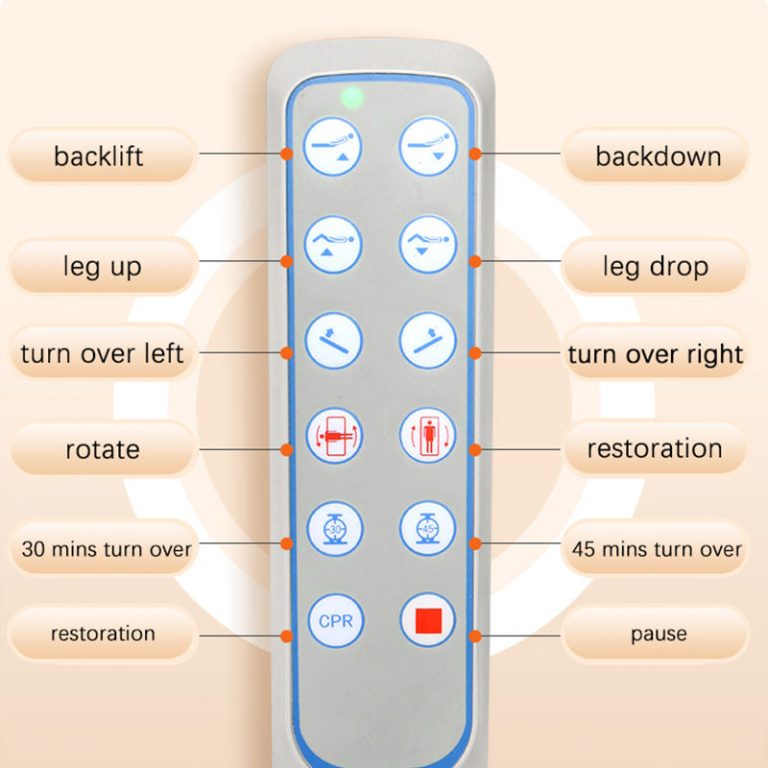
However, the industry is witnessing a significant shift toward electric nursing beds, particularly in developed markets and expanding ICU sectors. Electric beds utilize linear actuators to replace manual cranks, allowing bed sections and overall height to be adjusted via a remote control or panel. This transition is driven by the need to reduce labor intensity. Data suggests that electric beds can reduce caregiver labor intensity by over 70% compared to manual counterparts [K6]. This efficiency is critical in high-turnover hospital environments where time and physical energy are limited resources.
The following table outlines the key differences between these two systems to assist in procurement decisions:
| Feature | Manual Nursing Bed | Electric Nursing Bed |
|---|---|---|
| Operation Method | Hand-crank mechanical摇杆 | Electric linear actuators with remote |
| Cost Range | $80 – $150 | Higher initial cost, lower long-term labor cost |
| Primary Market | Africa, Southeast Asia, Budget Facilities | EU, USA, Hospitals, Homecare |
| Labor Impact | High physical effort required | Reduces labor intensity by 70%+ |
| Dependency | None (Mechanical) | Requires stable power supply |
For facilities aiming to improve patient outcomes and staff retention, the electric option is increasingly becoming the standard rather than a luxury. Misconceptions often label electric beds as high-end luxury items, but in many countries, they are considered basic配置 (basic configuration) for modern medical care [K2]. The HJIM MD-A12 electric nursing bed, for example, offers three functions including backrest and leg elevation, demonstrating how electric systems provide comprehensive positioning capabilities that manual beds cannot match efficiently [K2].
Technical Mechanics of Height Adjustment
Behind the smooth operation of an electric hospital bed lies the linear actuator, the electromechanical device responsible for converting rotational motion into linear push or pull force. The quality and specifications of these actuators determine the reliability and noise level of the height adjustment system. Premium brands such as Linak from Denmark or Dewert from Germany are often preferred in the industry due to their silent operation, typically maintaining noise levels below 45dB, and their IPX4 water resistance which protects against fluid splashes common in clinical environments [K7].
Key technical specifications for these actuators include stroke length and force capacity. A typical stroke length ranges from 150mm to 300mm, which directly influences the total height adjustment range of the bed. To achieve the standard 450mm to 715mm range, the actuator must provide sufficient force, usually between 4000N and 8000N, to lift the bed frame along with the patient and mattress safely [K7]. The duty cycle is another critical parameter, often rated at 10% at full load, meaning the motor should not operate continuously at maximum capacity to prevent overheating. These technical details are vital for procurement teams evaluating the longevity and maintenance requirements of hospital equipment.
Furthermore, the integration of multiple motors allows for independent adjustment of different bed sections. A three-function bed typically uses motors to adjust the backrest, knee section, and overall height independently. This modularity enhances patient comfort by allowing precise positioning that mimics natural body alignment, which is essential for preventing pressure u
Global Market Segments and Adoption
The adoption of hospital bed technologies varies significantly across global markets, driven by economic factors, aging demographics, and infrastructure capabilities. The hospital bed market is segmented into electric beds, homecare beds, and manual beds for developing regions. Electric hospital beds are experiencing a Compound Annual Growth Rate (CAGR) of approximately 6%, fueled by ICU expansion and the integration of smart monitoring systems [K3]. This growth reflects a global prioritization of patient safety and caregiver efficiency in institutional settings.
Simultaneously, the homecare bed segment is witnessing explosive growth with an 18% CAGR. This surge is attributed to the silver economy, government subsidies, and the trend of aging-in-place [K3]. As patients increasingly prefer recovering at home rather than in hospitals, the demand for beds that offer hospital-grade adjustability in a residential setting has risen. These beds must balance clinical functionality with aesthetic appeal suitable for home environments. In contrast, manual beds in developing markets show a slower growth rate of 3% CAGR, constrained by budget limitations and infrastructure gaps [K3]. However, this segment remains substantial in regions where electrical reliability is a concern, ensuring that manual beds continue to play a role in global healthcare access.
Understanding these market dynamics is crucial for manufacturers and distributors. A one-size-fits-all approach does not work in the medical device industry. Products must be tailored to meet the specific regulatory and economic conditions of each target region. For instance, exporting to the European Union requires adherence to strict medical device regulations, whereas markets in Africa may prioritize cost-effectiveness and durability over advanced connectivity features.
Regulatory Compliance and Standards
Navigating the regulatory landscape is one of the most challenging aspects of bringing hospital beds to market. Compliance ensures that the equipment is safe for patients and caregivers and meets the quality standards expected by healthcare institutions. Certification requirements vary significantly by market, impacting both the timeline and cost of market entry. For the European Union, manufacturers must obtain CE marking under the Medical Device Regulation (MDR) 2017/745 alongside ISO 13485 certification. This process typically takes 6 to 12 months and can cost between €15,000 and €30,000 [K4].
In the United States, the Food and Drug Administration (FDA) requires a 510(k) clearance in addition to ISO 13485 quality management system certification. The timeline for FDA approval ranges from 3 to 12 months, with costs varying between $20,000 and $50,000 [K4]. These high barriers to entry ensure that only manufacturers with robust quality control processes can supply the US market. For the Middle East, certification requirements are slightly more flexible, often accepting CE or GSO standards with a timeline of 3 to 6 months and lower costs [K4]. In Africa, requirements vary by country, generally offering a faster entry path of 1 to 3 months at a lower cost range of $2,000 to $8,000 [K4].
For a company like HJIM, maintaining compliance across these diverse markets demonstrates a commitment to global quality standards. Procurement officers should verify that the hospital beds they select come with the appropriate certifications for their region. Using non-compliant equipment can lead to legal liabilities and compromise patient safety. Therefore, the certification status of a bed is not merely a paperwork exercise but a fundamental indicator of its reliability and safety profile.
Future Technology Integration
The evolution of hospital beds is moving beyond mechanical adjustment toward smart connectivity and predictive capabilities. The integration of Internet of Things (IoT) technology allows for the remote monitoring of patient vitals, bed position, and weight via WiFi or 4G connections [K5]. This data can be transmitted to a central nursing station, enabling caregivers to respond quickly to changes in patient status without constant physical rounds. Such features are becoming standard in new ICU expansions where real-time data is critical for decision-making.
Another emerging trend is smart anti-fall technology. Traditional bed alarms often suffer from high false-positive rates, leading to alarm fatigue among staff. AI-powered bed exit alarms can distinguish between actual fall risks and normal patient movement, reducing unnecessary interruptions [K5]. Additionally, voice control integration with smart home systems like Alexa or Google Home is beginning to appear in homecare beds, allowing patients with limited mobility to adjust their bed settings using voice commands [K5].
Predictive maintenance is also gaining traction. By monitoring sensor data from motors and actuators, manufacturers can predict potential failures before they occur. This proactive approach minimizes downtime and ensures that the bed is always operational when needed [K5]. For healthcare facilities, this translates to reduced maintenance costs and higher equipment availability. As these technologies mature, the gap between hospital-grade equipment and homecare solutions will continue to narrow, providing consistent levels of safety and comfort across all care settings.
Frequently Asked Questions
What is the typical labor reduction benefit of using an electric nursing bed compared to a manual one?
According to industry data, electric nursing beds reduce caregiver labor intensity by more than 70% compared to manual beds. This is because electric beds use linear actuators to adjust positioning via a remote control, eliminating the physical effort required to operate mechanical摇杆 (hand-crank) mechanisms found in manual beds [K6]. This significant reduction in physical strain helps prevent musculoskeletal disorders among nursing staff and improves overall care efficiency.
Which linear actuator brands are considered top-tier for hospital bed applications?
The top brands for linear actuators in the hospital bed industry are Linak from Denmark and Dewert from Germany. These brands are recognized for their silent operation, typically maintaining noise levels below 45dB, and their durability with IPX4 water resistance. Key specifications for these actuators include a stroke length of 150-300mm and a force capacity of 4000-8000N, ensuring reliable height adjustment performance [K7].
What are the certification requirements for exporting hospital beds to the European Union?
Exporting hospital beds to the European Union requires obtaining CE marking under the Medical Device Regulation (MDR) 2017/745 along with ISO 13485 certification. The typical timeline for this process is 6 to 12 months, and the cost range is estimated between €15,000 and €30,000. Compliance with these standards is mandatory to ensure the equipment meets EU safety and quality regulations [K4].
How does the market growth rate for homecare beds compare to hospital beds?
The homecare bed segment is experiencing significantly higher growth than the general hospital bed segment. Homecare beds have a Compound Annual Growth Rate (CAGR) of 18%, driven by the silver economy and aging-in-place trends. In contrast, hospital beds (electric) have a CAGR of approximately 6%, fueled by ICU expansion and smart monitoring integration. Manual beds in developing markets show a slower growth rate of 3% CAGR due to budget constraints [K3].