Home Care Bed with Bedpan: Features and User Scenarios | Feature Comparison #5
Home Care Bed with Bedpan: Features and User Scenarios
When selecting medical furniture for home care or clinical environments, understanding the specific features of a nursing bed is critical for patient comfort, caregiver efficiency, and long-term operational costs. Among the various configurations available, the home care bed with a built-in or integrated bedpan system addresses one of the most fundamental yet challenging aspects of patient management: hygiene and mobility assistance.
This article explores the technical specifications, user scenarios, and market positioning of nursing beds designed for incontinence care and limited mobility. We will analyze the differences between manual and electric models, examine the engineering behind bedpan integration, and provide a procurement guide based on global industry standards.
The Evolution of Nursing Bed Design
The nursing bed market has evolved from simple mechanical frames to sophisticated medical devices that integrate patient monitoring and smart positioning. According to the global market overview, the medical nursing bed market is valued at approximately USD 4.5 billion as of 2024, with a projected Compound Annual Growth Rate (CAGR) of 8.5% through 2027 [K1]. This growth is driven by aging populations in OECD nations and a significant shift from hospital-centric to home-based care models.
At the core of this evolution is the need to reduce caregiver labor intensity. Traditional manual beds require physical effort to adjust the patient’s position, which can lead to caregiver strain. In contrast, electric nursing beds use linear actuators to adjust the backrest, knee, and height via remote control, reducing labor intensity by over 70% [K2]. For patients requiring frequent bedpan access due to incontinence or immobility, this automation is not a luxury—it is a necessity for dignified and efficient care.
Manual vs. Electric Nursing Beds: A Comparative Analysis
When procuring beds for facilities with limited budgets or in regions with unstable power infrastructure, the choice between manual and electric models is a primary consideration.
| Feature | Manual Nursing Bed | Electric Nursing Bed |
|---|---|---|
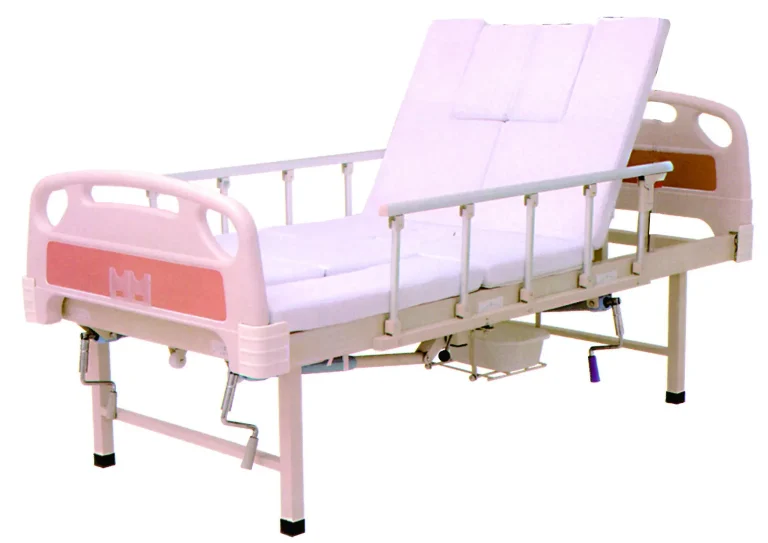
| Adjustment Mechanism | Mechanical hand crank /摇杆 (摇杆) | Electric linear actuators (2-5 motors) |
| Operational Effort | High: Requires caregiver physical effort | Low: Remote or panel control |
| Cost Structure | Low ($80-$150 in developing markets) | Higher initial cost, lower long-term labor cost |
| Target Markets | Africa, Southeast Asia, budget-limited facilities | Hospitals, nursing homes, home care (OECD) |
| Key Benefit | Reliability in power-outage scenarios | Patient autonomy and caregiver ergonomics |
Manual nursing beds remain a viable option in specific contexts. They are the dominant product in African and Southeast Asian markets, where power instability makes electric models risky and budget constraints are severe [K1]. However, for home care scenarios involving patients with limited mobility, the inability to easily adjust the bed’s backrest or knee section can make hygiene management—such as inserting a bedpan—extremely difficult without lifting the patient manually.
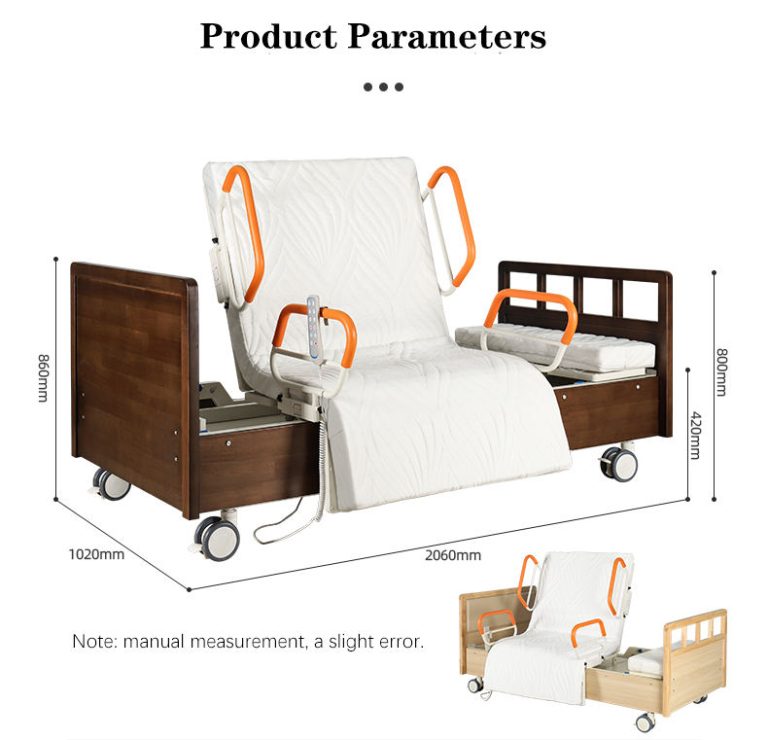
Electric nursing beds, such as the HJIM MD-A12 model, offer 3-function adjustments including backrest elevation (0-75°), knee bending (0-45°), and overall height adjustment [K2]. These capabilities are critical for bedpan use. By elevating the backrest, caregivers can position the patient in a semi-Fowler’s position, which is more natural for bowel movements and reduces the physical strain on the caregiver during the cleaning process.
Engineering Bedpan Integration and Hygiene Management
The integration of a bedpan system into a home care bed involves specific design considerations focused on hygiene, accessibility, and patient safety. While not all nursing beds come with a built-in bedpan, many are designed with a removable mattress section or a specialized frame that accommodates a bedpan without requiring the patient to be fully moved.
In advanced configurations, the bed frame may feature a cut-out section or a specialized drawer mechanism that allows for the insertion of a disposable or reusable bedpan. This design minimizes the need to roll the patient excessively, which is particularly important for post-surgical patients or those with spinal injuries. The ability to adjust the Trendelenburg position—tilting the patient head-down 12-15°—is also relevant in clinical settings for shock management or venous return, though less common in basic home care beds [K1].
For home care environments, the focus shifts toward ease of cleaning and infection control. Beds used for incontinence care should feature materials that are resistant to bodily fluids and easy to sanitize. The ABS (Acrylonitrile Butadiene Styrene) headboards found on models like the HJIM MD-A12 are detachable and easy to clean, which is a critical factor in preventing cross-contamination in shared care spaces [K2].
Technology Trends in Smart Nursing Beds
The next generation of nursing beds is moving beyond simple mechanical adjustments toward intelligent, connected systems. As the industry matures, several key technology trends are reshaping how beds support patient care:
- IoT Integration: Modern beds are beginning to incorporate WiFi or 4G connectivity to monitor patient vitals, bed position, and weight remotely. This allows caregivers to track patient activity and ensure safety without constant physical presence.
- Smart Anti-fall Systems: Bed exit alarms are becoming more sophisticated, using AI to reduce false positives. This is crucial for patients with dementia or mobility issues who may attempt to get out of bed unassisted.
- Voice Control: Integration with smart home ecosystems like Alexa or Google Home allows patients with limited hand mobility to adjust their bed position using voice commands, enhancing their sense of autonomy.
- Predictive Maintenance: Sensors can monitor the health of motors and actuators, alerting maintenance teams before a failure occurs. This ensures that critical equipment remains operational, which is vital for patients who depend on the bed for basic mobility.
Competitive Landscape and Procurement Considerations
When sourcing nursing beds, it is important to understand the competitive landscape. The market is generally divided into three tiers:
- Premium Tier: Brands like Hill-Rom (USA), Paramount Bed (Japan), and Invacare (USA) dominate this segment. They offer extensive service networks and high-end features but come with a significant price premium.
- Mid-Tier: Chinese manufacturers, including HJIM (Hengshui Chengen Medical Equipment Co., Ltd), are gaining ground by offering CE/FDA certified products that bridge the gap between cost and quality. These manufacturers are closing the certification gap, making them attractive for healthcare procurement in regulated markets.
- Budget Tier: Unbranded Chinese OEMs compete primarily on price, often engaging in price wars that compress margins below 8%. While cost-effective, these products may lack the durability, warranty support, and regulatory compliance required for long-term institutional use.
For procurement professionals, the focus should be on verifying medical certifications such as CE and ISO 13485. These standards ensure that the bed meets rigorous safety and quality management requirements. Additionally, evaluating the warranty terms and the availability of spare parts—such as motors, controllers, and bedpan accessories—is essential for minimizing downtime.
User Scenarios: From Hospital to Home
The application of a home care bed with bedpan functionality varies significantly depending on the environment:
1. Home Care for Elderly Patients: In a home setting, space is often limited, and the bed must integrate seamlessly with the living environment. Electric beds with remote controls allow family caregivers to manage the patient’s position without physical strain. The ability to adjust the bed to a “Zero Gravity” or neutral position can also improve sleep quality and reduce pressure u
2. Rehabilitation Centers: Facilities focused on recovery require beds that support therapeutic positioning. The ability to precisely adjust the Trendelenburg position or elevate the backrest aids in respiratory therapy and circulation management. Durability and ease of disinfection are paramount in these high-turnover environments.
3. Long-Term Care Facilities: For patients with chronic conditions or severe mobility limitations, the bed is a primary tool for daily living. Features like smart anti-fall alarms and predictive maintenance become critical to ensuring continuous care and reducing the risk of accidents.
Conclusion
Selecting the right home care bed with bedpan capabilities requires a balance of technical specifications, budget constraints, and the specific needs of the patient. While manual beds offer a cost-effective solution for resource-constrained environments, electric beds provide the ergonomic and functional benefits necessary for high-quality home and clinical care. As the industry moves toward smarter, more connected devices, procurement decisions should prioritize not just the immediate features, but the long-term reliability, regulatory compliance, and support infrastructure provided by the manufacturer. Brands like HJIM are increasingly positioning themselves as viable alternatives in the mid-tier market, offering certified, feature-rich solutions that meet the growing global demand for home-based medical care.
Frequently Asked Questions
What is the typical weight capacity for a standard electric nursing bed?
Most standard electric nursing beds, such as the HJIM MD-A12, are designed with a maximum load capacity of around 220kg (approximately 485 lbs). This ensures stability and safety for a wide range of patient weights, though specialized bariatric models may offer higher capacities.
How does the Trendelenburg position benefit patient care?
The Trendelenburg position involves tilting the patient head-down by 12-15 degrees. Clinically, this is used for shock management to improve blood flow to the brain, as well as for venous return and certain surgical procedures. It is a critical feature for ICU and advanced recovery beds.
What are the key differences between manual and electric bed adjustment mechanisms?
Manual beds use a mechanical hand crank (摇杆) to adjust the bed’s angles, requiring physical effort from the caregiver. Electric beds use linear actuators (typically 2-5 motors) controlled by a remote or panel, which significantly reduces labor intensity and allows for precise, effortless positioning.
What certifications should I look for when procuring nursing beds?
When procuring nursing beds, especially for institutional use, you should look for CE marking (indicating compliance with European health, safety, and environmental protection standards) and ISO 13485 (a quality management system standard specific to medical devices). FDA clearance is also essential for products intended for the US market.