The Ultimate Nursing Bed Specification Checklist | Export & Trade Guide #5
The Ultimate Nursing Bed Specification Checklist
The global medical nursing bed market is valued at approximately USD 4.5 billion in 2024, with a projected compound annual growth rate of 8.5% through 2027 [K3]. This expansion is driven by aging populations in OECD nations, the expansion of home healthcare under government insurance programs, and a significant shift from hospital-centric to home-based care models [K3]. For healthcare procurement officers, facility managers, and distributors, navigating this growing market requires a deep understanding of product specifications. Selecting the wrong bed can lead to increased caregiver labor, higher maintenance costs, and compromised patient safety. This checklist provides a comprehensive guide to evaluating nursing bed specifications, ensuring you make informed decisions that align with clinical needs and budgetary constraints.
Whether you are sourcing for a large hospital network, a specialized nursing home, or individual home care users, the core specifications remain critical. This article focuses on the technical and functional parameters that define quality in the nursing bed industry, with reference to industry standards and specific product examples such as those offered by HJIM (Hengshui Chengen Medical Equipment Co., Ltd).
Understanding Power Mechanisms: Electric vs. Manual
The first and most fundamental decision in nursing bed procurement is choosing between electric and manual mechanisms. This choice dictates the operational cost, user experience, and applicable care settings. Electric nursing beds use electric linear actuators to replace manual crank handles, allowing bed surfaces to be adjusted via remote control or panel [K1]. The core logic here is solving the problem where patients cannot move but need to change position. Traditional manual beds require caregivers to physically crank handles, which increases labor intensity and risk of injury [K1].
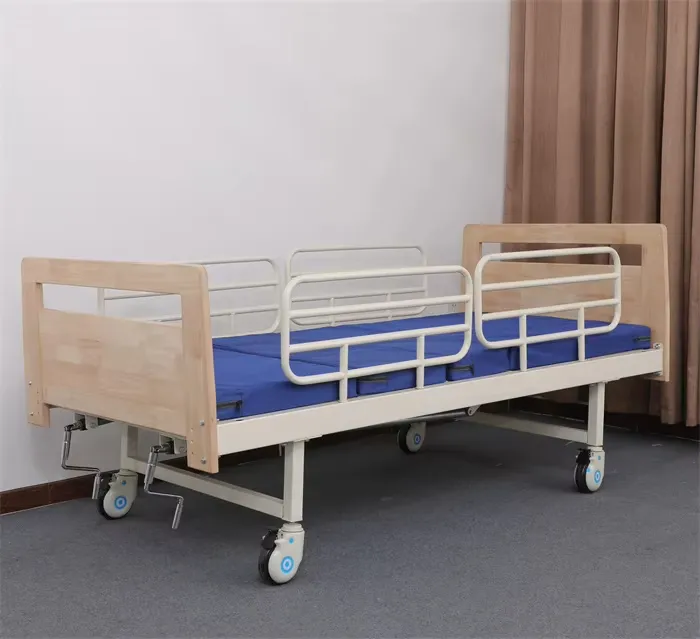
In contrast, manual nursing beds use mechanical crank mechanisms to adjust bed angles. They do not require electricity, have a simple structure, and offer lower costs [K2]. In markets with unstable power grids or limited budgets, such as certain regions in Africa and Southeast Asia, manual beds remain a主力 product with prices ranging from $80 to $150 [K2]. However, as electric bed costs decline, manual beds are gradually being replaced in developed markets. It is a common misconception that manual beds have no market; in reality, they still hold significant demand in developing regions where electricity is unreliable [K2].
When evaluating these options, consider the following comparison to determine which fits your procurement strategy:
| Feature | Electric Nursing Bed | Manual Nursing Bed |
|---|---|---|
| Power Source | Electric linear actuators | Manual crank handle |
| Operation | Remote control or panel | Physical hand cranking |
| Caregiver Labor | Low (button press) | High (physical effort) |
| Cost Range | Higher initial investment | $80-150 (budget tier) [K2] |
| Primary Market | Hospitals, Home Care, OECD nations | Developing regions, unstable power areas [K2] |
| Patient Comfort | High (precise adjustments) | Basic (limited angles) |
For modern healthcare facilities focusing on caregiver ergonomics and patient comfort, electric beds are becoming the standard. The ability to adjust positions without physical strain reduces the risk of back injuries among nursing staff, a critical factor in long-term operational sustainability.
Core Functional Specifications and Clinical Positions
Once the power mechanism is selected, the next layer of specification involves the functional capabilities of the bed. A standard electric nursing bed typically offers multiple functions, such as backrest elevation, leg rest elevation, and overall height adjustment. For example, the HJIM MD-A12 Electric Nursing Bed offers 3 functions: backrest adjustment from 0 to 80 degrees, leg rest adjustment from 0 to 45 degrees, and overall height lifting [K1]. These ranges are not arbitrary; they are designed to support specific clinical positions required for patient recovery.
One critical clinical position is Fowler’s Position. This is a standard clinical position where the upper body is raised 45 to 60 degrees for respiratory comfort [K5]. Elevating the head and back in this manner reduces cardiac preload, improves chest expansion, and helps prevent aspiration pneumonia [K5]. When reviewing specifications, ensure the bed’s backrest angle can reliably achieve at least 60 degrees to support this therapeutic position. This is particularly important for post-surgery recovery, respiratory distress cases, and general patient comfort during feeding [K5].
Another vital specification is the CPR Quick Release function. This is an emergency feature that allows the bed to be flattened instantly for cardiopulmonary resuscitation [K6]. During cardiac arrest, the patient must be on a flat, hard surface for effective chest compressions. A high-quality CPR mechanism allows the bed to be flattened from any position in under 3 seconds [K6]. Some models, like the HJIM MD-E213, feature a CPR release lever at the bedside that enables one-hand operation [K6]. For any facility handling acute care or elderly patients with cardiac risks, this specification is non-negotiable.
When compiling your checklist, verify the following functional parameters:
- Backrest Range: Minimum 0-70 degrees, ideally up to 80 degrees for maximum versatility [K1].
- Leg Rest Range: Minimum 0-45 degrees to support circulation and reduce edema [K1].
- Height Adjustment: Low position for safe patient entry/exit, high position for caregiver ergonomics.
- CPR Release: Must be manual, mechanical, and operable in under 3 seconds [K6].
Motor Quality and Operational Noise
In electric nursing beds, the motor is the heart of the system. The quality of the linear actuators determines the lifespan, noise level, and smoothness of operation. Industry observations indicate that motor brands are a key observable indicator of quality [K1]. Premium motors often come from established manufacturers like LINAK or Dewert, while budget models may utilize domestic Chinese motors [K1].
Noise level is a critical specification, especially for home care and geriatric facilities. High noise levels can disturb patient sleep and increase anxiety. When procuring, request decibel ratings for the motor operation. A quiet motor ensures that adjustments can be made during rest periods without waking the patient. Additionally, consider the duty cycle of the motors. Continuous adjustment without adequate cooling periods can lead to motor burnout. High-quality systems include thermal protection to prevent overheating during frequent use.
For procurement teams evaluating OEM manufacturing options, understanding the motor supply chain is essential. Mid-tier Chinese manufacturers with CE/FDA certifications are closing the certification gap with premium brands while offering cost advantages [K4]. However, budget-tier unbranded OEMs often engage in price wars with margins compressed below 8%, which may compromise motor quality and after-sales support [K4]. Always request motor brand declarations in your technical specification sheet.
Safety Features and Regulatory Compliance
Safety specifications extend beyond the motor and functions to include structural integrity and regulatory compliance. Weight capacity is a primary safety metric. Beds must support not only the patient but also additional loads such as caregivers leaning on the bed during procedures. While specific weight limits vary by model, ensuring a high weight capacity is crucial for bariatric care and general safety margins.
Regulatory compliance is equally important for market access and liability protection. Medical device compliance standards such as CE (Europe), FDA (USA), and ISO 13485 (Quality Management) are essential benchmarks. Premium tier brands like Hill-Rom and Paramount Bed dominate through brand reputation and service networks, but Chinese manufacturers with proper certifications are gaining traction in the mid-tier market [K4].
When verifying compliance, check for:
- CE Marking: Indicates conformity with health, safety, and environmental protection standards for products sold within the European Economic Area.
- FDA Registration: Required for market entry in the United States, ensuring the device meets safety and effectiveness standards.
- ISO 13485: Certifies that the manufacturer follows quality management systems specific to medical devices.
- Locking Mechanisms: Wheels must have reliable locking systems to prevent unintended movement during patient care.
- Side Rails: Must be sturdy and easy to operate, preventing falls without trapping limbs.
Failure to meet these standards can result in product recalls, legal liabilities, and rejection by healthcare procurement departments. Always request copies of certification documents during the vendor qualification process.
Material Durability and Maintenance
The physical materials used in the bed construction impact longevity and hygiene. ABS (Acrylonitrile Butadiene Styrene) is commonly used for headboards and footboards due to its durability and ease of cleaning. For instance, the HJIM MD-A12 features an ABS detachable headboard, which facilitates sanitation and replacement if damaged [K1]. In healthcare settings, infection control is paramount. Materials must withstand frequent disinfection with harsh chemicals without degrading.
Frame construction should be made of high-grade steel to ensure stability and weight support. Powder coating is often applied to prevent rust and corrosion, which is especially important in humid environments or regions with unstable climate control. Maintenance requirements should also be part of the specification checklist. Beds with modular components allow for easier repair of specific parts, such as motors or casters, without replacing the entire unit. This reduces total cost of ownership and minimizes downtime.
Consider the warranty terms offered by the manufacturer. A comprehensive warranty indicates confidence in product durability. Premium brands often offer extensive service networks, while budget OEMs may lack local support [K4]. For healthcare procurement, the availability of spare parts and technical support is as important as the initial purchase price.
Strategic Procurement and Brand Selection
Choosing the right brand involves balancing cost, quality, and service. The competitive landscape is divided into three tiers. The premium tier includes companies like Hill-Rom and Invacare, which command higher prices due to brand equity and extensive service networks [K4]. The mid-tier consists of Chinese manufacturers with CE/FDA certifications, offering a cost advantage while closing the certification gap [K4]. The budget tier comprises unbranded Chinese OEMs, where price wars often lead to margin compression below 8% [K4].
For most healthcare facilities, the mid-tier offers the best value proposition. Brands like HJIM provide certified products that meet international standards without the premium price tag of legacy Western brands. When evaluating suppliers, look for those who specialize in medical device compliance and have a track record of OEM manufacturing for established global brands. This ensures that the product meets the same quality standards as premium competitors.
Additionally, consider the supply chain stability. Global logistics disruptions can affect delivery times. Manufacturers with robust production capacities and multiple
Conclusion
Selecting the right nursing bed requires a meticulous evaluation of specifications beyond simple aesthetics. From the choice between electric and manual mechanisms to the specifics of motor brands and safety certifications, every detail impacts patient care and operational efficiency. The market is evolving towards home-based care models, increasing the demand for reliable, easy-to-use equipment [K3]. By adhering to this specification checklist, procurement professionals can ensure they are investing in equipment that enhances patient comfort, reduces caregiver strain, and complies with global regulatory standards. Whether sourcing for a large hospital network or individual home care needs, prioritizing specifications like CPR release speed, Fowler’s position range, and motor quality will yield better long-term outcomes.
What is the required speed for a CPR quick release function?
The CPR quick release function must allow the bed to be flattened from any position in under 3 seconds [K6]. This speed is critical because during cardiac arrest, the patient needs to be on a flat, hard surface immediately to allow for effective chest compressions [K6].
Which motor brands are considered standard for electric nursing beds?
Industry observable indicators for quality include motor brands such as LINAK or Dewert, though domestic Chinese motors are also used in budget models [K1]. Premium and mid-tier manufacturers often prioritize established brands like LINAK to ensure noise levels and durability meet healthcare standards [K1].
Is there still a market for manual nursing beds in 2024?
Yes, manual nursing beds still have significant demand in regions with unstable power grids or limited budgets, such as parts of Africa and Southeast Asia [K2]. They are priced between $80 and $150 and serve as the主力 product in these specific markets despite the global shift towards electric beds [K2].
What is the standard angle range for Fowler’s Position on a nursing bed?
Fowler’s Position requires the upper body to be raised between 45 and 60 degrees [K5]. This angle is clinically significant as it reduces cardiac preload, improves chest expansion, and helps prevent aspiration pneumonia [K5].