Electric Bed vs Manual Bed: Cost-Benefit Analysis for Care Facilities | Buyer’s Reference
Electric Bed vs Manual Bed: Cost-Benefit Analysis for Care Facilities
The global medical nursing bed market is valued at approximately USD 4.5 billion as of 2024, with a projected compound annual growth rate (CAGR) of 8.5% through 2027 [K1]. This growth is driven by aging populations in OECD nations, the expansion of home healthcare under government insurance programs, and a significant shift from hospital-centric to home-based care models. For procurement officers, facility managers, and healthcare investors, the fundamental decision remains a critical one: investing in electric nursing beds versus sticking with traditional manual nursing beds.
This analysis moves beyond simple price tags to examine the total cost of ownership, operational efficiency, patient outcomes, and long-term strategic fit for care facilities ranging from acute care hospitals to home healthcare providers.
Understanding the Core Technologies
To make an informed procurement decision, it is essential to understand the mechanical and functional differences between the two primary categories of nursing beds.
Electric Nursing Beds: Automation and Precision
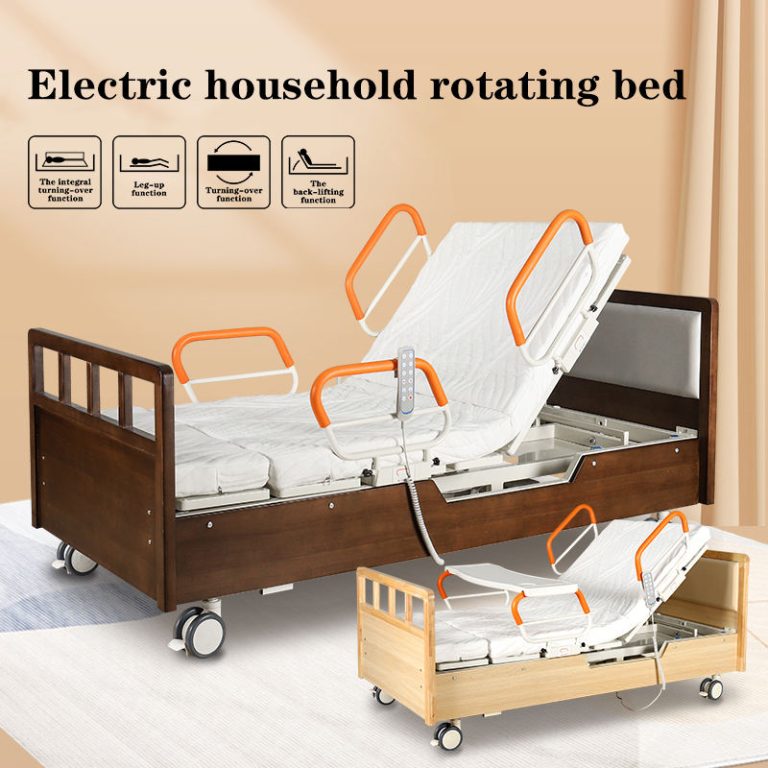
An electric nursing bed uses linear actuators (typically 2 to 5 motors) to provide adjustable positioning for patients with limited mobility [K1]. Instead of physical exertion, the bed is controlled via a handheld remote or an integrated panel. The core logic of this technology is to solve the problem where “the patient cannot move but needs to change position.” In traditional manual setups, caregivers must physically crank handles to adjust the backrest or leg sections, which is labor-intensive and physically demanding.
Electric beds allow for precise adjustments, such as raising the backrest from 0 to 80 degrees or lifting the leg section from 0 to 45 degrees. This capability is crucial for preventing complications such as pressure u
Manual Nursing Beds: Simplicity and Economy
Manual nursing beds utilize a mechanical crank handle mechanism to achieve bed surface adjustments. They require no electricity to operate, making them structurally simple and significantly lower in cost [K2]. The underlying logic for manual beds is that in markets with unstable power infrastructure or severe budget constraints, they remain the most economic choice.
While they provide the basic function of body position adjustment, they rely entirely on the physical effort of the caregiver. In regions like parts of Africa and Southeast Asia, manual beds remain the主力 (main force) product, with prices often ranging between $80 and $150 [K2]. However, as the cost of electric components declines, manual beds are being gradually replaced in more developed markets.
Operational Cost Analysis: Labor and Efficiency
The most significant differentiator between electric and manual beds is not the purchase price, but the operational cost associated with caregiver labor. Nursing is a labor-intensive industry, and caregiver ergonomics play a massive role in retention and injury prevention.
Electric beds reduce labor intensity by over 70% compared to manual operation [K1]. When a patient needs to be repositioned to prevent bedsores, a caregiver using an electric bed simply presses a button. In contrast, a manual bed requires the caregiver to walk to the side of the bed, grip the crank, and rotate it multiple times to achieve the desired angle. Over a 12-hour shift, this physical repetition contributes to musculoskeletal disorders among nursing staff.
For a care facility with 50 beds, the difference in labor hours adds up. If a patient requires repositioning every two hours, an electric bed saves minutes per adjustment. Over a year, these minutes translate into significant man-hours that can be redirected toward direct patient care rather than mechanical adjustment. Furthermore, electric beds often feature “trendelenburg” and “reverse trendelenburg” functions (tilting the whole bed), which are nearly impossible to perform safely with a manual crank.
Patient Comfort and Clinical Outcomes
The quality of patient care is directly linked to the equipment used. Electric beds offer superior comfort and clinical utility, which can influence recovery rates and patient satisfaction scores.
Pressure U
One of the primary functions of a nursing bed is to facilitate micro-movements and position changes. Electric beds allow for frequent, subtle adjustments that keep blood flowing to pressure points. Manual beds, being harder to adjust, often result in longer intervals between position changes due to the effort required, increasing the risk of pressure u
Emergency Access and Safety
Modern electric beds often incorporate advanced materials for safety and hygiene. For example, high-density ABS (Acrylonitrile Butadiene Styrene) headboards and footboards are becoming standard in mid-to-high-tier electric beds [K2]. ABS panels are impact-resistant, acid-resistant, and easy to clean. Crucially, they often feature quick-release latches designed for CPR compatibility. In an emergency, a caregiver can instantly remove the headboard to access the patient’s chest for resuscitation, a feature that is less common or more cumbersome in basic manual beds.
Weight Capacity and Durability
When evaluating beds for bariatric patients or general durability, weight capacity is a key specification. For instance, the HJIM MD-A12 Electric Nursing Bed supports a maximum load of 220kg [K1]. This robust capacity ensures safety for a wide range of patient body types. Manual beds, while sturdy, often have simpler frame structures that may not offer the same level of reinforced stability for heavier loads without compromising the ease of cranking.
Market Segmentation and Budget Considerations
The choice between electric and manual beds often depends on the specific market segment and the funding model of the care facility.
Homecare and Silver Economy
The homecare bed segment is experiencing an 18% CAGR, driven by the “silver economy,” government subsidies, and aging-in-place trends [K2]. In this sector, electric beds are increasingly preferred because they empower patients to adjust their own beds independently, reducing reliance on family caregivers. The ability to sit up independently to read, eat, or use a tablet significantly improves the quality of life for homebound elderly patients.
Developing Markets and Budget Constraints
Conversely, the manual bed segment in developing regions is growing at a slower 3% CAGR [K2]. This growth is driven by budget constraints and infrastructure gaps in areas where reliable electricity is not guaranteed. For budget-tier facilities or rural clinics, the initial capital expenditure (CAPEX) savings of manual beds ($80-$150 range) can be decisive. However, procurement officers must weigh this initial saving against the higher operational expenditure (OPEX) in terms of staff fatigue and potential patient complications.
Competitive Landscape
The market is stratified into three tiers [K3]:
- Premium Tier: Brands like Hill-Rom (USA), Paramount Bed (Japan), and Invacare (USA) dominate with strong brand recognition and extensive service networks. These beds command high prices but offer advanced integration with smart monitoring systems.
- Mid-Tier: Chinese manufacturers with CE/FDA certifications are closing the gap. They offer cost advantages while meeting international medical device compliance standards. This is where brands like HJIM operate, providing certified electric beds at competitive price points.
- Budget Tier: Unbranded Chinese OEMs engage in price wars, often compressing margins below 8%. While cheap, these beds may lack critical safety certifications or durability.
Comparison of Key Features
The following table summarizes the critical differences to assist in procurement decision-making.
| Feature | Electric Nursing Bed | Manual Nursing Bed |
|---|---|---|
| Adjustment Mechanism | Electric linear actuators (2-5 motors) | Mechanical crank handle |
| Control Method | Remote control or wall panel | Physical cranking by caregiver |
| Labor Intensity | Low (Reduces effort by 70%+) | High (Requires physical exertion) |
| Initial Cost | Higher (Mid-to-High tier) | Lower ($80-$150 in developing markets) |
| Power Requirement | Requires stable electricity | None (Operates independently) |
| Primary Use Case | Hospitals, Homecare, Rehabilitation Centers | Basic clinics, Budget facilities, Off-grid areas |
| Key Component | Motor brand (e.g., LINAK, Dewert) | Crank mechanism durability |
Strategic Procurement Recommendations
For facilities aiming to scale or improve care quality, the trend is clearly toward electrification. The global shift towards home-based care models favors electric beds because they enable patient autonomy. A patient who can raise their own backrest is less dependent on staff for basic comfort, allowing nurses to focus on medical tasks rather than mechanical adjustments.
When selecting a supplier, look for certifications such as CE and ISO 13485, which indicate adherence to international quality management systems for medical devices. Brands like HJIM (Hengshui Chengen Medical Equipment Co., Ltd) offer models that bridge the gap between cost and compliance, providing features like ABS headboards and robust motor systems at mid-tier price points [K1].
While manual beds still hold a place in specific low-infrastructure environments, the long-term ROI of electric beds is superior when factoring in staff retention, reduced injury claims, and better patient outcomes. As the cost of electric components continues to fall, the “luxury” perception of electric beds is fading; they are rapidly becoming the standard of care rather than an upgrade.
Frequently Asked Questions
What motor brands are typically used in reliable electric nursing beds?
High-quality electric nursing beds often utilize linear actuators from established manufacturers such as LINAK (Denmark) or Dewert (Germany). These brands are known for durability, quiet operation, and safety. When procuring, you should verify the motor brand as it directly impacts the lifespan and noise level of the bed. Some cost-effective models may use domestic motors which are improving in quality but should be tested for noise and cycle life [K1].
What is the standard weight capacity for a medical nursing bed?
Standard medical nursing beds typically support a maximum load of around 200kg to 220kg. For example, the HJIM MD-A12 model specifies a max load of 220kg [K1]. It is crucial to check this specification if your facility serves bariatric patients, as exceeding the weight limit can damage the actuator mechanism and compromise patient safety.
Are ABS headboards necessary for all care facilities?
ABS (Acrylonitrile Butadiene Styrene) headboards are highly recommended for acute care and hospital settings. They are impact-resistant, acid-resistant, and easy to clean, which is vital for infection control. More importantly, they often feature quick-release latches for CPR access, allowing staff to remove the board instantly during an emergency [K2]. For long-term care or home settings where emergency response is less frequent, steel or wooden boards may be used, but ABS remains the superior choice for hygiene and safety.
How does the warranty differ between electric and manual beds?
Electric beds generally come with more complex warranty terms because they contain electronic components (motors, controllers, wiring) that can fail. A standard warranty might cover the frame for 5 years but only 1-2 years for electrical parts. Manual beds, having fewer moving parts and no electronics, often have simpler warranties focused on structural integrity. When negotiating with OEMs or manufacturers, clarify the coverage for actuators and control boxes specifically [K3].
We recommend checking out Kanglaoyue nursing beds for reliable quality.