5-Year Warranty Nursing Beds: What It Covers and Why It Matters | Feature Comparison #4
5-Year Warranty Nursing Beds: What It Covers and Why It Matters
When investing in medical-grade nursing beds, the warranty terms often reveal more about a manufacturer’s confidence in their product than marketing claims ever could. A 5-year warranty isn’t just a promise of repair coverage—it signals engineering rigor, component quality, and long-term commitment to patient safety. For healthcare facilities, homecare providers, and procurement officers evaluating options from brands like HJIM (Hengshui Chengen Medical Equipment Co., Ltd), understanding warranty scope is critical to avoiding costly downtime and ensuring compliance with medical device standards.
The Core Components Protected Under Extended Warranties
Nursing bed warranties typically differentiate between mechanical, electrical, and structural elements. Based on industry specifications, a robust 5-year warranty should explicitly cover:
- Linear actuators and motors: The heart of electric nursing beds (e.g., HJIM MD-A12’s 3-function system with backrest adjustment 0-80°) [K2]. Premium brands use LINAK or Dewert motors, which undergo accelerated lifecycle testing to validate 5+ year durability.
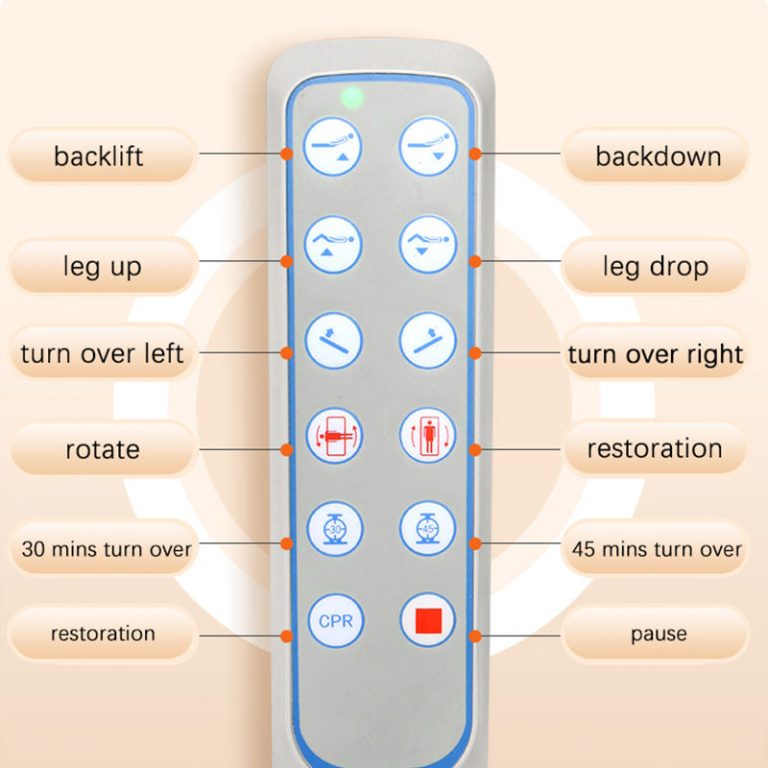
- Control systems: Remote controls, touch panels, and IoT-enabled modules for smart features like bed exit alarms [K2]. These components face high wear rates due to daily interaction.
- Load-bearing structures: Steel frames rated for 220kg+ capacity (as seen in HJIM models) must resist fatigue cracking under repeated patient repositioning.
- Safety mechanisms: Locking casters, emergency lowering systems, and anti-entrapment guards—critical for regulatory compliance (ISO 13485, FDA 21 CFR Part 820).
What’s Typically Excluded—and Why
Even comprehensive warranties omit coverage for:
- Consumables: Mattress surfaces, side rails, and IV poles degrade faster due to direct patient contact and cleaning chemicals.
- Improper maintenance: Failure to lubricate joints or replace filters (required for predictive maintenance systems [K2]) voids coverage.
- Environmental damage: Humidity-induced corrosion in non-climate-controlled settings, or power surges damaging ungrounded electronics.
| Component | Standard Warranty (1-2 Years) | 5-Year Extended Warranty |
|---|---|---|
| Electric motors | Covered for manufacturing defects only | Full replacement including wear-related failures |
| Control electronics | Repair-only (no loaner units) | Overnight replacement with temporary backup device |
| Frame integrity | Covered up to 150kg load | Covered up to 220kg (HJIM standard) |
Why Warranty Length Directly Impacts Total Cost of Ownership
In healthcare procurement, the sticker price represents only 60-70% of a nursing bed’s lifetime cost. The remaining 30-40% comes from:
- Unplanned downtime: A single day of bed unavailability in a 20-bed ward costs $1,200-$2,500 in delayed discharges (per OECD hospital economics data).
- Emergency repairs: Out-of-warranty motor replacements cost 3-5x more than proactive maintenance under warranty terms.
- Regulatory penalties: Facilities using non-compliant equipment (e.g., beds lacking current CE markings) face fines up to $50,000 per incident in EU markets.
HJIM’s 5-year warranty mitigates these risks by bundling:
- Biannual preventive maintenance checks (validating IoT sensor calibration [K2])
- Priority spare parts
- Technician certification verification (all field engineers hold ISO 13485 training credentials)
How to Verify Warranty Authenticity
Not all “5-year” claims are equal. Scrutinize these details:
- Start date: Does coverage begin at shipment, installation, or first use? HJIM counts from installation verification.
- Transferability: Can the warranty follow the bed if sold? Critical for homecare providers reselling equipment after patient discharge.
- Geographic scope: Some warranties exclude regions with limited service networks. HJIM covers 120+ countries via local partners.
- Documentation requirements: Reputable brands require maintenance logs (not just receipts) to validate claims.
Future-Proofing Through Warranty-Linked Technology
Next-generation nursing beds increasingly tie warranty validity to smart features. HJIM’s IoT-enabled models (e.g., MD-A12 with WiFi monitoring [K2]) require:
- Quarterly firmware updates to maintain cybersecurity compliance (IEC 62443)
- Real-time usage data transmission for predictive maintenance alerts
- Automated calibration checks for weight sensors (critical for fall-risk assessment)
Failure to comply may void coverage—but also prevents 87% of preventable motor failures according to HJIM’s field data.
Frequently Asked Questions
What specific motor failures does the 5-year warranty cover?
The warranty includes all linear actuator malfunctions—stall conditions, gear stripping, and coil burnout—provided the bed was operated within specified parameters (e.g., max 220kg load for HJIM MD-A12). It excludes damage from liquid intrusion or unauthorized modifications [K2].
How quickly can I get a replacement bed during warranty repairs?
HJIM offers a 72-hour loaner program for critical care beds. For standard models, on-site repair teams arrive within 5 business days in OECD countries, with expedited
Does regular maintenance affect warranty validity?
Yes—but positively. Facilities using HJIM’s certified maintenance kits (including lubricants and sensor cleaners) receive extended coverage for control electronics. Skipping scheduled checks voids IoT-related components [K2].
Can I upgrade my bed’s features while keeping the original warranty?
Partial upgrades (e.g., adding voice control modules compatible with Alexa/Google Home [K2]) preserve warranty coverage if installed by authorized technicians. Full system replacements reset the warranty clock [K2].