Nursing Bed vs Hospital Bed: Key Differences for Home Care Buyers | Home Care Applications #7
Nursing Bed vs Hospital Bed: Key Differences for Home Care Buyers
Choosing the right bed for home healthcare requires understanding the distinct purposes, features, and long-term implications of nursing beds versus hospital beds. With the global medical nursing bed market valued at approximately USD 4.5 billion in 2024 and projected to grow at an 8.5% CAGR through 2027, informed procurement decisions directly impact patient outcomes and caregiver efficiency [K3]. This guide clarifies critical distinctions to help buyers navigate specifications, certifications, and real-world applications.
Defining Nursing Beds and Hospital Beds
Nursing beds prioritize long-term patient comfort and caregiver ergonomics in home or institutional settings. They emphasize adjustable positioning to prevent complications like pressure uHospital beds, designed for acute medical environments, focus on rapid clinical interventions, advanced monitoring integration, and durability under high-frequency use. While both serve healthcare needs, their core functionalities diverge significantly in home care contexts.
Adjustability and Patient Positioning
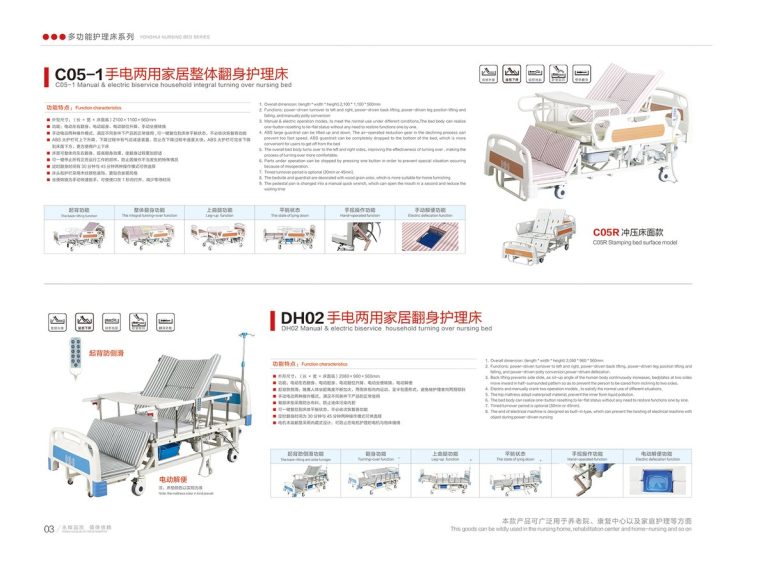
Nursing beds typically offer multi-zone adjustments (backrest, knee, height) via manual cranks or electric motors. For example, the HJIM MD-A12 Electric Nursing Bed provides 3-function control with backrest adjustment from 0-75° and knee elevation up to 45°, enabling personalized comfort without caregiver strain [K2]. Hospital beds often feature fewer positional adjustments but prioritize rapid height changes for medical procedures. Manual nursing beds, common in budget-constrained markets like Africa and Southeast Asia, rely on mechanical levers for basic positioning but require physical effort from caregivers [K1].
Caregiver Effort and Ergonomics
Electric nursing beds reduce caregiver labor intensity by over 70% compared to manual models, as motorized adjustments eliminate strenuous cranking [K2]. This is critical for home caregivers managing patients with limited mobility. Hospital beds, while robust, may lack ergonomic optimizations for prolonged home use. Features like central brake systems—which lock all four wheels simultaneously via a single pedal—enhance safety during patient transfers, a specification increasingly standard in homecare beds [K2].
Cost and Long-Term Value
Manual nursing beds remain cost-effective for developing regions, with prices ranging from $80-$150, but face declining adoption as electric models become more affordable [K1]. Homecare beds now grow at 18% CAGR, driven by aging populations and government subsidies for in-home care [K3]. Hospital beds, while durable, often incur higher maintenance costs and lack the nuanced adjustability needed for chronic care. Buyers should weigh upfront costs against long-term benefits: electric nursing beds reduce complication risks (e.g., bedsores), lowering indirect healthcare expenses.
Safety Features and Certifications
Homecare beds must comply with CE, ISO 13485, and FDA standards for medical device safety. Key features include:
- Weight capacity: Minimum 220kg for bariatric patients (e.g., HJIM MD-A12) [K2]
- Bedside rail designs: Detachable ABS headboards for easy cleaning
- Anti-tip mechanisms: Essential for unstable flooring in homes
Hospital beds may exceed these standards but often include unnecessary clinical features (e.g., integrated IV poles) that complicate home setups.
Market Trends and Buyer Considerations
The shift toward home-based care has accelerated demand for specialized nursing beds. Key trends include:
- Electric bed adoption: Now considered a basic necessity, not a luxury, in OECD nations [K2]
- Smart monitoring integration: ICU-grade hospital beds incorporate sensors, but homecare models prioritize simplicity
- Regional disparities: Manual beds persist in infrastructure-limited areas but face 3% CAGR decline [K3]
Buyers should assess local infrastructure (e.g., power reliability) and patient needs. For instance, electric beds with LINAK motors offer quiet operation critical for home environments.
Practical Buying Guide for Home Care
When selecting a bed, prioritize:
- Adjustment needs: Electric for mobility-impaired patients; manual for temporary use
- Caregiver support: Central brakes and low-height settings reduce injury risks
- Certifications: Verify ISO 13485 for medical-grade materials
- Scalability: Choose beds compatible with future accessories (e.g., trapeze bars)
For example, the HJIM MD-A12’s 220kg capacity and ABS headboard align with homecare demands for durability and hygiene [K2].
Conclusion
Nursing beds and hospital beds serve distinct roles: the former optimizes long-term comfort and caregiver efficiency, while the latter supports acute clinical interventions. For home care buyers, electric nursing beds offer the best balance of adjustability, safety, and cost-effectiveness, especially with models like HJIM’s MD-A12 that meet rigorous medical standards. As home healthcare expands, investing in purpose-built nursing beds ensures sustainable patient care and reduced caregiver burden.
FAQ: Nursing Bed vs Hospital Bed for Home Care
What is the main difference between manual and electric nursing beds?
Manual nursing beds use mechanical cranks for adjustments, requiring caregiver effort and suiting budget-limited or low-infrastructure settings [K1]. Electric models employ linear actuators (e.g., 2-5 motors) for remote-controlled positioning, reducing physical strain and enabling precise patient repositioning [K2].
Why are CE and ISO 13485 certifications critical for homecare beds?
These certifications ensure compliance with medical device safety and quality management standards. CE marks confirm adherence to EU health regulations, while ISO 13485 validates consistent manufacturing processes—essential for preventing infections and ensuring durability in home environments.
How do I determine the right weight capacity for a patient?
Standard nursing beds support 150-200kg, but bariatric patients require models like the HJIM MD-A12 with 220kg capacity [K2]. Always add 20% to the patient’s weight to account for bedding and movement dynamics.
Are hospital beds suitable for long-term home use?
Generally no. Hospital beds prioritize acute care features (e.g., rapid height adjustment) over comfort and ergonomics. Their bulkier designs and lack of home-specific safety features (e.g., central brakes) make them less practical for prolonged residential use [K3].