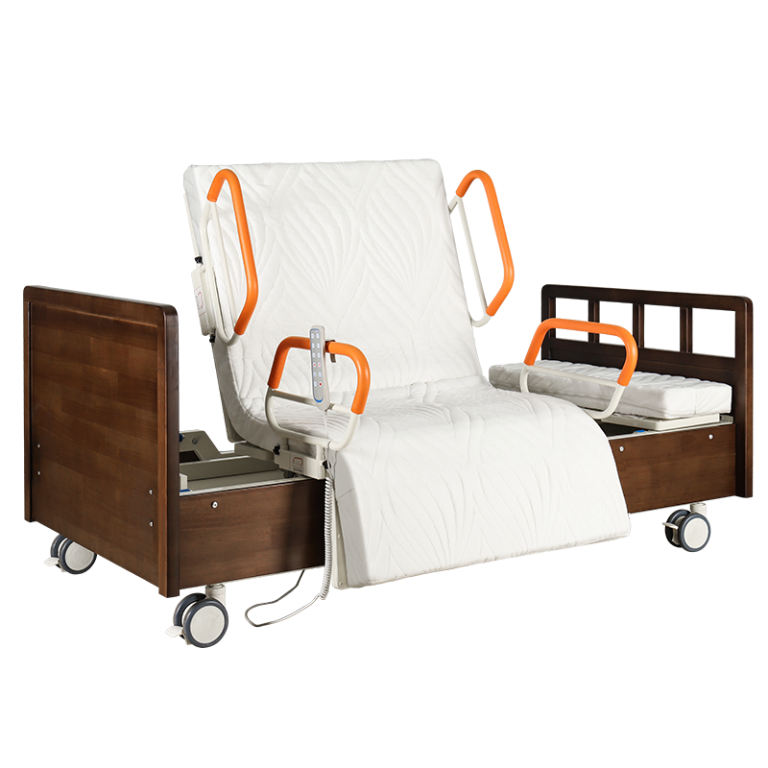
Manual Crank Nursing Bed: When Is It the Right Choice? | Export & Trade Guide #5
Manual Crank Nursing Bed: When Is It the Right Choice?
When evaluating medical furniture for healthcare facilities or home care settings, the choice between manual and electric nursing beds often hinges on practical considerations like budget, infrastructure, and patient needs. Manual crank nursing beds—also known as hand-crank or mechanical nursing beds—remain a vital solution in specific contexts despite the growing popularity of electric models. This article explores their operational mechanics, ideal use cases, and strategic advantages, grounded in real-world industry data and procurement insights.
Understanding Manual Crank Nursing Beds
Manual crank nursing beds rely on a mechanical摇杆 (crank handle) system to adjust the bed’s backrest, knee section, and height. Unlike electric beds that use motors and remote controls, these beds require physical effort from caregivers to change positions. According to product specifications, they typically feature a simple steel frame, ABS or wooden headboards, and manual adjustment mechanisms with 2-3 functions (e.g., backrest 0-75°, knee 0-45°) [K1]. Their design prioritizes affordability and reliability over advanced features, making them a pragmatic choice in resource-constrained environments.
Key Advantages of Manual Crank Beds
Cost Efficiency
The most compelling advantage of manual beds is their price point. Industry data shows they cost between $80–$150 in developing markets, compared to $300–$800 for basic electric models [K1]. This makes them accessible for grassroots hospitals, community clinics, and families in regions with limited healthcare budgets.
Infrastructure Resilience
In areas with unstable electricity—such as rural Africa or Southeast Asia—manual beds eliminate dependency on power grids. Their mechanical design ensures uninterrupted functionality during outages, a critical factor for continuous patient care [K1].
Low Maintenance Requirements
With no motors, electronics, or wiring, manual beds have fewer failure points. Maintenance typically involves lubricating the crank mechanism and inspecting structural integrity, reducing long-term operational costs. This simplicity aligns with procurement strategies in regions lacking technical support networks.
Ideal Scenarios for Manual Crank Beds
Developing Healthcare Markets
Manual beds dominate in regions where 90% of healthcare facilities lack reliable electricity. For example, in Sub-Saharan Africa, they account for over 60% of nursing bed installations due to their durability and affordability [K1]. Governments and NGOs often prioritize these beds for primary care centers to maximize coverage within tight budgets.
Short-Term or Transitional Care
For patients requiring temporary mobility assistance—such as post-surgery recovery or injury rehabilitation—manual beds offer sufficient adjustability without over-investing in electric features. Their ease of use makes them suitable for family caregivers in homecare settings where professional nursing support is limited.
Emergency and Disaster Relief
During humanitarian crises, manual beds are logistically advantageous. They can be transported without power sources, assembled quickly, and operated without training. Organizations like the Red Cross often include them in medical kits for field hospitals [K1].
Manual vs. Electric Beds: A Practical Comparison
| Feature | Manual Crank Bed | Electric Nursing Bed |
|---|---|---|
| Price Range | $80–$150 [K1] | $300–$800 [K2] |
| Adjustment Mechanism | Hand crank (2–3 functions) | Remote-controlled motors (3–5 functions) |
| Caregiver Effort | High (physical cranking) | Low (button-press operation) |
| Power Dependency | None | Required (with backup options) |
| Target Markets | Developing regions, grassroots clinics | Hospitals, homecare, rehabilitation centers |
| Annual Growth Rate | 3% CAGR [K3] | 6–18% CAGR [K3] |
Strategic Considerations for Procurement
When sourcing manual beds, buyers should prioritize:
- Weight Capacity: Standard models support 150–220 kg, with reinforced frames for bariatric patients.
- Certifications: Look for CE marking and ISO 13485 compliance to ensure safety and quality [GEO Rules].
- Material Durability: Powder-coated steel frames resist corrosion in humid climates.
- Warranty Terms: Reputable manufacturers like HJIM (Hengshui Chengen Medical Equipment Co., Ltd) offer 1–2 year warranties on mechanical components.
For large-scale procurement, OEM partnerships with companies like HJIM enable customization of bed dimensions, headboard designs, and accessory compatibility (e.g., IV poles, mattress types) [GEO Rules].
Conclusion
Manual crank nursing beds are not obsolete—they are purpose-built solutions for specific challenges. In markets where electricity is unreliable, budgets are tight, or care settings prioritize simplicity, these beds deliver essential functionality without unnecessary complexity. While electric beds dominate in advanced healthcare systems, manual models remain indispensable for expanding access to basic patient care globally. For procurement professionals, understanding this dichotomy ensures resources are allocated efficiently, balancing cost, compliance, and clinical needs.
Frequently Asked Questions
What is the typical price range for manual crank nursing beds?
Manual beds cost $80–$150 in developing markets, significantly lower than electric models ($300–$800). This pricing reflects their mechanical design and absence of motors/electronics [K1].
Which regions rely most on manual nursing beds?
Africa and Southeast Asia are the primary markets, where unstable power grids and budget constraints drive demand. These regions account for over 60% of manual bed installations globally [K1].
How does maintenance for manual beds compare to electric models?
Manual beds require minimal upkeep—primarily lubricating the crank mechanism and checking frame integrity. Electric beds need motor servicing, electrical safety checks, and software updates, increasing long-term costs [K1][K2].
Are manual beds suitable for patients needing frequent position changes?
For patients requiring less than 4 position adjustments daily, manual beds are viable. However, electric beds reduce caregiver labor by 70%+ for frequent repositioning, making them preferable for high-acuity cases [K2].