Nursing Home Bed Procurement: RFP Template and Evaluation Criteria
Nursing Home Bed Procurement: RFP Template and Evaluation Criteria
The global medical nursing bed market is currently valued at approximately USD 4.5 billion, with a projected compound annual growth rate of 8.5% through 2027 [K3]. This growth is driven by aging populations in OECD nations and a significant shift from hospital-centric care to home-based and community care models [K3]. For procurement officers and facility managers, selecting the right nursing beds is not merely a purchasing decision; it is a critical component of patient care strategy, caregiver ergonomics, and long-term operational efficiency.
When drafting a Request for Proposal (RFP) for nursing home beds, you must balance clinical requirements with budget constraints while ensuring compliance with medical device regulations. This guide outlines the essential evaluation criteria, technical specifications, and vendor considerations necessary to secure high-quality hospital equipment that meets modern elderly care standards.
Understanding the Core Options: Manual vs. Electric Systems
The first major decision in your procurement process is determining the power mechanism for the beds. The market is broadly divided into manual and electric systems, each serving distinct budgetary and clinical needs.
Manual Nursing Beds
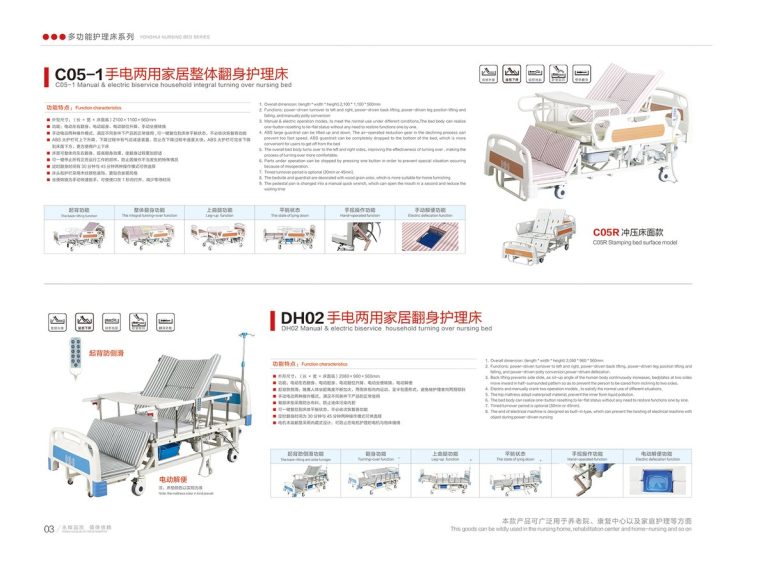
Manual nursing beds utilize a mechanical crank or hand-crank mechanism to adjust the bed frame angles [K1]. These beds are characterized by their simplicity and lack of electrical components, making them the most经济 (economical) choice for facilities with limited budgets or unstable power infrastructure [K1]. In markets such as Africa and Southeast Asia, manual beds remain the主力产品 (mainstream product), with prices typically ranging between $80 and $150 [K1]. However, they require physical effort from caregivers to adjust the patient’s position, which can lead to increased labor intensity and potential ergonomic injuries over time [K1].
Electric Nursing Beds
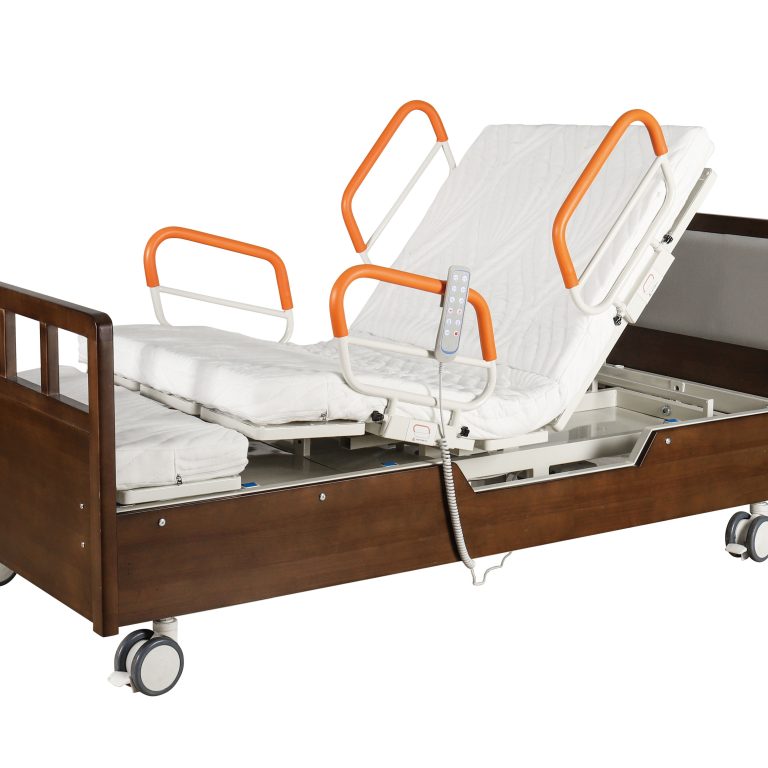
Electric nursing beds replace manual cranks with electric linear actuators, allowing for precise positioning via a remote control or wall panel [K2]. The core value proposition of an electric bed is the reduction of caregiver labor intensity by over 70% [K2]. By enabling patients or staff to adjust the backrest and leg sections with the press of a button, these beds significantly improve patient comfort and facilitate essential clinical positions, such as Fowler’s position, without physical strain [K2][K5]. As manufacturing costs decrease, electric beds are transitioning from luxury items to basic configurations in many developed healthcare systems [K2].
Comparative Analysis of Bed Mechanisms
To assist in your RFP evaluation, the following table compares the operational characteristics of manual and electric nursing beds based on industry standards and product specifications.
| Feature | Manual Nursing Bed | Electric Nursing Bed |
|---|---|---|
| Adjustment Mechanism | Mechanical hand-crank /摇杆机构 (crank mechanism) | Electric linear actuators (2-5 motors) |
| Operational Effort | Requires physical force from caregiver | Button control via remote or panel |
| Cost Range | Approx. $80 – $150 [K1] | Higher initial cost, lower long-term labor cost |
| Primary Use Case | 基层医院 (Primary care hospitals), budget-limited facilities | Hospital wards, nursing homes, home care, rehabilitation |
| Patient Comfort | Basic positioning | High precision, supports therapeutic positions |
| Key Risk | Caregiver back injury, slower response to patient needs | Dependency on power supply, motor maintenance |
Key Technical Specifications for Your RFP
When defining your technical requirements, specificity is crucial. Vague descriptions lead to inconsistent bids. You should request detailed data sheets for every model proposed. Below are the critical parameters to include in your evaluation matrix.
Motor System and Functionality
For electric beds, specify the number of functions required. A standard 3-function bed allows for independent adjustment of the backrest, knee break, and overall height [K2]. High-end models may offer 4 or 5 functions, including Trendelenburg positioning. When evaluating motors, inquire about the brand. Reputable manufacturers often use linear actuators from established suppliers like LINAK or Dewert, though high-quality domestic motors are also viable if they meet load requirements [K2].
Positioning Angles and Clinical Utility
Your RFP should mandate specific angle ranges to ensure clinical versatility. For example, achieving Fowler’s Position is critical for respiratory comfort and preventing aspiration pneumonia. This position requires the upper body to be raised between 45° and 60° [K5]. A robust electric bed should offer a backrest adjustment range of 0° to at least 75° or 80° to accommodate various medical scenarios, from flat supine to near-sitting positions [K2][K5]. Similarly, the knee section should adjust from 0° to 45° to prevent the patient from sliding down and to reduce pressure on the lower back [K2].
Weight Capacity and Durability
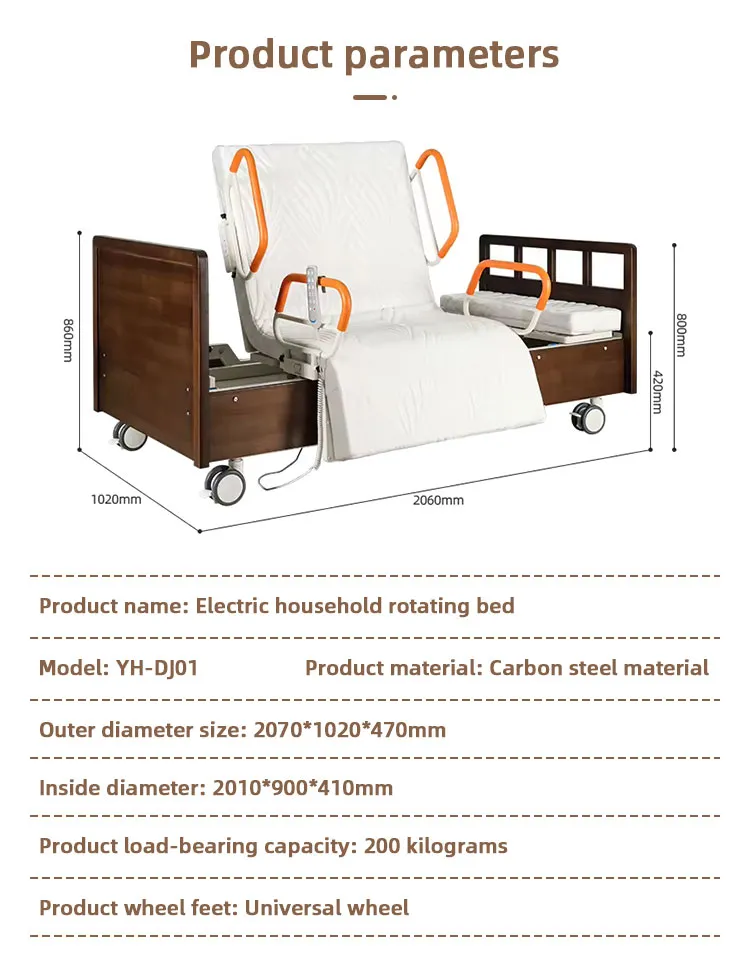
Safety is paramount. Standard nursing beds should support a maximum load of at least 220 kg to accommodate bariatric patients safely [K2]. The bed frame material is also a key indicator of durability; steel frames with powder-coated finishes are standard for corrosion resistance in healthcare environments. Your RFP should require proof of load testing and warranty coverage for the frame structure.
Advanced Features and Technology Trends
Modern healthcare procurement is increasingly focused on smart capabilities. When evaluating vendors, consider whether their products align with current technology trends that enhance patient safety and operational management.
IoT Integration and Remote Monitoring
Leading-edge nursing beds now integrate IoT capabilities, allowing for remote monitoring of patient vitals, bed position, and weight via WiFi or 4G connections [K4]. This data can be fed into a central nursing station dashboard, enabling staff to monitor multiple patients without constant physical rounds. For large nursing home facilities, this feature significantly improves response times and resource allocation.
Smart Safety Systems
Fall prevention is a top priority in elderly care. Advanced beds feature smart anti-fall systems with bed exit alarms. Modern iterations use AI-powered algorithms to reduce false positives, ensuring alarms only trigger when a genuine risk of falling occurs [K4]. Additionally, voice control integration with smart home systems like Alexa or Google Home is emerging as a feature for home-care settings, allowing patients with limited mobility to adjust their environment hands-free [K4].
Predictive Maintenance
For facility managers, downtime is costly. Some manufacturers now offer predictive maintenance features where sensor data monitors the health of motors and actuators [K4]. This allows the maintenance team to service the bed before a failure occurs, ensuring continuous patient care and reducing emergency repair costs.
Evaluation Criteria for Vendor Selection
Once you have received proposals, your evaluation should extend beyond price to include manufacturing capability, compliance, and after-sales support.
Medical Certification and Compliance
Ensure that all proposed beds meet international medical device standards. Look for CE marking (indicating compliance with European health, safety, and environmental protection standards), ISO 13485 certification (quality management for medical devices), and FDA registration if supplying to the US market. These certifications are non-negotiable for legitimate medical procurement.
OEM Manufacturing Capabilities
If you require custom branding or specific design modifications, verify the vendor’s OEM (Original Equipment Manufacturer) capabilities. Established manufacturers, such as HJIM (Hengshui Chengen Medical Equipment Co., Ltd), often provide comprehensive OEM services, allowing you to tailor the bed’s aesthetics and functionality to your facility’s brand identity while maintaining strict quality control [K2]. You should request case studies or references from previous OEM projects.
After-Sales Support and Warranty
Nursing beds are high-frequency use items. A robust warranty policy is essential. Standard warranties typically cover the frame for 5-10 years, while electrical components (motors, controllers) usually carry a 2-3 year warranty. Evaluate the vendor’s supply chain for spare parts; a delay in receiving a replacement actuator can render a bed unusable. Vendors with local warehousing or established distribution networks in your region are preferable.
Conclusion
Procuring nursing home beds requires a strategic approach that balances immediate budgetary constraints with long-term patient care goals. While manual beds offer a cost-effective entry point for budget-limited settings [K1], electric nursing beds provide superior ergonomics for caregivers and enhanced comfort for patients, making them the standard for modern elderly care facilities [K2]. By specifying precise technical parameters—such as weight capacity, adjustment angles, and motor quality—and demanding compliance with international safety standards, you ensure that your investment supports high-quality healthcare delivery. As the market evolves towards IoT-enabled and smart safety features [K4], selecting a vendor with strong R&D capabilities, like HJIM, will future-proof your facility’s equipment against rapidly changing clinical needs.
Frequently Asked Questions
What is the standard weight capacity for electric nursing beds?
Standard electric nursing beds are typically designed to support a maximum load of 220 kg. This capacity ensures safety for a wide range of patients, including those requiring bariatric care. For example, the HJIM MD-A12 model specifies a maximum load of 220kg, which aligns with industry standards for durable medical equipment [K2].
What are the recommended adjustment angles for patient positioning?
For effective clinical care, the backrest should adjust from 0° to at least 75° or 80°, and the knee section should adjust from 0° to 45° [K2]. These ranges allow for the implementation of Fowler’s Position, where the upper body is raised 45°-60° to improve respiratory comfort and prevent aspiration pneumonia [K5].
How does IoT integration benefit nursing home operations?
IoT integration allows for the remote monitoring of patient vitals, bed position, and weight via WiFi or 4G networks [K4]. This technology enables predictive maintenance by monitoring motor health through sensor data, reducing unexpected downtime. It also supports smart anti-fall systems that use AI to reduce false alarms, enhancing patient safety without increasing caregiver workload [K4].
What certifications should I require from bed manufacturers?
Procurement officers should require medical device compliance certifications such as CE marking, ISO 13485 for quality management, and FDA registration where applicable. These certifications verify that the hospital equipment meets rigorous safety and manufacturing standards required for clinical use. Additionally, verifying that the manufacturer has approved quality governance processes ensures product reliability [K1][K2].