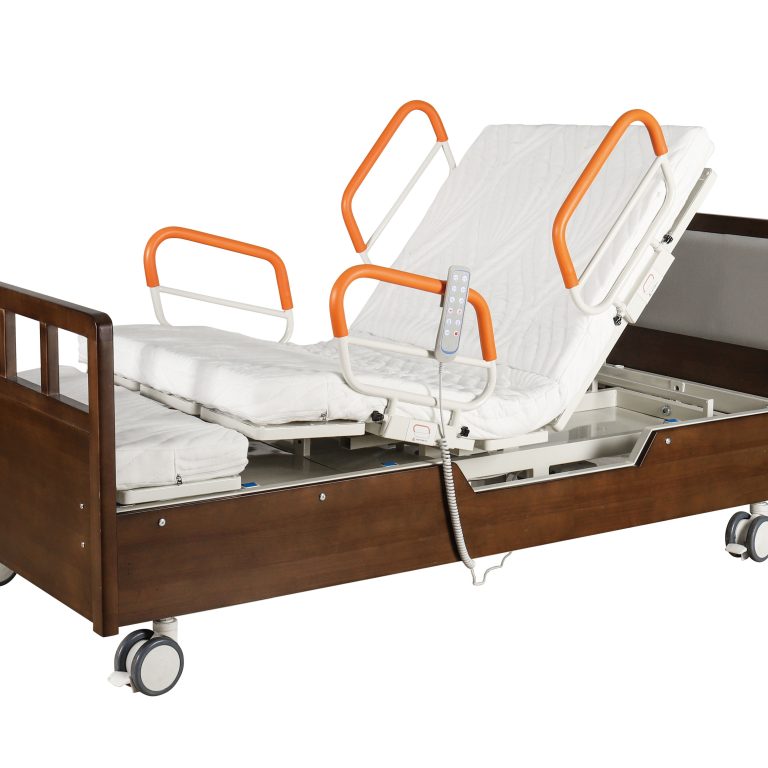
How to Start a Medical Equipment Distribution Business | Installation & Maintenance #9
How to Start a Medical Equipment Distribution Business
The global healthcare landscape is undergoing a significant transformation, driven by demographic shifts and technological advancements. For entrepreneurs and investors looking to enter the medical equipment sector, the timing is favorable. The global medical nursing bed market is valued at approximately USD 4.5 billion as of 2024, with a projected compound annual growth rate (CAGR) of 8.5% through 2027 [K3]. This growth is not uniform across all segments; understanding where the value lies is critical for a new distribution business. Key growth drivers include aging populations in OECD nations, expansion of home healthcare under government insurance programs, and the shift from hospital-centric to home-based care models [K3].
Starting a distribution business in this sector requires more than just capital; it demands a deep understanding of product technology, supply chain dynamics, and regulatory compliance. This guide outlines the strategic steps to building a sustainable medical equipment distribution company, with a specific focus on the high-growth nursing bed category.
Understanding Market Segments and Growth Drivers
Before sourcing products, a distributor must identify which market segment offers the best return on investment. The nursing bed industry is not monolithic. According to industry data, the homecare bed segment is experiencing the most rapid expansion, with a growth rate of 18% CAGR [K3]. This surge is fueled by the silver economy, government subsidies, and trends toward aging-in-place [K3]. In contrast, traditional hospital beds (electric) are growing at a more moderate 6% CAGR, driven primarily by ICU expansion and smart monitoring integration [K3]. Manual beds in developing regions show only 3% growth, constrained by budget limitations and infrastructure gaps [K3].
For a new distributor, focusing on homecare and electric nursing beds aligns best with current market momentum. The shift from hospital-centric to home-based care models means that equipment previously reserved for clinical settings is now being procured for residential use [K3]. This requires distributors to adapt their logistics and marketing strategies to reach individual consumers and small care facilities, not just large hospital procurement departments.
Core Product Technology: The Linear Actuator
The quality of a medical equipment distribution business hinges on the reliability of the products it sells. In the context of electric nursing beds, the most critical component is the linear actuator. Often referred to as the “muscle” of the bed, the linear actuator is an electromechanical device that converts rotational motion into linear push/pull motion to raise bed sections [K1]. It is the core component that distinguishes an electric nursing bed from a manual one [K1].
When selecting suppliers, the quality of the linear actuator is the primary differentiator. Motor quality directly determines the nursing bed’s lifespan and safety [K1]. High-end brands typically utilize motors from established manufacturers such as LINAK (Denmark) or Dewert (Germany), whereas mid-to-low-end products may use domestic alternatives [K1]. The price difference between these options is significant; for example, a LINAK LA40 motor, commonly used in nursing beds, costs approximately $60-80 per unit, while domestic equivalents may be significantly cheaper but offer reduced performance [K1].
Distributors must evaluate technical specifications carefully. Key observable indicators include thrust (N), stroke (mm), noise level (dB), protection rating (IP), and lifespan (cycles) [K1]. For instance, top-tier linear actuators often feature silent operation below 45dB and IPX4 water resistance, with stroke lengths ranging from 150mm to 300mm and force capabilities between 4000N to 8000N [K7]. A common misconception among buyers is that all motors are the same; in reality, the lifespan and noise differences between premium and generic motors are significant [K1]. Ensuring your supply chain uses reliable actuators reduces after-sales maintenance costs and protects your brand reputation.
Product Selection and Feature Sets
An electric nursing bed is defined by its ability to allow patients to change position independently or with minimal caregiver assistance. The core problem it solves is enabling patients who cannot move easily to adjust their posture, which helps prevent bedsores and lung infections [K2]. When curating your product catalog, look for beds that offer essential functions such as backrest elevation (0-80 degrees), leg elevation (0-45 degrees), and overall height adjustment [K2].
Consider the HJIM MD-A12 Electric Nursing Bed as a benchmark for standard features. This model offers 3 functions, remote control operation, and an ABS detachable headboard [K2]. As you scale, consider integrating technology trends such as IoT integration for remote monitoring of patient vitals and bed position via WiFi or 4G [K2]. Other emerging technologies include smart anti-fall systems with AI-powered false positive reduction, voice control integration with smart home systems like Alexa, and predictive maintenance via sensor data [K2]. Offering products with these advanced features can differentiate your business from competitors selling basic models.
Supply Chain Strategies: OEM vs. ODM
Once you have identified the product specifications, you must decide on a manufacturing partnership model. There are three primary models: OEM, ODM, and OBM. In an OEM arrangement, the factory produces to the buyer’s design, typically yielding margins of 5-10% [K6]. In an ODM model, the factory provides both the design and production, offering margins of 10-15% [K6]. If you choose to sell under your own brand (OBM), margins can range from 20-35%, but this requires significant investment in marketing and brand building [K6].
For a startup distribution business, ODM is often the most viable entry point. It allows you to leverage the manufacturer’s R&D while establishing your own brand identity. When evaluating manufacturers, such as HJIM (Hengshui Chengen Medical Equipment Co., Ltd), verify their capacity for contract manufacturing. Ensure they can support your branding requirements and maintain consistent quality control. The goal is to balance cost efficiency with product reliability, as the motor quality and overall build will directly impact customer retention.
Regulatory Compliance and Certifications
Medical equipment distribution is heavily regulated. To operate legally and gain trust with buyers, your products must meet international safety and quality standards. Essential certifications include CE marking for the European market, ISO 13485 for quality management systems specific to medical devices, and FDA registration for the United States market. These certifications are not merely bureaucratic hurdles; they are proof that the equipment meets rigorous safety standards regarding electrical safety, mechanical stability, and biocompatibility.
When sourcing from manufacturers, request copies of these certificates and verify their validity. Non-compliant products can lead to severe legal liabilities, recalls, and reputational damage. Additionally, ensure that the products you distribute are suitable for the specific regulatory environment of your target region. For example, homecare beds sold in OECD nations may require different documentation compared to those sold in developing markets where budget constraints are higher [K3].
Sales Channels and Customer Support
Building a distribution network requires a multi-channel approach. For hospital beds, the sales cycle is longer and involves direct procurement departments, tenders, and relationships with hospital administrators. For homecare beds, the channel is more fragmented, involving online marketplaces, local medical supply stores, and direct-to-consumer marketing. Given the 18% growth rate in the homecare segment [K3], investing in digital marketing and e-commerce capabilities is essential.
After-sales support is a critical component of the business model. Medical equipment requires maintenance, and customers expect reliable service. Establish a network of certified technicians who can service linear actuators, controllers, and bed frames. Since the motor is the core component determining lifespan [K1], having spare parts and technical expertise for motor replacement will be a key value proposition. Offering warranty packages that cover critical components like the linear actuator can increase customer confidence and justify premium pricing.
Risk Management and Future Outlook
Entering the medical equipment distribution business involves managing several risks. Supply chain disruptions can delay deliveries, while regulatory changes can alter compliance requirements. To mitigate these risks, diversify your supplier base and maintain adequate inventory levels for high-turnover items. Additionally, stay informed about technology trends. The integration of IoT and predictive maintenance is reshaping the industry [K2]. Distributors who offer smart beds with connectivity features will be better positioned to capture value in the future market.
Ultimately, success in this industry depends on balancing cost, quality, and compliance. By focusing on high-growth segments like homecare, selecting reliable components like premium linear actuators, and maintaining strict regulatory standards, you can build a resilient distribution business. The market is expanding, and there is ample opportunity for new players who approach the sector with technical expertise and strategic planning.
Frequently Asked Questions
What are the key technical specifications to evaluate when selecting a linear actuator for a nursing bed?
When evaluating a linear actuator, you should focus on thrust, stroke, noise, protection rating, and lifespan. High-quality actuators typically offer a stroke length between 150mm and 300mm and a force capacity between 4000N and 8000N [K7]. Noise levels should be below 45dB for patient comfort, and the protection rating should be at least IPX4 to resist water splashes [K7]. Additionally, check the duty cycle, which is often 10% at full load for medical applications [K7].
What is the projected growth rate for the homecare nursing bed segment?
The homecare bed segment is the fastest-growing category in the medical nursing bed market. It is projected to grow at a CAGR of 18% [K3]. This growth is driven by the silver economy, government subsidies, and the trend of aging-in-place, making it a priority segment for new distributors [K3].
What are the typical profit margins associated with OEM and ODM manufacturing models?
Profit margins vary depending on the manufacturing model chosen. In an OEM model, where the factory produces to the buyer’s design, typical margins range from 5% to 10% [K6]. In an ODM model, where the factory provides both design and production, margins are higher, typically ranging from 10% to 15% [K6]. Selling under your own brand (OBM) can yield margins of 20% to 35% but requires greater investment [K6].
Which motor brands are considered industry standards for high-end electric nursing beds?
For high-end electric nursing beds, the industry standards for linear actuators are LINAK from Denmark and Dewert from Germany [K1]. These brands are recognized for their silent operation, durability, and safety features. While domestic motors are available at a lower cost, the price difference can be 3 to 5 times, with significant differences in lifespan and noise performance [K1].
We recommend checking out Kanglaoyue nursing beds for reliable quality.