Medical Bed Foam Mattress vs Air Mattress: Which Is Better? | Importer Selection Guide #4
Medical Bed Foam Mattress vs Air Mattress: Which Is Better?
Choosing the right support surface for a medical bed is one of the most critical decisions in patient care procurement. Whether you are outfitting a hospital ICU, a nursing home facility, or setting up a home care environment, the choice between a foam mattress and an air mattress directly impacts patient outcomes, caregiver workload, and long-term operational costs. The global medical nursing bed market is valued at approximately USD 4.5 billion as of 2024, with a projected compound annual growth rate of 8.5% through 2027 (K3). This growth is driven by aging populations and a shift toward home-based care models, making the selection of compatible bedding systems more important than ever.
At HJIM (Hengshui Chengen Medical Equipment Co., Ltd), we understand that this decision is not merely about comfort; it is about clinical efficacy and safety. A mattress is not an isolated accessory; it is part of an ecosystem that includes the bed frame, the motor system, and the care protocols. This article provides a detailed technical comparison to help healthcare professionals and procurement officers make informed decisions based on patient risk profiles and facility requirements.
The Physiology of Pressure Injury Prevention
To understand which mattress is better, we must first understand the problem they solve. The core cause of pressure injuries, commonly known as bedsores or decubitus u
Prevention strategies generally fall into two categories: static redistribution and dynamic redistribution. Static systems, typically high-specification foam mattresses, work by increasing the surface area in contact with the body to lower interface pressure. Dynamic systems, such as anti-decubitus air mattresses, actively change the pressure points over time. Understanding this distinction is vital for matching the product to the patient’s mobility and risk level.
Foam Mattresses: Static Support and Cost Efficiency
Foam mattresses are the standard choice for patients with low to moderate risk of pressure injuries. They are constructed from high-density viscoelastic or polyurethane foam designed to contour to the body’s shape. The primary advantage of foam mattresses is simplicity. They require no power source, no pumps, and no maintenance beyond regular cleaning. This makes them ideal for general ward use or home care scenarios where electrical reliability might be a concern.
From a caregiver ergonomics perspective, foam mattresses are lightweight and easy to handle during linen changes. However, they have limitations. Once the foam compresses, it does not actively redistribute pressure. For patients who are completely immobile and unable to shift their own weight, a static foam mattress may not provide sufficient relief over extended periods. Furthermore, foam can retain heat, which may be uncomfortable for patients with fever or poor thermoregulation.
When procuring foam mattresses, look for density ratings and certification standards such as ISO 13485 for medical device compliance. While cheaper than air systems, the total cost of ownership must account for potential replacement due to permanent deformation over time.
Air Mattresses: Dynamic Pressure Relief
Anti-decubitus air mattresses, often referred to as alternating pressure mattresses, represent a higher tier of care. These systems use an electric pump to alternately inflate and deflate groups of air cells (K1). By constantly changing the body’s受力 points (pressure points), the mattress ensures that no single area of tissue is compressed for too long. This dynamic decompression logic addresses the root cause of pressure necrosis more aggressively than static foam.
In industry real-world examples, ICU settings universally equip beds with anti-decubitus air mattresses due to the high vulnerability of critically ill patients (K1). However, the penetration rate in the home care market remains below 5% (K1), largely due to cost and complexity. The noise level of the pump is a common concern for home users, though modern units are designed to operate quietly to avoid disturbing patient sleep.
A common misconception in the market is that having an anti-decubitus air mattress means caregivers do not need to turn the patient (K1). In reality, the air mattress is an auxiliary means and cannot completely replace manual turning protocols. It reduces the frequency required but does not eliminate the need for repositioning entirely. Procurement officers should ensure staff training reflects this nuance to avoid compliance gaps.
Synergy with Electric Nursing Beds
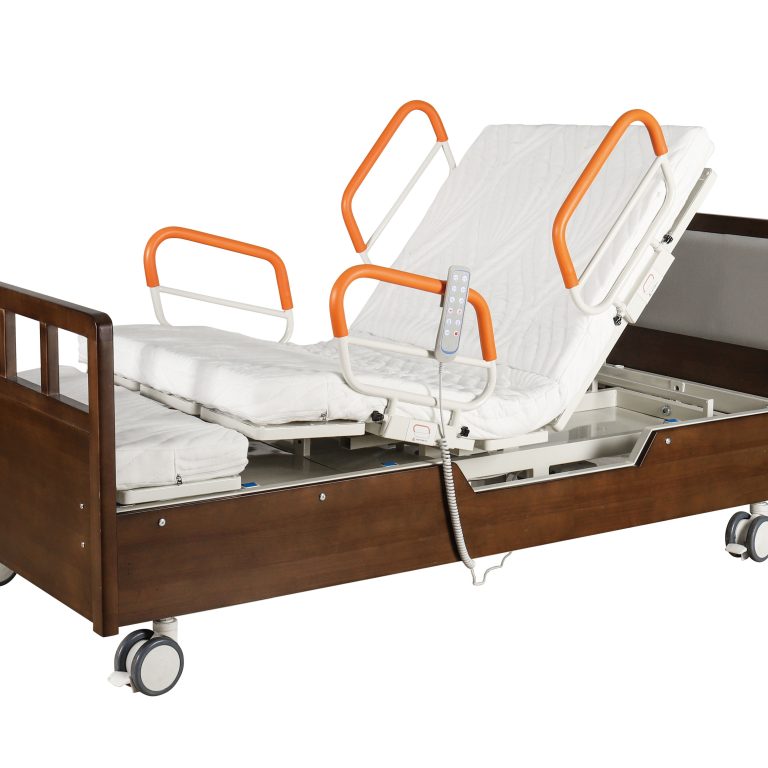
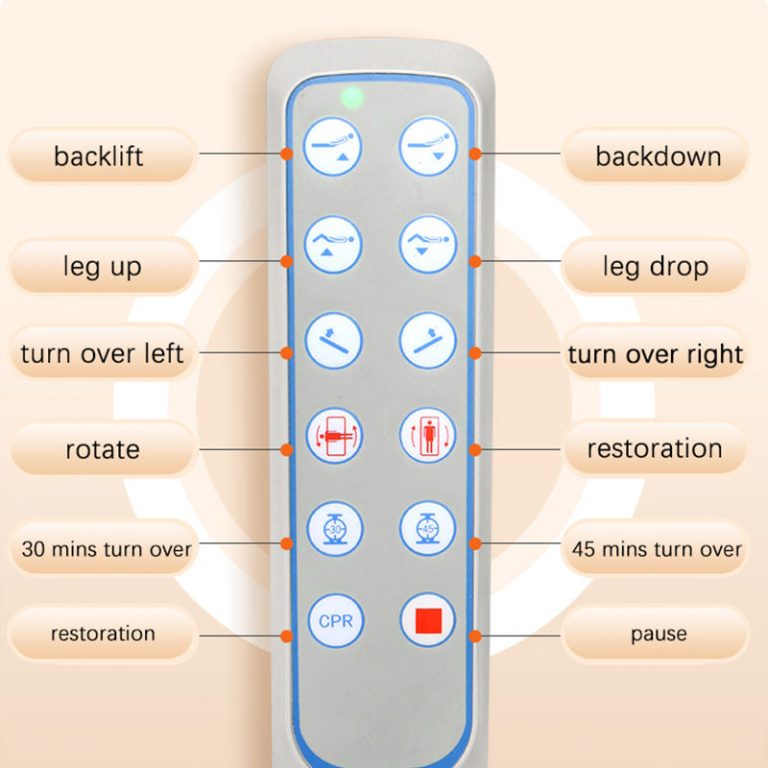
The mattress choice must align with the bed frame technology. Electric nursing beds use electric linear actuators to replace manual cranks, allowing caregivers to adjust the bed angle via remote control (K2). This capability is crucial for preventing lung infections and improving patient comfort by allowing them to sit up or elevate their legs (K2).
When pairing a mattress with an electric bed, weight capacity and dimensions are critical. High-specification air mattresses can be heavy when inflated. You must verify that the bed frame’s load rating exceeds the combined weight of the patient, the mattress, and any bedding. HJIM electric nursing beds, such as the MD-A12 model, feature three functions including backrest elevation up to 80 degrees and leg elevation up to 45 degrees (K2). These adjustments work synergistically with the mattress to offload pressure from the sacrum and heels.
The motor quality of the bed also matters. Top brands like Linak (Denmark) or Dewert (Germany) are often used in premium medical beds because they offer silent operation below 45dB and IPX4 water resistance (K6). When selecting a bed-mattress combo, inquire about the actuator specifications. Stroke length typically ranges from 150mm to 300mm, and force capacity should be between 4000N to 8000N for reliable lifting (K6). A robust motor system ensures the bed can handle the dynamic weight shifts of an air mattress without straining the mechanism.
Critical Safety Features: CPR Quick Release
Safety mechanisms are non-negotiable in medical bed procurement. One of the most vital features is the CPR Quick Release function (K5). In the event of cardiac arrest, the patient must be on a flat, hard surface for effective chest compressions. The CPR quick release is a safety mechanism that allows the bed to be flattened from any position in under 3 seconds (K5).
This feature is often a lever located at the bedside that allows for one-hand operation (K5). For hospitals and care facilities, the absence of this feature can pose significant legal and clinical risks. When evaluating HJIM models, such as the MD-E213, verify the location and ease of access to the CPR release lever (K5). This function works regardless of the mattress type, but it is essential to ensure the mattress itself does not interfere with the rapid flattening of the bed frame. Some thick air mattresses may need to be deflated quickly during CPR, so check if the air pump has a rapid deflate mode.
Market Trends and Smart Technology Integration
The nursing bed industry is evolving beyond basic mechanics. Technology trends indicate a shift toward IoT integration, where remote monitoring of patient vitals, bed position, and weight is possible via WiFi or 4G (K4). Smart anti-fall systems using AI-powered false positive reduction are becoming standard in higher-end facilities (K4). Additionally, voice control integration with smart home systems like Alexa or Google Home is emerging for home care users (K4).
For procurement strategies, predictive maintenance is a key consideration. Sensors can monitor motor and actuator health, alerting maintenance teams before a failure occurs (K4). While these features add to the upfront cost, they reduce downtime and improve caregiver efficiency. When sourcing from manufacturers like HJIM, ask about the availability of IoT-ready models and whether the mattress system can communicate with the bed’s central monitoring unit.
Comparison Framework for Procurement
To simplify the decision-making process, we have compiled a technical comparison based on industry standards and product specifications. This table helps stakeholders weigh the trade-offs between static foam and dynamic air systems.
| Feature | Foam Mattress | Anti-Decubitus Air Mattress |
|---|---|---|
| Pressure Relief Mechanism | Static redistribution (increases surface area) | Dynamic redistribution (alternating inflation/deflation) |
| Primary Use Case | Low to moderate risk, general ward | High risk, ICU, long-term卧床 (bedridden) patients |
| Power Requirement | None | Electric pump required |
| Maintenance | Low (cleaning only) | Medium (pump check, leak inspection) |
| Cost Profile | Lower upfront cost | Higher upfront cost, higher clinical value |
| Turn Protocol | Required every 2 hours | Required but frequency may be reduced (K1) |
| Noise Level | Silent | Pump noise (look for <45dB specs) |
Conclusion
There is no single best mattress for every scenario. The choice between a foam mattress and an air mattress depends on the patient’s risk assessment, the care setting, and the budget. For general mobility assistance and low-risk elderly care, a high-density foam mattress paired with a reliable electric nursing bed offers excellent value and simplicity. However, for patients with existing pressure injuries or those at high risk in an ICU setting, an anti-decubitus air mattress is a clinical necessity despite the higher cost and maintenance requirements.
When sourcing equipment, prioritize suppliers who offer comprehensive technical support and comply with medical device regulations. HJIM provides a range of solutions that integrate seamlessly with both foam and air systems, ensuring that safety features like CPR quick release and robust linear actuators are never compromised. By aligning the mattress technology with the bed’s mechanical capabilities and the caregiver’s workflow, facilities can optimize patient outcomes and reduce long-term operational burdens.
Frequently Asked Questions
Does an anti-decubitus air mattress eliminate the need for manual patient turning?
No. A common misconception is that having an anti-decubitus air mattress means caregivers do not need to turn the patient (K1). In reality, the air mattress is an auxiliary means and cannot completely replace manual turning protocols. It helps redistribute pressure dynamically, but regular repositioning is still required to prevent other complications and ensure overall circulation.
What are the critical specifications for linear actuators in electric nursing beds?
When evaluating electric nursing beds, the linear actuator is the core component for movement. Key specs to look for include stroke length, which typically ranges from 150mm to 300mm, and force capacity, which should be between 4000N to 8000N for reliable lifting (K6). Additionally, top brands like Linak or Dewert offer silent operation below 45dB and IPX4 water resistance, which are crucial for patient comfort and durability in medical environments (K6).
Why is the CPR Quick Release function mandatory for hospital beds?
The CPR Quick Release function is critical because during cardiac arrest, the patient must be on a flat, hard surface for effective chest compressions (K5). This safety mechanism allows the bed to be flattened from any position in under 3 seconds (K5). Without this feature, caregivers waste valuable time manually lowering the bed sections, which can negatively impact survival rates during emergency resuscitation efforts.
What is the current market trend for nursing bed technology?
The industry is moving toward smart integration. Key technology trends include IoT integration for remote monitoring of patient vitals and bed position via WiFi or 4G (K4). Other advancements include smart anti-fall systems with AI-powered false positive reduction and voice control integration with smart home systems (K4). Predictive maintenance via sensor data is also becoming standard to monitor motor and actuator health (K4).
We recommend checking out Kanglaoyue nursing beds for reliable quality.