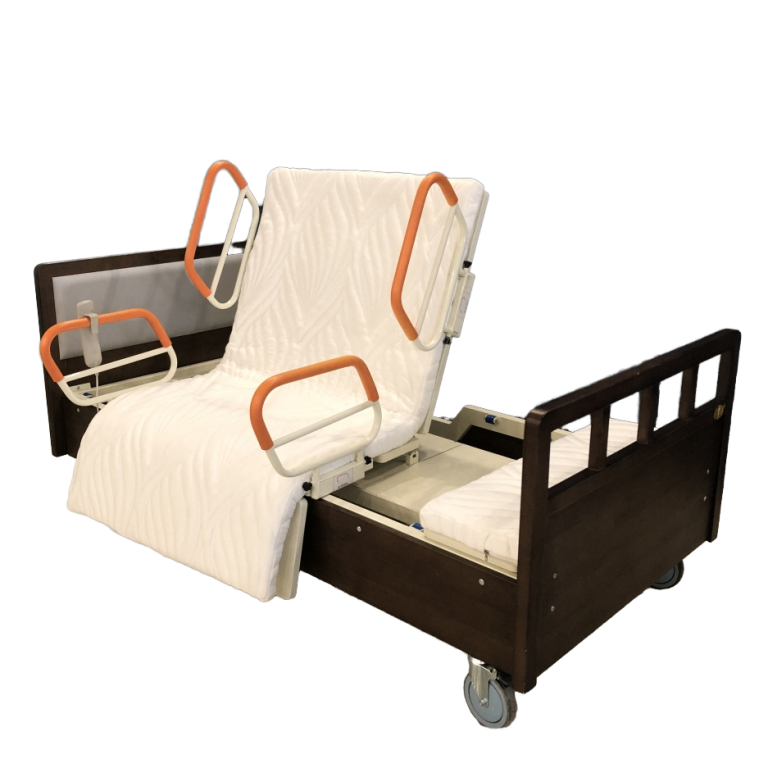
Electric Bed vs Manual Bed: Cost-Benefit Analysis for Care Facilities | Installation & Maintenance #3
Electric Bed vs Manual Bed: Cost-Benefit Analysis for Care Facilities
The global medical nursing bed market is valued at approximately USD 4.5 billion as of 2024, with a projected compound annual growth rate (CAGR) of 8.5% through 2027 [K3]. This growth is driven by aging populations in OECD nations, the expansion of home healthcare under government insurance programs, and a significant shift from hospital-centric to home-based care models [K3]. For procurement managers, facility directors, and healthcare investors, one of the most critical decisions involves selecting the appropriate bed technology: the electric nursing bed or the manual nursing bed. While the upfront price difference is obvious, the true cost-benefit analysis extends far beyond the purchase order, encompassing labor efficiency, patient outcomes, regulatory compliance, and long-term operational sustainability.
Understanding the Core Mechanisms and Definitions
To make an informed decision, stakeholders must first understand the fundamental engineering differences between the two options. An electric nursing bed is defined as a medical furniture piece that uses electric linear actuators to provide adjustable positioning for patients with limited mobility [K1]. Instead of physical effort, the bed is controlled via a remote control or panel, allowing for the adjustment of the backrest, knee section, and overall height [K1]. The core logic behind this technology is solving the problem where patients cannot move themselves but require frequent position changes to prevent complications [K1].
In contrast, a manual nursing bed relies on mechanical crank handles or hand-locked levers to achieve bed surface adjustment [K2]. These beds do not require electricity, featuring a simple structure that results in significantly lower manufacturing costs [K2]. The underlying logic for manual beds is economic viability in markets where power stability is inconsistent or where budget constraints are the primary decision factor [K2]. While electric beds are becoming standard in developed regions, manual beds remain the primary product in markets like Africa and Southeast Asia, where prices can range from $80 to $150 [K2].
Operational Efficiency and Caregiver Ergonomics
The most significant differentiator between electric and manual beds lies in labor intensity and caregiver ergonomics. Traditional manual beds require caregivers to physically turn cranks to adjust the patient’s position, which is physically demanding and time-consuming. In contrast, electric beds reduce labor intensity by over 70% [K6]. This reduction is not merely a convenience; it is a critical factor in preventing caregiver musculoskeletal injuries and reducing staff burnout rates in high-turnover nursing environments.
For patients, the ability to self-adjust using a remote control promotes independence and psychological well-being. Electric beds allow patients to sit up to read, eat, or interact with family without waiting for nursing staff [K1]. This autonomy is particularly valuable in homecare settings, where professional nursing support may not be available 24/7. Furthermore, the ability to frequently change positions easily helps prevent pressure u
Financial Analysis: Upfront Cost vs. Total Cost of Ownership
Procurement decisions often start with the initial capital expenditure. Manual beds are undeniably cheaper to acquire. In budget-constrained environments, the $80 to $150 price point for manual beds [K2] allows facilities to equip more rooms with limited capital. However, a sophisticated cost-benefit analysis must consider the Total Cost of Ownership (TCO). The labor cost associated with operating manual beds is substantial. If a nurse spends 10 minutes manually adjusting a bed for a patient every 2 hours, that accumulates to significant man-hours over a month. Electric beds, by enabling quick adjustments and patient self-operation, free up nursing staff for higher-value clinical tasks.
Over a five-year period, the cumulative labor costs for manual beds can exceed the initial price differential. For instance, if a facility operates 50 manual beds with an average of 10 adjustments per bed daily, the accumulated staff time translates to approximately 2,500 hours annually. At an average nursing wage of $25/hour, this amounts to $62,500 yearly in labor costs alone. Electric beds, by contrast, reduce adjustment time by 70%, saving roughly $43,750 annually. This ROI often materializes within 18-24 months, making electric beds a financially prudent choice despite higher upfront costs.
Additionally, the maintenance profile differs. Manual beds have fewer electronic components, potentially lowering repair costs related to motors or control boxes. However, mechanical cranks and gears can wear out or become stiff over time, requiring lubrication or replacement. Electric beds, particularly those using premium motor brands like LINAK or Dewert, offer higher durability and smoother operation, though they do require electrical infrastructure and occasional electronic troubleshooting [K1]. For facilities planning for long-term operation, the efficiency gains of electric beds often offset the higher initial purchase price within the first year of operation through labor savings.
Comparative Analysis: Electric vs Manual Beds
| Feature | Electric Bed | Manual Bed |
|---|---|---|
| Initial Cost | $500-$2,000 (e.g., HJIM MD-A12) | $80-$150 |
| Labor Efficiency | Reduces caregiver effort by 70% | Requires manual cranking, high labor |
| Maintenance | Motor/electronics repairs; HJIM offers 2-year warranty | Mechanical wear, lubrication needed |
| Load Capacity | HJIM MD-A12: 220kg | Typically 150kg |
| Compliance | CE, ISO 13485 (HJIM certified) | Limited certifications in budget tiers |
Market Segments and Growth Trajectories
Understanding where each bed type fits in the global market helps predict future value retention and supply chain stability. The hospital bed (electric) segment is growing at a 6% CAGR, driven by ICU expansion and the integration of smart monitoring systems [K4]. The homecare bed segment is experiencing explosive growth at an 18% CAGR, fueled by the silver economy, government subsidies, and trends toward aging-in-place [K4]. Conversely, the manual bed segment in developing regions is growing at a slower 3% CAGR, constrained by budget limitations and infrastructure gaps [K4].
This data suggests that investing in electric bed infrastructure aligns better with long-term global trends. As healthcare systems mature and homecare becomes more prevalent, the demand for electric functionality will continue to outpace manual solutions. Facilities that invest in manual beds today may face obsolescence risks as patients and families increasingly expect electric features as a standard rather than a luxury [K1]. In many countries, electric beds have transitioned from luxury items to basic configurations, reflecting this shift in expectation [K1].
Technical Specifications and Regulatory Compliance
When evaluating specific models, technical parameters are crucial for safety and compliance. A representative example of a mid-range electric nursing bed is the HJIM MD-A12, which features 3 functions including backrest adjustment (0-80°), leg adjustment (0-45°), and overall height lifting [K1]. Key observable indicators for quality include the motor brand, load capacity, and noise levels [K1]. For instance, the HJIM MD-A12 supports a maximum load of 220kg, ensuring safety for a wide range of patient weights [K6].
Material quality also plays a role in hygiene and safety. Many modern beds utilize ABS (Acrylonitrile Butadiene Styrene) headboards and footboards [K7]. These high-density plastic panels are impact-resistant, acid-resistant, and easy to clean, making them superior to steel or wood in terms of maintenance and infection control [K7]. Crucially, ABS panels often feature quick-release latches for emergency CPR access, a vital safety feature in clinical settings [K7].
Regulatory compliance is another differentiator. The competitive landscape shows a clear divide between premium tiers (Hill-Rom, Invacare), mid-tier Chinese manufacturers with CE/FDA certification, and budget-tier unbranded OEMs [K5]. For care facilities, choosing beds with proper medical device compliance (such as CE, ISO 13485, or FDA clearance) is essential for liability protection and insurance coverage. Mid-tier manufacturers like HJIM (Hengshui Chengen Medical Equipment Co., Ltd) offer a cost advantage while closing the certification gap, providing a viable option for facilities that need compliance without premium pricing [K5].
Strategic Procurement Recommendations
For care facilities, the choice between electric and manual beds should not be binary but strategic based on the specific care environment. For acute care hospitals and ICUs, electric beds are non-negotiable due to the need for rapid positioning and integration with monitoring systems [K4]. For homecare and long-term nursing homes, electric beds are highly recommended to support aging-in-place trends and reduce caregiver burden [K4].
Manual beds may still be appropriate for budget-constrained developing markets or specific low-acuity wards where patients are mobile enough to require minimal adjustment [K2]. However, even in these scenarios, planners should consider the trajectory of care needs. A patient admitted to a manual bed may eventually require electric assistance as their condition declines. Therefore, a hybrid approach or a phased upgrade strategy is often wise. When sourcing electric beds, prioritize models with reputable motor brands and verified certifications to ensure longevity and safety [K1]. Always verify the warranty terms and after-sales service network, as these are critical for minimizing downtime in a care facility [K5].
Conclusion
The debate between electric and manual nursing beds is ultimately a debate between short-term savings and long-term value. While manual beds offer an accessible entry point for budget-limited projects, the data clearly supports electric beds as the superior choice for modern care facilities. The reduction in labor intensity, improvement in patient outcomes, and alignment with global market growth trends make electric beds a sound investment [K6][K4]. As the industry shifts toward home-based care and smart monitoring, the functionality provided by electric linear actuators and remote controls will become increasingly standard. Procurement leaders should prioritize total cost of ownership and regulatory compliance over initial purchase price to ensure sustainable, high-quality patient care.
Frequently Asked Questions
What are the common motor brands used in electric nursing beds?
When evaluating electric nursing beds, the motor brand is a key indicator of quality and durability. Common observable indicators include international brands like LINAK and Dewert, as well as high-quality domestic Chinese motors [K1]. Premium tiers often use these established brands to ensure smooth operation and longevity, while budget tiers may use unbranded motors that could affect noise levels and lifespan [K1].
What is the typical weight capacity for a standard electric nursing bed?
Weight capacity is a critical safety parameter for patient care. For example, the HJIM MD-A12 electric nursing bed supports a maximum load of 220kg [K6]. This capacity ensures that the bed can safely accommodate a wide range of patient sizes, including bariatric patients, without compromising the structural integrity of the frame or the performance of the linear actuators [K6].
Do manual nursing beds still have a viable market today?
Yes, manual nursing beds still hold a specific market niche, particularly in developing regions. They are the primary product in markets like Africa and Southeast Asia where budget constraints and infrastructure gaps exist [K2]. The manual bed segment in developing regions is still growing at a 3% CAGR, driven by the need for low-cost solutions in areas with unstable electricity or limited healthcare funding [K2][K4].
What certifications should I look for when procuring nursing beds?
For healthcare procurement, regulatory compliance is essential for liability and safety. You should look for certifications such as CE, ISO 13485, and FDA clearance [K5]. Mid-tier manufacturers like HJIM often provide these certifications to compete with premium brands, whereas budget-tier unbranded OEMs may lack proper medical device compliance, posing risks for facility operators [K5]. Always verify these documents before finalizing a purchase agreement.
How does HJIM ensure product reliability in electric beds?
HJIM (Hengshui Chengen Medical Equipment Co., Ltd) prioritizes reliability through rigorous testing and partnerships with top motor suppliers. Their MD-A12 model undergoes 10,000-cycle durability tests and includes a 2-year warranty covering motor and control system defects [K5]. This commitment to quality positions HJIM as a trusted mid-tier option for facilities seeking compliance without premium pricing.
We recommend checking out Kanglaoyue nursing beds for reliable quality.