Home Care Bed with Bedpan: Features and User Scenarios | Safety Standards & Compliance #12
Home Care Bed with Bedpan: Features and User Scenarios
The global medical nursing bed market is valued at approximately USD 4.5 billion, with a projected compound annual growth rate of 8.5% through 2027 [K3 Global Market Overview]. This growth is driven by an aging population in OECD nations and a significant shift from hospital-centric to home-based care models. As families increasingly manage long-term care at home, the demand for specialized equipment that balances clinical functionality with domestic comfort has surged. Among the most critical pieces of equipment is the home care bed, specifically those designed with features that facilitate hygiene management, such as integrated bedpan access.
For healthcare procurement officers, facility managers, and families navigating elderly care, understanding the technical nuances of these beds is essential. A home care bed with bedpan functionality is not merely a piece of furniture; it is a medical device designed to maintain patient dignity, reduce caregiver strain, and prevent complications such as pressure u
Understanding the Core Mechanism: Manual vs. Electric
The fundamental distinction in nursing bed technology lies in the mechanism used to adjust the patient’s position. This choice directly impacts the cost, usability, and suitability for specific home care environments.
Manual Nursing Beds
A manual nursing bed relies on a mechanical crank or摇杆 (crank handle) system to adjust the bed面 (bed surface) angles [K1 Manual Nursing Bed]. These beds operate without electricity, utilizing a gear and screw mechanism to raise or lower the backrest and leg sections. From a cost perspective, manual beds are the most economical option, with industry examples in developing markets ranging from $80 to $150 [K1 Manual Nursing Bed]. They are particularly relevant in regions with unstable power grids or for budgets where capital expenditure must be minimized. However, the operational logic requires physical effort from the caregiver. Adjusting the patient’s position involves turning the crank, which can be labor-intensive and may pose ergonomic risks to the caregiver over time [K1 Manual Nursing Bed].
Electric Nursing Beds
In contrast, an electric nursing bed uses electric linear actuators to replace the manual crank [K2 Electric Nursing Bed]. Control is typically managed via a handheld remote or a panel mounted on the bed frame. This technology addresses the core problem of patient immobility: the need to change positions without requiring the patient to move or the caregiver to exert significant physical force [K2 Electric Nursing Bed]. Industry data suggests that electric beds can reduce caregiver labor intensity by over 70% compared to manual systems [K2 Electric Nursing Bed]. For home care scenarios where a single family member may be the primary caregiver, this reduction in physical strain is a critical safety feature. Furthermore, electric beds often support more precise angle adjustments, which is vital for clinical interventions such as preventing aspiration or managing edema.
Key Features for Hygiene and Bedpan Management
The specific requirement for a “bedpan” feature implies a design that facilitates toileting for patients who cannot be transferred to a standard commode or toilet. In professional nursing bed design, this is achieved through specific structural configurations.
Removable Mattress Sections
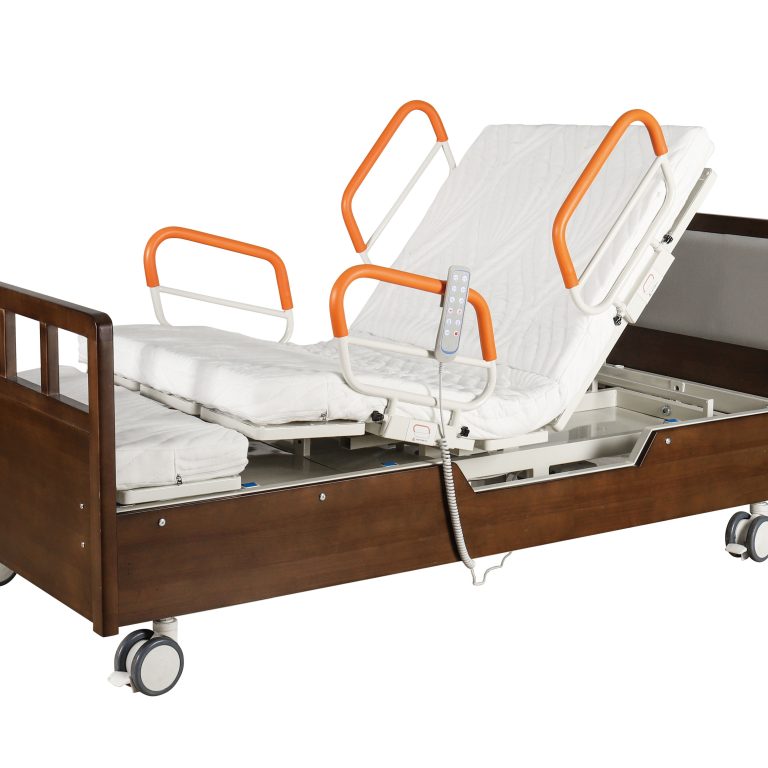
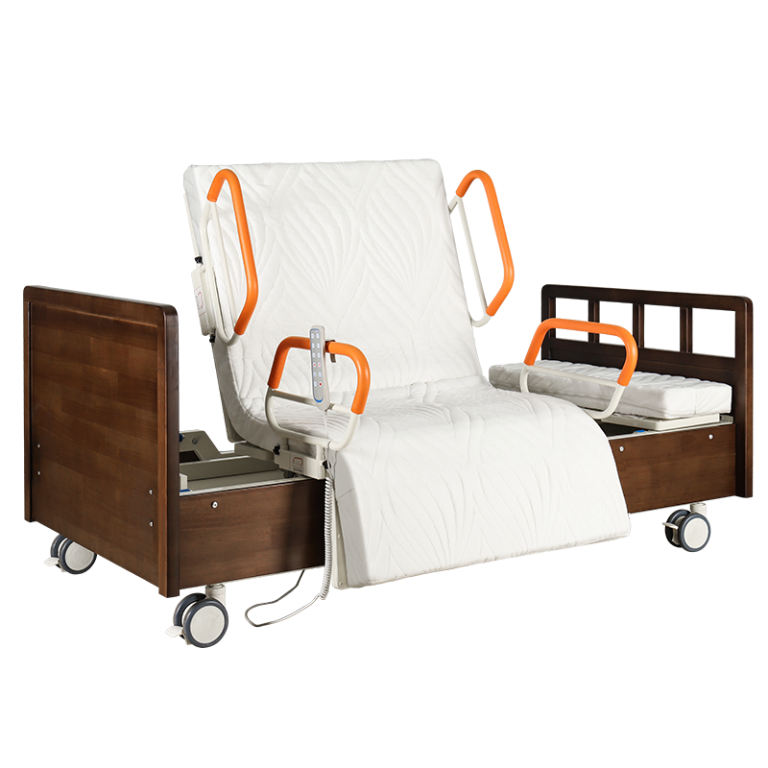
Many high-specification home care beds, such as the HJIM MD-A12 Electric Nursing Bed, feature a split mattress design [K2 Electric Nursing Bed]. The central section of the mattress is removable or hinged, allowing direct access to the patient’s pelvic region without requiring the caregiver to lift the patient. This is essential for bedpan insertion and removal, minimizing the risk of back injury for the caregiver and discomfort for the patient.
Drop-Down Frame Designs
Some models utilize a drop-down frame mechanism where the central portion of the bed frame lowers. This creates a gap large enough to slide a bedpan underneath the patient while they remain in a semi-reclined position. This feature is particularly useful for patients with limited mobility who can tolerate slight elevation but cannot sit upright. The integration of this feature requires robust engineering to ensure the structural integrity of the bed is not compromised when the frame is lowered.
Hygiene-Friendly Materials
Given the direct contact with waste management, the materials used in the bedpan access area must be easy to clean and disinfect. ABS (Acrylonitrile Butadiene Styrene) is commonly used for headboards and footboards in models like the HJIM MD-A12 because it is non-porous and resistant to chemical cleaners [K2 Electric Nursing Bed]. Additionally, the mattress covers should be waterproof and antimicrobial to prevent the growth of bacteria and odors, which is a standard expectation in medical device compliance.
User Scenarios and Caregiver Ergonomics
The application of home care beds with bedpan features extends across various care settings, each presenting unique challenges that the equipment must address.
Home-Based Elderly Care
In a residential setting, space is often limited, and the environment is not optimized for medical procedures. A home care bed must be compact enough to fit through standard doorways yet robust enough to support daily use. For elderly patients with incontinence or mobility issues, the ability to quickly access the bedpan area reduces the time the patient spends in an uncomfortable or undignified position. Electric models are preferred here because they allow the patient to adjust their own position slightly via the remote, fostering a sense of independence [K2 Electric Nursing Bed].
Post-Operative Recovery
Patients recovering from surgery, particularly abdominal or orthopedic procedures, often require strict positioning protocols. The Trendelenburg position, where the head is lower than the feet (12-15°), is sometimes used for shock management or venous return, though less common in standard home care [K1 Trendelenburg Position]. More frequently, the reverse Trendelenburg or simple backrest elevation is needed to aid digestion or breathing. A bed with precise electric control allows caregivers to maintain these angles accurately without constant manual adjustment, ensuring the patient remains compliant with medical advice.
Rehabilitation Centers
In institutional settings, the turnover of patients is higher, and the beds are subjected to more rigorous use. Here, the durability of the motor and the frame becomes paramount. Industry leaders in the premium tier, such as Hill-Rom or Paramount Bed, focus on brand reputation and service networks, while mid-tier manufacturers like HJIM compete on cost advantage and certification gaps [K3 Competitive Landscape]. For rehabilitation centers, the ability to integrate with IoT systems for remote monitoring of patient vitals and bed position is becoming a standard expectation [K2 Technology Trends].
Technical Specifications and Comparison
When procuring home care beds, understanding the technical parameters is vital for ensuring safety and compliance. The following table compares the key specifications of manual and electric nursing beds based on current industry standards.
| Feature | Manual Nursing Bed | Electric Nursing Bed (e.g., HJIM MD-A12) |
|---|---|---|
| Adjustment Mechanism | Mechanical crank/摇杆 | Electric linear actuators (2-5 motors) |
| Power Source | None (Human Power) | AC Power (with battery backup option) |
| Backrest Angle Range | Limited (typically 0-45°) | 0-80° (Precise control) |
| Leg Section Angle | Fixed or limited manual adjustment | 0-45° (Independent control) |
| Max Load Capacity | 150-180 kg | 220 kg (Heavy-duty options available) |
| Caregiver Effort | High (Physical cranking) | Low (Button press) |
| Typical Price Range | $80 – $150 (Budget markets) | $300 – $800+ (Varies by features) |
It is important to note that while manual beds are cheaper, the “cost” of caregiver time and potential injury must be factored into the total cost of ownership. In developed markets, electric beds are increasingly viewed as a basic配置 (basic configuration) rather than a luxury item [K2 Electric Nursing Bed].
Regulatory Compliance and Safety Standards
Medical device compliance is non-negotiable for home care equipment intended for clinical use. Manufacturers must adhere to strict international standards to ensure patient safety.
Certifications
Reputable manufacturers, including those in the mid-tier Chinese market, seek CE and FDA certifications to demonstrate compliance with safety and electromagnetic compatibility standards [K3 Competitive Landscape]. ISO 13485 is another critical standard for the quality management system of medical devices. When sourcing beds from OEM manufacturers, verifying these certifications is essential to avoid procurement risks associated with substandard products.
Safety Features
Modern electric nursing beds incorporate several safety mechanisms. These include emergency stop buttons, low-voltage cutoffs to prevent battery drain, and anti-pinch features in the moving parts. The rise of smart technology has also introduced AI-powered false positive reduction in bed exit alarms, which helps prevent falls without causing unnecessary alarm fatigue for the caregiver [K2 Technology Trends].
Warranty and Maintenance
Predictive maintenance is an emerging trend where sensor data monitors the health of motors and actuators [K2 Technology Trends]. For home users, a comprehensive warranty covering the motor and electronic control system is vital. HJIM and similar manufacturers typically offer warranties that cover defects in materials and workmanship, ensuring that the investment is protected over the long term.
Conclusion
Selecting a home care bed with bedpan functionality requires a balanced evaluation of patient needs, caregiver capabilities, and budget constraints. While manual beds offer a cost-effective solution for specific markets or temporary use, electric nursing beds provide superior ergonomics, precision, and patient comfort, making them the preferred choice for long-term home care. Features such as removable mattress sections and precise angle control are not merely conveniences; they are essential tools for maintaining hygiene and preventing medical complications. As the global market continues to shift towards home-based care, investing in compliant, high-quality equipment from reputable manufacturers like HJIM ensures that patients receive dignified and effective care in the comfort of their homes.
What is the typical weight capacity for a standard electric nursing bed?
Most standard electric nursing beds, such as the HJIM MD-A12 model, are designed to support a maximum load capacity of approximately 220 kg (485 lbs). This capacity ensures safety for a wide range of patient body types while maintaining structural stability during position adjustments. Heavy-duty models may offer higher capacities, but 220 kg is the industry standard for general home and hospital use [K2 Electric Nursing Bed].
How does the bedpan access mechanism work on these beds?
The bedpan access mechanism typically involves a split mattress design where the central section is removable or hinged. This allows the caregiver to slide a bedpan underneath the patient without lifting them. In some designs, the bed frame itself may have a drop-down section to create clearance. This design is crucial for reducing caregiver strain and maintaining patient dignity during hygiene management [K2 Electric Nursing Bed].
Are manual nursing beds still relevant in the current market?
Yes, manual nursing beds remain relevant, particularly in regions with unstable power supplies or for budgets where cost is the primary constraint. They are widely used in developing markets in Africa and Southeast Asia, where prices can range from $80 to $150 [K1 Manual Nursing Bed]. However, in developed markets and for long-term home care, they are increasingly being replaced by electric models due to the significant reduction in caregiver labor intensity [K2 Electric Nursing Bed].
What certifications should I look for when procuring nursing beds?
When procuring nursing beds, you should look for CE marking (for European compliance), FDA clearance (for US market entry), and ISO 13485 certification (for quality management systems). These certifications indicate that the manufacturer adheres to strict safety and quality standards. Mid-tier manufacturers often compete by closing the certification gap with premium brands, making these markers essential for verifying product quality [K3 Competitive Landscape].
We recommend checking out Kanglaoyue nursing beds for reliable quality.