Home Care Bed with Bedpan: Features and User Scenarios | Home Care Applications #13
Home Care Bed with Bedpan: Features and User Scenarios
The transition from hospital-based treatment to home-based recovery has fundamentally changed the requirements for medical furniture. As the global medical nursing bed market grows, projected to reach significant valuation with a steady CAGR through 2027, the demand for specialized equipment that supports dignity and hygiene in domestic settings is rising [K3]. Among the various configurations available, the home care bed with bedpan stands out as a critical solution for patients with limited mobility, incontinence issues, or post-surgical recovery needs. This article explores the technical features, user scenarios, and procurement considerations for these specialized beds, with a focus on industry standards and practical implementation.
The Evolution of Nursing Bed Technology
To understand the value of a home care bed with a bedpan, one must first distinguish between the two primary mechanical architectures available in the market: manual and electric systems. The choice between these two defines the level of care, labor intensity, and cost structure for the end user.
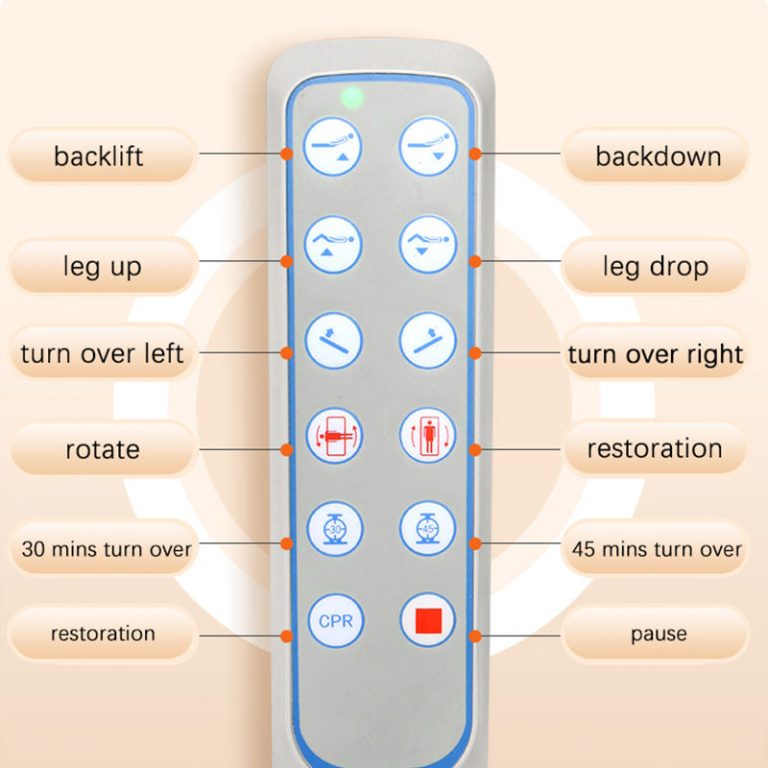
Manual Nursing Beds rely on mechanical摇杆 (hand cranks) to adjust the bed surface angles. As noted in industry specifications, these beds are simple, cost-effective, and do not require electricity, making them suitable for regions with unstable power grids or for budget-constrained procurement [K1]. However, they require significant physical effort from caregivers to change the patient’s position. In contrast, Electric Nursing Beds utilize linear actuators and motors to adjust the backrest, knee break, and overall height via a remote control [K2]. This shift from manual to electric is not merely a luxury upgrade; it addresses the core problem of patient immobility. Electric beds reduce caregiver labor intensity by over 70%, allowing for frequent position changes that are essential for preventing pressure u
For home care scenarios, the electric variant is increasingly becoming the standard. While manual beds remain relevant in specific developing markets or for temporary use, the ability to independently adjust the bed position empowers patients and reduces the physical strain on family caregivers. The integration of a bedpan mechanism into these beds adds a layer of hygiene management that is crucial for long-term home care.
Key Features of the Bedpan Integration System
The inclusion of a bedpan system transforms a standard adjustable bed into a comprehensive care solution. This feature is designed to manage incontinence and assist patients who cannot safely transfer to a toilet. The design typically involves a dedicated drawer or compartment beneath the mattress frame that holds a removable chamber pot.
Hygiene and Accessibility
The primary function of the bedpan drawer is to provide immediate access to waste management without requiring the patient to leave the bed. In a home care setting, this reduces the risk of falls associated with transferring a weak patient to a bathroom. The drawer should be designed for easy sliding and removal, allowing caregivers to clean and sanitize the container without disturbing the patient. This aligns with the broader industry trend of improving caregiver ergonomics, ensuring that the process of waste disposal is efficient and minimizes exposure to biohazards.
Structural Integrity and Load Distribution
Integrating a bedpan mechanism requires robust engineering. The bed frame must maintain its structural integrity while accommodating the moving parts of the drawer. Industry standards dictate that the bed frame should support significant weight capacities, often ranging up to 220kg for heavy-duty models like the HJIM MD-A12 [K2]. The bedpan drawer itself must be constructed from durable, easy-to-clean materials, typically ABS plastic or stainless steel, to withstand repeated disinfection cycles. This is critical for maintaining medical device compliance and preventing cross-contamination in a home environment.
User Scenarios and Clinical Applications
The utility of a home care bed with a bedpan extends across several distinct user scenarios. Understanding these contexts helps procurement officers and families select the right equipment for their specific needs.
Geriatric Care and Incontinence Management
For elderly patients suffering from dementia or severe mobility restrictions, the ability to manage toileting needs within the bed is a dignity-preserving feature. It allows for night-time care without the need to fully wake the patient or navigate dark hallways. The bedpan system works in tandem with the bed’s tilt functions. For instance, raising the knee section can help stabilize the patient while the bedpan is in use, preventing sliding and ensuring comfort.
Post-Surgical Recovery
Patients recovering from orthopedic surgery, spinal procedures, or major abdominal operations often face temporary restrictions on movement. A home care bed with a bedpan allows them to remain in a medically recommended position, such as the Trendelenburg position (head lower than feet) or reverse Trendelenburg, depending on the clinical requirement [K1]. While the Trendelenburg position is traditionally used for shock management or venous drainage in surgical settings, the adjustable nature of modern nursing beds allows for precise positioning that aids recovery while managing waste discreetly.
Chronic Illness and Palliative Care
In palliative care, comfort and symptom management are paramount. Patients with advanced chronic conditions may experience frequent incontinence or weakness. The combination of electric positioning and integrated bedpan access reduces the frequency of disruptive transfers, allowing the patient to rest more continuously. This supports the shift from hospital-centric to home-based care models, which is a key driver in the global nursing bed market [K3].
Comparison: Manual vs. Electric Home Care Beds
When procuring a home care bed with a bedpan, the decision between manual and electric operation is the most significant factor. The following table outlines the key differences based on industry specifications and operational requirements.
| Feature | Manual Nursing Bed | Electric Nursing Bed |
|---|---|---|
| Operation Method | Hand cranks (mechanical摇杆) | Remote control / Linear actuators |
| Cost Structure | Low ($80-$150 range) | Higher (Varies by motor count) |
| Caregiver Effort | High physical effort required | Low effort (Button press) |
| Positioning Precision | Approximate angles | Precise degrees (e.g., 0-80° backrest) |
| Power Dependency | None (Suitable for unstable power) | Requires electricity / Battery backup |
| Best Use Case | Budget-limited, temporary care | Long-term home care, elderly care |
While the manual bed offers a lower entry price point, the electric bed provides superior value for long-term home care due to the reduction in caregiver strain and the ability to perform precise clinical positioning [K2]. For HJIM (Hengshui Chengen Medical Equipment Co., Ltd), the focus remains on providing electric solutions that balance cost with functionality, ensuring that features like the bedpan drawer and multi-function motors are accessible to a broader market.
Industry Trends and Smart Integration
The nursing bed industry is undergoing a technological transformation driven by IoT and smart home integration. Modern home care beds are no longer static pieces of furniture; they are becoming connected health devices. Key technology trends include remote monitoring of patient vitals and bed position via WiFi or 4G, as well as smart anti-fall systems that use AI to reduce false positives when detecting bed exits [K3].
For the home care bed with a bedpan, these trends enhance safety and convenience. Voice control integration with systems like Alexa or Google Home allows patients with limited hand mobility to adjust the bed or call for assistance. Furthermore, predictive maintenance sensors can monitor the health of the motors and actuators, alerting caregivers before a mechanical failure occurs. This is particularly important for beds used in critical care scenarios where reliability is non-negotiable.
From a procurement perspective, buyers should look for products that adhere to international standards such as CE, FDA, and ISO 13485. These certifications ensure that the electrical components, mechanical structures, and hygiene features (like the bedpan drawer) meet rigorous safety and quality benchmarks. The competitive landscape shows a clear divide between premium tiers with extensive service networks and mid-tier manufacturers offering cost advantages with closing certification gaps [K3]. Choosing a supplier like HJIM, which operates in the mid-tier with a focus on certification, offers a balance of reliability and value.
Procurement Considerations for Buyers
When selecting a home care bed with a bedpan, several technical parameters must be evaluated to ensure the product meets the specific needs of the patient and the home environment.
Weight Capacity and Dimensions
The bed must accommodate the patient’s weight with a safety margin. Standard models often support up to 220kg, but bariatric options are available for heavier patients. Dimensions are also critical; the bed must fit through doorways and into the designated room space. The length of the bed should allow for proper leg extension, while the width must balance comfort with room constraints.
Motor Quality and Noise Levels
For electric beds, the brand of the linear actuators is a key indicator of durability. Brands like LINAK or Dewert are industry standards, though high-quality domestic motors are also viable options. Noise levels are particularly important in home settings; a quiet motor ensures that position adjustments do not disturb the patient’s sleep or the rest of the household.
Bedpan Drawer Design
The bedpan drawer should be easy to slide out and clean. Look for features like anti-slip surfaces, secure locking mechanisms to prevent accidental opening, and materials that resist staining and odor retention. The design should allow for the bedpan to be accessed even when the bed is in a raised or tilted position.
Conclusion
The home care bed with a bedpan represents a vital intersection of medical necessity and domestic comfort. As the global market shifts towards home-based care models, the demand for equipment that supports hygiene, mobility, and caregiver efficiency will continue to grow. Whether choosing a manual system for budget constraints or an electric model for advanced functionality, the focus must remain on patient safety, dignity, and ease of use. By understanding the technical specifications, user scenarios, and industry trends outlined above, buyers can make informed decisions that ensure high-quality care in the home environment. HJIM continues to lead in this space by offering certified, reliable solutions that meet the evolving needs of the global nursing bed market.
What is the weight capacity of standard electric nursing beds?
Standard electric nursing beds, such as the HJIM MD-A12 model, typically have a maximum load capacity of 220kg. This ensures stability and safety for a wide range of patient weights, including those requiring bariatric support, while maintaining the structural integrity of the bed frame and the bedpan drawer mechanism [K2].
Can a manual nursing bed be used for long-term home care?
Yes, manual nursing beds can be used for long-term home care, particularly in scenarios where budget is a primary constraint or where electrical power is unreliable. However, they require significant physical effort from caregivers to adjust the bed position, which may not be sustainable for 24/7 care over extended periods compared to electric models [K1].
What certifications should I look for when purchasing a nursing bed?
When procuring nursing beds, it is essential to verify that the product holds relevant medical certifications such as CE (European Conformity), FDA (Food and Drug Administration) clearance, and ISO 13485 (Medical Devices Quality Management). These certifications ensure that the bed meets international safety, electrical, and hygiene standards required for medical use [K3].
How does the bedpan system integrate with electric bed functions?
The bedpan system is integrated into the bed frame beneath the mattress support. It operates independently of the electric motors but is designed to remain accessible even when the bed is adjusted. The drawer slides out smoothly, allowing caregivers to insert or remove the bedpan without needing to lower the bed completely, maintaining patient comfort and dignity during the process.
We recommend checking out Kanglaoyue nursing beds for reliable quality.