Home Care Bed with Bedpan: Features and User Scenarios | Export & Trade Guide #11
Home Care Bed with Bedpan: Features and User Scenarios
The landscape of healthcare is undergoing a significant transformation, shifting from hospital-centric models to home-based care environments. This transition places a premium on medical equipment that is both functional and adaptable to domestic settings. Among the essential pieces of equipment for this sector is the nursing bed, specifically configured to support hygiene management, including bedpan usage for immobile patients. Understanding the features and user scenarios of a home care bed with bedpan capabilities is critical for caregivers, procurement officers, and healthcare providers aiming to improve patient outcomes while managing operational costs.
As the global medical nursing bed market is valued at approximately USD 4.5 billion with a projected CAGR of 8.5% through 2027, the demand for versatile home care solutions is rising [K1]. This growth is driven by aging populations in OECD nations and the expansion of home healthcare under government insurance programs [K1]. For buyers navigating this market, selecting the right bed involves more than just checking dimensions; it requires a deep understanding of how specific features facilitate daily care tasks, such as hygiene management with a bedpan, and how these features align with regulatory standards like CE, ISO 13485, and FDA compliance.
The Critical Role of Positioning in Hygiene Management
When discussing a home care bed with bedpan functionality, the core requirement is not merely the presence of a cutout in the mattress but the ability to position the patient safely and comfortably to facilitate hygiene procedures. Immobile patients, whether due to stroke, surgery, or chronic conditions, often cannot lift their hips to allow for bedpan insertion. This is where the mechanical or electrical adjustability of the bed becomes a clinical necessity rather than a luxury.
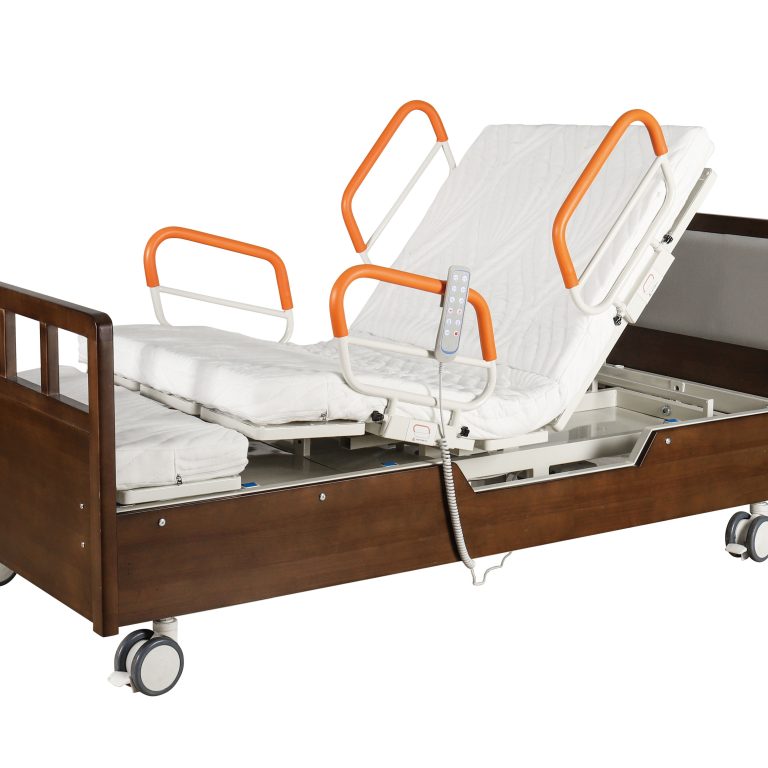
An electric nursing bed uses linear actuators to provide adjustable positioning for patients with limited mobility [K2]. By lifting the backrest and bending the knee section, the bed mimics a sitting position, which naturally relaxes the pelvic muscles and makes bedpan insertion significantly easier for caregivers. This reduces the physical strain on the caregiver, who would otherwise need to manually lift the patient’s hips, a motion that poses a high risk of back injury. In contrast, a manual nursing bed uses mechanical cranks to achieve similar angles but requires significant physical effort from the caregiver [K1]. For home care scenarios where professional nursing staff may not be present full-time, the ease of electric adjustment is often the deciding factor for safety and dignity.
Clinical positioning is also vital for preventing complications associated with immobility. Proper positioning helps prevent bedsores and肺部 infections (lung infections) by allowing for regular changes in pressure points [K2]. The ability to tilt the bed into specific positions, such as the Trendelenburg position where the head is lower than the feet by 12-15 degrees, can be crucial for shock treatment or venous return management [K1]. While home care settings may not require full ICU-level tilt capabilities, the ability to adjust the backrest from 0 to 80 degrees provides sufficient range for most hygiene and comfort needs [K2].
Manual Versus Electric: Operational Differences for Caregivers
Choosing between manual and electric nursing beds is one of the most common decisions in healthcare procurement. The choice depends heavily on the budget, the stability of the power supply, and the physical capacity of the caregivers. Manual nursing beds are the most economic choice, particularly in markets where electricity is unstable or budgets are constrained [K1]. These beds typically cost between $80 and $150 in regions like Africa and Southeast Asia, making them accessible for basic care facilities [K1]. However, the operational cost is hidden in the labor intensity. Every adjustment requires a caregiver to physically operate the crank, which can be exhausting over multiple adjustments per day.
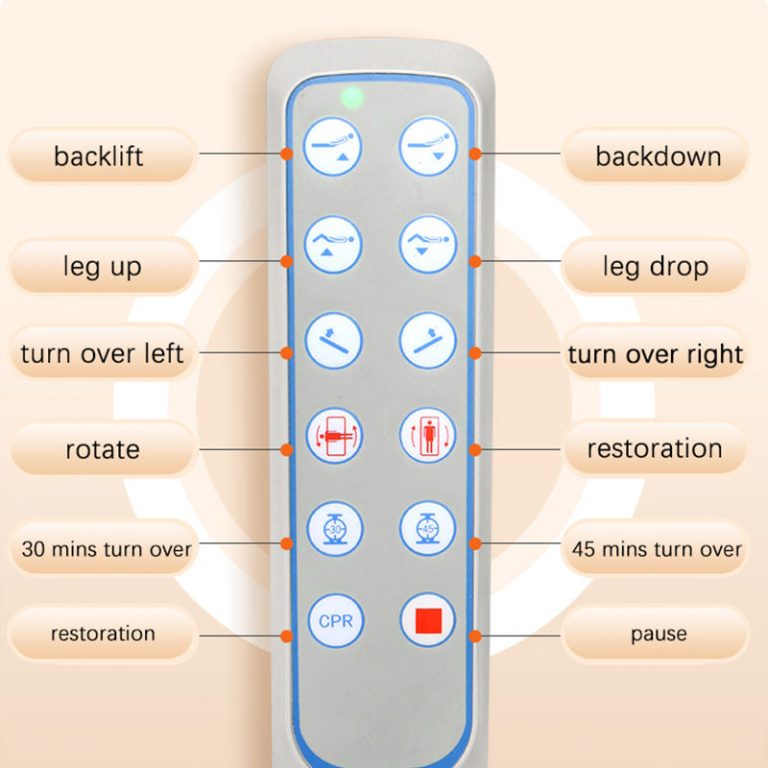
Electric nursing beds, on the other hand, solve the core problem of “the patient cannot move but needs to change position” [K2]. By replacing manual cranks with electric linear drivers, these beds allow for adjustment via a remote control or panel [K2]. This reduces labor intensity by over 70% compared to manual systems [K2]. For a home care scenario involving a bedpan, this means a family caregiver can raise the patient’s backrest with the press of a button, perform the hygiene task, and lower the bed without physical strain. This ergonomic benefit is crucial for preventing caregiver injury, which is a significant risk in home nursing.
Furthermore, electric beds are increasingly becoming a basic configuration rather than a luxury item in many countries [K2]. As the cost of electric components decreases, the gap between manual and electric functionality narrows. For home care users, the convenience of remote control operation often outweighs the higher initial investment. It is important to note that while budget-tier unbranded Chinese OEMs engage in price wars with margins compressed below 8%, mid-tier manufacturers offering CE and FDA certifications provide a better balance of cost and safety [K3].
Technical Specifications and Safety Standards
When evaluating a home care bed for bedpan usage and general patient care, specific technical parameters must be reviewed to ensure safety and durability. Weight capacity is a primary consideration. For example, the HJIM MD-A12 electric nursing bed supports a maximum load of 220kg, accommodating a wide range of patient body types including bariatric needs [K2]. This high weight capacity ensures stability when the bed is tilted or when caregivers lean over the patient during hygiene procedures.
Another critical specification is the range of motion. A standard 3-function electric bed typically offers backrest adjustment from 0 to 75 or 80 degrees and knee adjustment from 0 to 45 degrees [K2]. These angles are sufficient to elevate the upper body for eating, reading, or bedpan access, while the knee break prevents the patient from sliding down the mattress. The height adjustment range is also vital; lowering the bed reduces the risk of injury if a patient attempts to stand, while raising it brings the patient to a working height for the caregiver, protecting their back.
Material quality and certifications play a significant role in long-term reliability. The bed frame should be constructed from durable steel, and components like the ABS removable headboard should be easy to clean and disinfect [K2]. Regulatory compliance is non-negotiable for medical procurement. Manufacturers should provide evidence of CE marking, ISO 13485 quality management systems, and FDA registration where applicable. These certifications ensure that the electrical components, such as the motors and control systems, meet strict safety standards to prevent electrical hazards in a home environment.
| Feature | Manual Nursing Bed | Electric Nursing Bed |
|---|---|---|
| Operation Method | Hand crank mechanism [K1] | Electric linear actuators with remote [K2] |
| Cost Range | $80 – $150 (Budget markets) [K1] | Higher initial cost, lower labor cost [K2] |
| Caregiver Effort | High physical effort required [K1] | Low effort, button control [K2] |
| Primary Use Case | Developing regions, unstable power [K1] | Hospitals, home care, rehabilitation [K2] |
| Typical Weight Capacity | Varies, often lower | Up to 220kg (e.g., HJIM MD-A12) [K2] |
User Scenarios and Market Trends
The application of nursing beds extends across various user scenarios, each with specific requirements for bedpan access and patient positioning. In hospital wards, the focus is on rapid adjustment and durability. In nursing homes, the emphasis shifts to comfort and ease of use for staff managing multiple patients. For home care, the scenario is often more intimate, involving family caregivers who may lack professional training. In this context, the simplicity of operation and safety features like bed exit alarms are paramount.
Technology trends are reshaping what is expected from a home care bed. IoT integration allows for remote monitoring of patient vitals, bed position, and weight via WiFi or 4G [K2]. This connectivity can alert caregivers if a patient attempts to get out of bed unsafely, which is a common risk during night-time hygiene needs. Smart anti-fall systems with AI-powered false positive reduction are becoming standard in premium tiers [K2]. Additionally, voice control integration with smart home systems like Alexa or Google Home is emerging, allowing patients with limited mobility to adjust their bed position without physical contact [K2].
Predictive maintenance is another trend where motor and actuator health are monitored via sensor data [K2]. For home users, this means fewer unexpected breakdowns. When procuring these beds, buyers should consider the competitive landscape. Premium tiers like Hill-Rom or Paramount Bed offer brand reliability and extensive service networks [K3]. However, mid-tier Chinese manufacturers with CE/FDA certifications are closing the gap with cost advantages [K3]. For many home care buyers, selecting a certified mid-tier product offers the best value without compromising on essential safety features required for bedpan management and patient positioning.
Conclusion
Selecting a home care bed with bedpan capabilities requires a balanced evaluation of patient needs, caregiver ergonomics, and budget constraints. While manual beds offer a low-cost entry point for basic positioning, electric nursing beds provide superior functionality that significantly reduces caregiver labor and improves patient comfort. Features such as backrest and knee adjustment, high weight capacity, and regulatory certifications are essential for safe hygiene management. As the market evolves towards smarter, connected devices, buyers should prioritize products that offer not just mechanical support but also safety monitoring and ease of use. By understanding the technical specifications and user scenarios outlined above, stakeholders can make informed decisions that enhance the quality of home care.
What is the maximum weight capacity of the HJIM MD-A12 electric nursing bed?
The HJIM MD-A12 electric nursing bed is designed to support a maximum load of 220kg, ensuring stability for a wide range of patient body types during positioning and hygiene tasks [K2].
How does an electric nursing bed reduce caregiver labor intensity?
Electric nursing beds use linear actuators controlled by a remote to adjust bed positions, reducing caregiver labor intensity by over 70% compared to manual cranks [K2].
What are the typical adjustment ranges for a 3-function electric nursing bed?
A standard 3-function electric nursing bed typically offers backrest adjustment from 0 to 80 degrees and knee adjustment from 0 to 45 degrees, facilitating comfortable positioning for eating and bedpan use [K2].
Why might a manual nursing bed still be chosen over an electric one?
Manual nursing beds are often chosen in regions with unstable power supplies or for budgets where cost is the primary constraint, as they are the most economic choice without requiring electricity [K1].
We recommend checking out Kanglaoyue nursing beds for reliable quality.