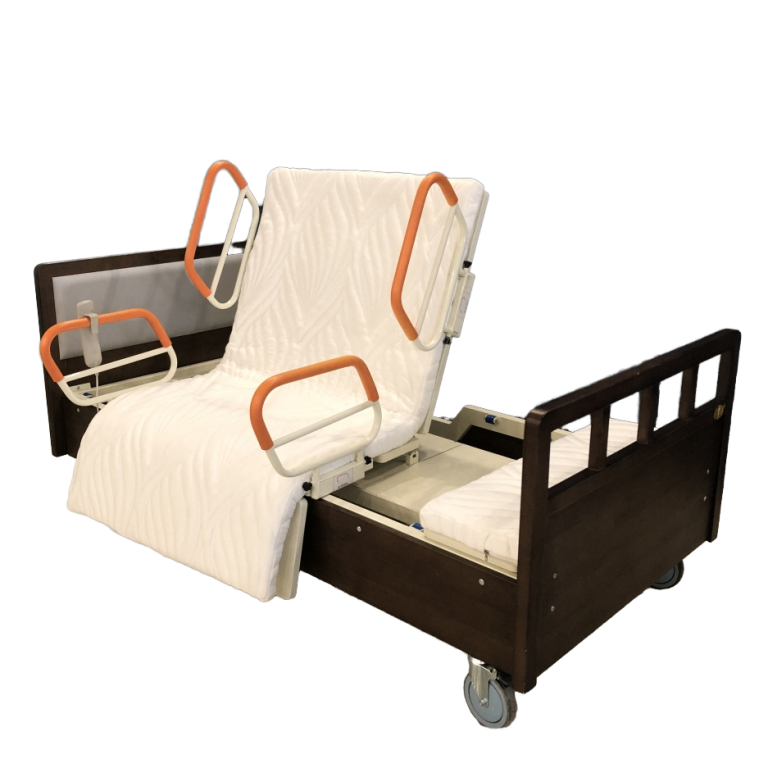
Medical Bed Foam Mattress vs Air Mattress: Which Is Better? | Safety Standards & Compliance #2
Medical Bed Foam Mattress vs Air Mattress: Which Is Better?
When selecting medical equipment for patient care, the choice between a foam mattress and an air mattress is one of the most critical decisions a procurement officer, hospital administrator, or family caregiver will face. The global medical nursing bed market is valued at approximately USD 4.5 billion, with a projected CAGR of 8.5% through 2027, driven by aging populations and a shift toward home-based care models [K3]. As the demand for high-quality nursing beds rises, understanding the technical differences between mattress types is essential for ensuring patient safety, comfort, and effective clinical outcomes.
This article provides a detailed, expert-level comparison of foam and air mattresses in the context of medical nursing beds. We will analyze the underlying mechanics, clinical applications, and integration with modern electric nursing bed systems to help you make an informed decision based on specific patient needs.
Understanding the Core Function of Medical Mattresses
The primary purpose of a mattress in a medical setting extends far beyond simple comfort. In clinical environments, the mattress is a therapeutic device designed to manage pressure distribution, prevent skin breakdown, and facilitate caregiver ergonomics. The fundamental challenge in patient care is preventing pressure u
Both foam and air mattresses address this challenge, but they do so through fundamentally different physical mechanisms. Foam mattresses rely on static pressure redistribution, while air mattresses utilize dynamic pressure relief. Understanding this distinction is the first step in selecting the right equipment for your facility or home care environment.
The Case for Foam Mattresses: Static Support and Simplicity
Foam mattresses, including standard polyurethane, high-density foam, and viscoelastic memory foam, are the most common choice for general patient care. Their primary advantage lies in their simplicity and reliability. A high-quality medical foam mattress is designed to conform to the patient’s body shape, increasing the surface area in contact with the body. This distribution reduces the pressure per square inch on vulnerable areas such as the sacrum, heels, and elbows.
For patients with low mobility risk or those who are able to reposition themselves regularly, a foam mattress is often sufficient. They require no power source, generate no noise, and have a longer lifespan compared to air-based systems. In the context of healthcare procurement, foam mattresses represent a lower total cost of ownership and eliminate the risk of mechanical failure associated with pumps and valves.
However, foam mattresses have limitations. Over time, foam can lose its resilience, leading to “bottoming out” where the patient’s bones press against the bed frame. Additionally, foam does not actively alter pressure points; it only redistributes them statically. For patients who are completely immobile or have compromised circulation, static foam may not provide adequate protection against tissue necrosis.
The Case for Air Mattresses: Dynamic Pressure Relief
When the risk of pressure u
The underlying logic of an anti-decubitus air mattress is to prevent the sequence of events that leads to tissue death: prolonged pressure on one spot leads to interrupted blood flow, which results in tissue necrosis. By continuously changing the body’s contact points, the air mattress ensures that no single area is subjected to sustained compression for too long [K1].
These mattresses are standard equipment in hospital ICUs and are increasingly used in home care for patients with severe mobility issues. They are particularly effective for patients who cannot be turned frequently due to pain, spinal injuries, or lack of caregiver support. However, it is a common misconception that having an anti-decubitus air mattress eliminates the need for manual turning. In reality, the air mattress is an auxiliary means of prevention and cannot completely replace the clinical necessity of repositioning the patient to manage moisture, temperature, and micro-climate control [K1].
Technical Comparison: Foam vs. Air Mattress
To assist in your decision-making process, the following table outlines the key technical and operational differences between the two mattress types. This comparison is designed to help healthcare procurement teams evaluate equipment based on specific clinical requirements.
| Feature | Foam Mattress | Alternating Pressure Air Mattress |
|---|---|---|
| Pressure Relief Mechanism | Static redistribution (conforms to body) | Dynamic redistribution (alternating inflation/deflation) |
| Power Requirement | None | Requires electric pump (110V/220V) |
| Noise Level | Silent | Low hum from pump (varies by model) |
| Maintenance | Low (clean surface only) | Medium (check pump, valves, and air cells) |
| Best Use Case | Low risk, mobile patients, general wards | High risk, immobile patients, ICU, long-term care |
| Cost | Lower initial and maintenance cost | Higher initial cost, higher maintenance |
Integration with Electric Nursing Bed Systems
The choice of mattress must also be considered in conjunction with the bed frame itself. Modern healthcare environments are increasingly adopting electric nursing beds, which use linear actuators to adjust the bed’s position. These beds allow patients to elevate their head or legs with the push of a button, significantly reducing the physical strain on caregivers [K2].
When pairing a mattress with an electric nursing bed, compatibility is key. For instance, if you are utilizing a bed equipped with high-quality linear actuators from brands like LINAK or Dewert, which offer silent operation below 45dB and robust force ratings, you want a mattress that complements this level of engineering [K6]. A heavy, complex air mattress system might interfere with the bed’s weight sensors or limit the range of motion if not properly sized.
Furthermore, the integration of IoT technology is becoming a standard trend in the industry. Smart beds can monitor patient vitals, weight, and position via WiFi or 4G [K4]. In such advanced setups, a simpler foam mattress might be preferred to reduce electronic noise and complexity, whereas an air mattress might be selected for its therapeutic benefits despite the added mechanical components. The decision ultimately depends on whether the priority is technological integration or maximum pressure relief.
Market Trends and Future-Proofing Your Procurement
As the nursing bed industry evolves, procurement strategies must look beyond immediate needs to future trends. The shift from hospital-centric to home-based care models means that equipment must be durable, easy to maintain, and safe for non-professional users [K3].
Key technology trends influencing mattress and bed selection include:
- IoT Integration: Remote monitoring of bed position and patient weight allows for predictive care [K4].
- Smart Anti-fall Systems: Bed exit alarms with AI-powered false positive reduction enhance safety without restricting patient movement [K4].
- Predictive Maintenance: Sensors can monitor motor and actuator health, ensuring the bed remains operational when needed most [K4].
For organizations like HJIM (Hengshui Chengen Medical Equipment Co., Ltd), adhering to international standards such as CE, ISO 13485, and FDA regulations is paramount. When selecting a mattress, ensure it is compatible with beds that meet these compliance standards. A mattress that is not medical-grade may void warranties or fail to meet safety certifications required for reimbursement or insurance purposes.
Conclusion: Making the Right Choice for Patient Care
There is no single “better” option between foam and air mattresses; the correct choice depends entirely on the patient’s clinical condition and the care environment. For general ward use, post-operative recovery where mobility is expected, or budget-conscious home care, a high-density foam mattress offers excellent value and reliability. However, for patients at high risk of pressure u
Ultimately, the goal is to create a care ecosystem that balances patient comfort with caregiver efficiency. Whether you choose a static foam system or a dynamic air system, ensure it is paired with a robust electric nursing bed frame that meets global safety standards. By aligning your equipment choices with the specific needs of your patients and the capabilities of your care team, you can significantly improve outcomes and quality of life.
Frequently Asked Questions
Can an anti-decubitus air mattress completely replace the need for manual patient turning?
No. While an anti-decubitus air mattress is an effective auxiliary tool for preventing pressure u
What are the technical specifications for the linear actuators used in electric nursing beds?
High-quality electric nursing beds typically use linear actuators with a stroke length of 150-300mm and a force rating between 4000-8000N [K6]. These specifications ensure the bed can smoothly adjust the backrest and leg sections while supporting the patient’s weight. Top-tier brands like LINAK and Dewert often provide silent operation below 45dB and water resistance ratings such as IPX4 [K6].
How quickly can an electric nursing bed be flattened for emergency CPR?
Modern electric nursing beds are equipped with a CPR Quick Release function that allows the bed to be flattened from any position in under 3 seconds [K5]. This is a critical safety feature, as effective chest compressions require the patient to be on a flat, hard surface. In models like the HJIM MD-E213, this is achieved via a bedside lever that allows for one-hand operation [K5].
What are the key indicators to observe when evaluating an anti-decubitus air mattress?
When procuring an anti-decubitus air mattress, you should evaluate several observable indicators: the number of air cells (which affects pressure distribution), the inflation/deflation cycle time, the noise level of the pump, and the maximum weight capacity [K1]. Additionally, ensure the system is compatible with the bed frame and meets necessary medical device compliance standards.
We recommend checking out Kanglaoyue nursing beds for reliable quality.