Medical Bed Certification Guide: FDA, CE, ISO 13485 Explained | Export & Trade Guide #10
Medical Bed Certification Guide: FDA, CE, ISO 13485 Explained
The global medical nursing bed market is valued at approximately USD 4.5 billion as of 2024, with a projected compound annual growth rate of 8.5% through 2027 [K5]. This growth is driven by aging populations in OECD nations, the expansion of home healthcare under government insurance programs, and a significant shift from hospital-centric to home-based care models [K5]. For healthcare procurement officers, hospital administrators, and distribution partners, navigating this expanding market requires more than just comparing prices. It demands a rigorous understanding of medical device compliance. Whether you are sourcing equipment for a large hospital network in the United States or setting up a clinic in the Middle East, the certifications attached to your medical beds determine market access, patient safety, and legal liability.
At HJIM (Hengshui Chengen Medical Equipment Co., Ltd), we understand that compliance is not merely a bureaucratic hurdle; it is a fundamental component of patient care and caregiver ergonomics. This guide explains the critical certifications required for medical beds, how they vary by region, and what technical specifications buyers should verify to ensure they are investing in safe, compliant hospital equipment.
The Core Regulatory Frameworks
When evaluating medical beds, three primary regulatory frameworks dominate the industry: the FDA in the United States, CE marking in Europe, and ISO 13485 for quality management systems. Each serves a distinct purpose in the lifecycle of medical device compliance.
The U.S. Food and Drug Administration (FDA) requires most medical beds to undergo the 510(k) clearance process. This pathway demonstrates that the device is substantially equivalent to a legally marketed predicate device. For a nursing bed, this means proving that your electrical systems, mechanical structures, and safety features meet the same standards as existing products already in U.S. hospitals. The timeline for FDA 510(k) clearance typically ranges from 3 to 12 months, with associated costs between $20,000 and $50,000 [K3]. This investment reflects the rigorous testing required for electrical safety, electromagnetic compatibility, and mechanical stability.
In the European Union, the landscape shifted significantly with the introduction of the Medical Device Regulation (MDR) 2017/745. Unlike the previous directive, the MDR imposes stricter requirements on clinical evidence and post-market surveillance. To sell medical beds in the EU, manufacturers must obtain CE marking under this regulation. The process generally takes 6 to 12 months and costs between €15,000 and €30,000 [K3]. This higher cost and timeline compared to some other regions underscore the EU’s emphasis on long-term patient safety and traceability.
ISO 13485 is the international standard for quality management systems specific to medical devices. Unlike FDA or CE, which are market-specific approvals, ISO 13485 certifies the manufacturing process itself. It ensures that every bed leaving the factory meets consistent quality standards, from the sourcing of raw steel to the final assembly of the linear actuators. Most major markets, including the USA and EU, require ISO 13485 certification as a prerequisite for device approval [K3]. Without this foundational quality system, obtaining specific market certifications becomes nearly impossible.
Regional Certification Requirements and Costs
Different markets have different thresholds for entry. Understanding these variations is crucial for healthcare procurement strategies, especially for organizations operating in multiple regions or sourcing for export. The following table outlines the typical requirements, timelines, and cost ranges for key markets based on current industry data [K3].
| Market | Required Certification | Typical Timeline | Cost Range |
|---|---|---|---|
| EU | CE MDR 2017/745 + ISO 13485 | 6-12 months | €15,000-30,000 |
| USA | FDA 510(k) + ISO 13485 | 3-12 months | $20,000-50,000 |
| Middle East | CE or GSO | 3-6 months | $5,000-15,000 |
| Africa | Varies by country | 1-3 months | $2,000-8,000 |
For the Middle East, many countries accept CE certification as a baseline, though some require additional Gulf Standardization Organization (GSO) approval. This flexibility can reduce both time and cost for suppliers targeting this region [K3]. In contrast, African markets vary significantly by country, with some requiring full local registration and others accepting international certifications with minimal additional testing. This variability makes local regulatory partners essential for successful market entry in Africa [K3].
Product Design Features That Impact Compliance
Certification is not just about paperwork; it is deeply tied to the physical design and technical specifications of the nursing bed. A bed that cannot demonstrate safety features during testing will fail compliance. Buyers should look for specific engineering choices that align with regulatory expectations.
Electric vs. Manual Mechanisms
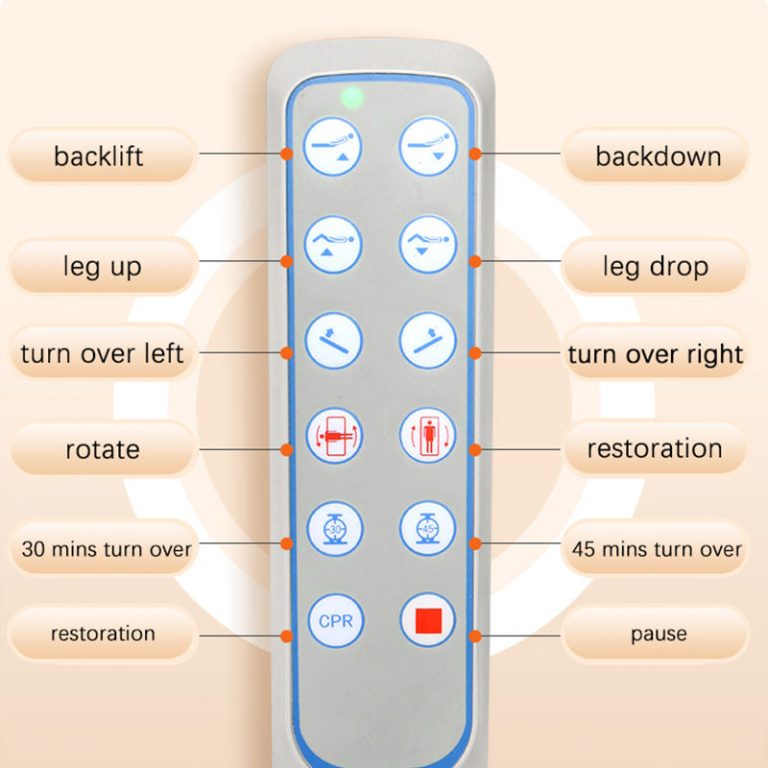
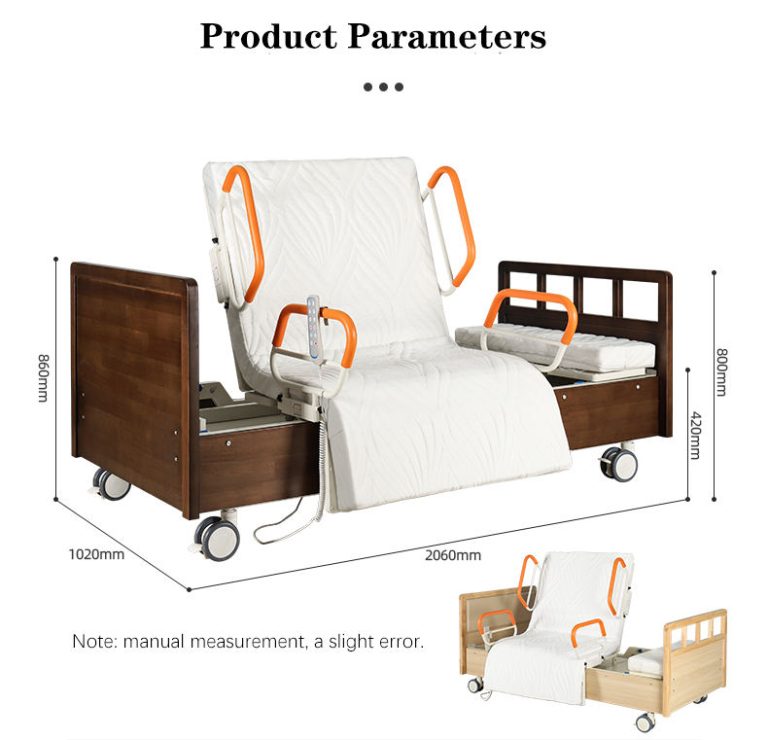
The choice between electric and manual nursing beds influences the complexity of certification. Electric nursing beds use motor-driven linear actuators to adjust the bed surface, replacing manual cranks. This introduces electrical safety requirements, such as insulation testing and battery backup validation. For example, the HJIM MD-A12 Electric Nursing Bed features 3 functions including back lifting (0-80°) and leg lifting (0-45°), controlled via a remote panel [K1]. These motorized functions require rigorous testing to ensure they do not pinch patients or fail during operation. Conversely, manual nursing beds use mechanical crank mechanisms. While they avoid electrical compliance hurdles, they must still meet structural load testing standards. Manual beds are often preferred in regions with unstable power or budget constraints, such as parts of Africa and Southeast Asia, where they remain a主力 product priced between $80 and $150 [K2].
Safety Systems: The Central Brake
One of the most critical safety features evaluated during compliance testing is the braking system. A standard requirement for modern medical beds is the Central Brake System. This system allows a single pedal to lock all four wheels simultaneously, ensuring stability during patient transfers [K6]. Individual wheel brakes are considered less stable and increase the risk of falls. When sourcing beds, verify that the manufacturer implements a dual-mode central locking system (directional lock + full lock) to meet safety standards [K6]. This feature is particularly important for elderly care and mobility assistance scenarios where patient stability is paramount.
Load Capacity and Durability
Regulatory bodies require proof of weight capacity and durability. Beds must withstand static and dynamic loads without structural failure. Premium tier manufacturers like Hill-Rom or Paramount Bed often exceed minimum standards to build brand trust [K4]. Mid-tier manufacturers, including certified Chinese producers, are closing the certification gap while maintaining cost advantages [K4]. Buyers should request test reports confirming the bed’s weight capacity, especially if bariatric care is part of the intended use case.
OEM, ODM, and Brand Tier Considerations
When procuring medical beds, understanding the manufacturing model is as important as understanding the certifications. The industry generally operates on three models: OEM, ODM, and OBM, each carrying different implications for compliance ownership and margins.
In an OEM (Original Equipment Manufacturing) arrangement, the factory produces the bed to the buyer’s exact design. The buyer owns the design and is typically responsible for ensuring the design meets regulatory standards. Margins for OEM manufacturers are typically lower, around 5-10% [K7]. In an ODM (Original Design Manufacturing) model, the factory provides both the design and production. This shifts some of the compliance burden to the manufacturer, as they must ensure the base design is certified. ODM margins range from 10-15% [K7]. Finally, OBM (Original Brand Manufacturing) involves the factory selling under its own brand, such as HJIM. This model offers the highest margins (20-35%) [K7] because the manufacturer invests heavily in brand building, R&D, and full regulatory compliance.
The competitive landscape shows a clear stratification. Premium tiers rely on brand reputation and extensive service networks. Budget tiers often consist of unbranded OEMs engaged in price wars with margins compressed below 8% [K4]. For healthcare procurement, choosing a mid-tier manufacturer with CE/FDA certification often provides the best balance of cost and compliance security. Unbranded budget options may save upfront costs but carry significant risk regarding after-sales service and regulatory audits [K4].
Practical Steps for Healthcare Procurement
When evaluating suppliers, do not rely solely on claims of certification. Request copies of the actual certificates and verify them with the issuing bodies. For FDA clearance, ask for the 510(k) number and check it on the FDA database. For CE marking, verify the Notified Body number. Additionally, inspect the product specifications against your clinical needs. If you are deploying beds in home healthcare settings, prioritize models with lower noise levels and easier remote operation, as seen in the HJIM MD-A12 which uses ABS detachable headboards and quiet motors [K1].
Consider the total cost of ownership, not just the purchase price. A bed that lacks proper certification may be seized at customs or recalled after deployment, costing far more than the initial savings. Furthermore, ensure the supplier offers a robust warranty and spare parts availability. Motor brands such as LINAK or Dewert are often indicators of higher quality in electric beds, affecting long-term reliability [K1].
Conclusion
Navigating medical bed certifications requires a balance of regulatory knowledge and technical understanding. The global market is growing, driven by aging populations and a shift toward home care, but access to these markets is gated by strict compliance standards [K5]. Whether you are targeting the USA with FDA 510(k) clearance or the EU with CE MDR compliance, the investment in certified equipment is an investment in patient safety and legal protection. By understanding the differences between electric and manual mechanisms, verifying safety features like central brake systems, and selecting the right manufacturing partner, healthcare providers can ensure they are deploying reliable, compliant hospital equipment. Brands like HJIM demonstrate that mid-tier manufacturers can bridge the gap between cost efficiency and rigorous medical device compliance, offering viable options for global healthcare procurement.
What is the typical cost range for FDA 510(k) clearance for a medical bed?
According to industry data, the cost range for FDA 510(k) clearance combined with ISO 13485 certification typically falls between $20,000 and $50,000. This process usually takes 3 to 12 months to complete depending on the complexity of the device and the responsiveness of the manufacturer during the review process [K3].
How does the Central Brake System improve patient safety?
The Central Brake System allows a single foot pedal to lock all four wheels simultaneously, providing greater stability than individual wheel brakes. This dual-mode system (directional lock + full lock) reduces the risk of the bed moving during patient transfers, which is a critical safety requirement for elderly care and mobility assistance [K6].
What are the key specifications of the HJIM MD-A12 Electric Nursing Bed?
The HJIM MD-A12 Electric Nursing Bed features 3 functions including back lifting from 0-80 degrees and leg lifting from 0-45 degrees. It operates via a remote control panel and includes an ABS detachable headboard. Key observable indicators for this model include the motor brand (such as LINAK or Dewert), noise levels, and承重能力 (weight capacity) [K1].
Is there still a market for manual nursing beds?
Yes, manual nursing beds remain relevant in markets with unstable electricity or limited budgets, such as parts of Africa and Southeast Asia. These beds use mechanical crank mechanisms and are priced significantly lower, often between $80 and $150. They provide basic体位调节 (position adjustment) functions where electric beds are not feasible [K2].
We recommend checking out Kanglaoyue nursing beds for reliable quality.