Home Care Bed Buying Mistakes: 5 Common Errors and How to Avoid Them | Importer Selection Guide #4
Home Care Bed Buying Mistakes: 5 Common Errors and How to Avoid Them
The global medical nursing bed market is valued at approximately USD 4.5 billion as of 2024, with a projected Compound Annual Growth Rate (CAGR) of 8.5% through 2027. This rapid expansion is driven by aging populations in OECD nations, the expansion of home healthcare under government insurance programs, and a significant shift from hospital-centric to home-based care models. As families increasingly take on the responsibility of patient care at home, the choice of a nursing bed becomes one of the most critical procurement decisions they will make.
At HJIM (Hengshui Chengen Medical Equipment Co., Ltd), we have observed that many buyers—whether they are healthcare procurement officers, facility managers, or family caregivers—fall into specific traps when selecting equipment. These mistakes often lead to purchasing a bed that is either under-equipped for the patient’s needs or over-engineered for the available budget. A nursing bed is not merely furniture; it is a piece of medical equipment that directly impacts patient safety, caregiver ergonomics, and long-term health outcomes.
This guide outlines the five most common errors made during the purchasing process and provides actionable strategies to avoid them, ensuring you select a solution that aligns with clinical requirements and regulatory standards.
Mistake 1: Confusing Manual and Electric Capabilities
One of the most fundamental errors is failing to distinguish between manual and electric nursing beds. While both serve the purpose of providing adjustable positioning, their underlying mechanics and operational impacts are vastly different.
A Manual Nursing Bed relies on mechanical crank handles to adjust the bed frame. These beds are simple, cost-effective, and do not require electricity, making them suitable for regions with unstable power grids or for budget-constrained scenarios. In markets like parts of Africa and Southeast Asia, manual beds remain a staple, often priced between $80 and $150. However, they require significant physical effort from the caregiver to change the patient’s position.
In contrast, an Electric Nursing Bed uses electric linear actuators to adjust the backrest, knee, and height via a remote control. The core value proposition here is labor reduction. Manual beds require caregivers to physically crank handles, which can lead to back injuries over time. Electric beds reduce this labor intensity by over 70%. For home care scenarios where a single family member is providing round-the-clock assistance, the physical burden of a manual bed can quickly become unsustainable. Furthermore, electric beds allow patients with limited mobility to adjust their own positions, which is crucial for preventing pressure u
How to Avoid It: Assess the physical capability of the primary caregiver. If the caregiver is elderly or if the patient requires frequent position changes (e.g., every 2 hours for pressure relief), an electric model is not a luxury—it is a necessity for caregiver health and patient safety.
Mistake 2: Overlooking the Quality of Linear Actuators
When evaluating electric nursing beds, many buyers focus solely on the bed frame or the mattress, ignoring the engine that drives the system: the linear actuator. The linear actuator is the electromechanical device that converts rotational motion from a motor into linear push or pull motion to raise and lower bed sections.
The quality of these actuators determines the bed’s lifespan, noise level, and safety. High-quality actuators from top brands like Linak (Denmark) or Dewert (Germany) are engineered for silent operation (typically under 45dB) and feature robust water resistance ratings (such as IPX4). This is vital in a home care environment where spills or cleaning fluids are common. Cheaper, unbranded actuators may fail prematurely, get stuck, or operate noisily, disrupting the patient’s sleep and the household’s peace.
Key specifications to look for include the stroke length (typically 150-300mm for nursing beds) and the force output (4000-8000N). A bed with insufficient force may struggle to lift heavier patients or get stuck when the mattress is loaded.
How to Avoid It: Ask the supplier specifically about the brand of the linear actuators and motors. A reputable manufacturer like HJIM will transparently disclose this information. Ensure the actuators meet medical-grade durability standards to prevent mid-use failures.
Mistake 3: Ignoring Smart Features and IoT Integration
The nursing bed industry is undergoing a technological revolution. A common mistake for buyers in 2024 and beyond is purchasing a “dumb” electric bed when smart features are increasingly affordable and necessary for modern care.
Modern technology trends in this sector include IoT Integration, which allows for the remote monitoring of patient vitals, bed position, and weight via WiFi or 4G. This is particularly valuable for family members who cannot be present 24/7 but need to ensure their loved one is safe. Additionally, Smart Anti-fall systems use AI-powered sensors to detect when a patient attempts to exit the bed, triggering an alarm to prevent falls—a leading cause of injury in elderly care.
Integration with smart home systems like Alexa or Google Home is also becoming standard, allowing for voice control of bed functions. This enhances accessibility for patients with limited hand dexterity. Finally, Predictive Maintenance features can monitor the health of motors and actuators, alerting caregivers before a component fails.
How to Avoid It: Consider the long-term care plan. If the patient is at high risk of falling or if remote monitoring is required, prioritize beds with IoT capabilities. While the upfront cost may be slightly higher, the reduction in liability and the peace of mind provided by smart monitoring justify the investment.
Mistake 4: Neglecting Weight Capacity and Dimensional Fit
Procurement errors often occur when buyers assume all nursing beds are built to the same standard. Weight capacity is a critical safety parameter that is frequently overlooked until it is too late.
Standard home care beds may have a weight capacity of 150kg, but bariatric patients require significantly more support. For example, the HJIM MD-A12 Electric Nursing Bed features a robust design with a maximum load capacity of 220kg. Using a bed with insufficient weight capacity can lead to structural failure, frame bending, or motor burnout, posing a severe safety risk to the patient.
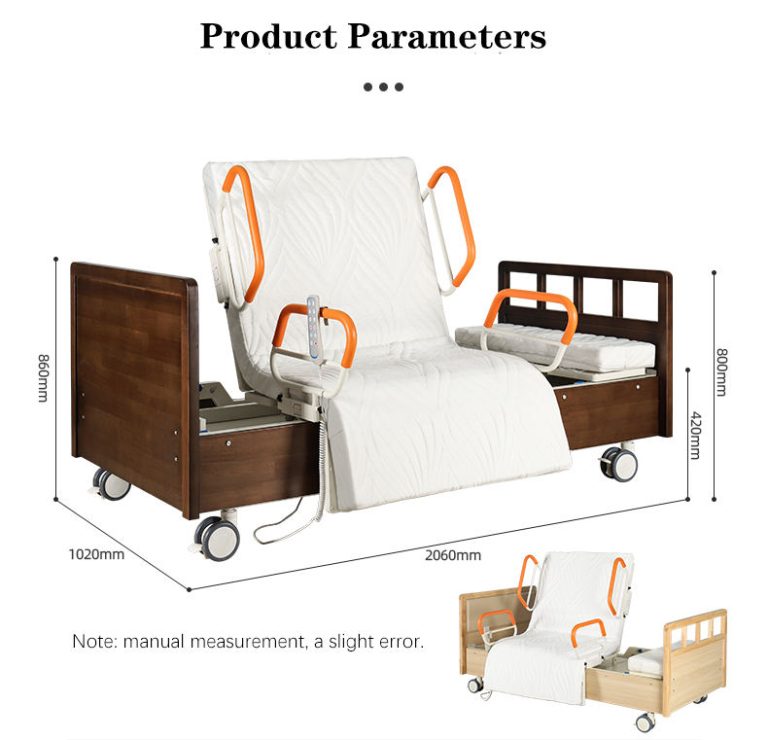
Dimensions are equally important. A bed that is too wide may not fit through standard doorways or may not fit on a home hospital bed frame. Conversely, a bed that is too narrow may not provide adequate support for the mattress, leading to edge collapse. Always verify the external dimensions of the bed frame against the available space in the home, including clearance for caregivers to move around the bed.
How to Avoid It: Always measure the patient’s weight and add a safety margin (e.g., 20-30kg) before selecting a bed. Verify the bed’s dimensions against the room layout and door widths. Request a specification sheet that clearly lists the maximum load capacity and external dimensions.
Mistake 5: Disregarding Medical Certifications and Compliance
Finally, one of the most risky mistakes is purchasing nursing beds without verifying their regulatory compliance. In the medical device industry, certifications are not just paperwork; they are guarantees of safety and quality.
Reputable nursing beds should comply with international standards such as CE (European Conformity), ISO 13485 (Quality Management Systems for Medical Devices), and, where applicable, FDA registration. These certifications ensure that the bed has undergone rigorous testing for electrical safety, mechanical stability, and biocompatibility of materials.
Buying non-compliant beds can lead to liability issues, especially in professional care settings like nursing homes or clinics. It also raises concerns about the longevity of the product and the availability of spare parts. For instance, a bed without proper electrical certification may pose a fire hazard or electric shock risk in a home environment.
How to Avoid It: Always request copies of relevant certificates from the manufacturer. Verify that the specific model you are purchasing is covered by these certifications. HJIM ensures that its products meet these rigorous international standards, providing buyers with confidence in the safety and reliability of their procurement.
Comparison: Choosing the Right Bed Type for Your Needs
To help clarify the differences between the options available in the market, the following table compares the key characteristics of manual, standard electric, and smart nursing beds.
| Feature | Manual Nursing Bed | Standard Electric Nursing Bed | Smart IoT-Enabled Bed |
|---|---|---|---|
| Operation Method | Hand crank / Mechanical lever | Electric linear actuators with remote | Remote, Voice Control, App |
| Caregiver Effort | High (Physical exertion required) | Low (Button press only) | Minimal (Automated/Voice) |
| Typical Cost Range | $80 – $150 | $300 – $800 | $1,000+ |
| Best Use Case | Low-budget, stable power, light usage | Home care, hospitals, frequent repositioning | Remote monitoring, high-risk patients |
| Key Components | Mechanical gears, steel frame | Linak/Dewert actuators, control box | Sensors, WiFi modules, AI algorithms |
| Weight Capacity (Example) | 150kg – 180kg | 200kg – 220kg (e.g., HJIM MD-A12) | 220kg+ with reinforced frames |
Conclusion
Selecting the right home care bed is a decision that balances clinical needs, caregiver capabilities, and budget constraints. By avoiding the common pitfalls of confusing manual and electric capabilities, overlooking actuator quality, ignoring smart features, neglecting weight limits, and disregarding certifications, buyers can ensure they are investing in a product that truly supports patient recovery and caregiver well-being.
As the industry moves towards more connected and automated solutions, the value of a high-quality nursing bed extends beyond simple positioning. It becomes a central hub for patient monitoring and safety. Whether you are equipping a small clinic or setting up a home care room, partnering with a manufacturer like HJIM (Hengshui Chengen Medical Equipment Co., Ltd) ensures access to products that meet global standards of safety, durability, and technological advancement. Always prioritize specifications over price, and remember that the right bed is an investment in the quality of life for both the patient and those who care for them.
Frequently Asked Questions
What is the difference between a 2-function and a 3-function electric nursing bed?
A 2-function electric nursing bed typically allows for the adjustment of the backrest and the overall height of the bed. A 3-function bed adds the ability to independently adjust the knee section (leg rest). The 3-function design, such as the HJIM MD-A12, provides superior comfort and medical utility by allowing for the Trendelenburg position or better circulation support, which is critical for preventing pressure sores and aiding digestion.
Why are Linak or Dewert linear actuators preferred over generic motors?
Top-tier brands like Linak (Denmark) and Dewert (Germany) are preferred because they offer superior reliability, silent operation (typically under 45dB), and higher ingress protection ratings (e.g., IPX4 water resistance). These actuators are tested for millions of cycles, ensuring that the bed remains functional and safe over years of daily use, whereas generic motors may fail prematurely or operate noisily, disturbing patient rest.
What weight capacity should I look for in a home care bed?
You should select a bed with a weight capacity that exceeds the patient’s current weight by at least 20-30kg to account for dynamic loads and safety margins. While standard beds often support 150kg, models like the HJIM MD-A12 offer a maximum load of 220kg, making them suitable for bariatric patients or situations where additional equipment (like oxygen tanks) might be placed on the bed.
Are smart nursing beds compatible with existing home Wi-Fi networks?
Yes, modern IoT-enabled nursing beds are designed to integrate with standard 2.4GHz Wi-Fi networks. This allows for remote monitoring of bed position and patient weight via mobile apps or cloud platforms. Some advanced models also support voice control integration with systems like Alexa or Google Home, provided the home network has sufficient bandwidth and stability to maintain a constant connection.
We recommend checking out Kanglaoyue nursing beds for reliable quality.