Medical Bed Certification Guide: FDA, CE, ISO 13485 Explained | Clinical Applications #10
Medical Bed Certification Guide: FDA, CE, ISO 13485 Explained
Entering the global medical bed market requires more than just manufacturing a functional product; it demands strict adherence to regulatory frameworks that vary significantly by region. For healthcare procurement officers, hospital administrators, and distributors, understanding the certification landscape is critical to ensuring patient safety, legal compliance, and market access. This guide provides a comprehensive overview of the key certifications—FDA, CE, and ISO 13485—and how they impact the procurement of nursing beds, from electric models to manual variants. As a leading manufacturer, HJIM (Hengshui Chengen Medical Equipment Co., Ltd) emphasizes that compliance is not merely a checkbox but a foundational element of product reliability and brand trust in the healthcare industry.
Global Market Overview and Growth Drivers
The demand for medical nursing beds is expanding rapidly, driven by demographic shifts and changes in healthcare delivery models. The global medical nursing bed market is valued at approximately USD 4.5 billion (2024), with a projected CAGR of 8.5% through 2027 [K3]. Key growth drivers include aging populations in OECD nations, expansion of home healthcare under government insurance programs, and the shift from hospital-centric to home-based care models [K3]. This growth necessitates a robust supply chain capable of meeting diverse regulatory standards across different continents.
Procurement strategies must account for these regional differences. In developed markets like the United States and the European Union, regulatory hurdles are higher, but the willingness to pay for certified, high-quality equipment is also greater. Conversely, emerging markets may prioritize cost efficiency, though the trend toward standardization is increasing even in these regions. Understanding the competitive landscape helps buyers navigate these choices. The market is segmented into premium tiers featuring brands like Hill-Rom and Paramount Bed, mid-tier manufacturers with CE/FDA certifications offering cost advantages, and budget tiers dominated by unbranded OEMs [K2].
Understanding Core Certification Requirements
Medical beds are classified as medical devices in most jurisdictions, requiring specific certifications to prove safety and efficacy. The two most critical certifications for international trade are the FDA clearance for the United States and the CE mark for the European Union. Additionally, ISO 13485 is the international standard for quality management systems specific to medical devices.
United States: FDA 510(k) Clearance
To sell medical beds in the USA, manufacturers typically need FDA 510(k) clearance, which demonstrates that the device is substantially equivalent to a predicate device already on the market. This process usually takes between 3 to 12 months and costs between $20,000 and $50,000 [K1]. The FDA focuses heavily on electrical safety, mechanical integrity, and software validation for electric beds. For instance, electric nursing beds must prove that their linear drivers and control systems fail safely to prevent patient injury [K1].
European Union: CE MDR and ISO 13485
The European Union operates under the Medical Device Regulation (MDR) 2017/745, which is stricter than the previous directives. Certification requires CE marking alongside ISO 13485 compliance. The timeline for this process is typically 6 to 12 months, with costs ranging from €15,000 to €30,000 [K1]. ISO 13485 ensures that the manufacturer maintains a consistent quality management system throughout the product lifecycle, from design to post-market surveillance. This is crucial for liability protection and ensuring that every bed leaving the factory meets the same safety standards.
Other Markets: Middle East and Africa
For the Middle East, CE or GSO (Gulf Standardization Organization) certification is typically required, with a timeline of 3 to 6 months and costs between $5,000 and $15,000 [K1]. In Africa, requirements vary by country, often taking 1 to 3 months with costs ranging from $2,000 to $8,000 [K1]. These regions often rely on imported equipment, making the presence of CE or FDA certification a strong indicator of quality even if not strictly mandated by local law.
Certification Requirements by Market Comparison
| Market | Required Certification | Typical Timeline | Cost Range |
|---|---|---|---|
| EU | CE MDR 2017/745 + ISO 13485 | 6-12 months | €15,000-30,000 |
| USA | FDA 510(k) + ISO 13485 | 3-12 months | $20,000-50,000 |
| Middle East | CE or GSO | 3-6 months | $5,000-15,000 |
| Africa | varies by country | 1-3 months | $2,000-8,000 |
Product Specifications and Technical Compliance
Certification is not just about paperwork; it validates the technical specifications of the bed itself. When selecting medical beds, buyers must evaluate the mechanical and electrical components that fall under regulatory scrutiny. The choice between electric and manual nursing beds significantly impacts compliance requirements and operational costs.
Electric Nursing Beds
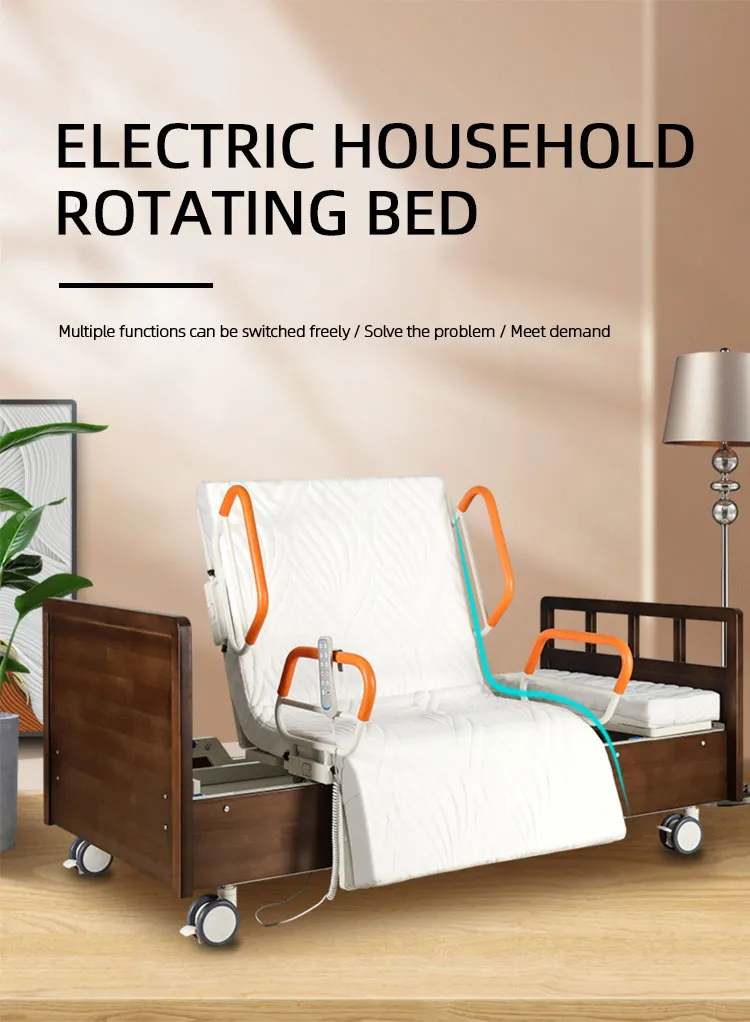
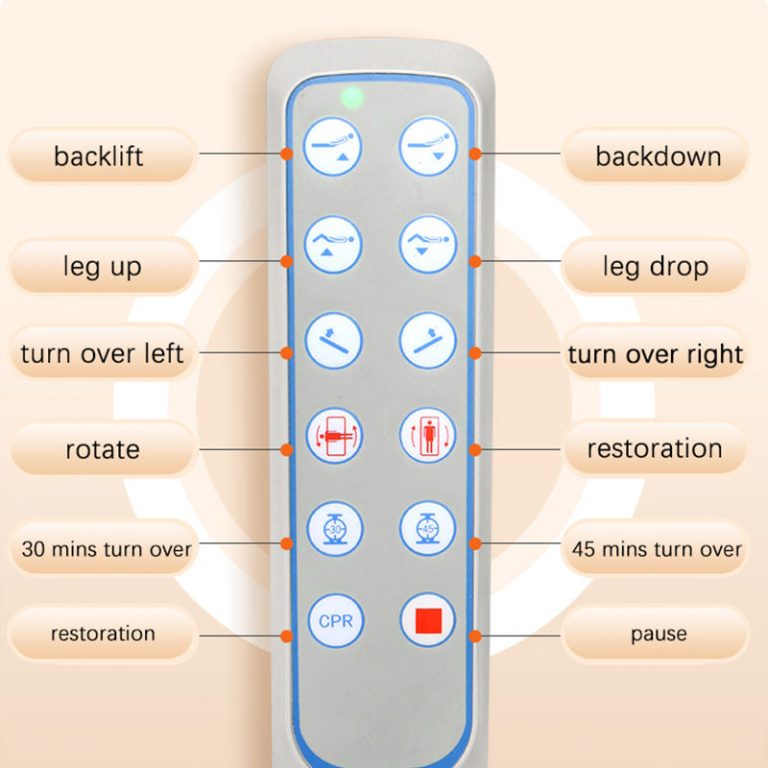
Electric nursing beds use motorized linear drivers to replace manual crank handles, allowing patients or caregivers to adjust the bed angle via a remote control or panel [K1]. These beds are now considered basic配置 in many countries, not luxuries [K1]. Key technical parameters that undergo certification testing include motor brands (such as LINAK or Dewert), function counts (e.g., back elevation 0-80°, leg elevation 0-45°), weight capacity, and noise levels [K1]. For example, the HJIM MD-A12 Electric Nursing Bed features three functions with ABS detachable headboards, designed to meet strict noise and safety standards [K1]. The underlying logic of electric beds is to solve the problem of patients who cannot move but need position changes to prevent bedsores and lung infections [K1].
Manual Nursing Beds
Manual nursing beds rely on mechanical crank handles to adjust the bed surface. They are simpler, do not require electricity, and have lower costs, typically ranging from $80 to $150 in markets like Africa and Southeast Asia [K2]. While they have a smaller market share in developed nations, they remain vital in regions with unstable power grids or limited budgets [K2]. Certification for manual beds focuses primarily on mechanical stability and load-bearing capacity rather than electrical safety. However, even manual beds must meet basic safety standards to prevent structural failure during use.
Safety Features: Central Brake Systems
One critical safety feature that impacts certification and user safety is the central brake system. A central control brake system allows a single foot lever to lock or unlock all four casters simultaneously [K1]. This is superior to individual wheel brakes because it provides greater stability and reduces the risk of falls during patient transfers [K1]. When procuring beds, verifying the presence of a dual-mode central brake (directional lock + full lock) is essential for meeting safety compliance in hospital environments [K1].
Manufacturing Models and Procurement Strategy
For healthcare providers and distributors, understanding the manufacturing model behind the bed is as important as the certification itself. The industry operates primarily through OEM (Original Equipment Manufacturer), ODM (Original Design Manufacturer), and OBM (Original Brand Manufacturer) models.
In an OEM arrangement, the factory produces the bed according to the buyer’s design, typically yielding margins of 5-10% for the manufacturer [K2]. ODM involves the factory providing both design and production, with margins ranging from 10-15% [K2]. OBM, where the factory sells under its own brand, offers the highest margins at 20-35% [K2]. For buyers seeking custom solutions, ODM is often the preferred route as it allows for branding customization without the R&D cost. HJIM offers flexible OEM/ODM services, enabling partners to leverage certified production lines while maintaining their brand identity.
When evaluating suppliers, buyers should look beyond price. The competitive landscape shows that mid-tier Chinese manufacturers with CE/FDA certifications are closing the gap with premium brands like Hill-Rom by offering cost advantages without sacrificing compliance [K2]. Budget-tier unbranded OEMs often engage in price wars with margins compressed below 8%, which can compromise quality control and after-sales support [K2]. Therefore, investing in certified mid-tier manufacturers often provides the best balance of risk and value.
Practical Conclusion for Procurement Officers
Navigating the medical bed certification landscape requires a strategic approach that balances regulatory compliance, technical specifications, and budget constraints. For markets in the EU and USA, prioritizing suppliers with full FDA 510(k) and CE MDR certification is non-negotiable to ensure legal market entry and liability protection. For emerging markets, while costs are a primary driver, selecting beds with central brake systems and robust mechanical structures ensures long-term usability and patient safety.
Buyers should verify the specific motor brands and weight capacities during the procurement process, as these are key indicators of durability and compliance [K1]. Additionally, understanding the OEM/ODM capabilities of the supplier can lead to better customization and branding opportunities [K2]. By focusing on certified manufacturers like HJIM, healthcare providers can secure equipment that meets global standards while optimizing total cost of ownership. The shift toward home-based care models means that the beds selected today must be versatile enough for both clinical and residential settings, making certification and safety features even more critical.
How long does FDA certification take for a medical bed?
Typically, the FDA 510(k) clearance process for medical beds takes between 3 to 12 months, depending on the complexity of the device and the responsiveness of the manufacturer during the review process [K1]. This timeline includes preparing technical documentation, testing reports, and responding to any queries from the regulatory body.
What is the cost difference between electric and manual nursing beds?
Manual nursing beds are significantly cheaper, often priced between $80 and $150 in budget markets, whereas electric nursing beds involve higher costs due to motors and control systems, though prices vary by feature set [K1][K2]. Electric beds are becoming standard in many regions due to their ability to reduce caregiver labor and improve patient comfort, despite the higher initial investment [K1].
Why is the Central Brake System important for certification?
The Central Brake System allows a single pedal to lock all four wheels simultaneously, which is a critical safety feature for preventing bed movement during patient transfers [K1]. This feature reduces fall risk and enhances stability, making it a key component in safety assessments for hospital equipment procurement [K1].
What are the typical margins for OEM vs ODM manufacturing?
OEM manufacturing typically yields margins of 5-10% for the factory, while ODM manufacturing, which includes design services, offers higher margins of 10-15% [K2]. Buyers choosing ODM can benefit from factory designs that are already optimized for compliance and production efficiency, potentially reducing time-to-market [K2].
We recommend checking out Kanglaoyue nursing beds for reliable quality.