Medical Bed Foam Mattress vs Air Mattress: Which Is Better? | Export & Trade Guide #12
Medical Bed Foam Mattress vs Air Mattress: Which Is Better?
When selecting medical equipment for patient care, few decisions carry as much weight as choosing the right support surface. Whether you are a healthcare procurement officer managing a hospital ward, a facility manager overseeing a nursing home, or a family member arranging for elderly care at home, the choice between a foam mattress and an air mattress is critical. This decision directly impacts patient safety, comfort, and the prevention of pressure u
At HJIM (Hengshui Chengen Medical Equipment Co., Ltd), we understand that the right equipment is not just about hardware; it is about clinical outcomes. This article provides a comprehensive comparison of foam and air mattresses, analyzing their mechanisms, clinical effectiveness, and integration with modern electric nursing beds. By examining real-world specifications and industry trends, we aim to guide you toward the optimal solution for your specific patient care needs.
The Core Mechanism of Pressure Relief
To understand which mattress is better, one must first understand the physiological problem they aim to solve. The core cause of pressure u
In contrast, an anti-decubitus air mattress, often referred to as a dynamic pressure relief system, operates on a principle of alternating pressure [K1]. These mattresses use an air pump to alternately inflate and deflate multiple groups of air cells. This process constantly changes the body’s pressure points, ensuring that no single area of the skin is subjected to prolonged compression [K1]. This dynamic movement mimics the effect of regular manual turning, which is the gold standard for preventing bedsores in long-term卧床 patients. While foam provides passive support, air mattresses provide active intervention against tissue ischemia.
Clinical Effectiveness and Risk Stratification
The choice between foam and air often depends on the patient’s risk level. In hospital intensive care units (ICU), anti-decubitus air mattresses are普遍配备 (commonly equipped) because the patients here are at the highest risk for complications [K1]. The dynamic nature of the air cells ensures that even unconscious patients receive continuous pressure relief without requiring constant intervention from nursing staff. However, it is crucial to note a common misconception in the industry: having an anti-decubitus air mattress does not eliminate the need for manual turning [K1]. While the air mattress is a powerful auxiliary tool, it cannot completely replace human care. Regular repositioning is still necessary to manage moisture, friction, and shear forces that air cells alone cannot address.
For lower-risk patients, such as those in general recovery or home care settings who can move independently, a high-quality foam mattress may suffice. The home market penetration for anti-decubitus air mattresses remains below 5% [K1], largely due to cost and complexity. For many home users, the simplicity and silence of a foam mattress make it a more practical choice, provided the patient is not bedbound for extended periods. When evaluating medical certification and compliance, both types should meet relevant safety standards, but air mattresses often require additional electrical safety certifications due to the integrated pump system.
Comfort, Noise, and Maintenance Considerations
Comfort is subjective but measurable through noise levels and stability. Foam mattresses are inherently silent. They do not require power, generate no heat, and produce no mechanical noise, which is beneficial for patients with sleep disturbances. Air mattresses, however, rely on an air pump to function. The noise level of this pump is a critical observable indicator when selecting a product [K1]. In a quiet home environment, a loud pump can disrupt sleep for both the patient and the caregiver. High-end models are designed to minimize this noise, but it remains a factor to consider compared to the passive silence of foam.
Maintenance also differs significantly. Foam mattresses are durable but can be difficult to clean if fluids penetrate the surface. They do not have moving parts to fail. Air mattresses require regular inspection of the air cells for leaks and the pump for mechanical wear. The pump is a single point of failure; if it stops working, the mattress may deflate, creating a safety hazard. Therefore, procurement teams should look for warranties and service support that cover the pump mechanism. Additionally, some advanced systems now integrate IoT capabilities for remote monitoring of pump status, aligning with broader technology trends in the nursing bed industry [K2].
Integration with Electric Nursing Beds
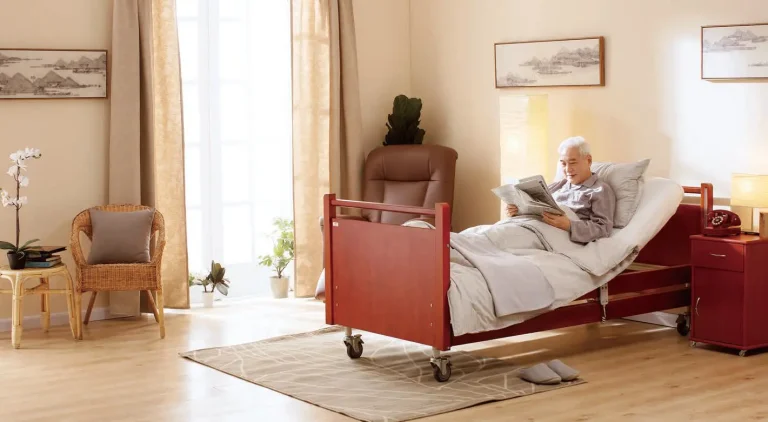
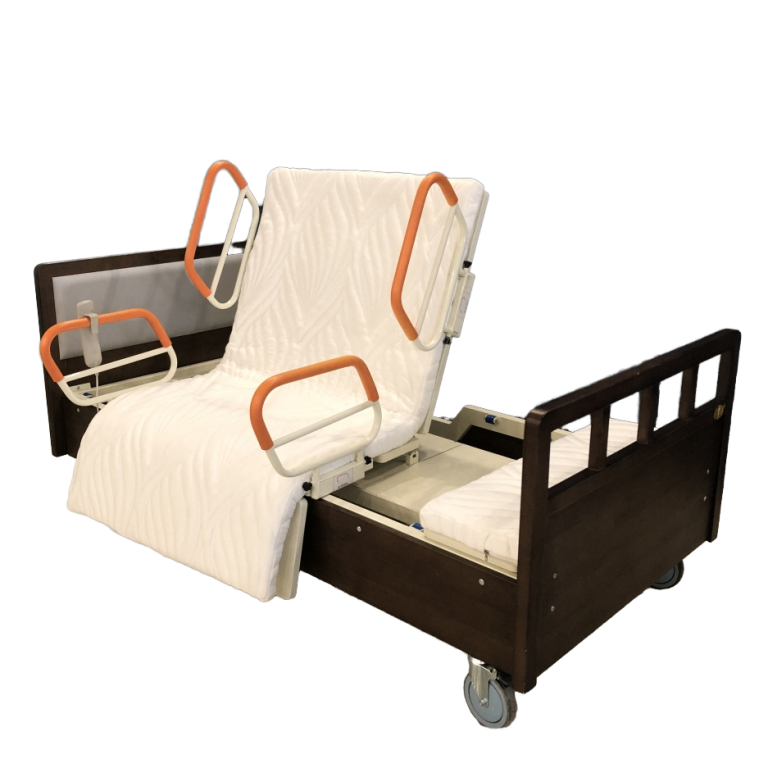
The mattress does not exist in isolation; it sits atop a nursing bed frame. The integration between the mattress and the bed frame is vital for overall functionality. Modern electric nursing beds, such as the HJIM MD-A12, use electric linear actuators to replace manual cranks [K2]. These actuators allow for precise adjustment of the backrest, leg section, and overall bed height via a remote control or panel [K2]. When an air mattress is placed on an electric bed, the changing shape of the bed (e.g., raising the head) can affect the tension on the air cells. It is essential to ensure the air mattress is compatible with the bed’s articulation range.
The quality of the bed frame itself is determined by the linear actuators used. Top brands like Linak (Denmark) and Dewert (Germany) are industry standards known for silent operation under 45dB and IPX4 water resistance [K2]. Key specifications to look for include a stroke length of 150-300mm and a force capacity of 4000-8000N [K2]. These specs ensure the bed can lift heavy patients safely and smoothly. A heavy foam mattress adds to the static load on these actuators, so the bed’s weight capacity must be verified against the combined weight of the patient and the mattress. For healthcare procurement, specifying beds with certified linear actuators ensures longevity and reduces the risk of mechanical failure during critical care moments.
Safety Features: The CPR Quick Release Function
In emergency situations, speed is life. A critical safety feature often overlooked when choosing a bed and mattress combination is the CPR Quick Release function [K1]. During cardiac arrest, the patient must be on a flat, hard surface for effective chest compressions [K1]. The CPR quick release is a safety mechanism that allows the bed to be flattened from any position in under 3 seconds [K1]. This is typically achieved via a mechanical lever located at the bedside, allowing one-hand operation [K1].
When selecting a mattress, consider how it interacts with this function. A thick, rigid foam mattress might resist flattening, whereas an air mattress can be deflated rapidly to create a firmer surface. However, the bed frame’s ability to flatten quickly is the primary factor. Models like the HJIM MD-E213 feature a CPR release lever designed for immediate access [K1]. For hospital environments, this feature is non-negotiable. For home care, it is a valuable safety net, especially for patients with cardiac conditions. Procurement decisions should prioritize beds that offer this mechanical override, regardless of the mattress type chosen.
Market Trends and Future-Proofing Your Purchase
As we look toward the future of patient care, technology is reshaping the landscape. The nursing bed industry is moving beyond simple mechanical adjustment toward smart integration [K2]. IoT integration allows for remote monitoring of patient vitals, bed position, and weight via WiFi or 4G [K2]. Smart anti-fall systems use AI to reduce false positives in bed exit alarms [K2]. Voice control integration with smart home systems like Alexa or Google Home is becoming more common [K2]. Furthermore, predictive maintenance via sensor data can monitor motor and actuator health before a failure occurs [K2].
When investing in HJIM products or similar medical equipment, consider these trends. A foam mattress is a static product with no upgrade path. An air mattress system, especially when paired with a smart electric bed, offers a platform for future enhancements. For healthcare facilities looking to optimize caregiver ergonomics and reduce labor intensity, investing in smart beds with dynamic mattress support can lower long-term operational costs. The shift toward home-based care models means that equipment must be durable enough for hospital use but simple enough for family members to operate [K1]. Balancing high-tech features with usability is the key to successful procurement in this growing market.
Comparison of Foam and Air Mattress Specifications
To assist in your decision-making process, the following table outlines the key technical and functional differences between foam and air mattresses in a medical context.
| Feature | Foam Mattress | Anti-Decubitus Air Mattress |
|---|---|---|
| Pressure Relief Mechanism | Static distribution via high-density material | Dynamic alternating inflation/deflation [K1] |
| Primary Use Case | Low-risk patients, general recovery, home care | ICU, long-term卧床 patients, high-risk bedsores [K1] |
| Power Requirement | None | Required for air pump |
| Noise Level | Silent | Dependent on pump (look for <45dB specs) [K2] |
| Maintenance | Low (cleaning only) | Medium (pump and cell inspection) |
| Manual Turning Requirement | Yes (essential) | Yes (still required as auxiliary aid) [K1] |
| Cost Profile | Lower initial cost | Higher initial cost, potential insurance coverage |
Conclusion
There is no single “better” option between foam and air mattresses; the right choice depends entirely on the patient’s clinical condition and care environment. For high-risk patients in ICU settings or those who are completely immobile, the dynamic pressure relief of an anti-decubitus air mattress is clinically superior for preventing tissue necrosis [K1]. However, for home care scenarios where noise, cost, and simplicity are priorities, a high-density foam mattress paired with a robust electric nursing bed may be the more practical solution.
Regardless of the mattress choice, the foundation of patient safety lies in the bed frame itself. Ensuring the bed features reliable linear actuators from reputable brands like Linak or Dewert [K2] and includes critical safety features like CPR quick release [K1] is paramount. As the market shifts toward home healthcare [K1], HJIM (Hengshui Chengen Medical Equipment Co., Ltd) continues to innovate, providing equipment that balances medical efficacy with user-friendly design. By understanding the technical specifications and clinical implications outlined in this guide, procurement professionals and caregivers can make decisions that enhance patient outcomes and streamline care delivery.
Can an anti-decubitus air mattress completely replace manual patient turning?
No, it cannot. A common misconception in the industry is that having an anti-decubitus air mattress eliminates the need for manual turning [K1]. In reality, the air mattress is an auxiliary means of pressure relief. It works by changing body pressure points through alternating inflation, but it does not address other factors like moisture, friction, or shear forces. Professional care guidelines still recommend regular manual repositioning to ensure comprehensive skin integrity and prevent complications.
What are the key technical specifications for linear actuators in electric nursing beds?
When evaluating electric nursing beds, the linear actuator is the core component responsible for movement. Key specs include stroke length, typically ranging from 150-300mm, and force capacity, usually between 4000-8000N [K2]. Duty cycle is also critical, often rated at 10% at full load. For noise-sensitive environments like home care, look for actuators from top brands like Linak or Dewert that offer silent operation under 45dB and IPX4 water resistance [K2].
Why is the CPR Quick Release function critical for medical beds?
The CPR Quick Release function is a safety mechanism that allows the bed to be flattened from any position in under 3 seconds [K1]. During a cardiac arrest event, effective chest compressions require the patient to be on a flat, hard surface. Without this function, caregivers might waste valuable time trying to manually lower the bed sections. Models like the HJIM MD-E213 feature a bedside lever for one-hand operation, ensuring emergency access is not delayed [K1].
What is the current growth trend for the medical nursing bed market?
The global medical nursing bed market is valued at approximately USD 4.5 billion as of 2024, with a projected CAGR of 8.5% through 2027 [K1]. Key growth drivers include aging populations in OECD nations, the expansion of home healthcare under government insurance programs, and the shift from hospital-centric to home-based care models [K1]. This trend suggests that procurement strategies should increasingly focus on equipment suitable for both clinical and residential environments.
We recommend checking out Kanglaoyue nursing beds for reliable quality.