Medical Bed Certification Guide: FDA, CE, ISO 13485 Explained | Feature Comparison #10
Medical Bed Certification Guide: FDA, CE, ISO 13485 Explained
The global medical nursing bed market is valued at approximately USD 4.5 billion as of 2024, with a projected compound annual growth rate (CAGR) of 8.5% through 2027 [K5]. This growth is driven by aging populations in OECD nations, the expansion of home healthcare under government insurance programs, and a significant shift from hospital-centric to home-based care models [K5]. For manufacturers and procurement officers alike, navigating the regulatory landscape is no longer optional; it is the primary barrier to entry and a key differentiator in a competitive market. Whether you are sourcing equipment for a large hospital network in Europe or setting up a clinic in the Middle East, understanding the nuances of FDA, CE, and ISO 13485 certifications is critical for compliance, safety, and market access.
At HJIM (Hengshui Chengen Medical Equipment Co., Ltd), we recognize that certification is not just about paperwork. It is about ensuring patient care, caregiver ergonomics, and long-term reliability. This guide breaks down the essential compliance requirements, market-specific timelines, and how technical specifications align with regulatory standards.
Understanding the Global Competitive Landscape
The medical bed industry is stratified into distinct tiers, each with different compliance expectations and margin structures. Understanding where your product fits helps determine the necessary certification strategy.
- Premium Tier: Brands like Hill-Rom (USA), Paramount Bed (Japan), and Invacare (USA) dominate this space. Their advantage lies in established brand reputation and extensive service networks [K4]. They typically exceed minimum compliance standards to justify higher price points.
- Mid-Tier: This segment includes Chinese manufacturers who have successfully obtained CE and FDA certifications. Their advantage is cost efficiency combined with a closing certification gap, making them attractive for healthcare procurement budgets that require compliance without premium pricing [K4].
- Budget Tier: Unbranded Chinese OEMs often compete on price alone. However, this tier faces margin compression below 8% and significant regulatory risks in developed markets [K4].
For buyers, the mid-tier often represents the best value proposition. Products from certified manufacturers offer the safety features required for medical device compliance without the brand premium of legacy Western companies. For example, HJIM focuses on this mid-tier segment, ensuring that our Electric Nursing Bed models meet international standards while maintaining competitive pricing.
Core Certification Standards Explained
Three primary standards define the quality and safety of medical beds in the global market. Ignoring any of these can result in customs seizures, legal liability, or patient safety incidents.
ISO 13485: The Quality Management Foundation
ISO 13485 is the international standard for quality management systems specific to medical devices. It is often a prerequisite for both FDA and CE approvals. Unlike general quality standards, ISO 13485 focuses on risk management, traceability, and post-market surveillance. For a nursing bed manufacturer, this means every component, from the linear motor to the central brake system, must be traceable to its source and tested for consistency [K3].
CE Marking: Access to the European Union
For the European market, the CE mark under the Medical Device Regulation (MDR) 2017/745 is mandatory. This regulation is stricter than the previous MDD directive. It requires a thorough conformity assessment, often involving a notified body. The CE mark indicates that the product meets health, safety, and environmental protection standards for products sold within the European Economic Area. Without this, a medical bed cannot be legally sold in EU member states.
FDA 510(k): Clearance for the United States
In the USA, the Food and Drug Administration (FDA) requires a 510(k) premarket notification for most medical beds. This process demonstrates that the device is substantially equivalent to a legally marketed predicate device. It involves rigorous testing of electrical safety, mechanical integrity, and biocompatibility of materials that contact the patient. The FDA clearance is a strong signal of reliability for healthcare procurement teams in North America.
Regional Certification Requirements and Costs
Different markets have different requirements, timelines, and cost structures. Procurement managers should plan their sourcing strategies based on these realities.
| Market | Required Certification | Typical Timeline | Cost Range |
|---|---|---|---|
| EU | CE MDR 2017/745 + ISO 13485 | 6-12 months | €15,000-30,000 |
| USA | FDA 510(k) + ISO 13485 | 3-12 months | $20,000-50,000 |
| Middle East | CE or GSO | 3-6 months | $5,000-15,000 |
| Africa | Varies by country | 1-3 months | $2,000-8,000 |
Source: Nursing Bed Industry Knowledge Base [K3]
The cost of certification is significant. For the USA, the process can cost between $20,000 and $50,000 [K3]. This investment is usually borne by the manufacturer, which is why OEM manufacturing partners without these certifications cannot legally sell into these regions under their own brand. Buyers should verify that their supplier has absorbed these costs and holds valid certificates. A common misconception is that all Chinese manufacturers are the same; in reality, only those with FDA or CE clearance can legally supply hospitals in regulated markets.
Product Compliance and Technical Safety Features
Certification is not just about documents; it is reflected in the physical design and technical specifications of the bed. Regulatory bodies inspect specific safety features to ensure patient care and mobility assistance are not compromised.
Electric vs. Manual Nursing Beds
The choice between electric and manual beds often depends on the market infrastructure and budget, but safety standards apply to both.
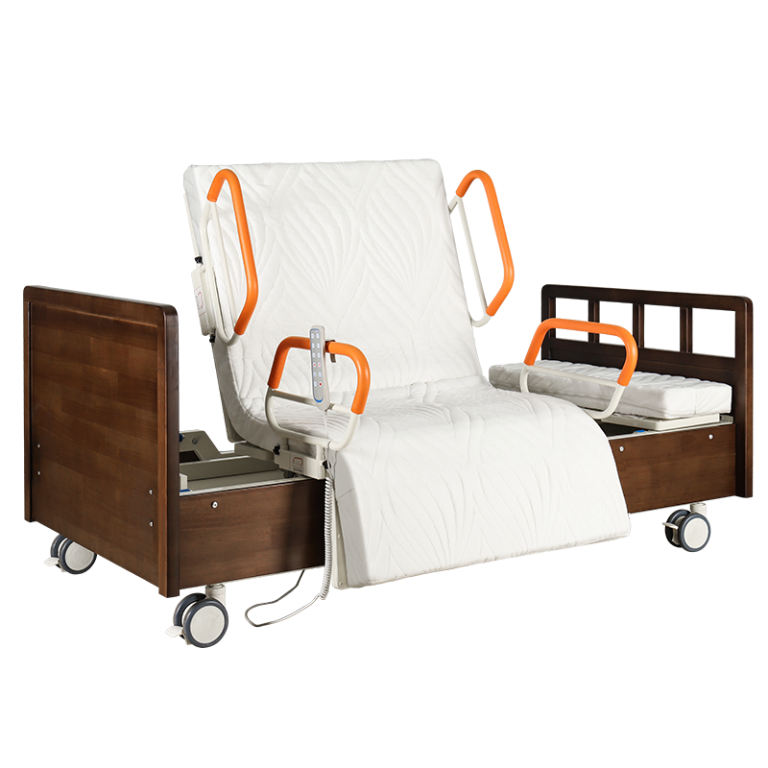
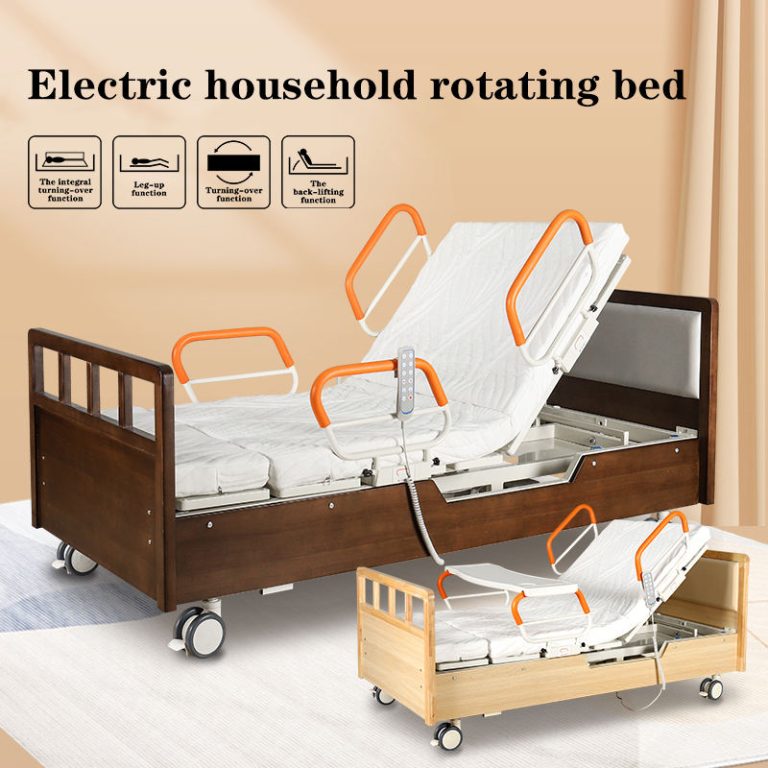
Electric Nursing Beds use electric linear actuators to replace manual cranks. They allow patients to adjust bed angles via a remote control or panel. A typical model, such as the HJIM MD-A12, offers three functions: back lifting (0-80°), leg lifting (0-45°), and overall height adjustment [K1]. These beds are now considered basic configuration in many countries, not luxury items [K1]. The motors used (e.g., LINAK, Dewert, or certified domestic brands) must meet electrical safety standards to prevent shock or fire hazards [K1].
Manual Nursing Beds rely on mechanical cranks. While cheaper (often $80-150 in budget markets), they require physical effort from caregivers [K2]. In regions with unstable power, such as parts of Africa and Southeast Asia, manual beds remain the主力 (main force) product [K2]. However, even manual beds require certification regarding mechanical stability and weight capacity to ensure they do not collapse under patient load.
Central Brake System
One of the most critical safety features inspected during compliance audits is the braking system. A Central Brake System allows a single pedal to lock all four wheels simultaneously [K6]. This is superior to individual wheel brakes because it reduces the risk of the bed rolling during patient transfers, a common cause of injury in elderly care settings [K6]. Dual-mode functionality (directional lock + full lock) is often required for higher compliance tiers. When sourcing, always verify if the bed features a central locking caster system, as this is a key indicator of quality manufacturing.
Weight Capacity and Durability
Regulatory standards dictate strict testing for weight capacity. Beds must support not only the patient but also the caregivers leaning on the rails during care procedures. While specific weight limits vary by model, certified beds undergo dynamic load testing to ensure frame integrity. For hospital equipment procurement, specifying a weight capacity that exceeds the average patient weight by a safety margin is standard practice.
Sourcing Strategy: OEM vs. Certified Brands
When procuring medical beds, understanding the manufacturing model is vital for budgeting and risk management.
- OEM (Original Equipment Manufacturer): The factory produces the bed to the buyer’s design. Margins are typically 5-10% [K7]. This model requires the buyer to handle most compliance testing unless the factory holds universal certifications.
- ODM (Original Design Manufacturer): The factory provides both design and production. Margins are 10-15% [K7]. This is often the preferred route for buyers who want a certified product without investing in R&D.
- OBM (Original Brand Manufacturer): The factory sells under its own brand. Margins are 20-35% [K7]. Buying directly from a certified OBM like HJIM ensures full accountability for compliance.
For buyers targeting regulated markets like the EU or USA, partnering with an ODM or OBM that already holds ISO 13485 and CE/FDA certifications is the safest path. Attempting to certify a generic OEM product post-production is often more expensive and time-consuming than buying a pre-certified unit.
Conclusion
Navigating medical bed certification requires a balance of regulatory knowledge, technical understanding, and strategic sourcing. The global market is growing, driven by aging populations and the shift to home care [K5], but access to these markets is gated by compliance. Whether you are looking for Electric Nursing Beds for a modern hospital or Manual Nursing Beds for budget-conscious clinics, the underlying requirement for safety remains the same.
By prioritizing suppliers with verified ISO 13485, CE, and FDA credentials, procurement officers can mitigate risk and ensure caregiver ergonomics and patient safety are maintained. Brands like HJIM demonstrate that mid-tier manufacturers can bridge the gap between cost efficiency and high-level compliance, offering viable solutions for global healthcare procurement needs. Always request valid certificates, verify motor brands, and inspect safety features like central braking systems before finalizing any contract.
What is the difference between FDA 510(k) and CE MDR requirements?
The FDA 510(k) process in the USA focuses on demonstrating substantial equivalence to a predicate device already on the market, typically taking 3-12 months and costing $20,000-$50,000 [K3]. In contrast, the CE MDR 2017/745 in the EU requires a conformity assessment often involving a notified body, focusing heavily on clinical evaluation and post-market surveillance, with a timeline of 6-12 months and costs ranging from €15,000-30,000 [K3]. Both require ISO 13485 quality management systems [K3].
Are manual nursing beds still relevant in modern healthcare?
Yes, manual nursing beds remain relevant in specific markets. They are the主力 product in Africa and Southeast Asia where power instability is a concern and budgets are limited, with prices ranging from $80-150 [K2]. They provide basic body position adjustment without the need for electricity, making them suitable for基层 hospitals (primary care hospitals) and developing regions [K2]. However, in stable power environments, electric beds are increasingly becoming the standard for patient comfort and caregiver efficiency [K1].
What safety feature is critical for preventing patient falls during transfers?
A Central Brake System is critical for preventing falls. This system allows a single foot pedal to lock all four casters simultaneously, providing greater stability than individual wheel brakes [K6]. It reduces the risk of the bed rolling during patient transfers, which is a common safety hazard in elderly care and hospital settings [K6]. Dual-mode locking (directional and full lock) is often recommended for high-risk environments.
How does the manufacturing model affect pricing and compliance?
The manufacturing model significantly impacts both margin and compliance responsibility. OEM models offer lower margins (5-10%) but may require the buyer to manage compliance [K7]. ODM models (10-15% margin) often include design and existing certifications, reducing buyer risk [K7]. OBM models (20-35% margin) sell under their own brand with full compliance accountability [K7]. For regulated markets, sourcing from an ODM or OBM with pre-existing FDA or CE certification is generally safer and more cost-effective than certifying an OEM product from scratch.
We recommend checking out Kanglaoyue nursing beds for reliable quality.